
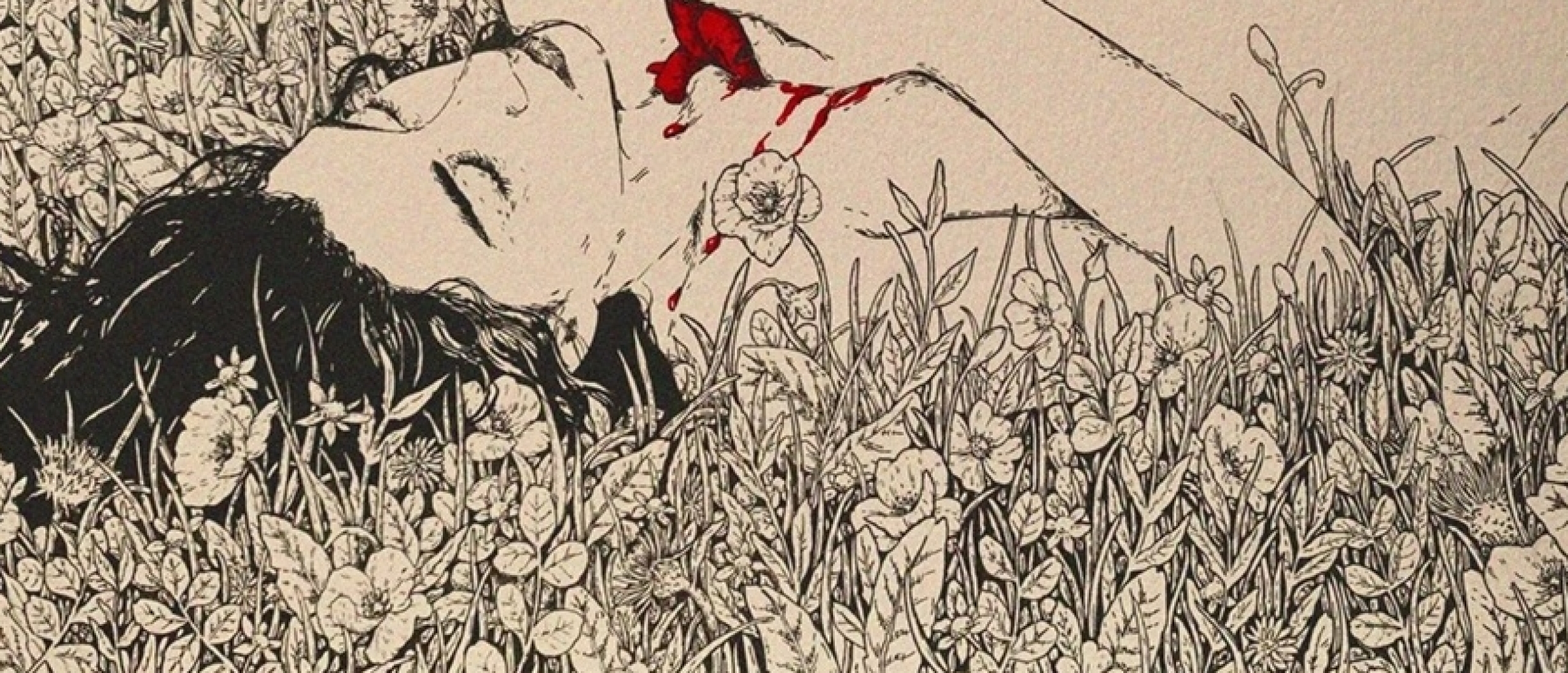

In the contemporary resurgence of figurative drawing, the work of Rebeca Fleur, based in Valencia, Spain, stands out for its quiet yet emotionally charged eroticism. Her ink drawings occupy a delicate territory between sensuality and introspection, between exposure and poetic concealment. Rather than presenting the erotic body as spectacle, Fleur approaches it as an interior landscape; one shaped by longing, vulnerability, memory, and psychological nuance. The result is an aesthetic language where the line itself becomes an emotional instrument. Fleur’s Instagram caption; ‘From the heart to the ink', is a great introduction to the world of her ink drawings. Also, the motif of a heart appears here and there as well in her art, in the Fig.4. where the naked woman in seen lying on the grass and holding a bleeding heart in her hands. This brings to mind a few paintings by Edvard Munch. The contrast between black ink and this red colour is visually striking as well and Fleur knows how to use this contrast well, as we can see in other examples such as in Fig.12. where the pops of red come from the rosehip and poppies.
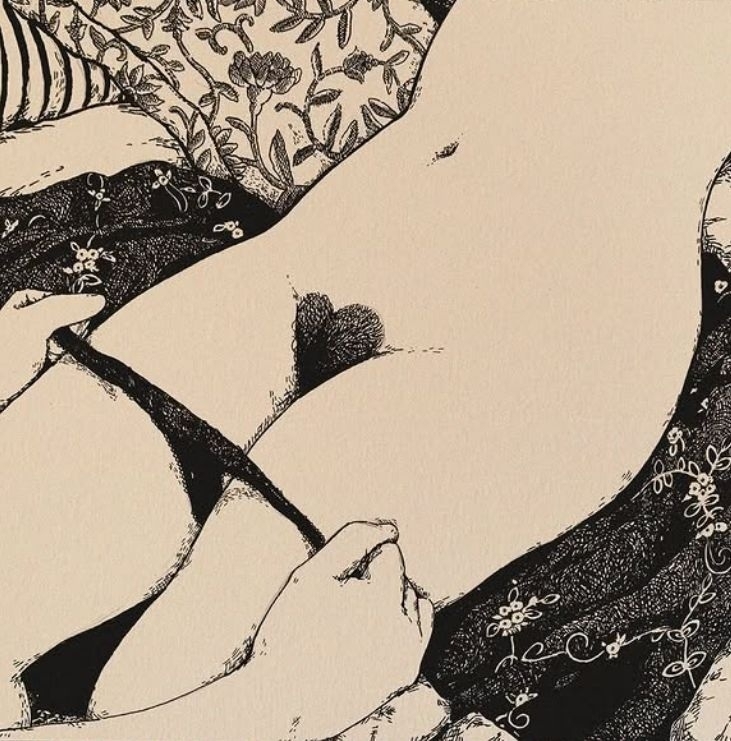
Fig.1
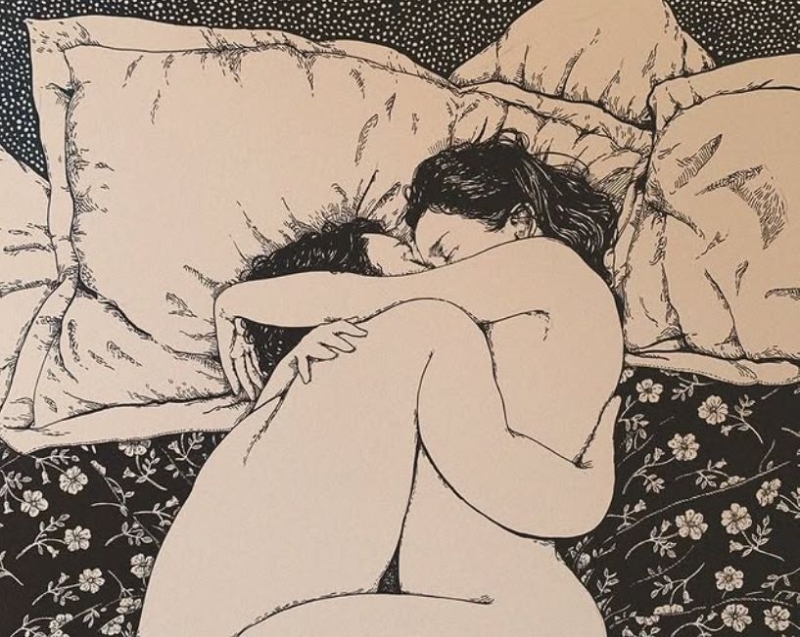
Fig.2
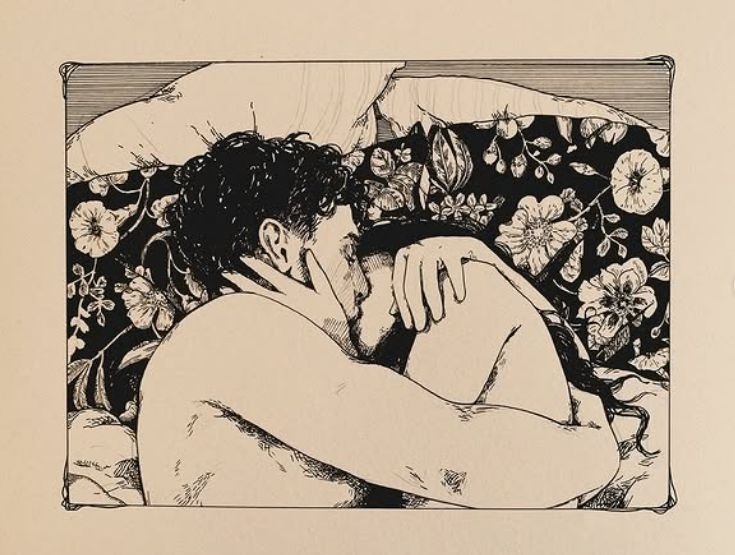
Fig.3
Aubrey Beardsley
At first glance, the most striking feature of Fleur’s drawings is the dominance of the line. Ink, unlike paint, offers little opportunity for revision; it demands decisiveness, control and an almost calligraphic sensitivity. Fleur’s line often oscillates between confident contour and trembling delicacy, suggesting a body that is both present and dissolving. This tension creates the impression that the figures exist in a suspended emotional state, caught between appearance and disappearance, desire and hesitation. Such handling of line situates her work within a long tradition of erotic draftsmanship, recalling both the late nineteenth and the early twentieth-century drawings such as those by Aubrey Beardsley and also the Japanese shunga influences, where minimal means convey intense sensuality.
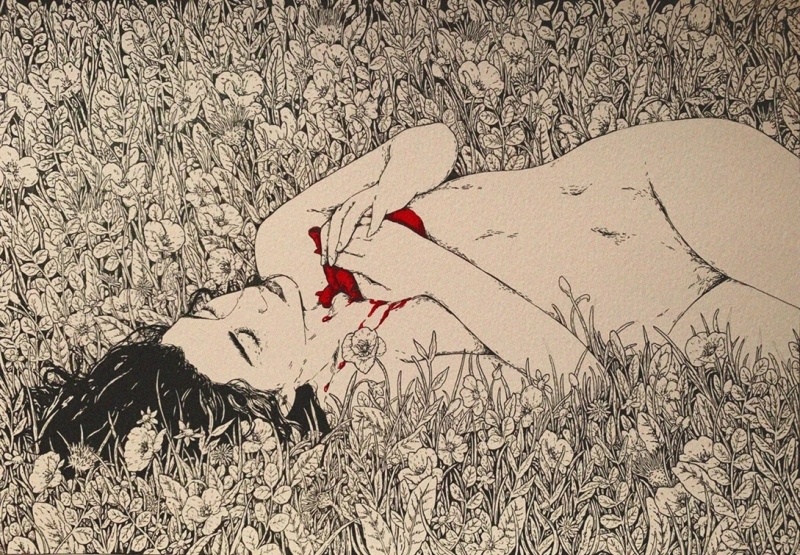
Fig.4
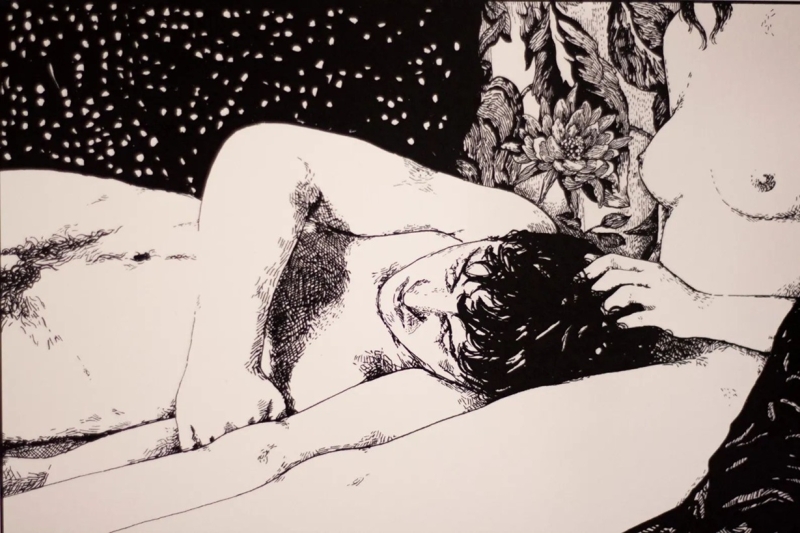
Fig.5
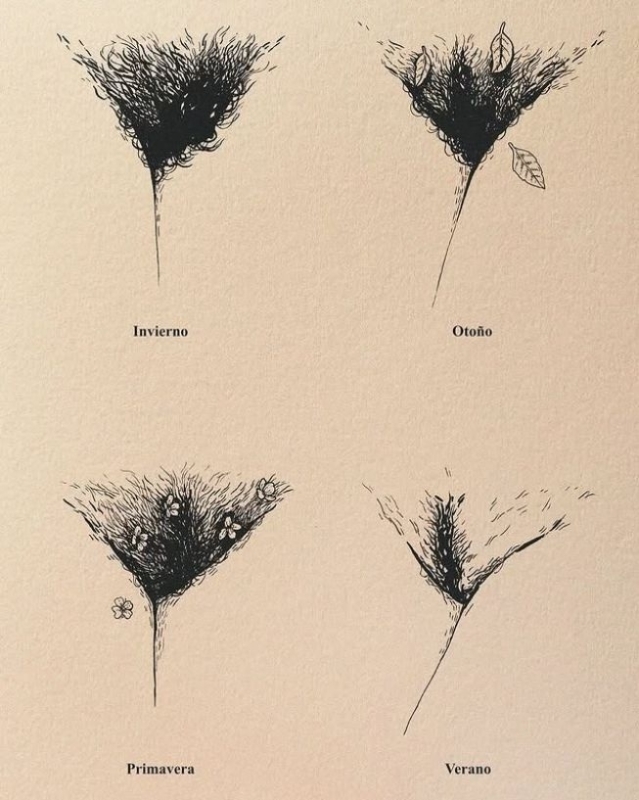
Fig.6
Contemporary Feminist Art
Yet Fleur’s eroticism is distinctly contemporary in its psychological framing and also distinctly feminine I would argue. The figures rarely appear as anonymous objects of desire; instead, they seem self-aware, introspective and even slightly melancholic. Their gazes are often turned inward or away from the viewer, suggesting that the erotic moment belongs primarily to the subject herself rather than to an external observer. In this sense, Fleur’s work participates in a broader shift within contemporary feminist art, where the representation of sexuality is reclaimed as an expression of autonomy and interior experience rather than passive display. The erotic body becomes a site of narrative, emotion, and identity.
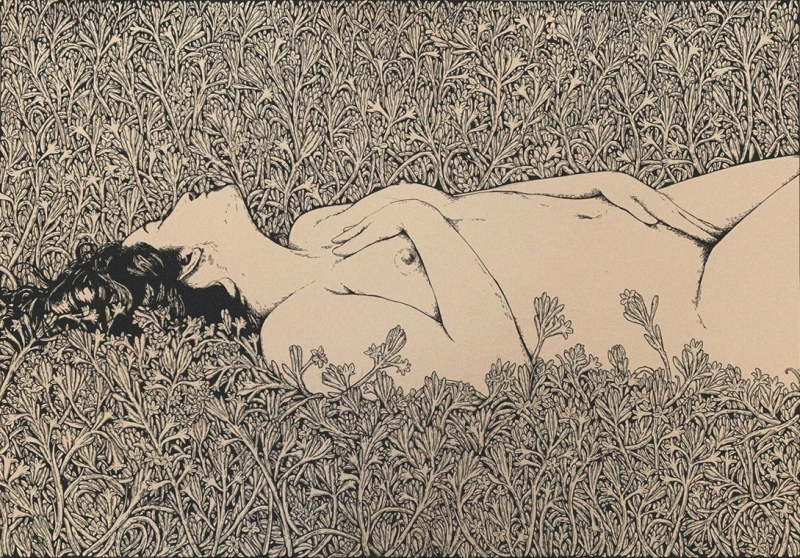
Fig.7
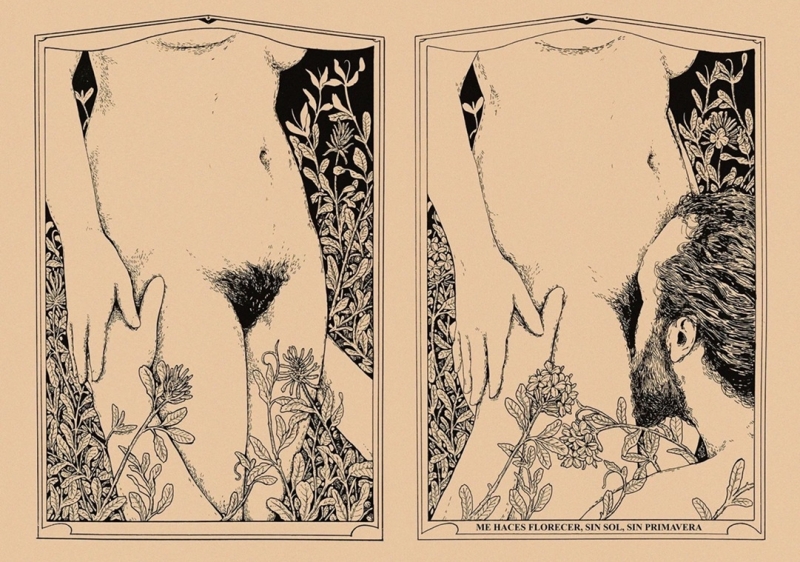
Fig.8
Tactile Richness
Another defining feature of Fleur’s drawings is the interplay between minimalism and sensual detail. Large areas of negative space often surround the figure, isolating the body against a near-empty background. This compositional strategy heightens intimacy: the viewer is not distracted by elaborate settings but is invited into a quiet encounter with the figure’s posture, gesture, and subtle expression. At the same time, Fleur introduces carefully rendered elements, hair strands, delicate shadows, folds of fabric, that create tactile richness. The contrast between emptiness and detail echoes the emotional structure of desire itself: intense feeling emerging within silence. Let us take a look at a few examples where this interplay of details and empty space is wonderfully done; in Fig.2. the ornamental, floral and very detailed bed covers in contrast with the pure white of the pillows, in Fig.7. the detailed flowers and the grass against the empty space of woman’s skin, and so on…
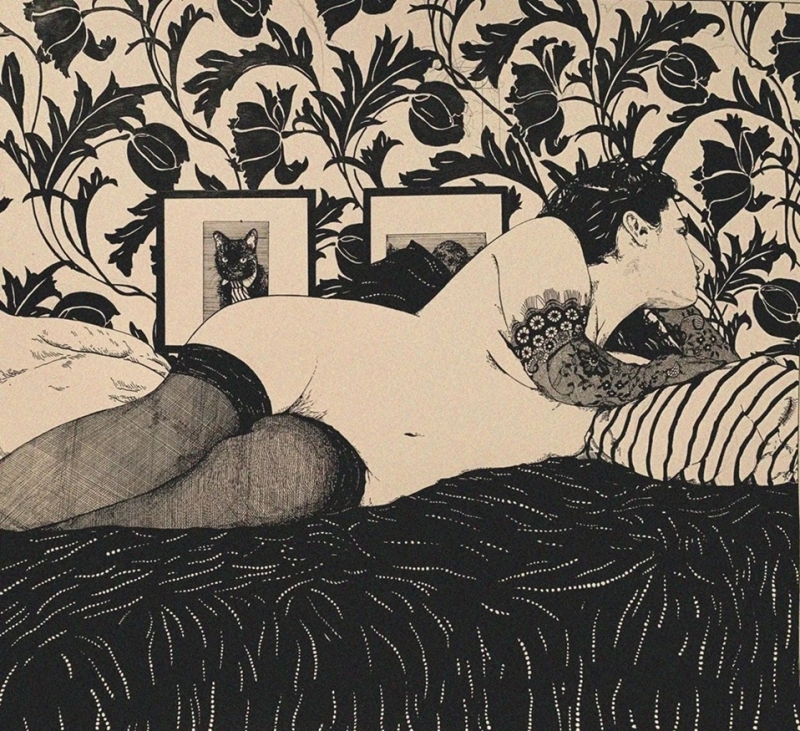
Fig.9
Transitional Gestures
The poses of her figures also resist conventional erotic clichés. Instead of overt theatricality, many drawings depict transitional gestures, hands resting lightly on skin, bodies curled inward, torsos leaning in contemplative relaxation. These moments convey the sensuality of lived experience rather than staged seduction. Such imagery aligns Fleur’s work with a lineage of artists who approached eroticism as a poetic state rather than a purely visual one, including Egon Schiele’s psychological nudes and the intimate domestic scenes of certain post-war figurative painters. However, Fleur’s tone is less confrontational; her figures do not challenge the viewer aggressively but invite quiet empathy.
In Premium more about Rebeca Fleur's ink aesthetics, how immediacy reveals gesture speed and pressure, imperfect lines express fragility spontaneity authenticity, how pubic hair becomes symbolic expressive motif, intimate scenes including cats, how figures suggest narratives through symbolism introspection, and MUCH more...!!
Rebeca Fleur is active on Instagram
Click HERE for the little bathers of Swiss-French artist Félix Vallotton
Let us know your thoughts about Rebeca Fleur's sensual ink drawings in the comment box below...!!