

In Conversation With Lawrence Buttigieg — Deconstructing the Relational Gaze In DESIRE & ITS EXCESS
Editorial Note
The following interview explores the theoretical frameworks and cross-disciplinary practices that underpin Lawrence Buttigieg’s DESIRE & ITS EXCESS, a landmark solo exhibition held at Spazju Kreattiv, Malta’s National Centre for Creativity, earlier this year. Bridging fine art, architecture, and psychoanalysis, this multi-media project challenges passive consumption of the human form by establishing a 'shared field of vision.’ Below, the artist discusses how space, time, and collaborative trust intersect to transform our understanding of erotic looking and alterity.
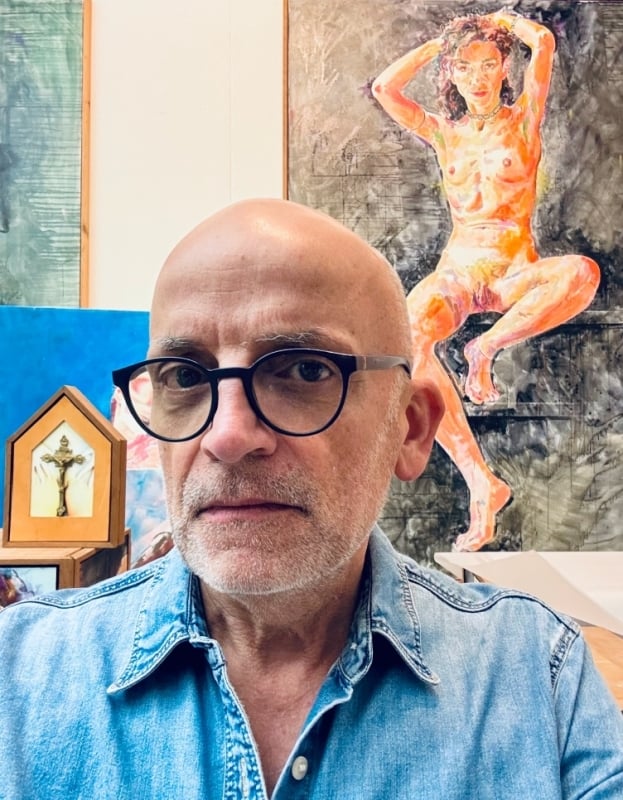
Fig.1 Lawrence Buttigieg, 2026
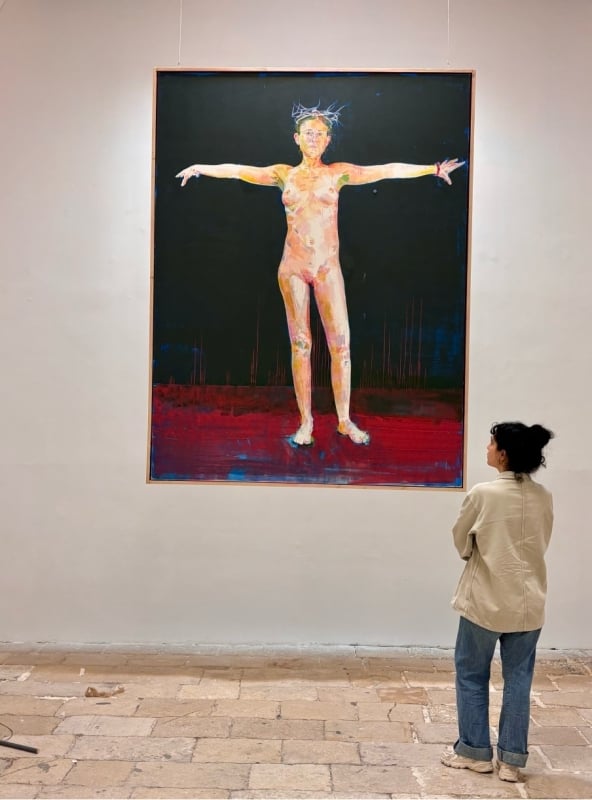
Fig.2 Painting in picture is Cruciform, 2025, oil on canvas, 250cm x 190cm
What prompted you to position desire as the foundational thread of your creative practice?
DESIRE & ITS EXCESS functions as a conceptual evolution of my 2017 exhibition, namely Sacred | Profane, which interrogated the baseline alterity underlying my relationship with the female subject. In this subsequent project, my focus shifts directly onto desire itself — analysed here as a fluid mental state rooted in Otherness, activated by presence, and inherently relational.
In my practice, this psychological state is consistently catalysed by the female subject, her physical and psychic presence carving out a dedicated space for creative exploration. Desire in this context is far from static; it circulates, destabilises, and persists, actively driving both the fabrication of the artworks and the affective currents that extend to the audience.
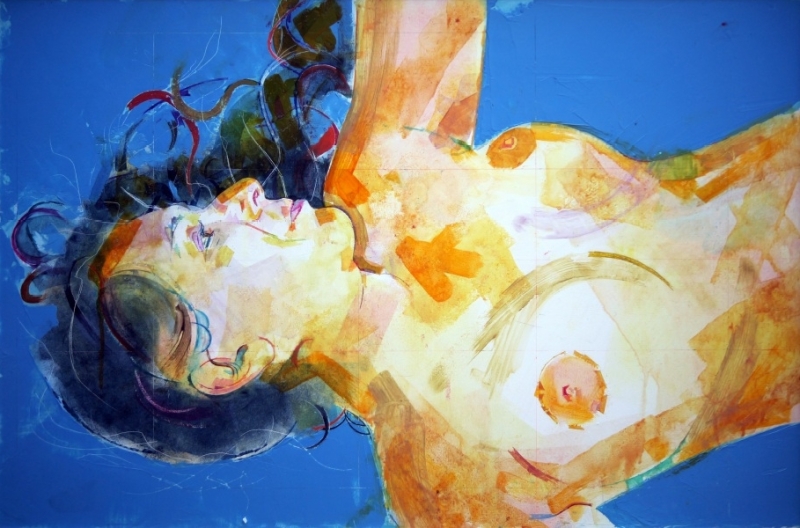
Fig.3 Lawrence Buttigieg, Kelly, 2024, oil on canvas
Your creative output spans painting, box-assemblages, and cinema. In what ways do these distinct mediums address different elements of physical embodiment and longing?
Each of these media articulates a distinct dimension of corporeality and longing; however, they all operate within the primary encounter between myself and the female subject as the Other. Painting registers desire in an immediate, sensuous manner through tactile mark-making, the rendering of flesh, and the pursuit of human likeness. Yet, the painted figure is left deliberately incomplete — suspended in a vacuum between material reality and fantasy. This preserves a state of longing rather than offering resolution, echoing Lacanian theories of desire as structurally unfulfilled.
The box-assemblages, with their body-part simulacra, materialise desire in three dimensions; their creation demands physical proximity, handling, and spatial interaction. The fragmented, gazing figures within, evoke an innate impulse to preserve or fetishise, yet they systematically resist total closure. Drawing on the philosophies of Jean-Paul Sartre, Judith Butler, and Emmanuel Lévinas, these artefacts render the tension of alterity visible — the Other is tangibly present yet entirely irreducible.
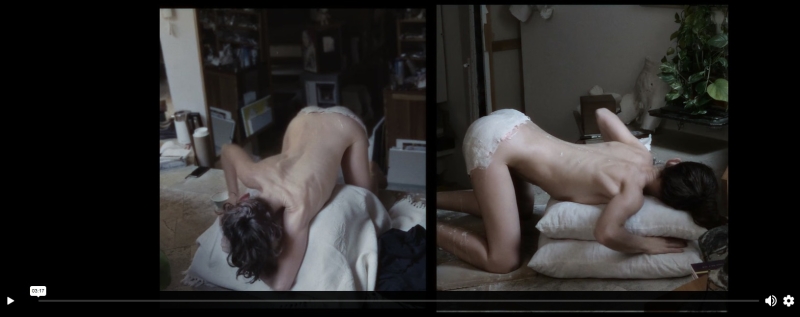
Film, such as Pros-thesis [2020, 3min 38sec] and SACRUM II [2026, 3min 17sec], introduces temporality, duration, and sequence, thus allowing desire to unfold through anticipation, delay, and repetition. While physical movement disrupts the viewer's unilateral control, bringing ethical dimensions to the forefront, fantasy supplements physical absence just as profoundly as it accentuates presence. Together, this triad of media maps the diverse modalities of desire, such as seeing, touching, waiting, and persisting.
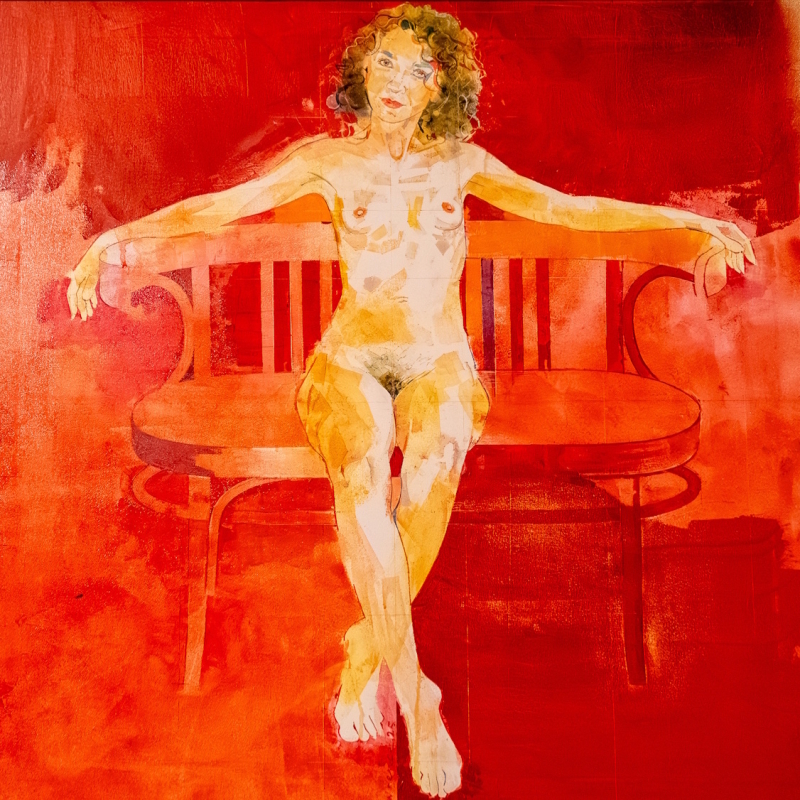
Fig.4 Idoia, unfinished, oil on canvas, 60cm x 60cm
Could you trace the trajectory of your box-assemblages. How did this develop out of your background in architecture and academic research?
My formal architectural training and research-driven methodology directly structured the development of the box-assemblages. Architecture instilled in me a deep consideration for enclosure, framing, and spatial logic — specifically how physical form dictates human perception, movement, and meaning. The box functions essentially as a miniature, albeit complex, room, strictly organising sight lines, proximity and access, while heightening relational and ethical friction.
These artefacts operate as active sites of inquiry rather than purely expressive objects. Every decision regarding material, scale, and iconography is informed not only by aesthetic judgement but also, and more importantly, by psychoanalytic and philosophical research. Over time, the works have transitioned from formal, structural objects into intricate, highly affective erotic spaces. Their represented bodies, that of the female subject and, at times, also my own, actively press against and push boundaries or simply but boldly return the gaze of the viewer. Ultimately, the box-assemblage serves to mediate critical borders — inside and outside, visibility and concealment, proximity and distance, and the circulation of desire between the studio, the artwork, and the observer.
![Me [Kelly], 2024, oil on canvas, 50.5cm x 65.5cm Lawrence Buttigieg](https://media-01.imu.nl/storage/shungagallery.com/2236/me-kelly-2024-oil-on-canvas-50-5cm-x-65-5cm-lawrence-buttigieg-800x602.jpg "Me [Kelly], 2024, oil on canvas, 50.5cm x 65.5cm Lawrence Buttigieg")
Fig.5 Me [Kelly], 2024, oil on canvas, 50.5cm x 65.5cm
What motivated you to introduce moving images into your study of desire, and how does motion transform the power dynamic between looking and being looked at?
Cinematography emerged as an organic extension of my investigation into human longing. Unlike painting or the box-assemblages, film introduces movement, temporality, and duration — qualities that directly mirror the lived, unstable experience of desire.
Whereas desire naturally unfolds through anticipation, delay, and repetition, physical movement intensifies the inherent instability of the gaze, transforming the act of looking into a reciprocal, time-based exchange. The filmed subject actively modulates her own presence — even by the act of withholding and returning looks — which complicates traditional power dynamics and highlights the underlying ethical tension. Film also accommodates the realm of fantasy, where imagination compensates for physical absence. Through these time-based dynamics, desire is experienced as an ongoing, deferred, and relational phenomenon, reflecting its structural unfulfillment and the impossibility of complete mastery over the Other.
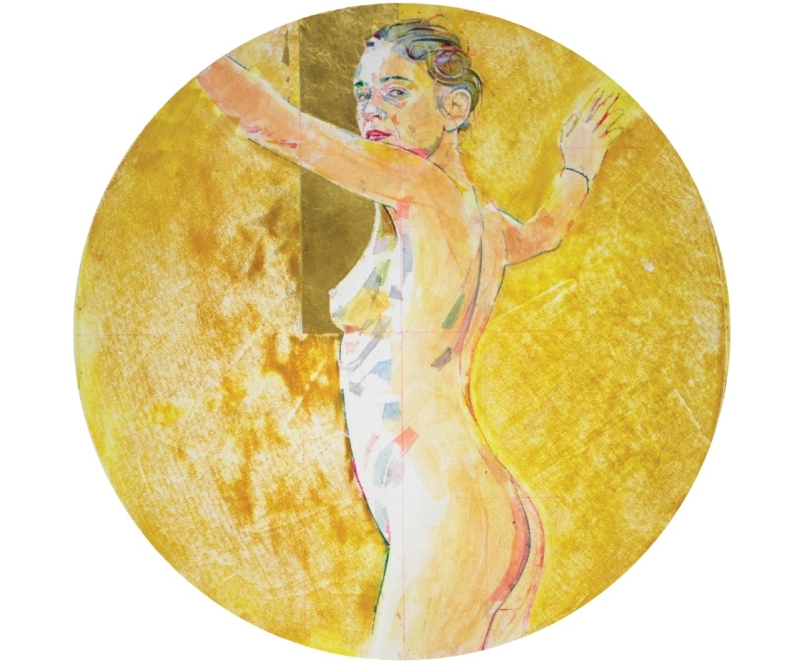
Fig.6 Cesca 3, 2025, oil on canvas board, 40cm
DESIRE & ITS EXCESS is heavily informed by psychoanalysis and feminist critique. How did these theoretical lenses alter your treatment of the gaze and the female nude?
Feminist theory and psychoanalysis allow work to approach the female nude not as a passive object of consumption, but as a site of complex psychic, relational, and ethical networks. Psychoanalysis reveals that desire is inherently unresolved; consequently, the nude cannot function as a site of viewer dominance or possession. The female body remains perpetually suspended between presence and absence, materiality and fantasy.
Here, feminist theory — specifically the writings of Judith Butler and Luce Irigaray — foregrounds the strict ethics of the gaze. The nude returns the look, withdraws from view, or exceeds the physical frame, creating a shared, embodied encounter rather than a unilateral act of visual control. Emmanuel Lévinas’s concept of alterity reinforces this framework, establishing that the female subject demands ethical recognition. While erotic looking is acknowledged, it is intentionally complicated, thereby producing artworks where desire circulates both ethically and relationally.
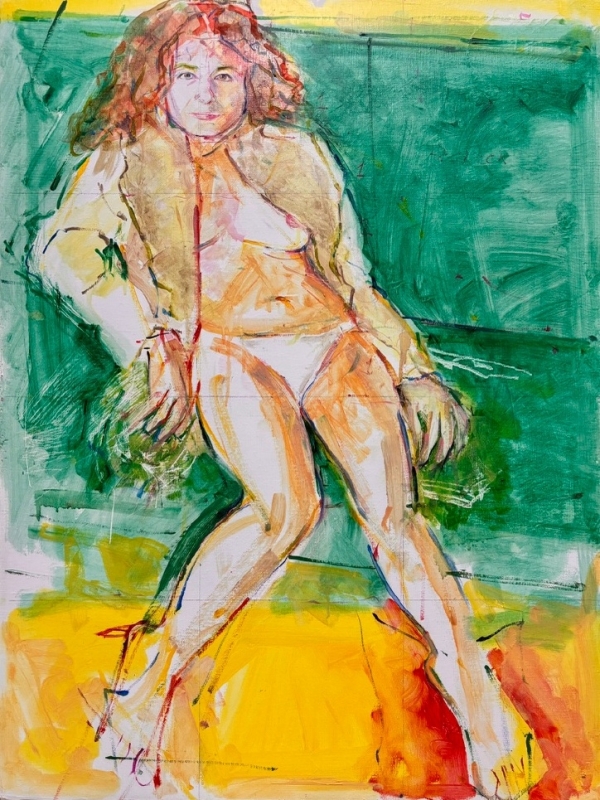
Fig.7 White slip and gown, 2025, oil on canvas, 80cm x 60cm
Jacques Lacan’s premise that “Desire is the desire of the Other” underpins this body of work. How does this manifest itself within your studio environment and the resulting artwork?
Within the studio environment, desire arises strictly through the encounter. The female model is never conceived as an object to possess, but as an absolute Other whose difference simultaneously attracts, resists, and de-centres my own subjectivity. Desire is continuously mediated by Cesca’s gaze, her physical presence, and the imagined recognition she grants. Fantasy steps in to supplement the unknowable aspects of her own desire.
The resulting artworks materialise this tense threshold between desire and inaccessibility. Figures across the paintings, box-assemblages, and films return the viewer's attention or exceed the frame entirely, implicating the audience as desiring subjects. Desire circulates freely between artist, subject, artwork, and observer without ever fully settling, reflecting its relational, ethical, and ongoing nature.
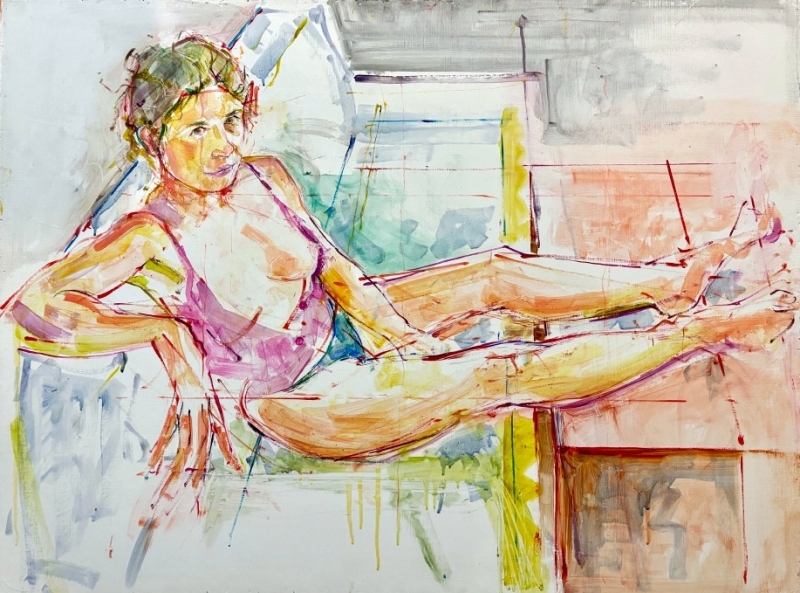
Fig.8 The Couch, 2026, oil on canvas, 60cm x 80cm
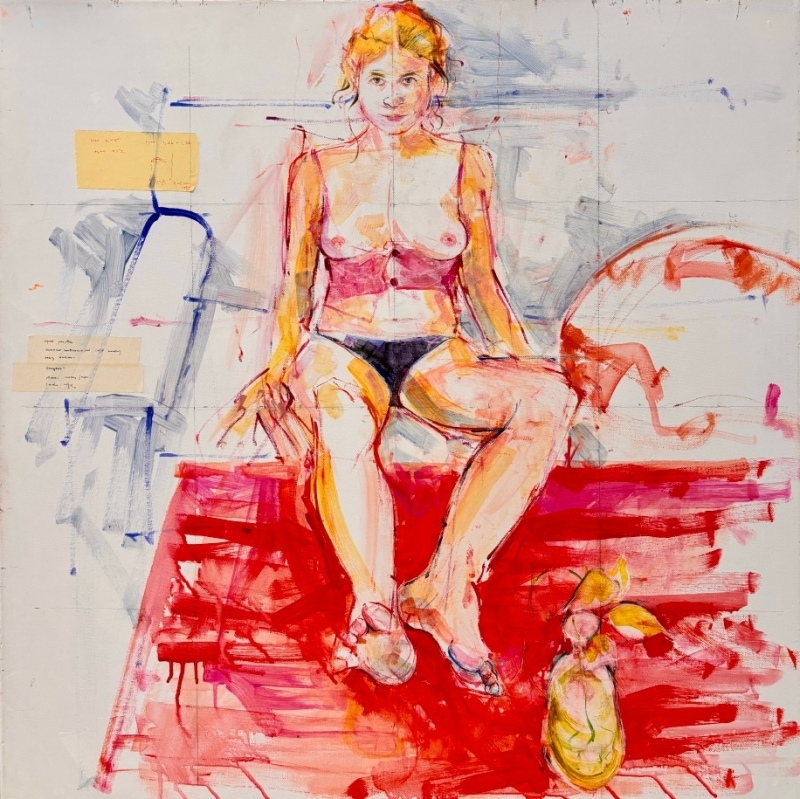
Fig.9 Devil's Ivy, 2026, oil on canvas, 70cm x 70cm
What is your process for balancing the delicate tension between eroticism and ethical responsibility when depicting the female form?
Eroticism and ethics are completely inseparable in my practice. While erotic desire springs from looking, proximity, and imagination, it must be ethically mediated through trust, consent, and continuous dialogue. The female subject is approached as an Other whose fundamental difference cannot be assimilated or overwritten. She retains the agency to withhold her presence, gaze back, or exceed the frame, ensuring that looking becomes a negotiated encounter rather than an exercise in unilateral control. This ethical commitment begins in the live studio relationship and extends directly into the final artwork, allowing eroticism to be shared and mutually acknowledged. Desire remains productively unstable; the body is alluring, yet because it maintains its own distinct agency, it actively resists objectification while engaging the viewer affectively.
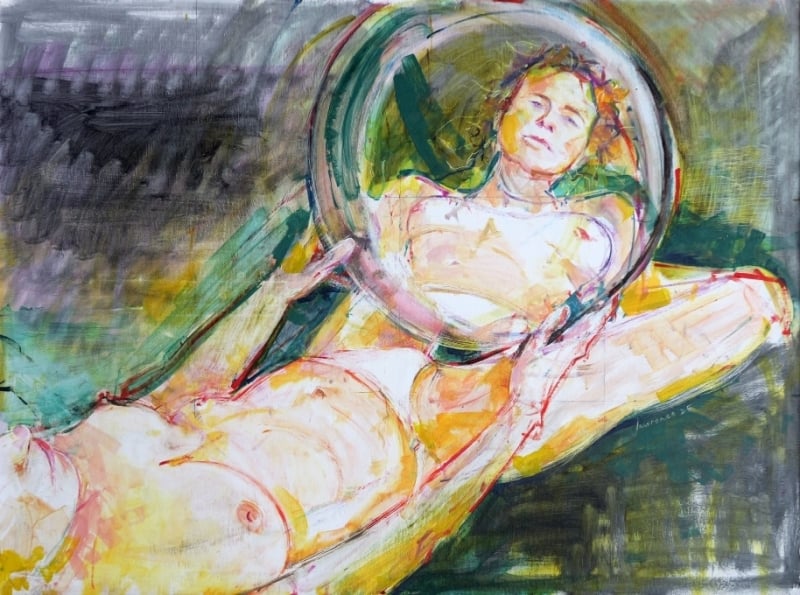
Fig.10 Round Mirror and Green Sofa, 2025, oil on canvas, 60cm x 80cm
The curatorial note describes sight as a ‘shared field.’ How do you orchestrate this sense of visual reciprocity between yourself, the model, and the audience?
I view the studio as a canvas where vision is inherently relational. Reciprocity emerges through sustained attention to the ways in which the artist and the model mutually perceive, respond to, and affect one another. I choreograph this exchange by fostering a foundational environment of trust, consent, and open dialogue, allowing gestures, glances, and bodily presence to circulate freely. Cesca is an active participant, directly shaping the ways she appears, and how she chooses to withhold or return the gaze. This shared attention transforms the act of seeing into a co-created experience where the boundaries between observer and observed blur.
The artworks themselves extend this live choreography directly to the gallery visitor. Viewers are seamlessly implicated in the field of vision, invited to physically navigate the gallery space, linger, and adjust their own gaze. In this sense, the shared field expands outward, creating a triadic exchange where desire, ethics, and embodiment circulate continuously between artist, subject, and observer.
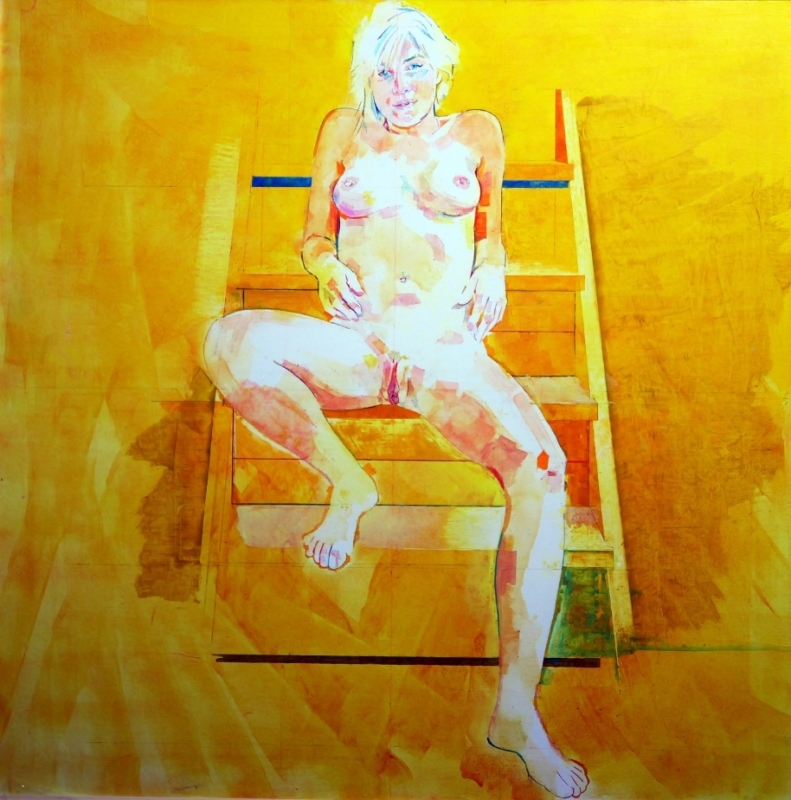
Fig.11 Sacha, 2025, oil on canvas, 60cm x 60cm, unfinished
Would you describe the characterisation of the gaze in your work as something tactile? And if yes, how do you pull the viewer into that tactile, sensory exchange?
Yes, I understand the gaze as fundamentally tactile, drawing on Maurice Merleau-Ponty’s concept of vision as ‘flesh,’ where looking constitutes a form of physical contact that binds the observer and the observed. In the studio, the gaze is entirely reciprocal — Cesca and I are intertwined in perception, and looking is already an embodied, affective act. In the artworks comprising DESIRE & ITS EXCESS, this tactile quality is enacted through different sensory registers. The box-assemblages and body casts invite
proximity and physical movement around the object, making vision a spatial and bodily experience. The paintings evoke touch through surface texture, distinct marks and brushstrokes, tracing the body’s gestures and inviting the eye to graze across the canvas as though moving across skin. And film adds a temporal tactility, requiring the viewer to follow a specific movement, rhythm, and duration, producing a time-based form of touch.
Across all media, the gaze is never one-sided. Figures return attention, modulate presence, and unsettle the viewer’s position. Seeing feels like touching; being seen feels unavoidable. This invites viewers into an embodied, sensorial exchange where desire circulates between image, object, and observer, mirroring the relational dynamics established in the studio.
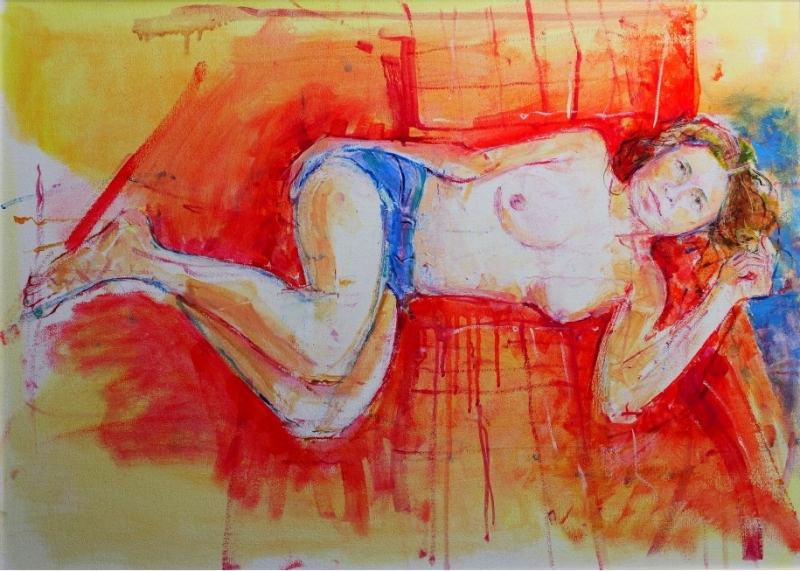
Fig.12 Blue Jeans I, 2024, oil on canvas, 50cm x 70cm
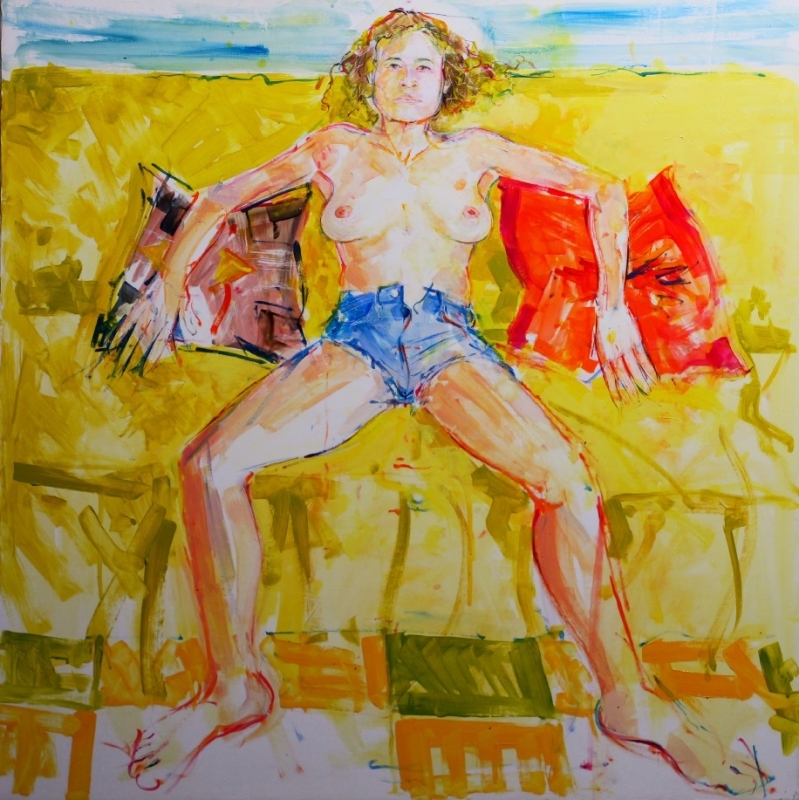
Fig.13 Blue Jeans II, 2024, oil on canvas, 70cm x 70cm
Could you talk about the dynamic you established with your model? In what ways did intimacy and mutual trust dictate the final pieces, and did any moments of friction or unexpected insight change your perspective on desire?
Trust and proximity are the core pillars of the work. Cesca operates as an active collaborator, shaping gestures, glances, and immediate responses. Moments of hesitation, withdrawal, or explicit assertions of autonomy reveal that desire is never unilateral or fully controllable. The revelatory moments occurred when her presence felt intensely intimate yet entirely untouchable, making tangible the Lacanian principle that desire is fundamentally the desire of the Other, but an unattainable Other. Both artist and model are transformed through this process. The resulting artworks become vessels for a relational, multi-dimensional desire, successfully marrying erotic, ethical, and affective dynamics.
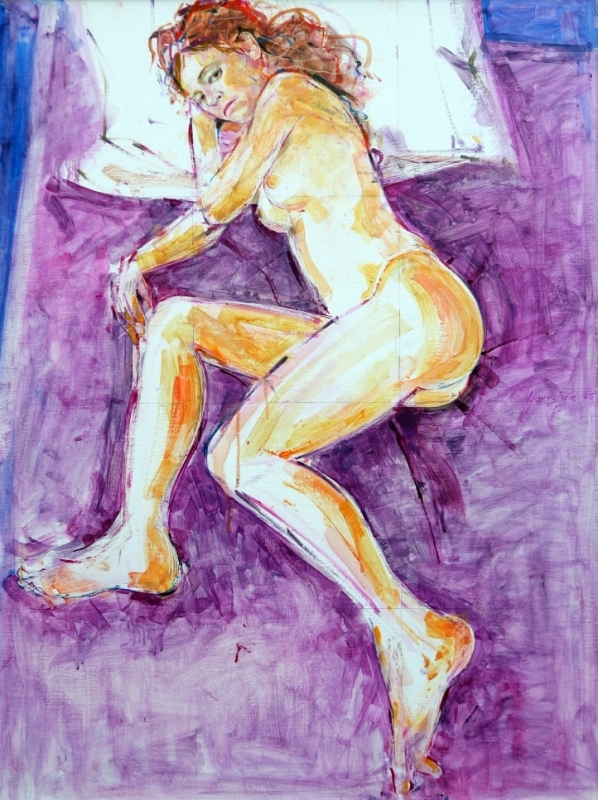
Fig.14 White Pillow, 2025, oil on canvas, 80cm x 60cm
Your doctoral research concentrated on themes of womanhood and alterity. How has your perspective shifted since then, particularly when viewed through the lens of modern conversations on gender and representation?
Sustained engagement with contemporary feminist, queer, and intersectional theories has expanded my understanding of gender beyond fixed, rigid categories. While the female subject remains central to my practice, she now embodies multiplicity, fluidity, and irreducible difference. My work currently places a much heavier emphasis on ethical negotiation, alterity, and the circulation of desire. This shifts the practice to respond directly to contemporary global debates surrounding representation, institutional power, and non-binary or post-human perspectives.
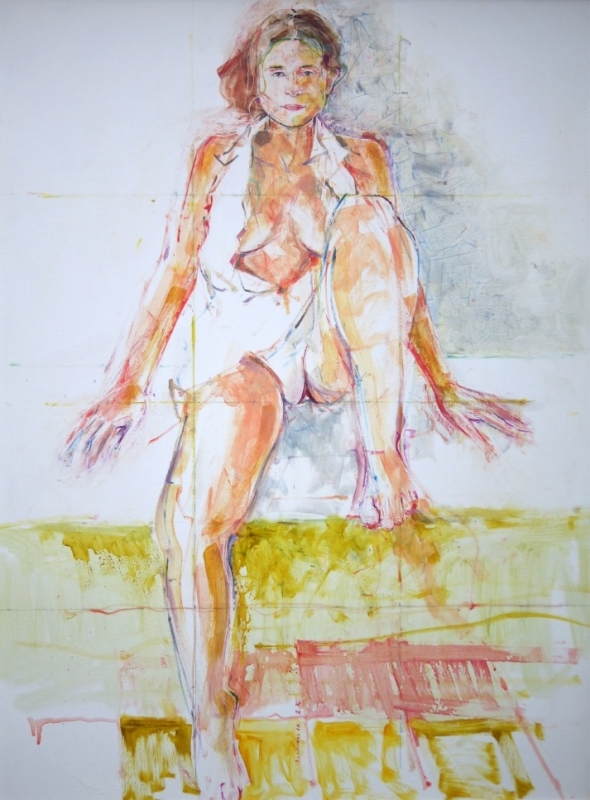
Fig.15 White Dress and Slip, 2025, oil on canvas, 80cm x 60cm
How do you bridge the gap between the sacred and the carnal in your assemblages, especially regarding representations of the feminine and the divine?
Spirituality and sensuality coexist seamlessly within the box-assemblages. Tactile materials evoke the physical reality of the flesh, while strategic framing, iconography, and spatial resonance introduce transcendent qualities. The feminine is positioned as simultaneously immanent and exalted — deeply rooted in the body, yet highly suggestive of ideals, archetypes, or divine otherness.
Desire operates precisely at this intersection — it is bodily and affective yet it gestures toward the intangible, the reverent, and the ethically significant. This reflects the constant, productive tension between body and spirit, proximity and transcendence.
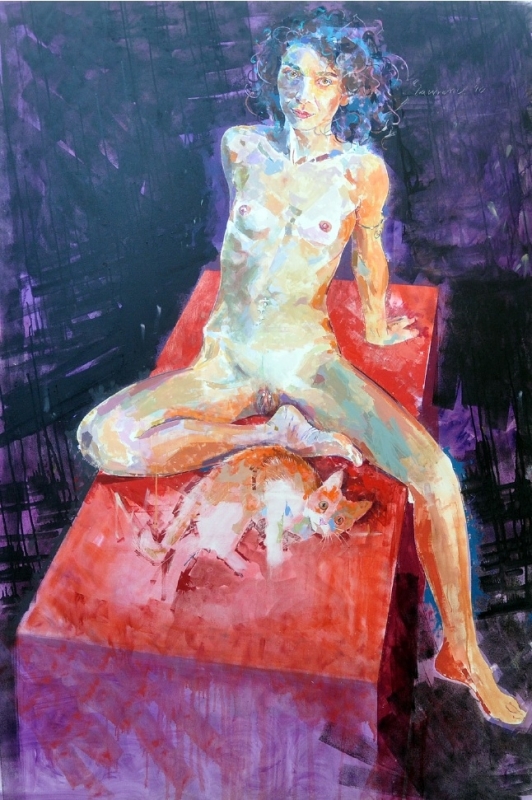
Fig.16 Idoia and Sari, 2008, oil on canvas, 195cm x 130cm
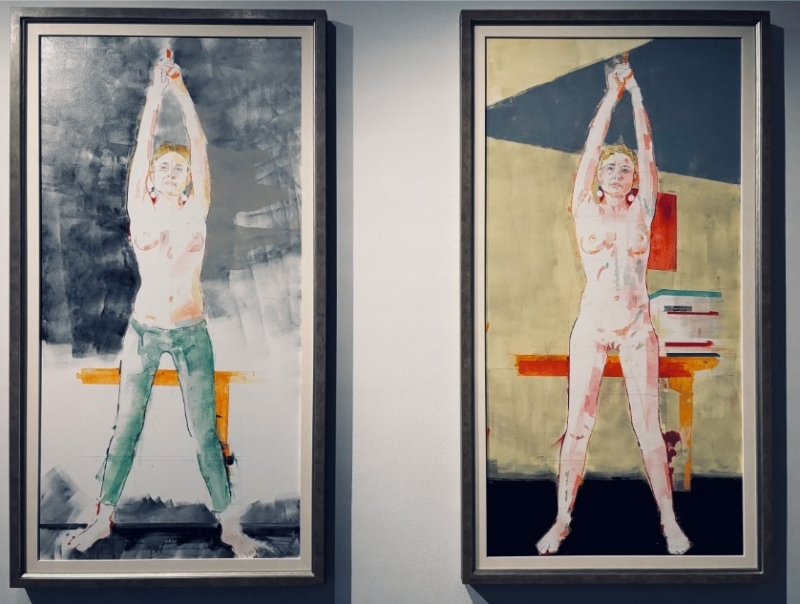
Fig.17 Orange Strap I & II, unfinished, oil on canvas, 120cm x 60cm
What was the core intellectual or emotional impression you wished your visitors would take away with them from DESIRE & ITS EXCESS?
I hope visitors left with a heightened, conscious awareness of desire as an unsettled, ethically charged, and relational force. Emotionally, I wanted them to feel the distinct tension of looking and being looked at — navigating waves of attraction, hesitation, and intimacy. Intellectually, my goal was to prompt them to reflect on how desire circulates ethically and relationally within visual culture, and to ponder the intricate interplay of eroticism and alterity. Visitors were meant to walk away recognising that desire is never singular, always mediated, and profoundly generative.
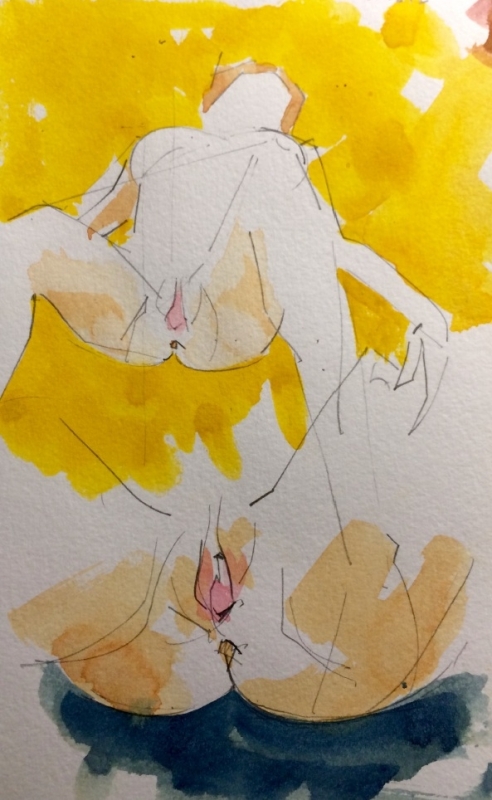
Fig.18 Frontal View, pencil and watercolour on paper
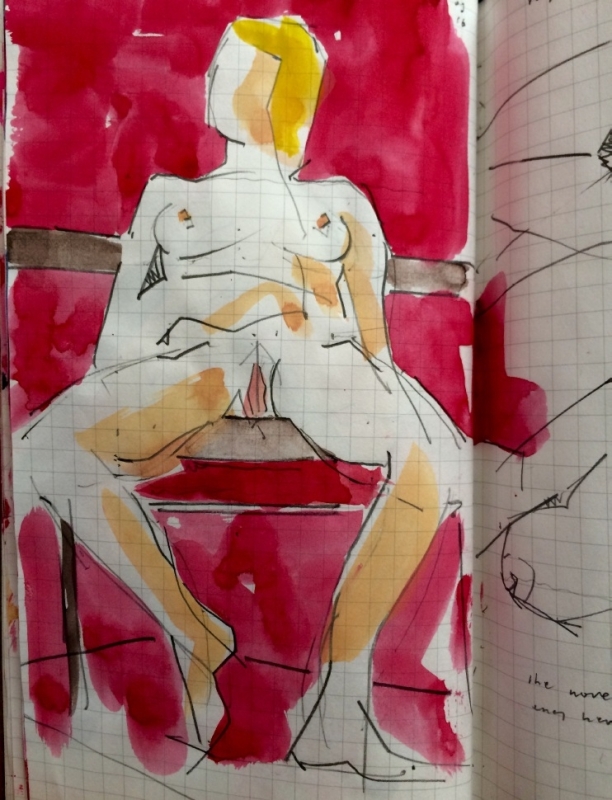
Fig.19 Frontal View, pencil and watercolour on paper
How do you envision this exhibition impacting broader dialogues around visual culture and gender, both locally within Malta and on an international stage?
The exhibition brings the ethical and relational dynamics of representing the female body directly to the forefront. Locally, it engages with evolving Maltese debates surrounding gender, representation, and visual culture.
Internationally, it dialogues with global discourses on the mechanics of the gaze, alterity, and ethical representation. By combining painting, box-assemblage, and cinema, the project highlights multiple concurrent approaches to desire, embodiment, and power. This effectively situates contemporary Maltese artistic practice within wider, universal conversations on representation, ethics, and relationality.
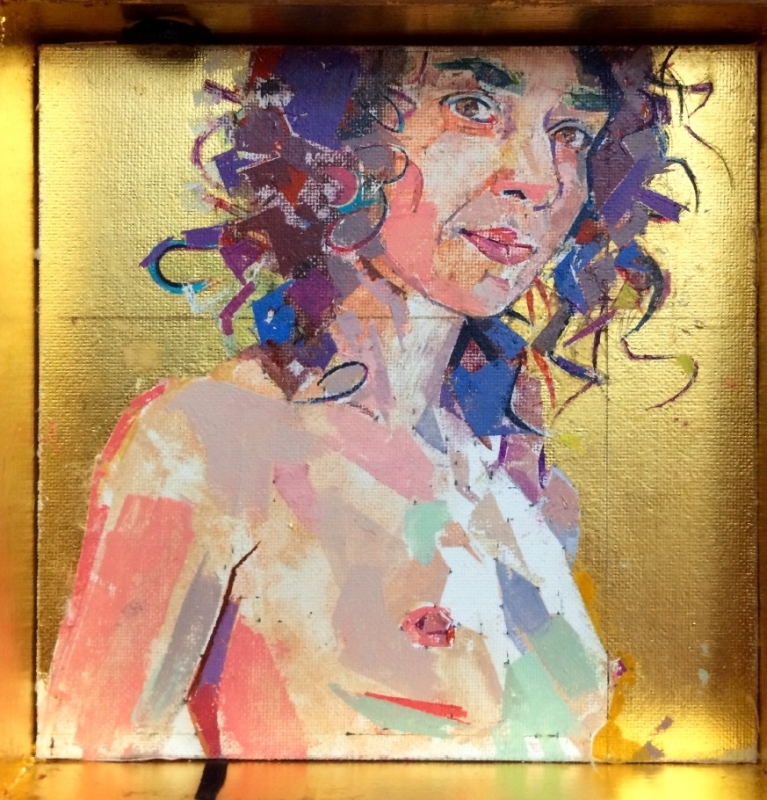
Fig.20 Reliquary of Idoia, 2011
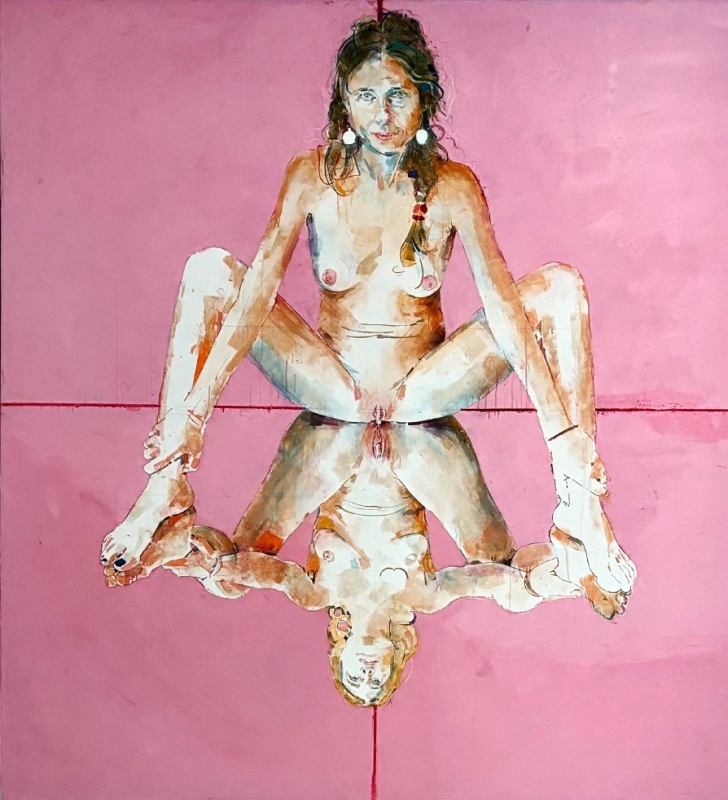
Fig.21 On a Mirror, unfinished, oil on canvas, 200cm x 190cm
What do you hope lingers in the minds of the audience long after they have left the exhibition space?
The exhibition ultimately encourages deep reflection on the circulation of desire, reciprocity, and alterity across bodies, physical spaces, and images. Viewers should leave thinking about how the act of looking directly implicates them. It challenges traditional cultural assumptions of possession, mastery, or unilateral control over the art object, leaving a lasting impression of the ethical and affective dimensions of desire.
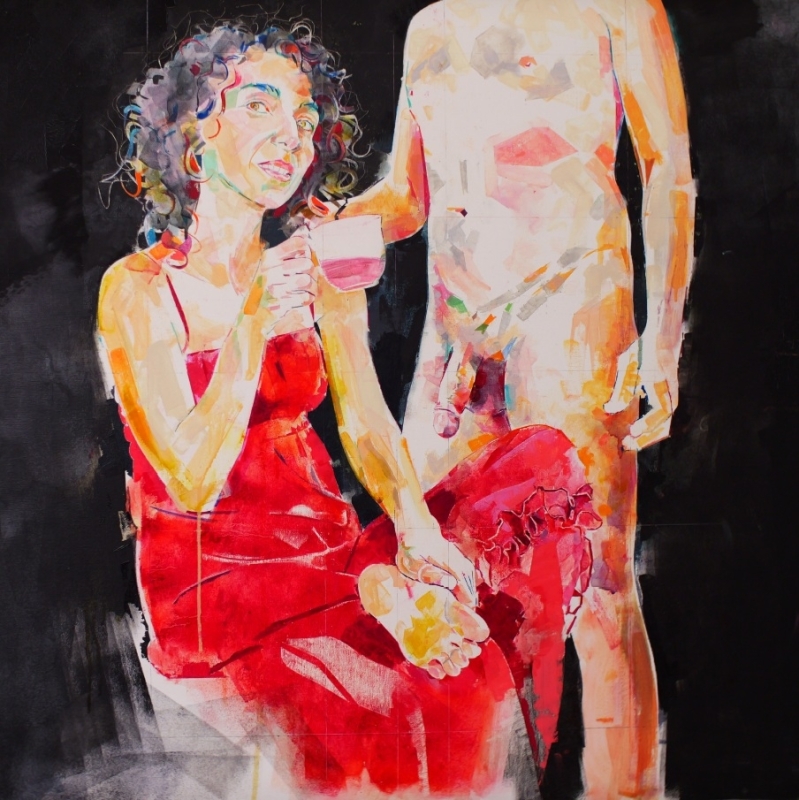
Fig.22 Pomegranate tea_model (Idoia) and Artist, detail, 100cm x 100cm
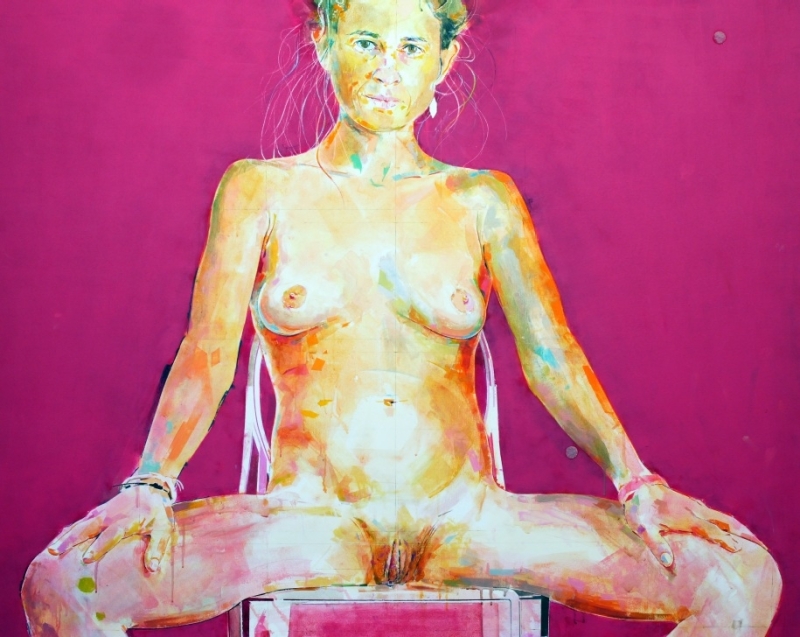
Fig.23 On a Chair, 2023, oil on canvas, 195cm x 130cm
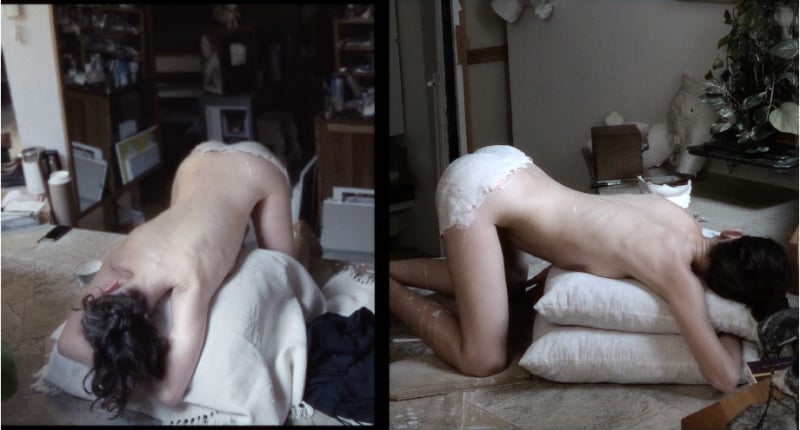
Fig.24 Still from Sacrum II, 00.14
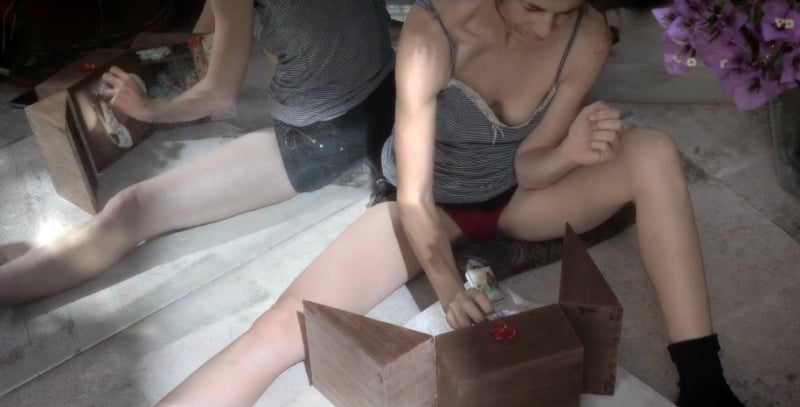
Fig.25 Still from Sacrum II, 00.58
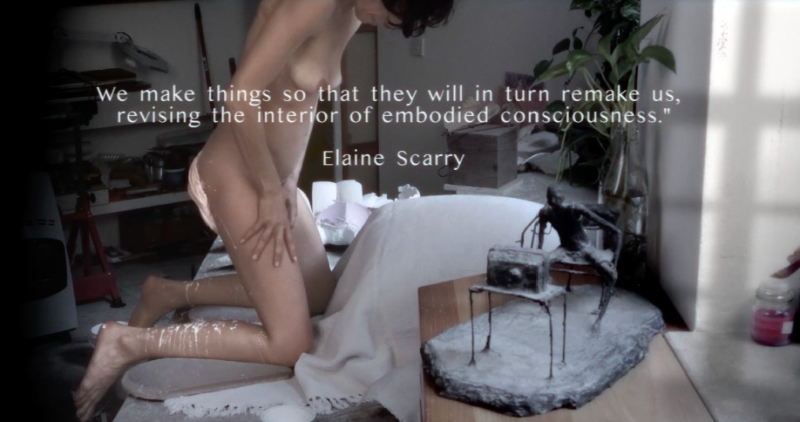
Fig.26 Still from Sacrum II, 01.36
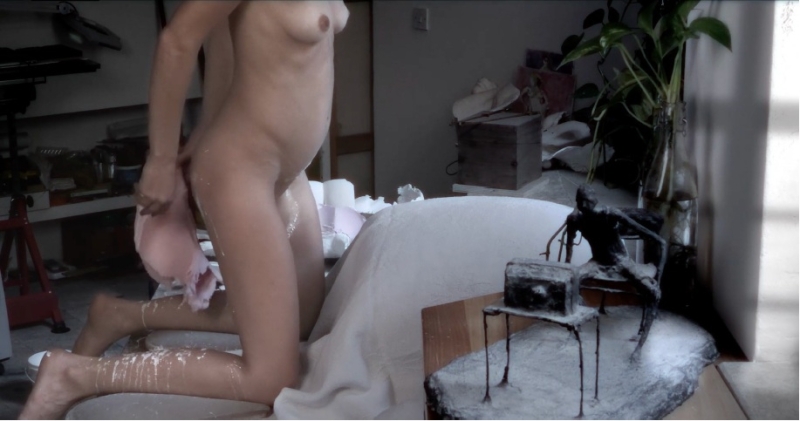
Fig.27 Still from Sacrum II, 01.58
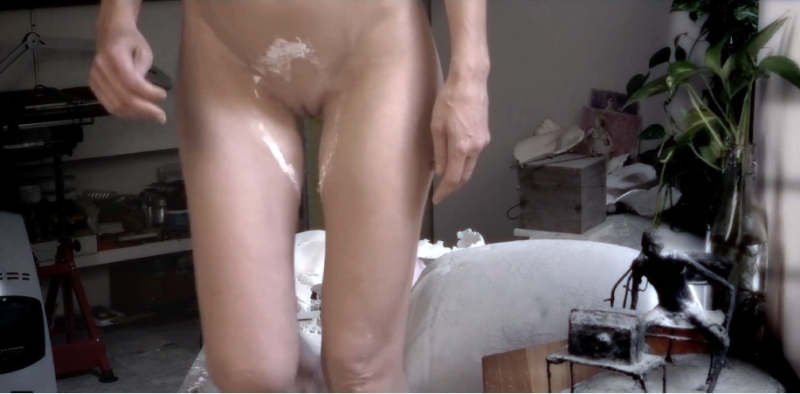
Fig.28 Still from Sacrum II, 02.09
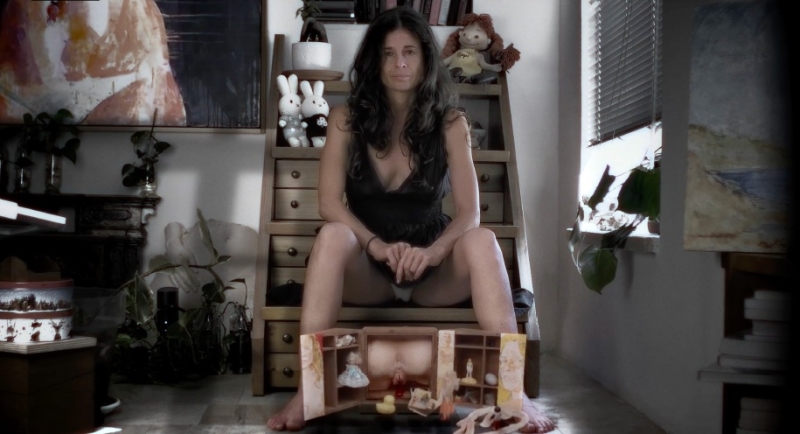
Fig.29 Still from Sacrum II, 02.16
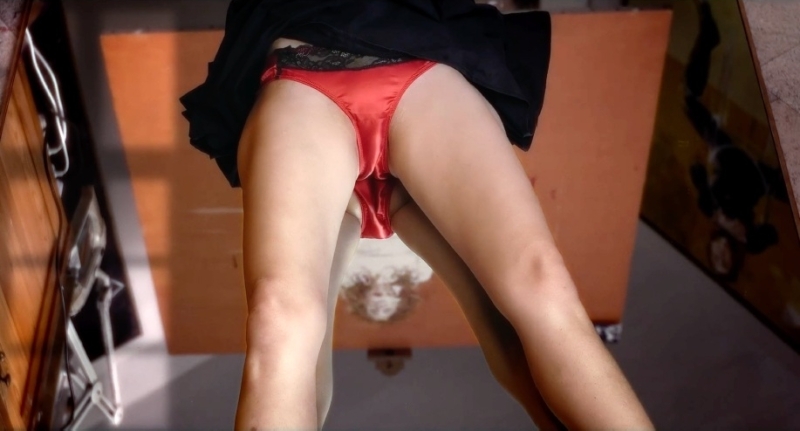
Fig.30 Still from Sacrum II, 02.42
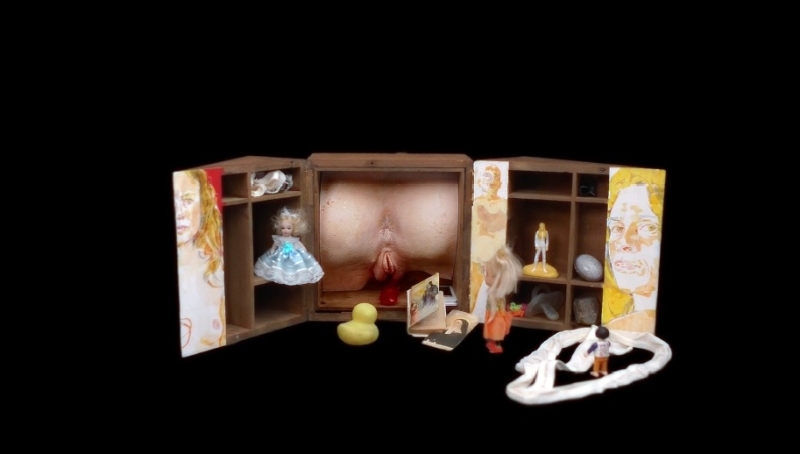
Fig.31 Still from Sacrum II, 02.53
The short film Sacrum II can be viewed here or by clicking the image below...
Click HERE for a publication about Buttigieg's Pros-thesis project or HERE for our conversation with the "The Great Wall of Vulva" creator Jamie McCartney
Lawrence Buttigieg has the following website
Let us know your thoughts about Buttigieg's project DESIRE & ITS EXCESS in the comment box below....!!