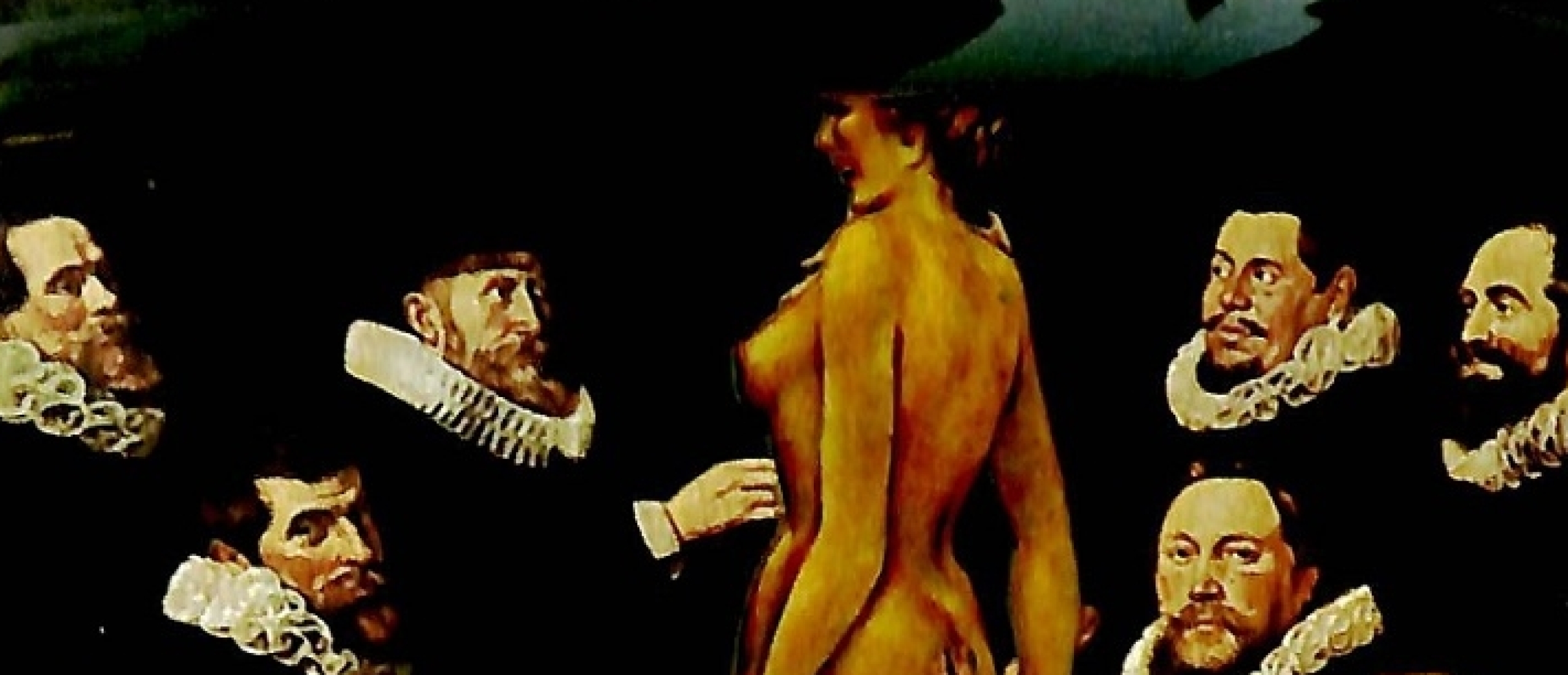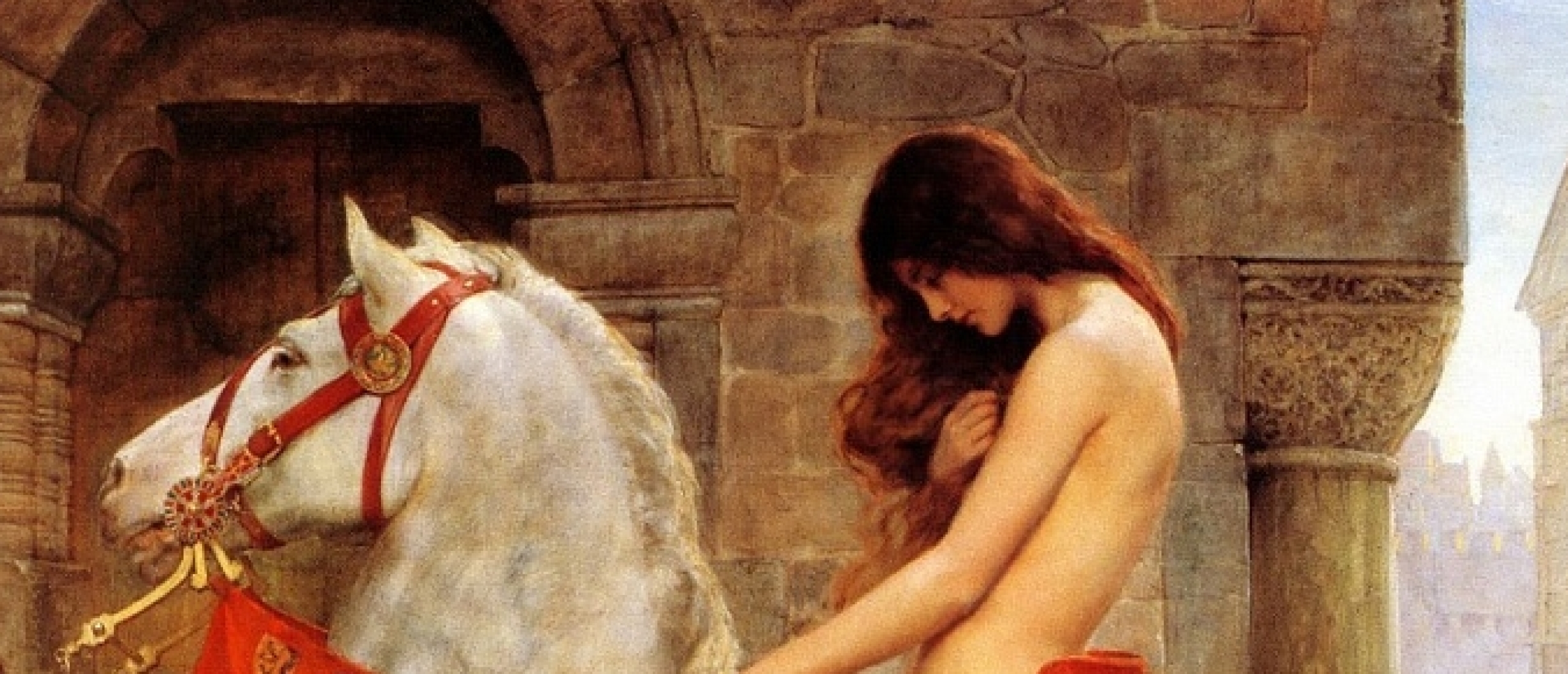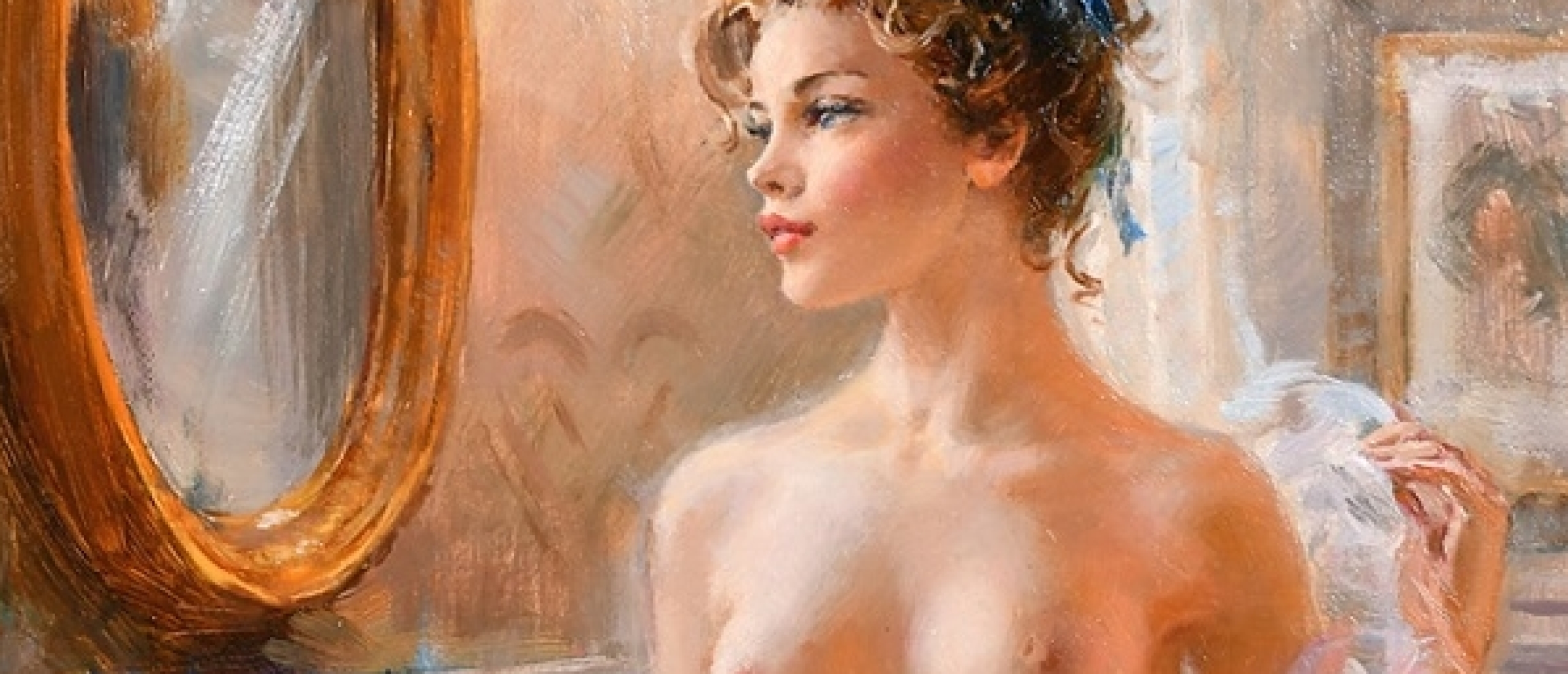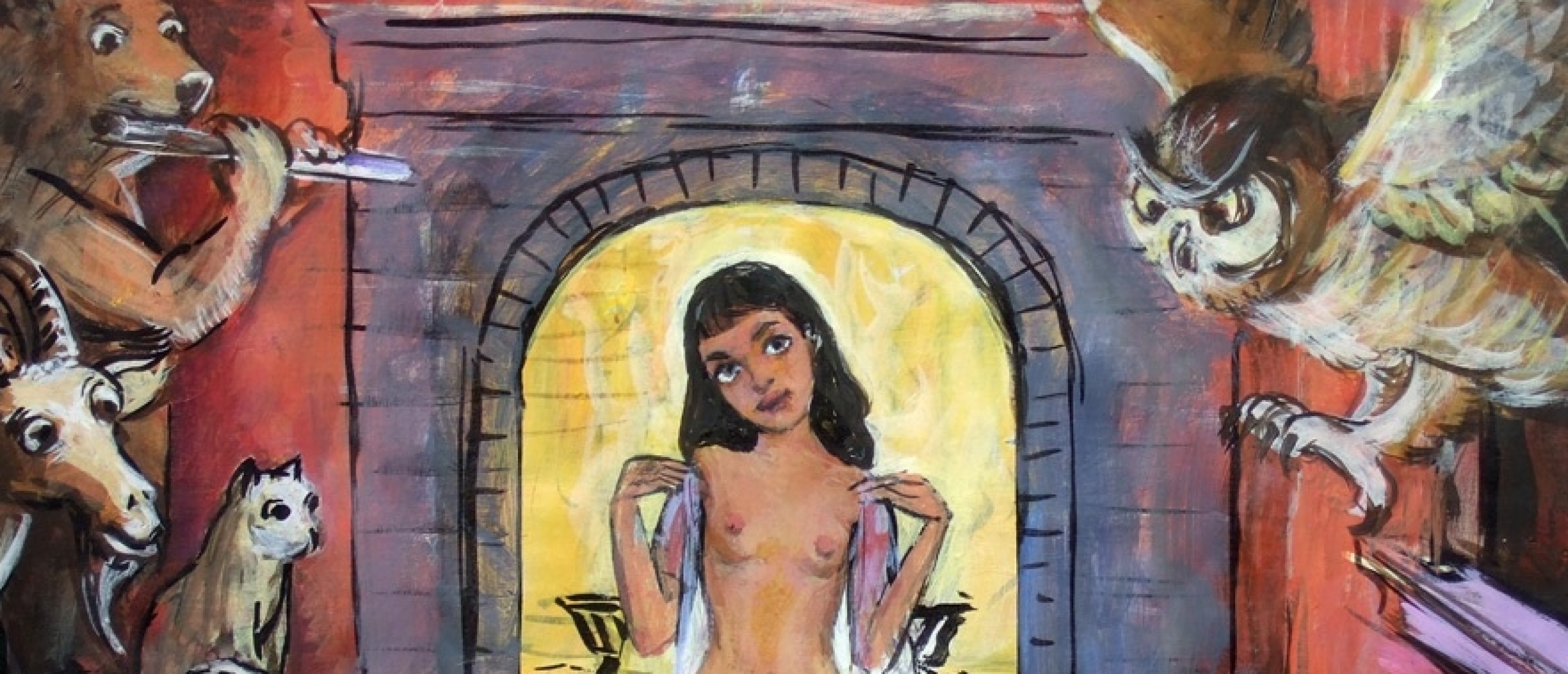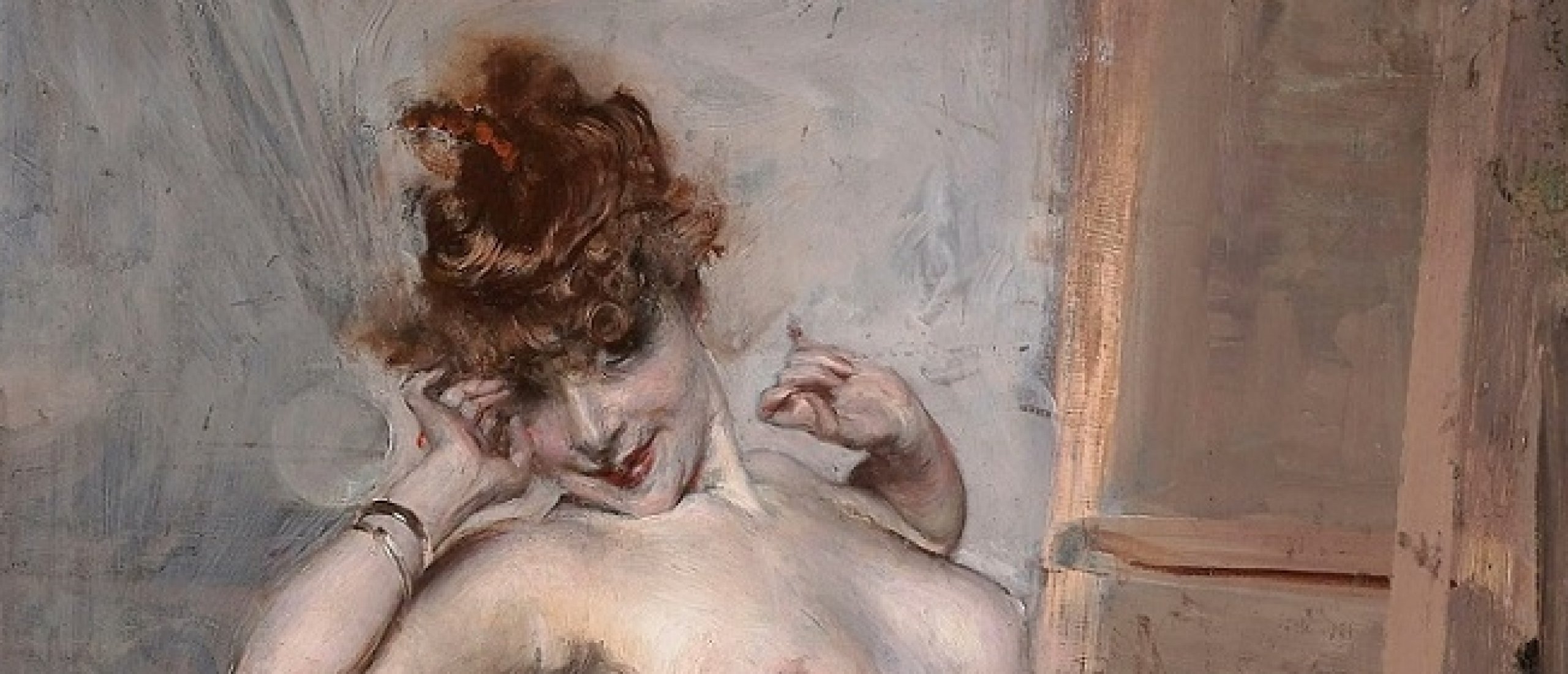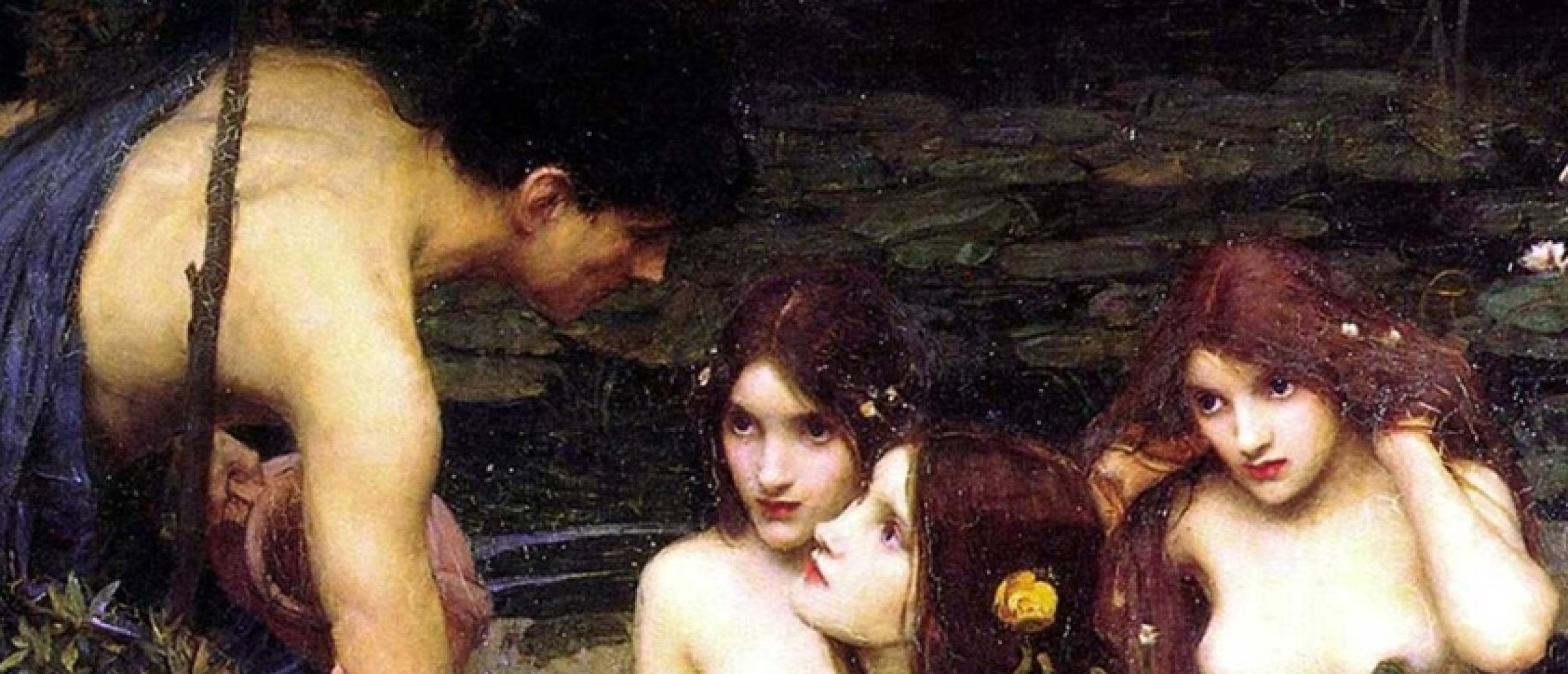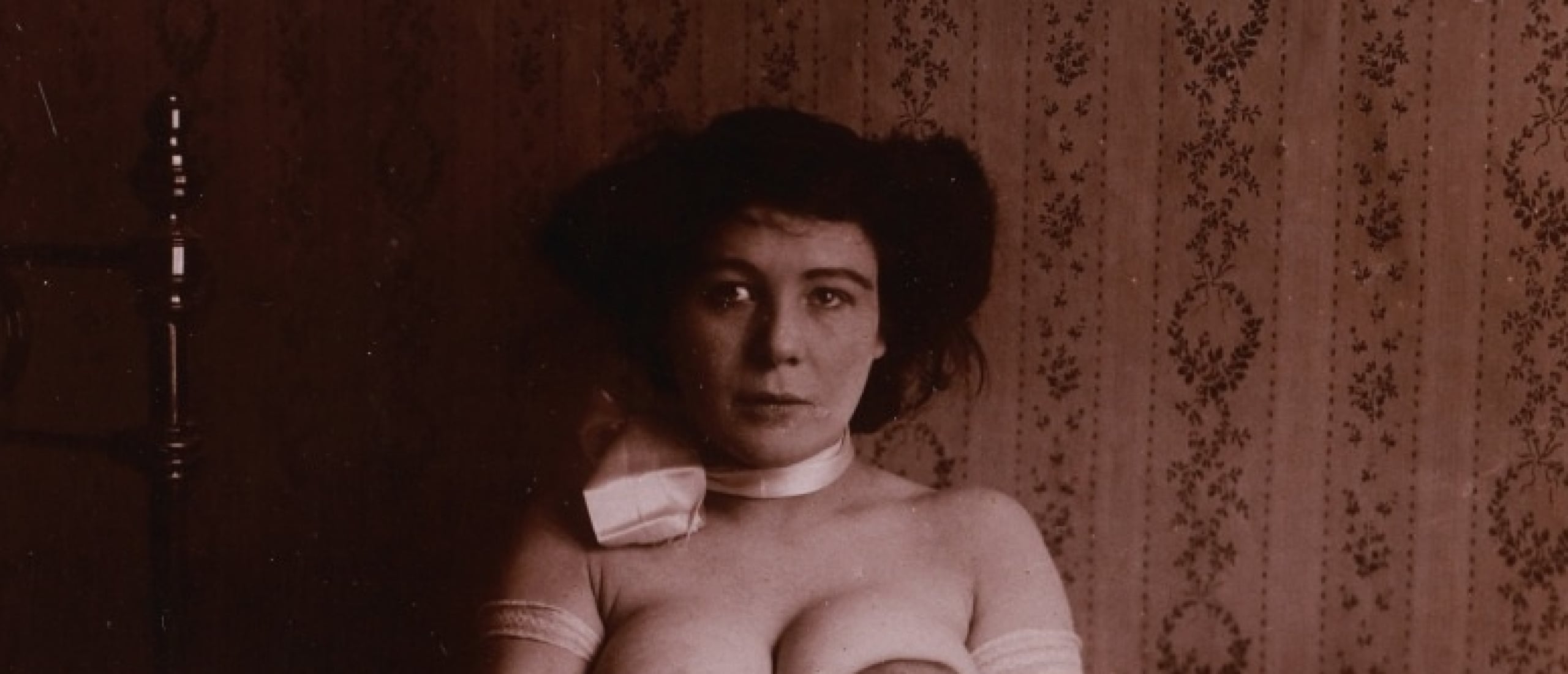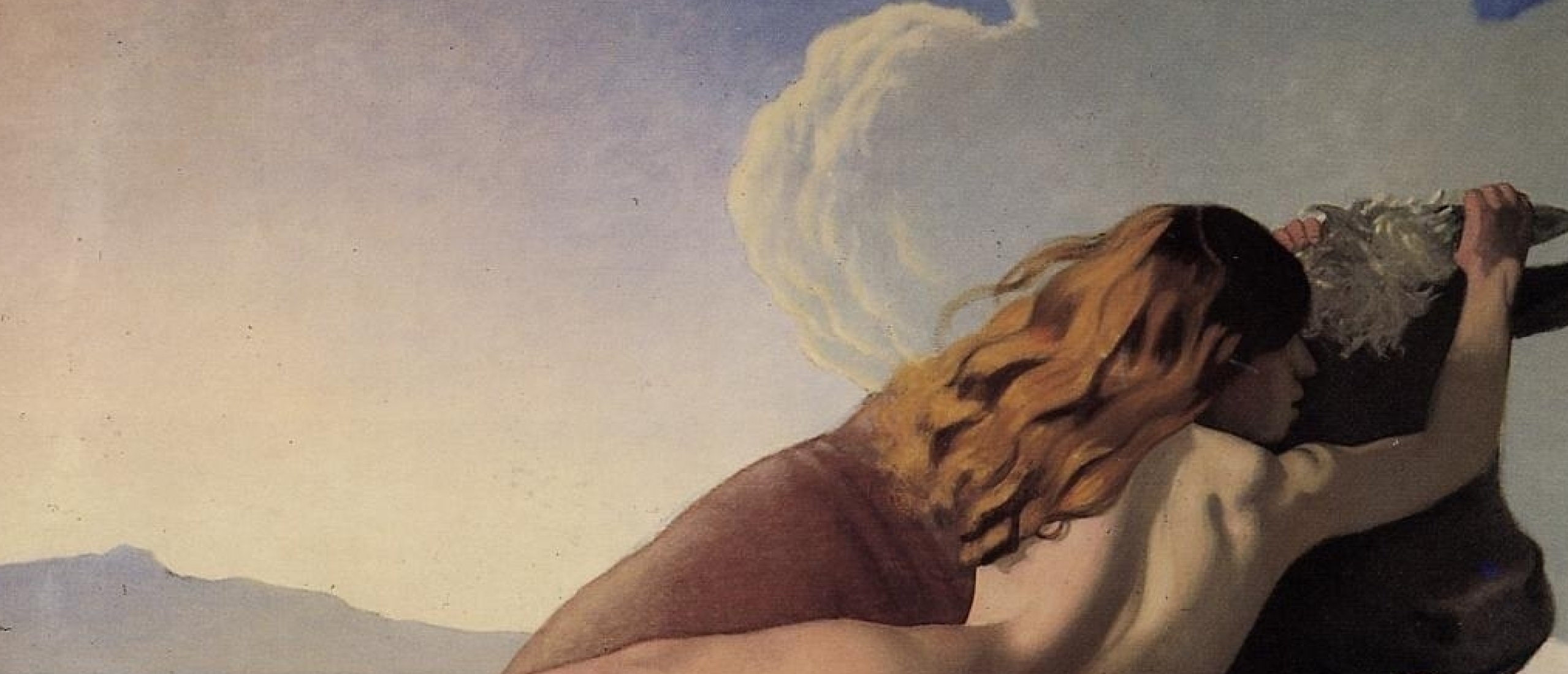
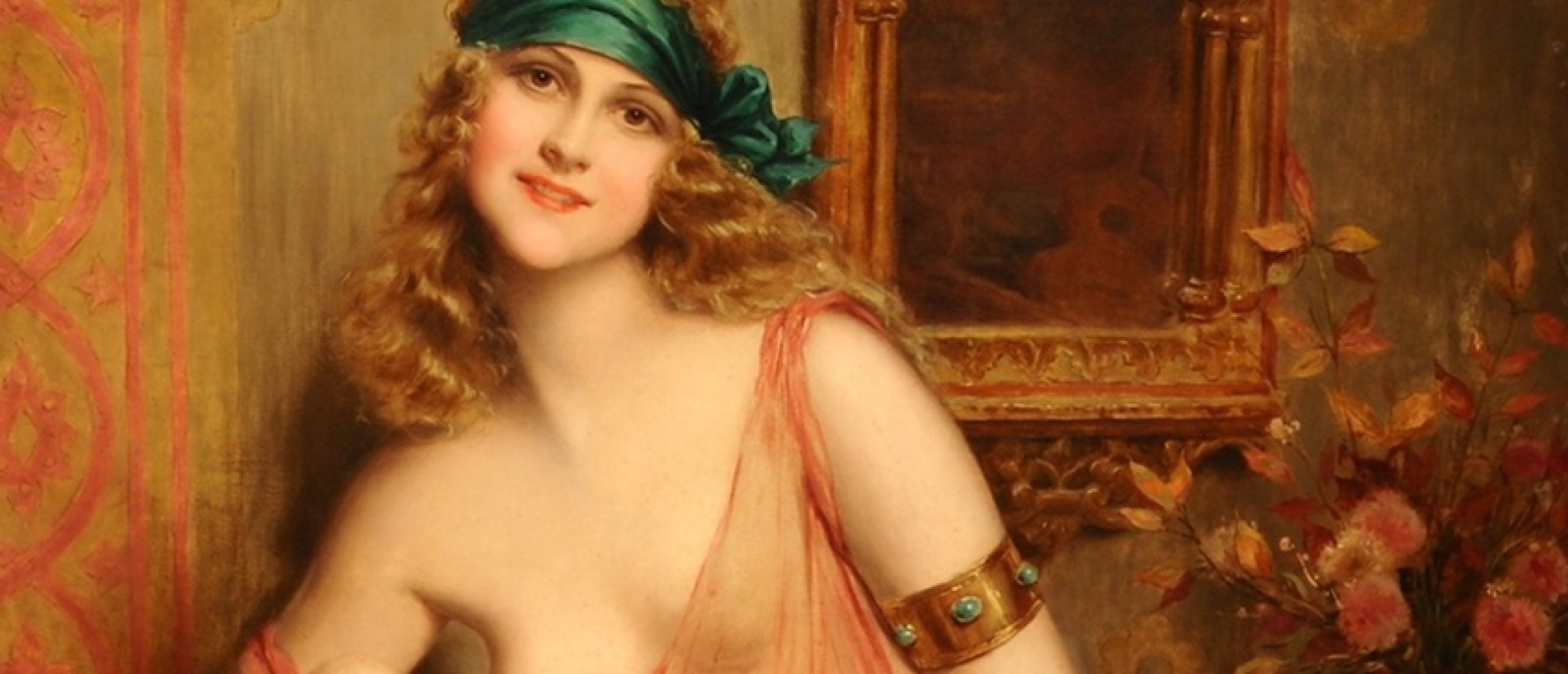

The artistic concept of what I have decided to name ‘half-revealed, half-concealed’ has bloomed in the turn of the century sensual art. Rather than relying on complete nudity or explicit sexual imagery, many late nineteenth and early twentieth century academic painters understood that desire could be generated more effectively through concealment than through exposure. Transparent fabrics, slipping garments, reclining poses, lowered gazes and carefully orchestrated compositions transform the body into an object of anticipation rather than immediate revelation. This quiet sensuality is burning slowly like an incense stick. The paintings I have chosen here shown exemplify this aesthetic strategy, demonstrating how eroticism is constructed through the tension between visibility and obscurity. At the heart of this visual language lies the paradox that what is hidden often becomes more psychologically compelling than what is fully seen. Concealment activates the viewer's imagination, encouraging an active participation in completing what the eye cannot entirely access. The veil, whether literal or metaphorical, becomes not an obstacle to eroticism but one of its primary mechanisms.
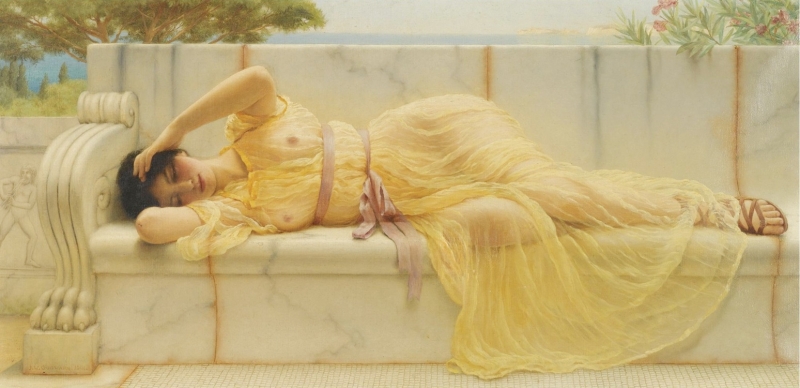
Fig.1 John William Godward, Girl in Yellow Drapery, 1901
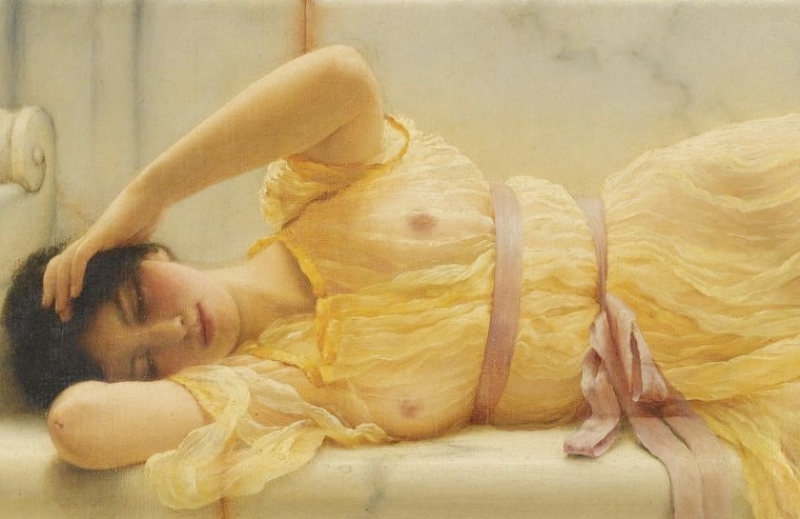
Fig.1a
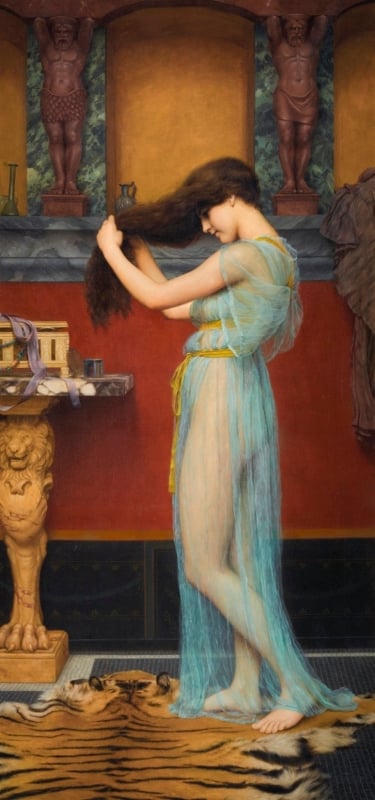
Fig.2 John William Godward, Preparing for the Bath, 1900
Girl in Yellow Drapery
A visually striking example of this motif can be seen in Fig.1., in John William Godward’s painting ‘Girl in Yellow Drapery’. Here the reclining woman dressed in a translucent yellow classical gown embodies this principle with remarkable subtlety. Although much of her body is covered by flowing drapery, the fabric is so delicate that it softly reveals the contours of her breasts beneath it. The transparency never completely abandons modesty; instead, it creates an ambiguous visual state where the body oscillates between concealment and exposure. Her closed eyes and languid pose further remove her from direct engagement with the viewer, suggesting a private moment of sleep or reverie. This emotional distance intensifies rather than diminishes erotic appeal, as the viewer becomes an unseen observer. The marble bench, the classical architecture and the soft Mediterranean light elevate the scene beyond mere sensuality, framing desire within ideals of antiquity, beauty and refinement.
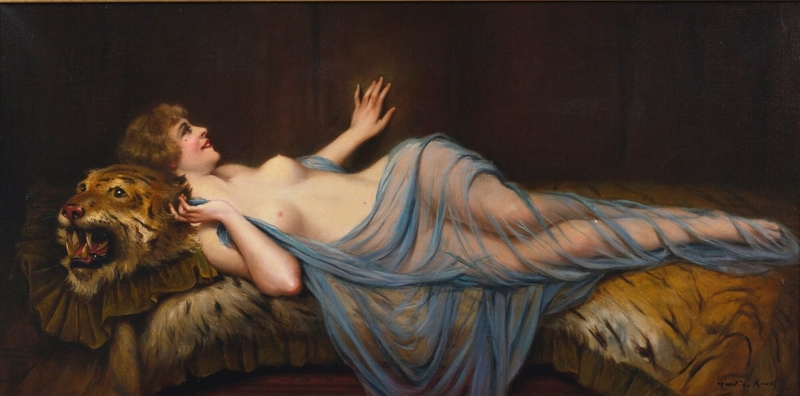
Fig.3 François Martin-Kavel, Femme au Tigre
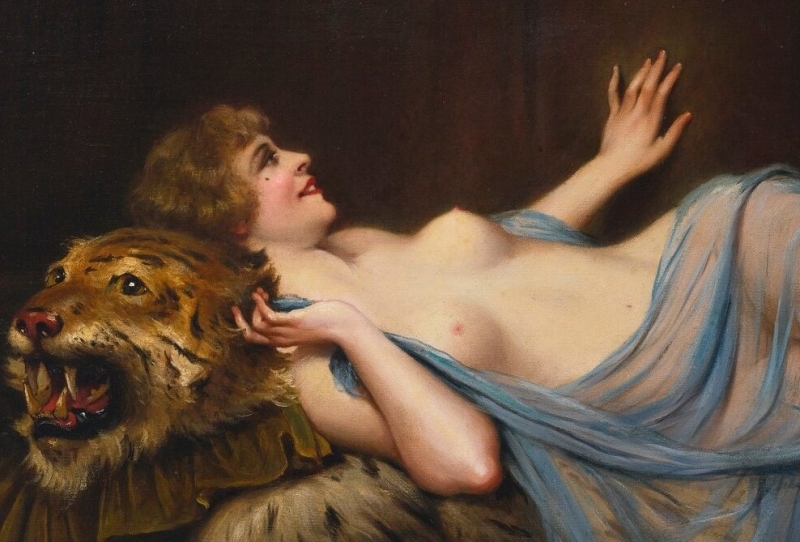
Fig.3a
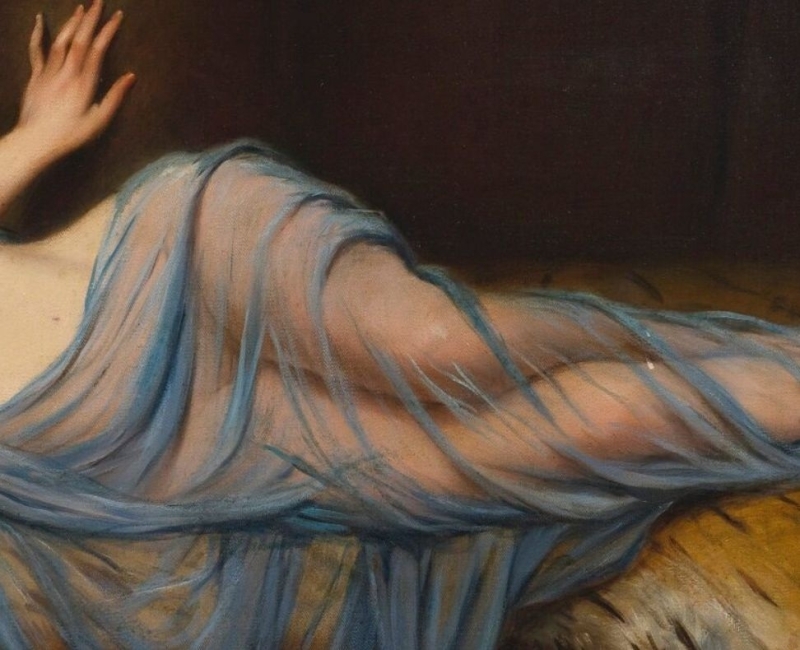
Fig.3b
Before the Bath
Arthur Dampier May’s 1905 painting ‘Before the Bath’ (fig.5) approaches the same concept through asymmetry rather than transparency. Here the woman's white Grecian dress slips from one shoulder, revealing part of her breast while a dramatic slit exposes nearly the entire length of one leg. Yet significant portions of her body remain hidden beneath softly draped fabric. The garment appears perpetually on the verge of falling further, creating a suspended moment of anticipation. This instability is essential to the painting's eroticism. The viewer witnesses not a fully undressed figure but one caught in transition between dressed and undressed. Unlike explicit nudity, which offers visual certainty, this incompleteness invites speculation. The exposed shoulder, partially visible breast, and uncovered leg become visual focal points precisely because the rest of the body remains veiled. Her direct gaze toward the viewer introduces another layer of complexity. Rather than appearing passive, she seems aware of being observed, complicating the relationship between subject and spectator. Desire is therefore negotiated through both visual concealment and psychological ambiguity.
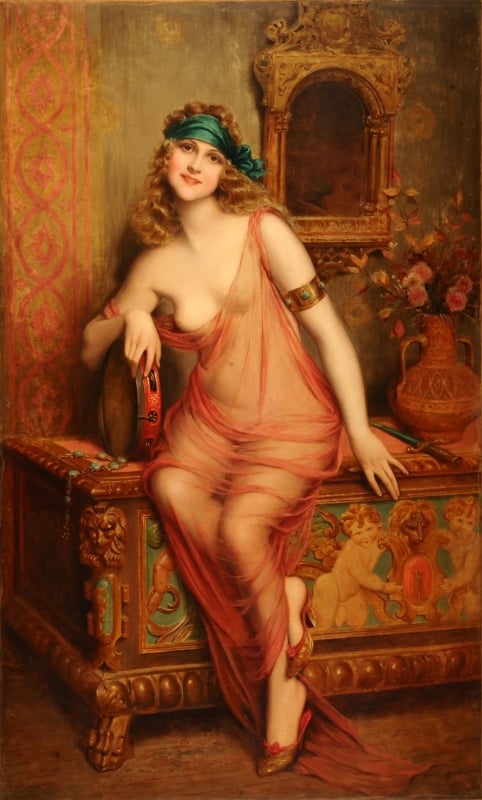
Fig.4 François Martin-Kavel, Dancer, no date
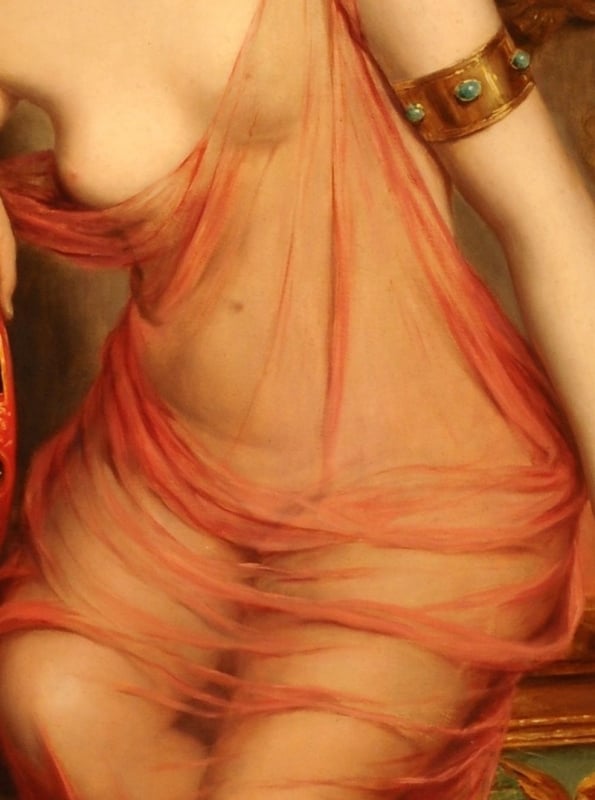
Fig.4a
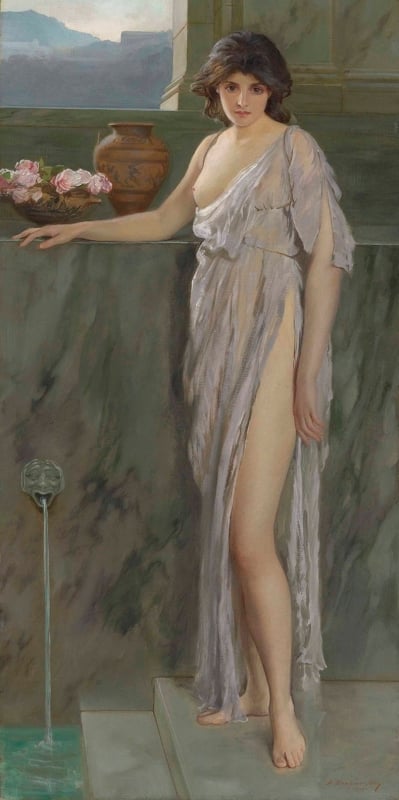
Fig.5 Arthur Dampier May, Before the Bath, May 1905
Become a Premium member now and the extended edition including an extensive discussion about the "Woman with a Tiger" piece (fig.3), the sensual contours as found in the depiction of fabrics in these paintings, the use of architecture and color as erotic instrument, and many more details on the aesthetics in these kind of paintings.
Click HERE for 136 of the most unbridled orgies ever depicted in art history
What are your thoughts about the ‘half-revealed, half-concealed’ topic? Leave our reaction in the comment box below...!!