
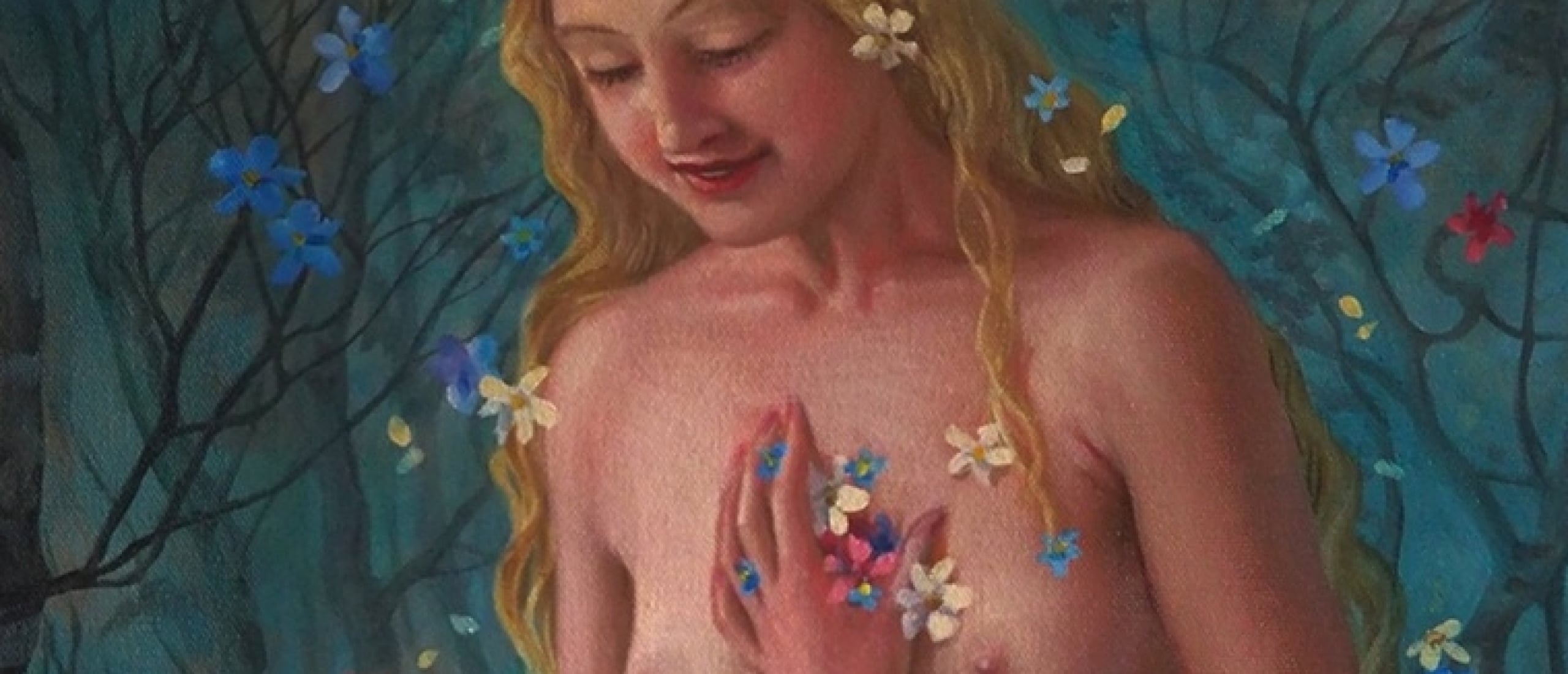

In contemporary figurative painting, few artists navigate the fragile boundary between innocence and sensuality with as much delicacy as the Latvian painter Jana Brike (b. 1980 in Riga, Latvia). There are similarities between the paintings of Brike and the paintings of fellow female painters such as Joyce Lee and Relm in the way they create a sort of eroticised fairy tale world, but still there is a lot of uniqueness in Brike’s work. Her work occupies a rare visual territory where eroticism does not negate childhood wonder, and where whimsy does not dissolve emotional depth. Instead, these seemingly opposing states coexist, creating paintings that feel suspended between fairy tale, memory, and intimate reverie.
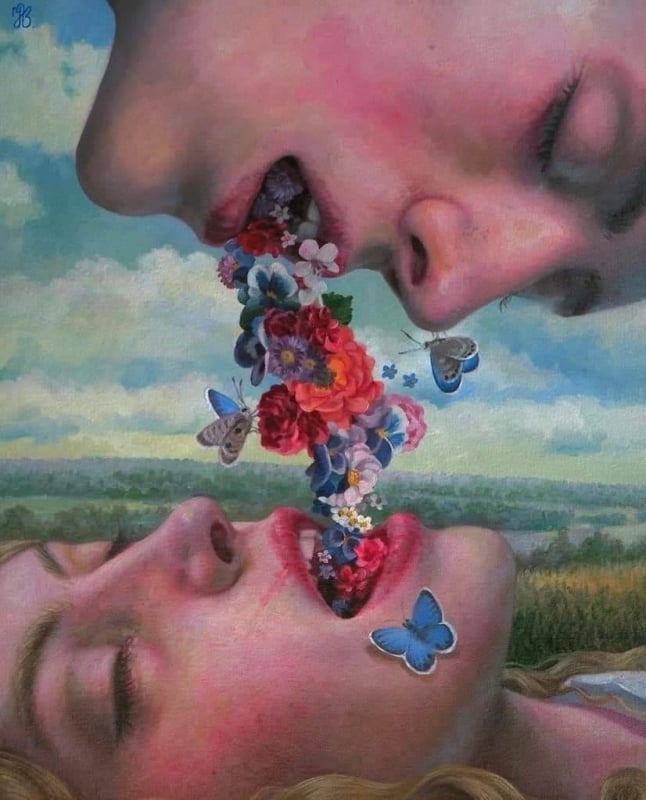
Fig.1 Jana Brike
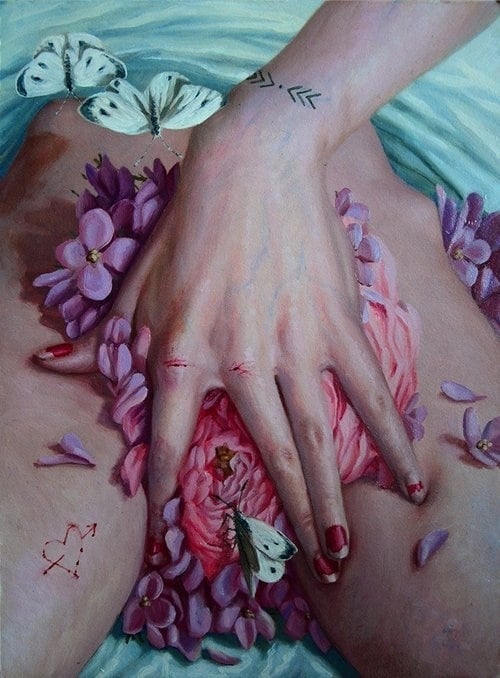
Fig.2 Jana Brike, Self Portrait as L'Origine du Monde, 2016
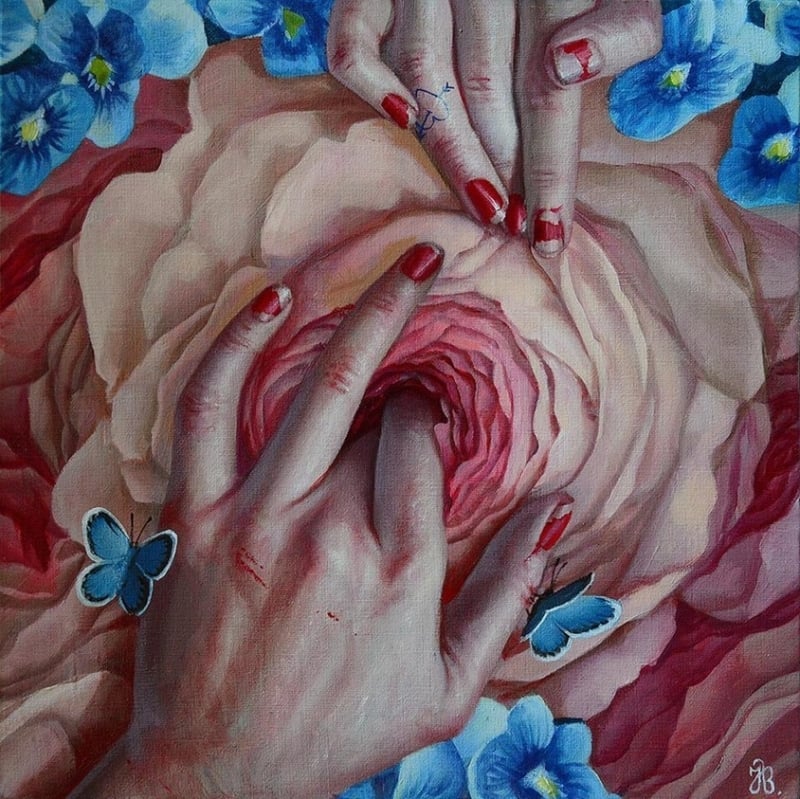
Fig.3 Jana Brike, Gardener & the Centre of the Universe, 2015
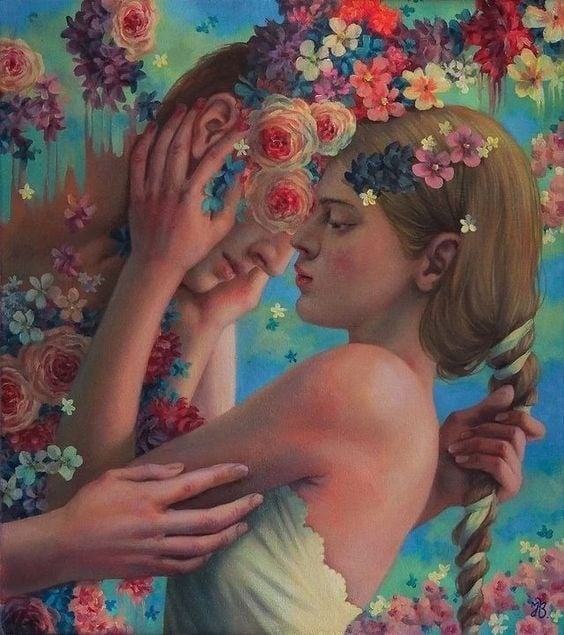
Fig.4 Jana Brike, Invisible Strings
Porcelain Skin
Jana Brike’s paintings are instantly recognizable: softly rendered female figures with porcelain skin, luminous eyes and dreamlike expressions inhabit surreal environments.These figures appear simultaneously vulnerable and self-possessed, sensual yet introspective, childlike yet unmistakably aware of their own bodies. It is precisely this tension that defines Brike’s artistic language and gives rise to what may be described as erotic whimsy; an aesthetic in which sensual awareness unfolds within a dreamlike psychological landscape.
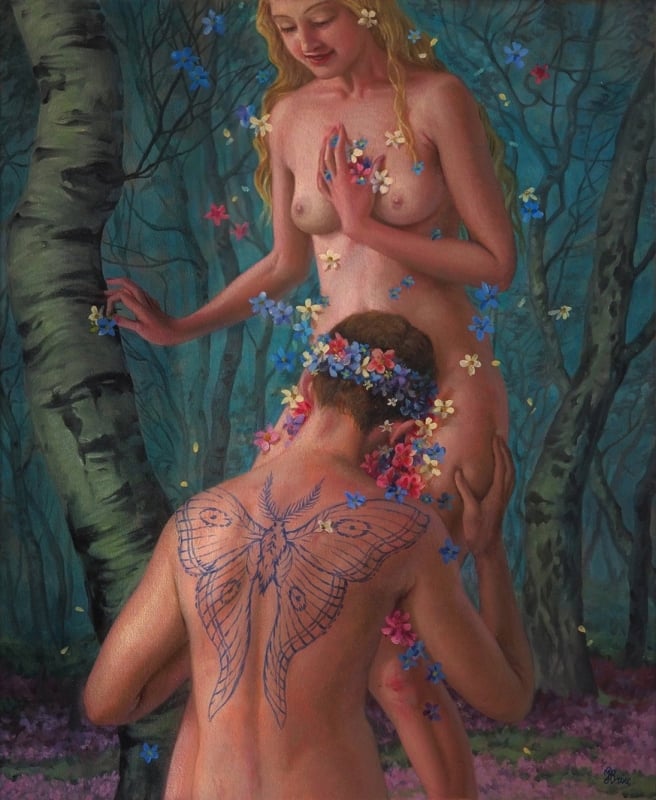
Fig.5 Jana Brike,. Moth Man and the Light of Creation, 2023.
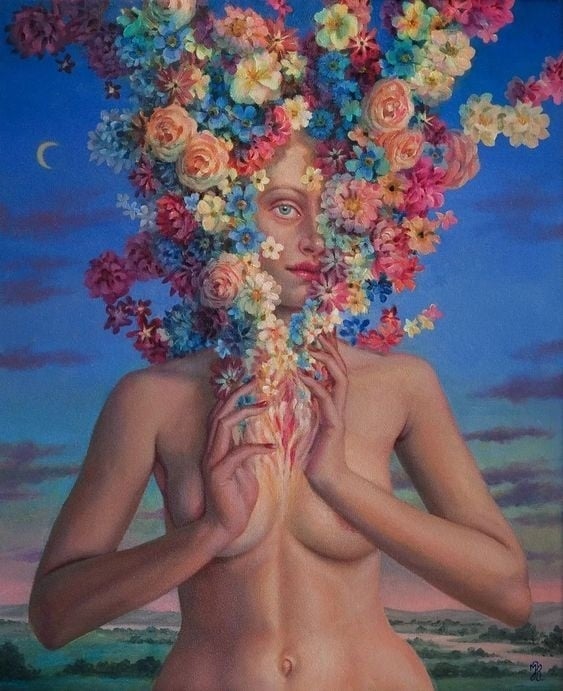
Fig.6 Jana Brike, Heartsong, 2023
Moments of Transition
At the heart of Brike’s paintings lies the theme of awakening. Many of her figures seem caught in moments of transition; between childhood and adulthood, between fantasy and reality, between inner world and outer perception. Their expressions often convey quiet contemplation rather than overt emotion, suggesting that something internal is unfolding rather than being performed. This quality reframes eroticism not as explicit desire but as emergent consciousness of the body. The viewer senses that the figures are discovering themselves, experiencing curiosity, tenderness, vulnerability and subtle self-awareness. This is particularly noticeable in the painting seen in Fig.10. where the figures get their first taste of love in the lush nature settings. Sensuality arises from presence rather than action. In this way, Brike’s work participates in a broader artistic tradition that associates erotic experience with transformation. The body becomes a site of psychological development, a place where imagination, identity, and emotional awareness converge.
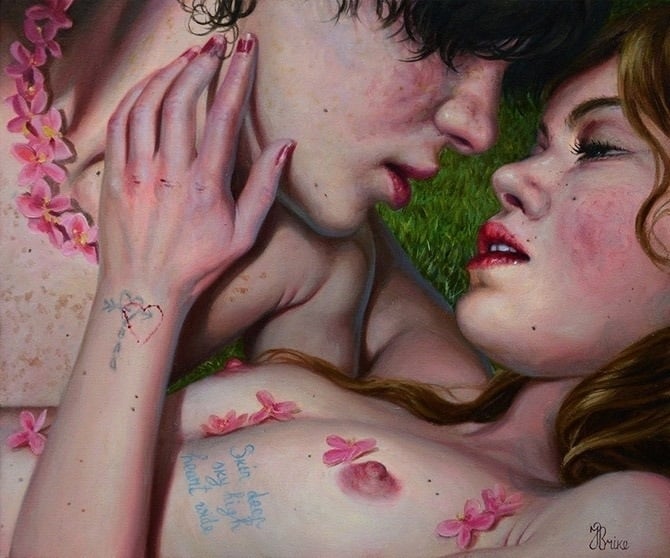
Fig.7 Jana Brike
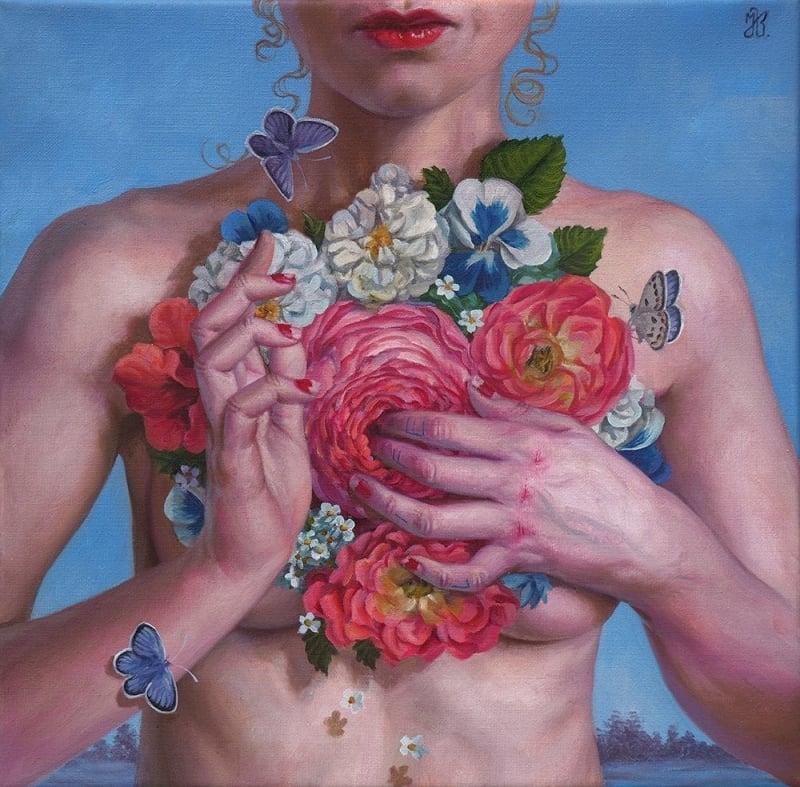
Fig.8 Jana Brike
Persephone and her Gentle Lover
The world of Brike’s paintings in the world of eternal spring and in this sense her art makes me think of Botticelli’s painting ‘Primavera ’ and the whole Neoplatonism philosophy mixed with Christianity that influenced it. Botticelli and Brike both paint idealised worlds of eternal spring and the figures in Brike’s paintings are often mythological, even though no always, of course. For example, Fig.9. shows a painting titled ‘Persephone and her Gentle Lover’ and it shows a close-up of a man touching the woman’s breasts and from her nipples blue morning glories are growing. Women and flowers are always interconnected in one way or another in Brike’s art.
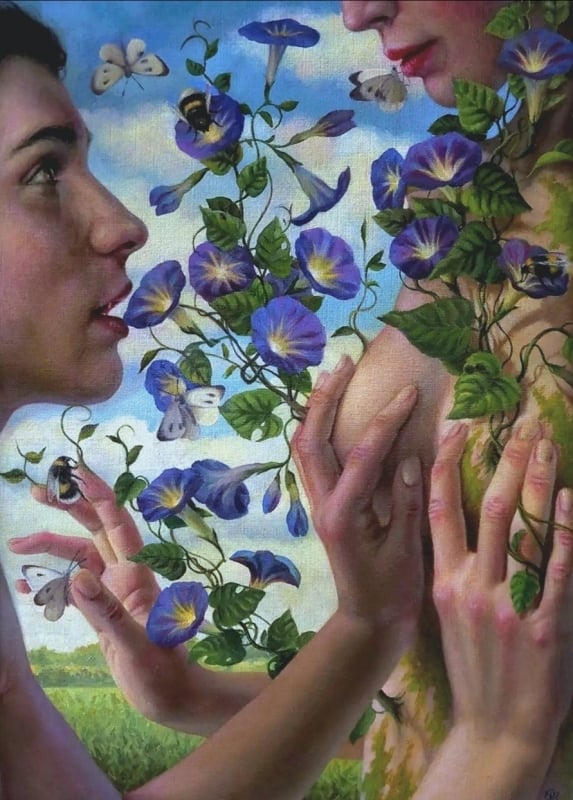
Fig.9 Jana Brike, Persephone and Her Gentle Lover, 2022
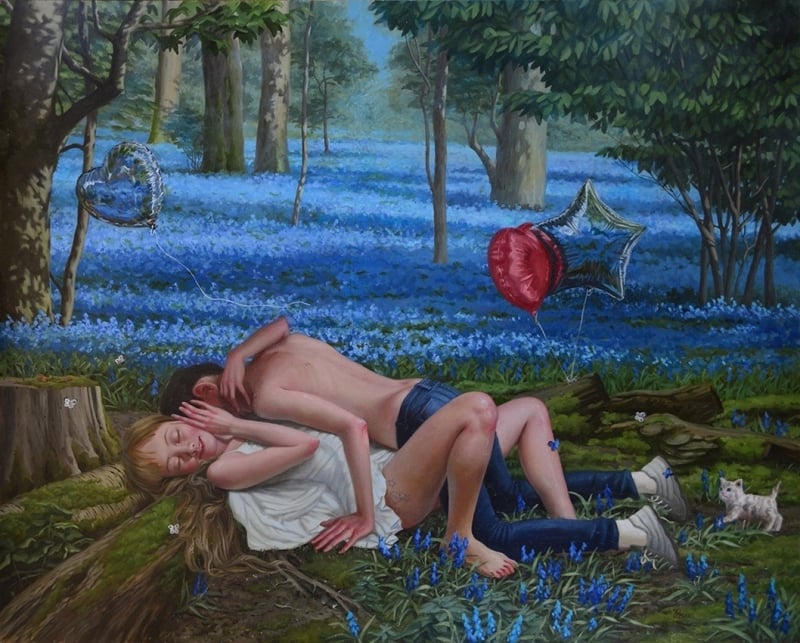
Fig.10 Jana Brike, Little Death in the Bluebells Grove, 2016.
Become a Premium member now and discover more about Brike's use of skulls in her paintings, the motif of flowers in her work (botanical eroticism), the function of playfulness, the emotional environments, her painterly strategy, and MUCH more...!!
Click HERE for the erotic cosmology of Joyce Lee
What do you think about Brike's erotic paintings? Leave your reaction in the comment box below...!!