
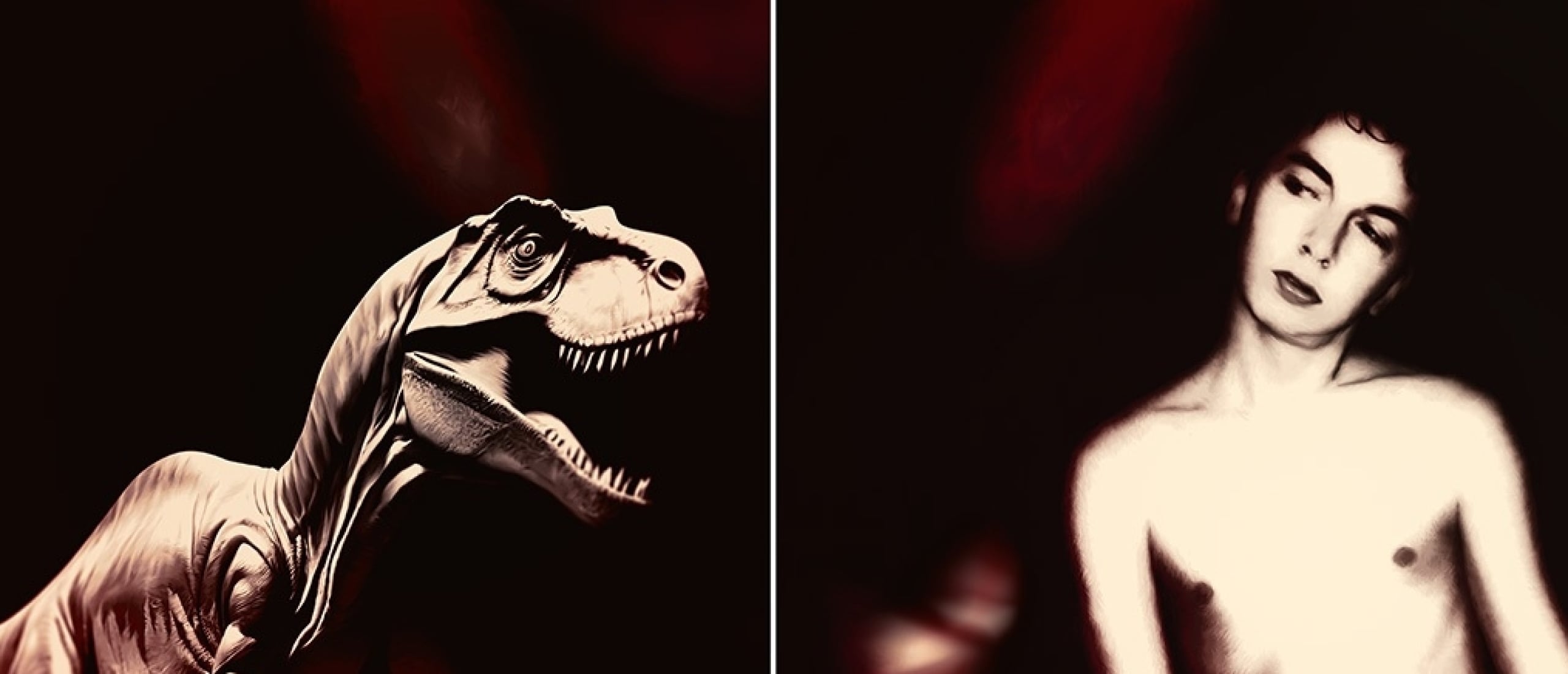

A naked human being is not a difficult thing to understand at first. You recognize it immediately. Skin, posture, gender. And then there is everything such an image can evoke: desire, curiosity, memory, fantasy. Erotic images live from this immediate intelligibility. They do not need to be explained theoretically. The gaze knows where it wants to go.
SacredFlesh begins exactly there.
These are my works. This text attempts to move them from the purely visual into a context that is analytical, but not academic. I am Rufus Krieger, an artist. I sometimes draw photorealistically in my work. I use photographs as source material; the actual process of transformation takes place on a digital drawing tablet. Images are shifted, fragmented, layered and reassembled.
For the SacredFlesh project, I work exclusively with my own body. This has less to do with vanity than with intimacy and pragmatism. The body itself is available. It is familiar. Its proportions, its posture, its limits and its effect are known. It does not have to become a model first. It is already there – familiar, concrete and immediate.
Nothing is idealized. There is no flawless anatomy, no display of muscle mass. In its appearance, there is something more androgynous than demonstratively masculine.
SacredFlesh is not a side project or a departure from my previous work. The fundamental way I work remains the same. My other works also deal with recognizable figures and motifs that lose their original certainty through displacement, fragmentation, layering and light. The familiar remains visible, but is stripped of its self-evidence. Figuration and abstraction, intimacy and distance, visibility and concealment exist simultaneously.
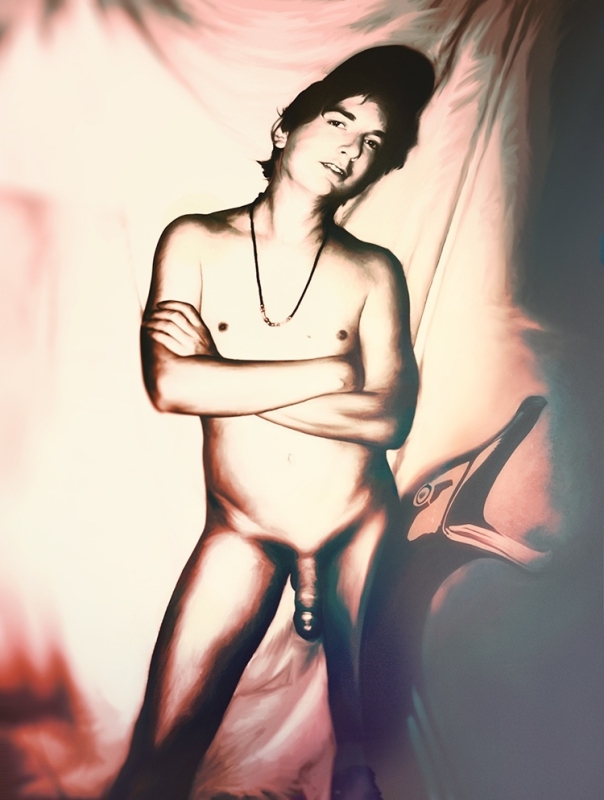
Fig.1 Rufus Krieger, Presence
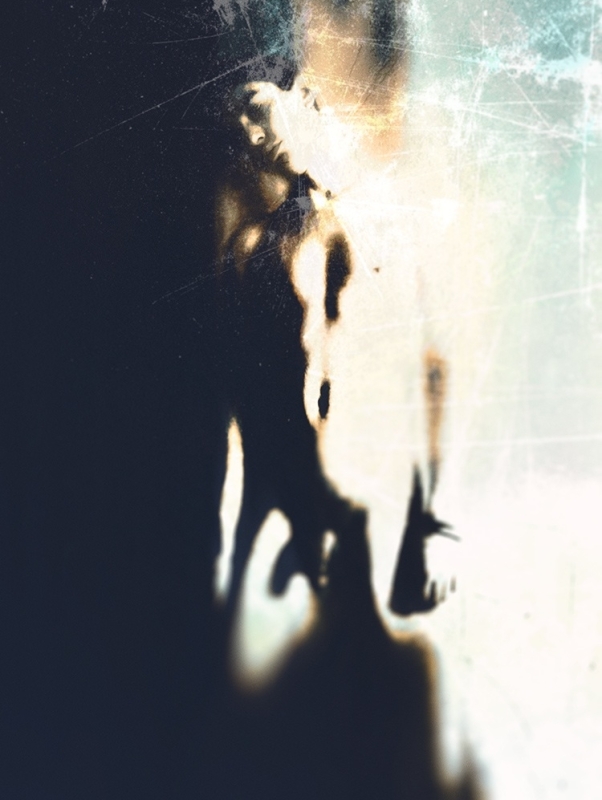
Fig.2 Rufus Krieger, Threshold Transformation
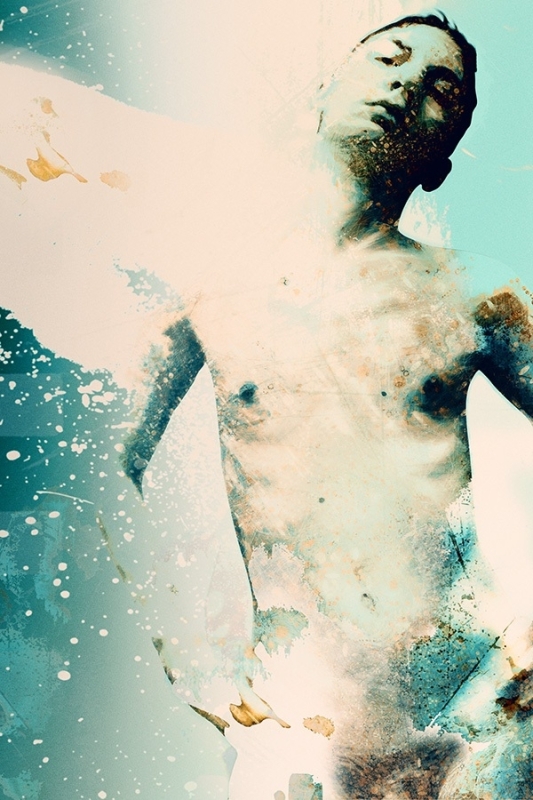
Fig.3 Rufus Krieger, Mellow Mind
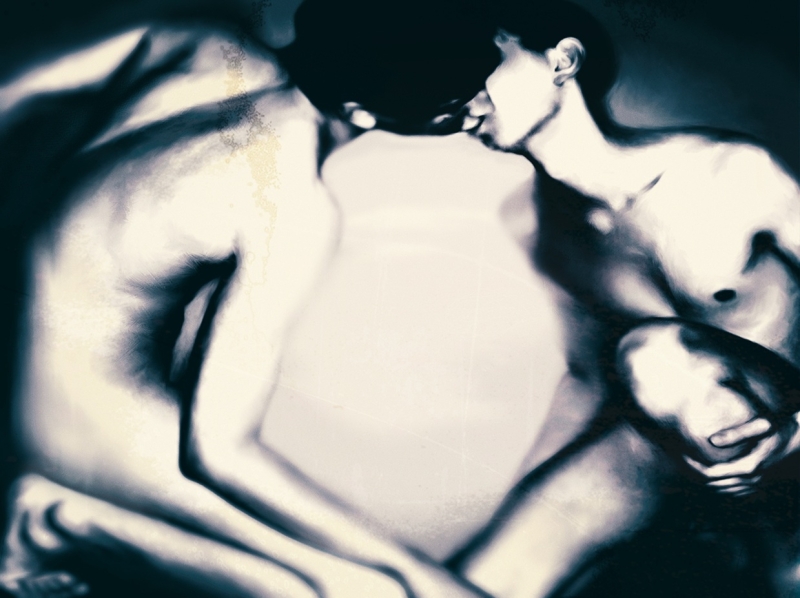
Fig.4 Rufus Krieger, Closed Circuit
The works are homoerotic. This does not need to be hidden or softened by some supposedly higher meaning. Male beauty, desire, lust and sexual tension are part of the material of these images. They are immediate: heated skin and hard light.
Horniness is not excluded from SacredFlesh. It runs through all of the works. It is neither a problem that the art needs to overcome nor an effect at which the image simply stops.
A naked man can be hot. A cock can be hot. An ass can be hot. The gaze directed at it can be hot too. None of this needs to be explained academically or reduced to something banal.
Gay desire is not a thesis or a provocation here. It is a physical reality and therefore part of the image. Lust is allowed to remain lust. A viewer is allowed to see a naked man and think: hot. They may find him attractive, too thin or too beautiful; they may feel drawn to him or repelled by him. All of this belongs to the gaze.
SacredFlesh does not exist outside the long tradition of homoerotic imagery. Robert Mapplethorpe belongs to this visual memory, as do the countless images of male bodies that gay men have created for one another. SacredFlesh does not seek to repeat this history or simply place itself within it.
The double role of artist and model changes the situation. Subject and object become one. The person looking at the man is the same person who shows him. The person creating the image is at the same time the person who can be desired.
Perhaps this closeness is the actual starting point.
I am interested not only in the moment of arousal. I am also interested in the act itself, its staging, and above all in what remains afterwards. Before sex, during it or afterwards – each of these states has its own tension. What pornography presents as a climax or as a commodity can lose its original function within an image and be charged with something new.
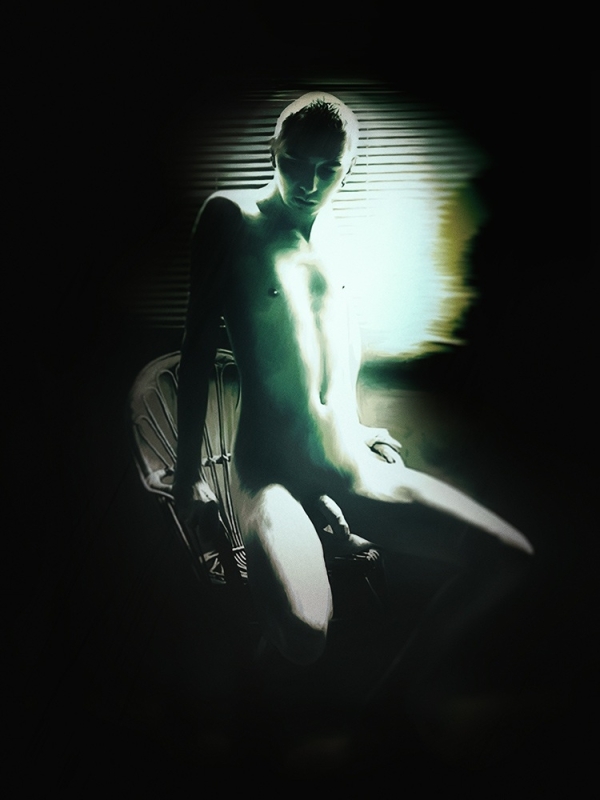
Fig.5 Rufus Krieger, Soft Spot
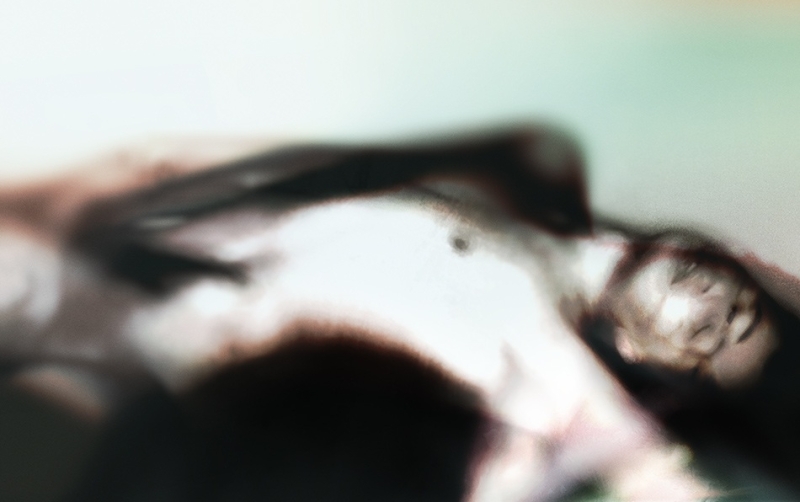
Fig.6 Rufus Krieger, Residual Desire
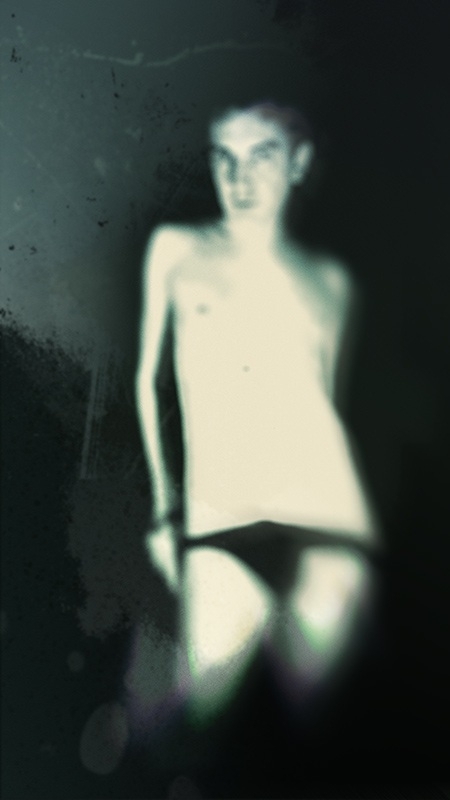
Fig.7 Rufus Krieger, Strip Project
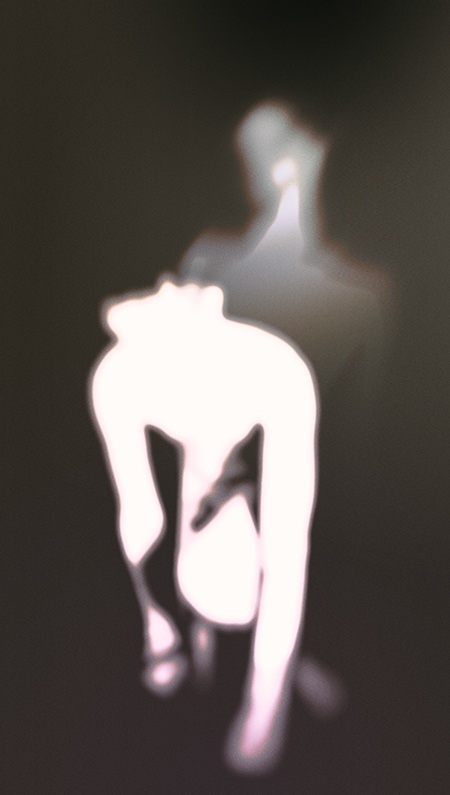
Fig.8 Rufus Krieger, Strip Project
There are works in which I am seen kneeling with a jockstrap, nipple clamps and a dildo in my mouth. Others show me after sex: wet, open, used, my ass still slightly spread, my cock soft or half-hard. Here I deliberately play with the codes of pornography and prostitution. The artist becomes an object that can be looked at, desired and consumed. Intimacy, availability, the idea of selling oneself to the gaze – all of this becomes material.
I offer myself and withdraw at the same moment. The gaze is allowed to become horny. It can linger on the dildo between my lips, on the clamps on my nipples, on the wet sheen of my skin after fucking. And yet something remains elusive. That tension – between offering and withholding, between horniness and unavailability – is exactly what interests me.
Because at some point, something begins to happen to the image. The figure is shifted, layered, fragmented and exposed to light. Contours lose their certainty, skin becomes surface, movement becomes trace. Sometimes the figure remains completely recognizable; sometimes it seems to be just emerging from the image.
The erotic does not disappear. It changes its location.
It reappears in light and shadow. In a shoulder. In the line of a back, a hip or a face. In an open posture. In traces of seduction and in a moment frozen in time.
This is where an essential difference lies between the depiction of pornography and its use as material. In a world where pornographic images are available almost endlessly and at any time, simply imitating them would hardly be interesting. SacredFlesh instead takes something from their directness: naked skin, physical closeness, the gaze, sexual tension. Pornography is neither attacked nor imitated. It becomes material.
This material is removed from its original context and subjected to another visual order.
The body does not become proof of an idea. It becomes an image. A visual fragment.
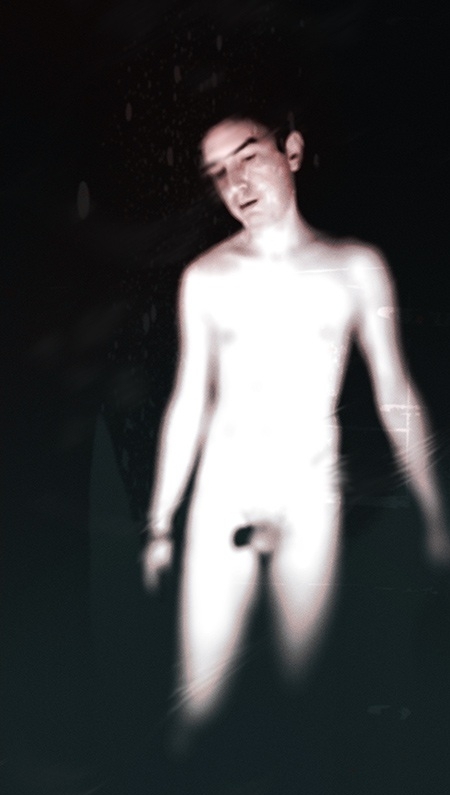
Fig.9 Rufus Krieger, Strip Project
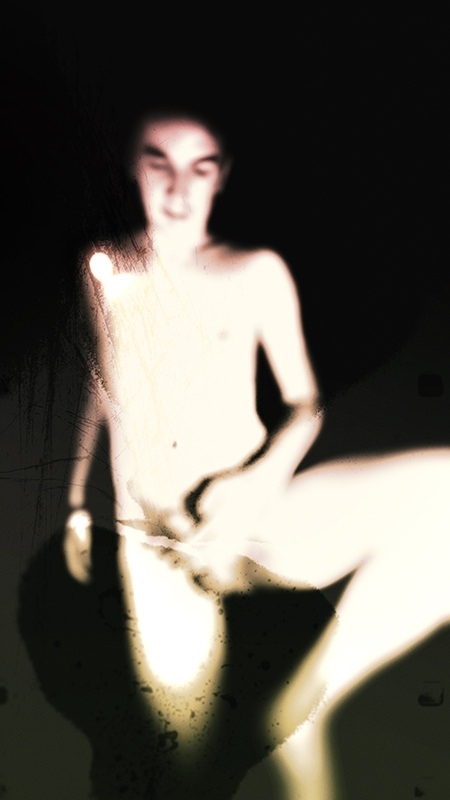
Fig.10 Rufus Krieger, Strip Project
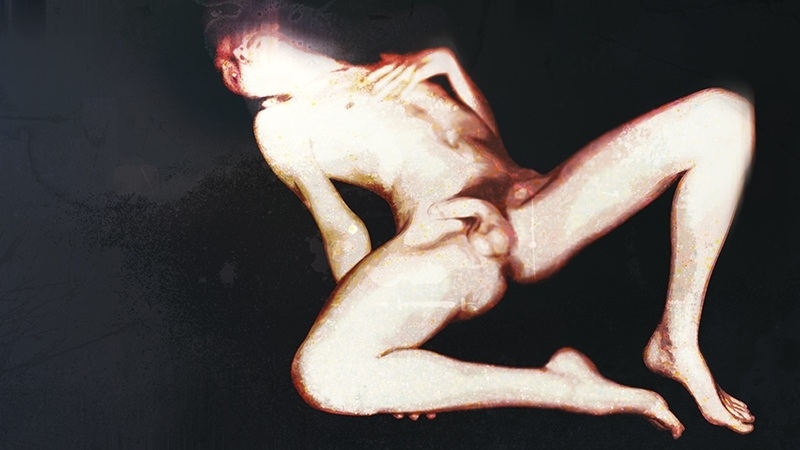
Fig.11 Rufus Krieger, Raw Flesh II.
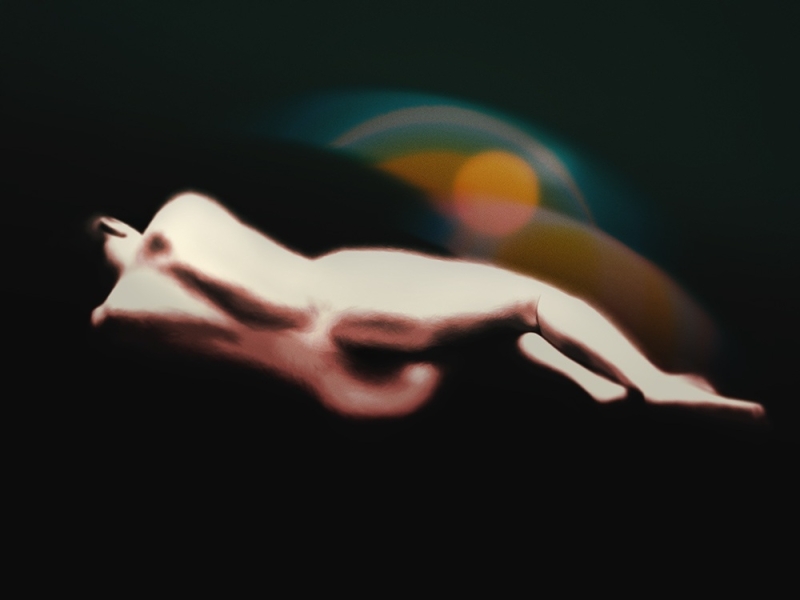
Fig.12 Rufus Krieger, Exposed
The naked man should not be looked at innocently. He is not merely form, line and surface. He carries his history with him: ideas about masculinity, homosexuality, attractiveness and availability. He can promise intimacy while creating distance at the same time. He can be a counterpart, an object of desire, or simply someone looking back.
This ambiguity is part of the work.
Eroticism does not arise from nakedness alone. It arises through the viewer's gaze – perhaps through the gaze of a voyeur. Through what is shown, but equally through what the gaze makes of it.
That is why the figure initially remains deliberately legible. It is allowed to be beautiful. It is allowed to create sexual tension. It is allowed to provoke. It is allowed to arouse desire. There is no reason to talk the viewer out of this immediate reaction.
But at some point, something begins to feel wrong.
The light becomes too strong. A contour shifts. Skin loses its surface. The image seems to move even though it remains still. What was just moments ago unmistakable suddenly becomes difficult to hold onto.
Does the light begin to attack the formation? Is a fire starting? It spreads like spilled mercury.
Something tips.
The gaze searches for the man where it has just seen him. But finds only a trace. A trace that itself becomes a ghost.
Perhaps this is the decisive moment in SacredFlesh: not when the human being disappears, but when his certainty disappears.

Fig.13 Rufus Krieger, Access
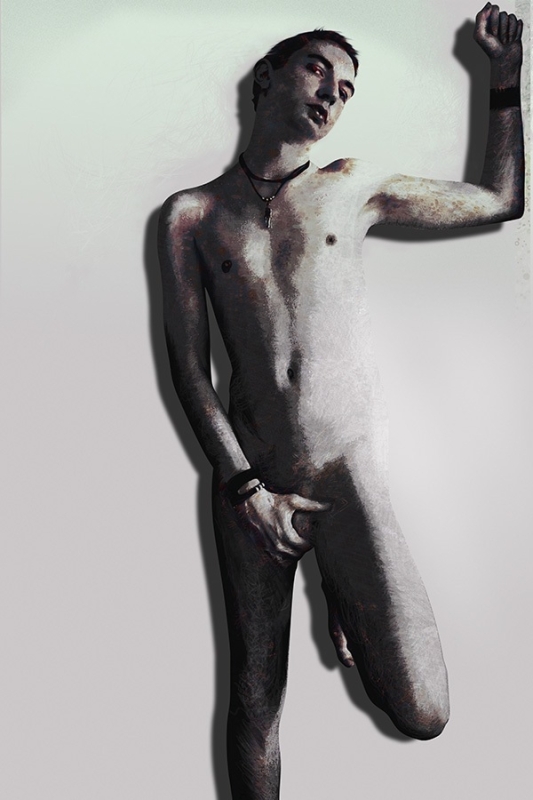
Fig.14 Rufus Krieger, The Corner
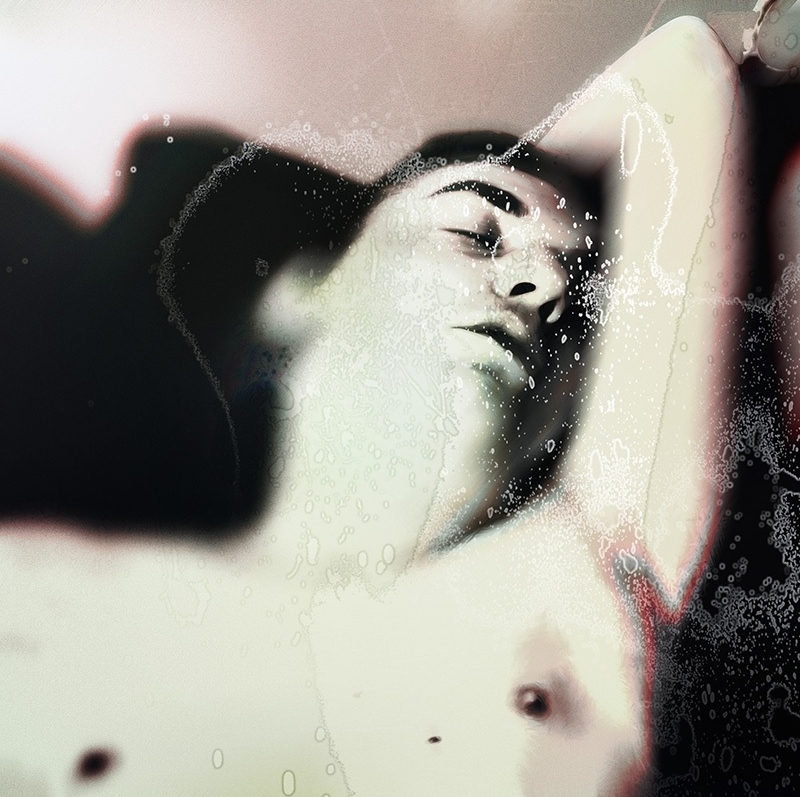
Fig.15 Rufus Krieger, Dormiens
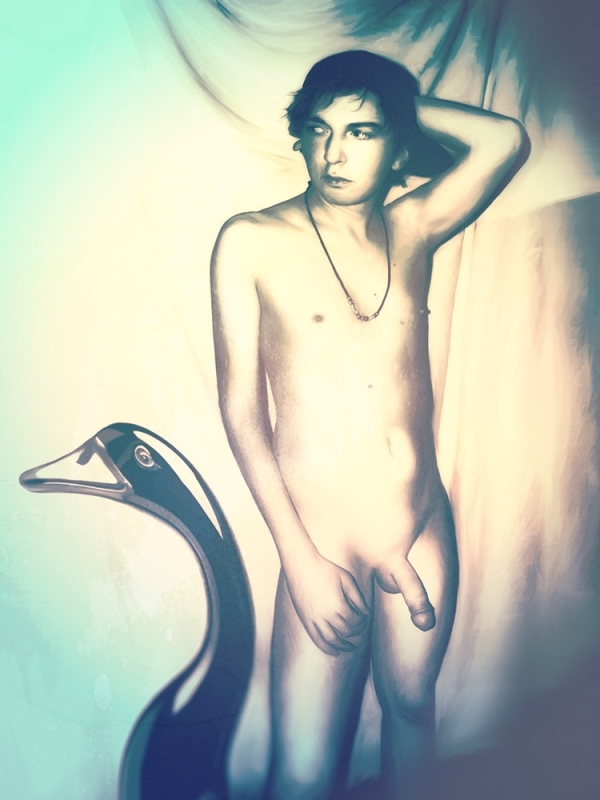
Fig.16 Rufus Krieger, Presence Uncut
An image can show naked skin, a cock, a chest, an ass, without fully satisfying the gaze. It can reveal and withdraw at the same time. The intimacy remains, but it becomes uncertain.
This is also the point at which the works move away from mere sexual representation. Not because the erotic disappears.
On the contrary. It is shifted onto another level.
A shadow can suddenly feel more physical than the skin that produced it. An overexposed surface can possess more tension than a clearly recognizable contour. A movement that exists only as a blur can feel more intimate than a precise pose.
Horniness does not disappear when the image changes.
It changes its form. It becomes a fragment itself.
Subtly, it suddenly lies in a remnant of light. In a line. In a posture that can only be sensed. In the suggestion of a face. In the memory of a touch. In the brief moment before a figure tips out of the image.
The role of the viewer changes as well.
At first, the viewer believes they know what they are seeing.
Naked human being.
Later, perhaps only skin.
Then light.
Then a trace.
And eventually comes the uncomfortable question of whether what initially attracted the viewer is even still there where they were looking for it.
Perhaps it was never only the body.
Perhaps it was the moment when the gaze began to make it disappear.
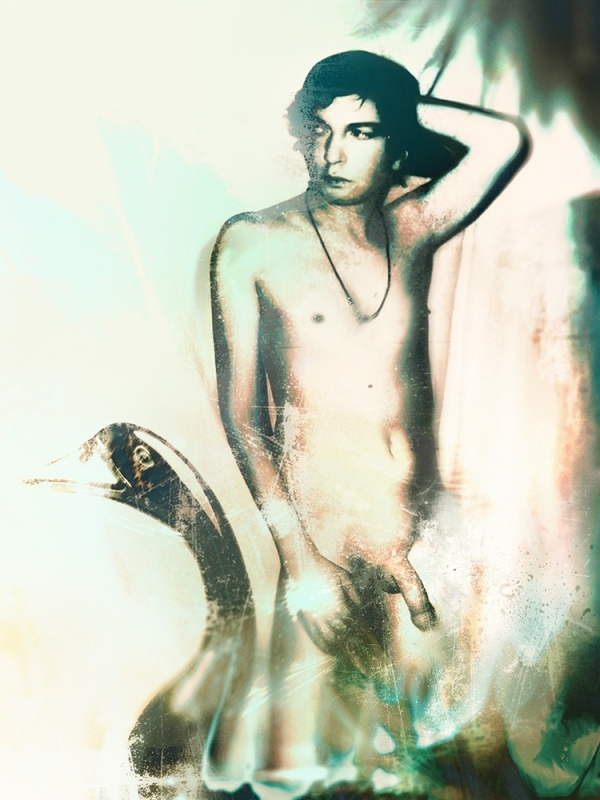
Fig.17 Rufus Krieger Presence, Tranformation
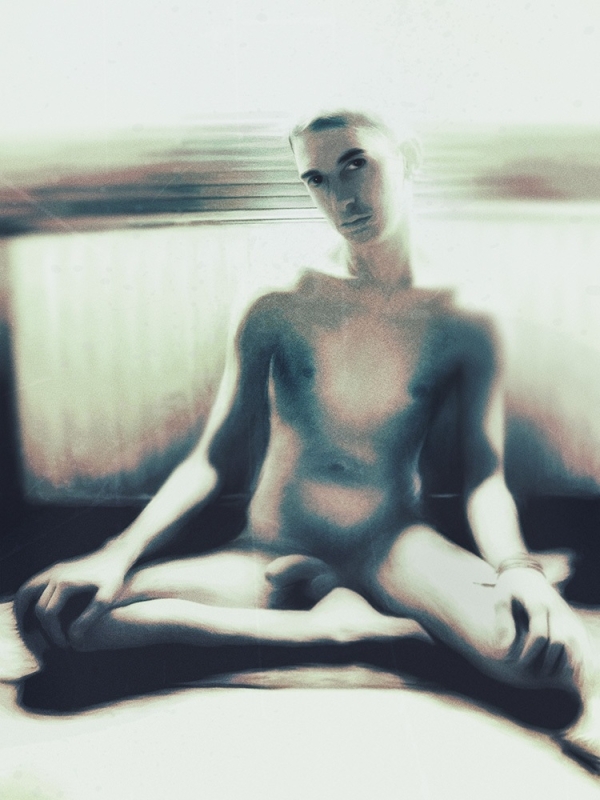
Fig.18 Rufus Krieger, Radiant Field
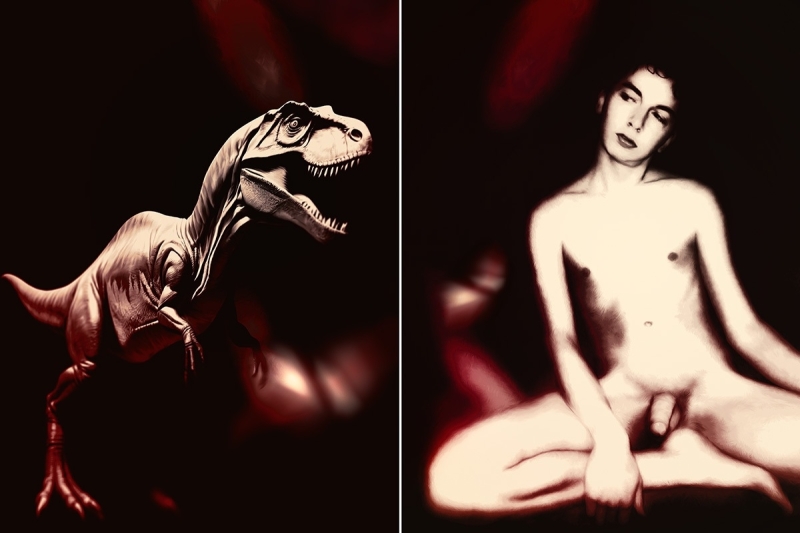
Fig.19 Rufus Krieger Apex Diptych
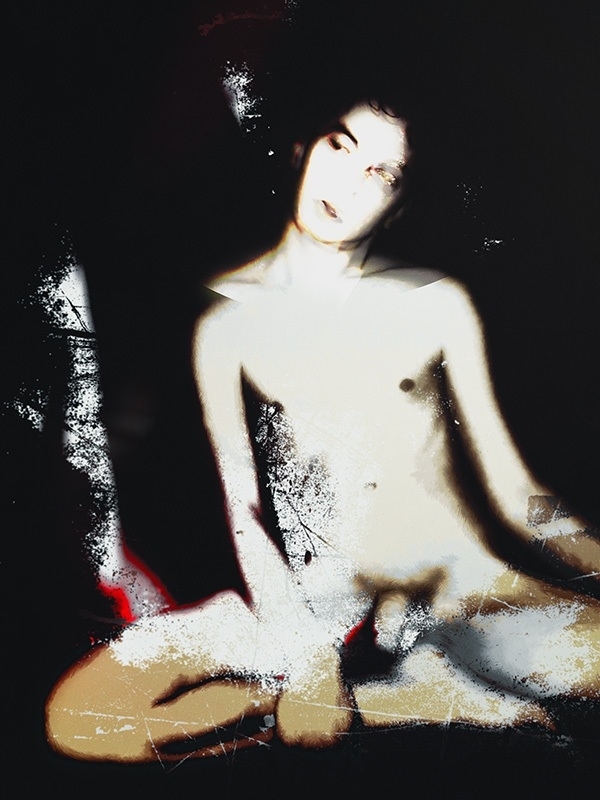
Fig.20 Rufus Krieger, Soft Collapse
Click HERE for the publication "Jupiter With a Camera: Renaissance Beauty In The Art Of Tom Bianchi"
Rufus Krieger has the following website and more about SacredFlesh project can be found here
Let us know your thoughts about Rufus Krieger's work in the comment box below...!!