

Early lessons
As a boy, in the 1960’s, I lived in North-Eastern Canada, and my only source of visual stimulation, other than the local library, was the television service of the Canadian Broadcasting Corporation and its French equivalent Radio Canada.
The English side was very American-centric so it broadcasted some local programming but mostly television productions from Hollywood. Radio Canada on the other hand was more focused on programming that could feed or nurture a nascent or re-nascent French Canadian culture in Canada. It had a broader scope. It had a programming philosophy, perhaps a vision.
One important program at the time in particular was Cine-Club. It presented every night, at midnight, a noteworthy European film. I would sneak from my bed at midnight and quietly make my way to the where the black and white television was located and turn it on without any other light and keep the volume low as to not wake up anybody in the house. In that illuminated darkness I received my earliest erotic education. I saw the Italian films of Fellini and Pasolini. I saw Bunuel’s Viridiana and Belle de jour. I saw Polanski’s Knife in the Water. I saw Godard’s À bout de souffle. I would stay up, as often as I could, late at night, hoping to see beautiful women, and not to put too fine a point on it, to see naked beautiful women. In return I inadvertently also received an education in world cinema. Wanting to preserve the images I saw, it is also where I began making photographs, like a voyeur, taking pictures with my camera directly from the television screen. The television, and the films I saw there, opened a door to a world from which I wanted more.
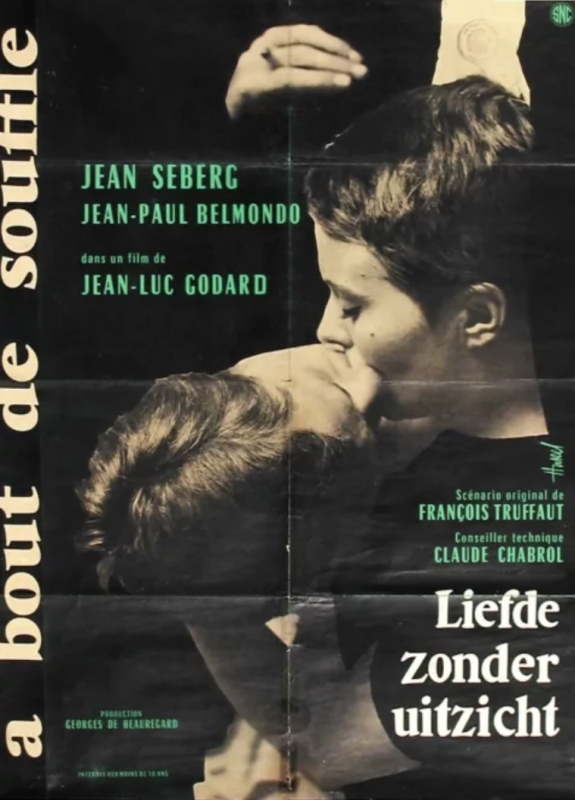
fig 1, Poster for À bout de souffle, 1960
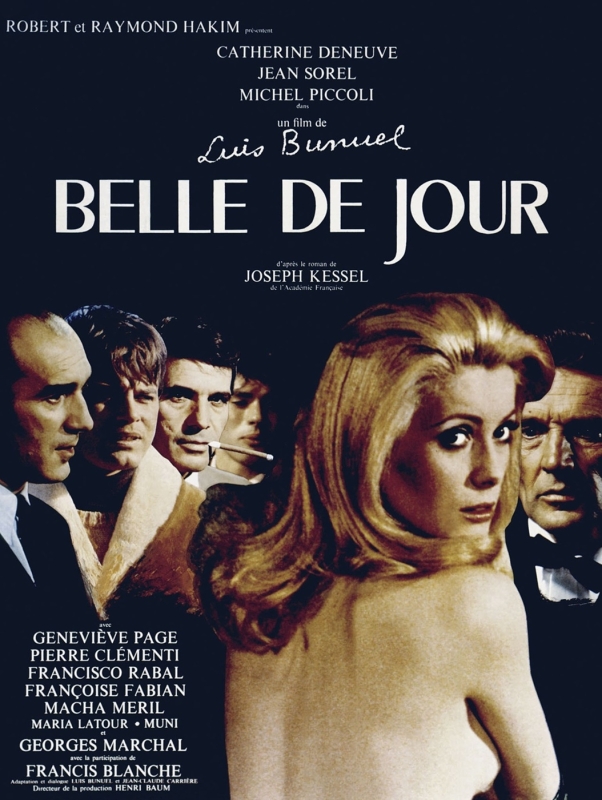
fig 2. Poster for Belle de jour, 1967
Subconscious Erotic Vocabulary
When I tried to share my excitement about what I perceived as interesting erotic films on television my friends would look at me quizzingly then utter; “Oh you mean the dirty films on the French channel.” I knew early on that I was different. I also perceived early on that the difference between French and English culture, at least in Canada, was not a linguistic or a cultural divide but a moral one. I’m still working out the reasons for that but in the meantime I have pursued my interest in the erotic and cinema has obviously been a large part of that.
But if we all agree at the outset that the mind is the most important sex organ and that the cultivation of our intellect is as important to our sexual education and sex life as experience and knowledge of a more carnal nature it follows that literature, cinema, painting and the visual arts in general play a large part in the development of a rich erotic intellect.
For many of us, as writers, photographers, and artists of all kinds, cinema in particular has provided rich lessons to those of us interested in the erotic in a conscious way. With that mind, here is my personal take on three films that may not, on the surface, be all thought of as erotic but that has nevertheless fed my subconscious erotic vocabulary and enriched my erotic intellect at the same time. As part of the process of writing this essay I also perused my archives for images I know were made thinking about those films.
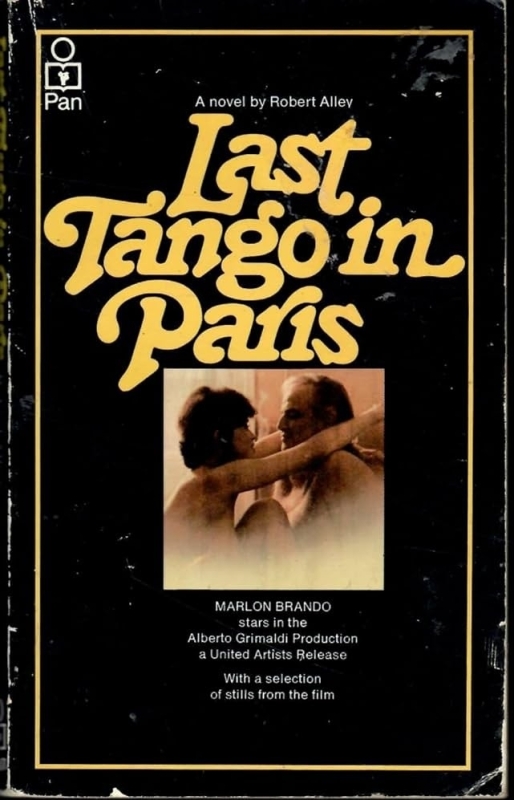
fig 3. Poster for Last Tango in Paris, 1972
1. À bout de souffle (Breathless), 1960. by Jean Luc Godard.
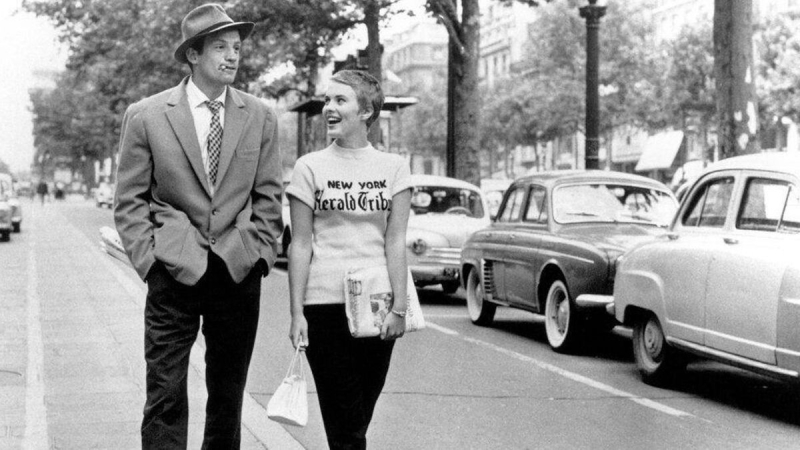
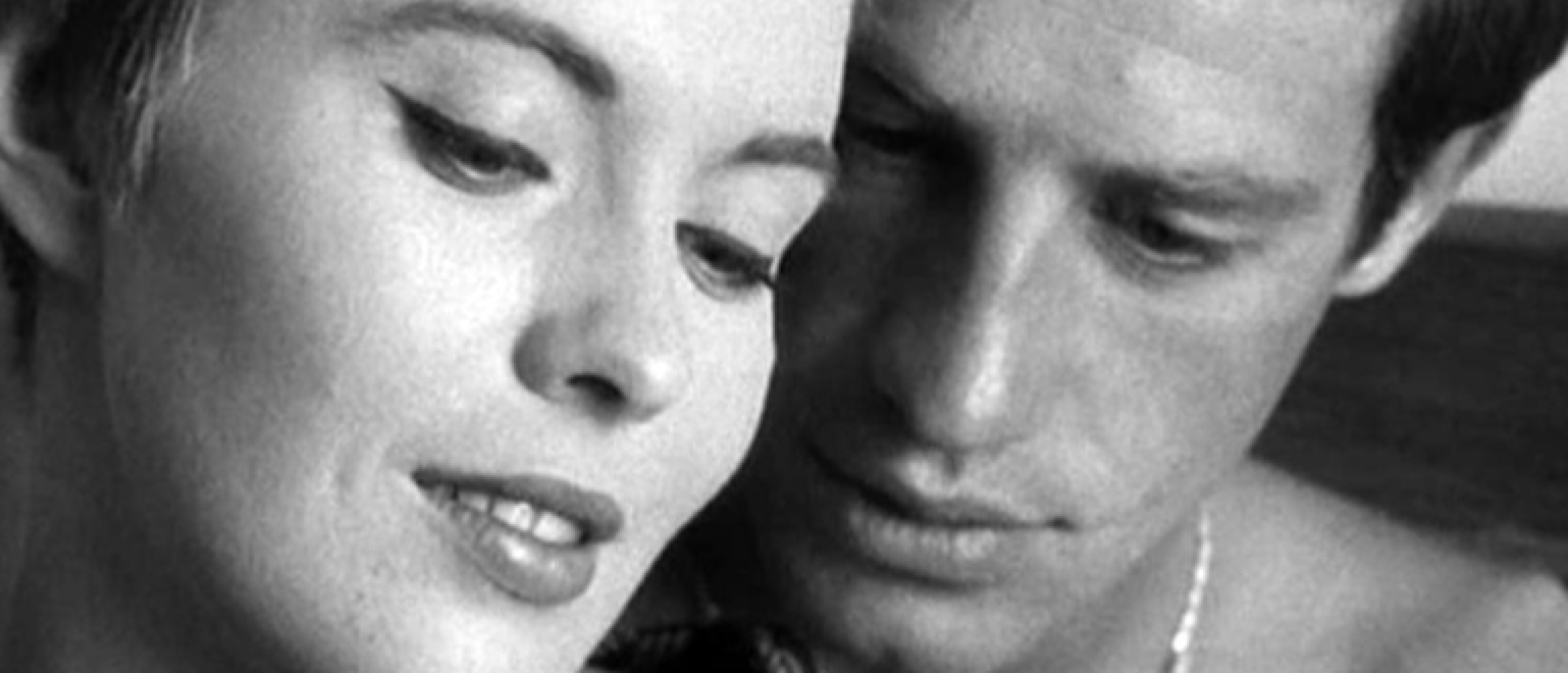
fig 4. Scene from À bout de souffle
Important Masterpieces
The films of the French New Wave can hardly be considered erotic by today’s standards but they nevertheless contain the building blocks of cinematic eroticism whether seen in the context of European or Hollywood filmmaking. From Jean Luc Godard’s À bout de Souffle made in 1960 to Bernardo Bertolucci’s Last Tango in Paris in 1972, arguably the last New Wave film to come out of France, the films made in France during the 60’s and up to the early 70’s explored themes in sexuality and relationships on a level that eventually made us consider them important masterpieces in our thinking about the erotic in art. From Godard to Bunuel to Bertolucci, the New Wave took us from a kind of naïve adolescence regarding eroticism to a more mature psychological view of how we looked at sex and ultimately at ourselves.
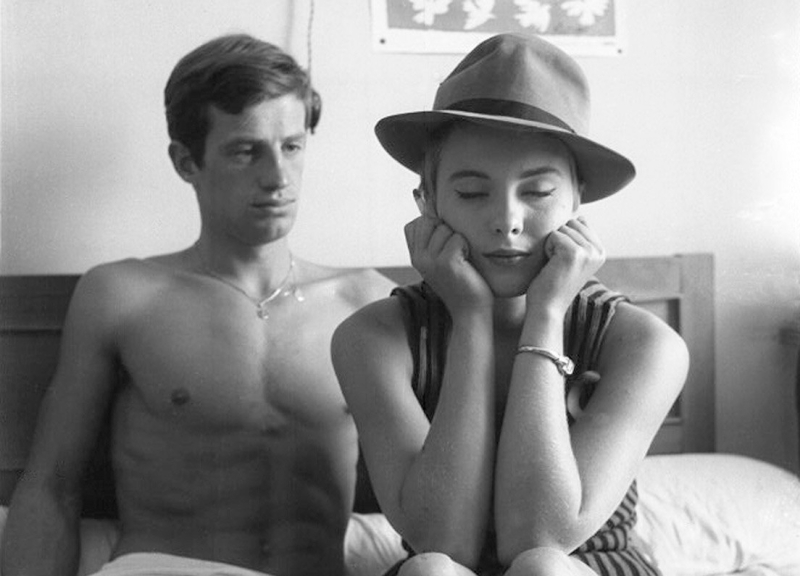
fig 5. Scene À bout de souffle
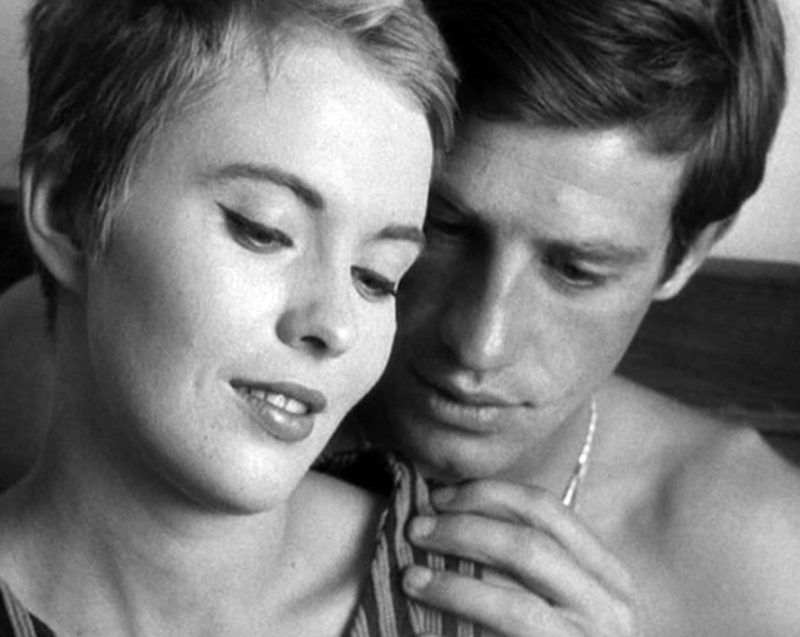
fig 6. Scene À bout de souffle
Coming of Age For Sexiness
À bout de souffle is a centerpiece of French New Wave Cinema. It was directed by Jean-Luc Godard, on a story by Francois Truffaut with Claude Chabrol in as a technical advisor for good measure. The early 60’s represented a coming of age for sexiness in French cinema. À bout de souffle is the film in which you see Jean- Paul Belmondo dressed like an American gangster and Jean Seberg in a French Picasso-like horizontal striped top repeated in a million fashion shoots since then. It’s a bad boy innocent girl fairy tale. Godard once said; "All you need to make a movie is a girl and a gun".
fig 7. Scene from À bout de souffle
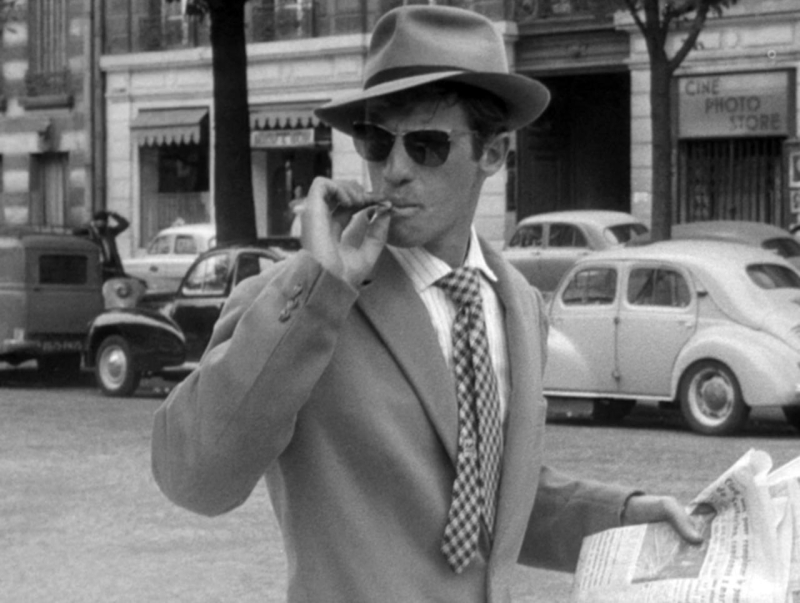
fig 8. Scene from À bout de souffle
Misogyny and Sexism
Godard had also been a film critic . During his early career writing in Cahiers du Cinéma. Godard had often criticized mainstream French cinema. He preferred Hollywood directors like Alfred Hitchcock or Howard Hawks.He and like-minded critics started making their own films, challenging as any new generation would, the conventions that came before. Some critics have also claimed that Godard's films contain themes of misogyny and sexism towards women. That may be so but in the context of 1960’s culture it may be the benefit of 20-20 hindsight.
Tough-Guy Humphrey Bogart
In À bout de souffle Belmondo’s petty-thief is modeled after a real-life 1950s French criminal named Michel Portail, who also had an American journalist girlfriend. He is mesmerized by glamorous images of tough-guy Humphrey Bogart in a dinner jacket. Almost cartoonish he is dressed in a sport-jacket too large for his shoulders and wears a fedora too large for his head. He leads a criminal life that even criminals would find a bit low brow: hot-wiring cars, stiffing waiters, and pilfering from the purses of the women. He eventually begins a relationship with an American girl (played by Jean Seberg), who sells the New York Herald-Tribune to motorists on the Champs-Élysées while she tries to develop a career as a journalist for herself. She is attracted to Belmondo’s bad boy image enough to sleep with him. In hindsight once more, the film feels like a graphic novel plot. It is hard to overestimate the appeal of all this to a postwar generation but the soundtrack alone, composed by jazz pianist Martial Solal, represented the height of that era’s musical tastes before the advent of the Beatles.
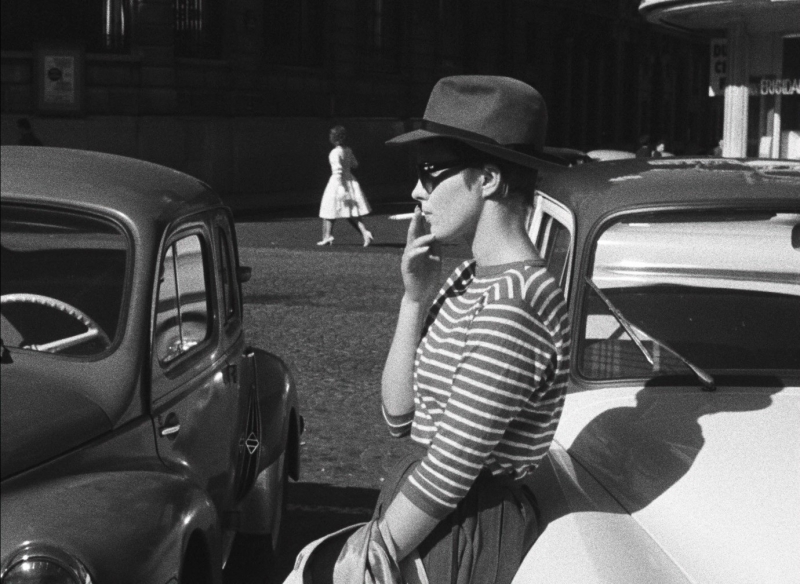
fig 9. Scene from À bout de souffle
A sex scene?
The film’s centerpiece is a conversation between the two characters in a hotel room where he has been hiding out from the police in her unmade bed. Belmondo is sexy even to himself, chain-smoking cigarettes while rolling under the sheets. The two do make love, but then the film cuts to a press conference at which Seberg’s character, on a journalistic assignment interviews a novelist with banal questions like “What is your greatest ambition in life?” and “Do women have a role to play in modern society?” injecting the appearance of philosophical gravitas to the film by inserting a more intellectual character.
À Bout de Souffle might have been a morality tale of sorts, with Belmondo’s Poiccard as a bumbling latter-day Lucien Chardon mesmerized by big-city crime-glamour and fatally undone by the delusional belief that he can shortcut his way to fame, wealth, and women’s love. Godard wanted to make a dramatization—informed by the existentialist philosophy that was the intellectual rage in 1950s France—of the meaninglessness and absurdity of human existence and action. And it was this that made his film so mesmerizing to his postwar-generation audiences, and to a generation of aspiring young American filmmakers, in particular. But in the end Godard just wants us to identify with his film’s surface smartness: good-looking young people evading the Man in a sleek American car to the beat of Solal’s cool jazz score.
Absorbing All the Forces
Film Critic Richard Brody wrote: "After Breathless, anything artistic appeared possible in the cinema. The film moved at the speed of the mind and seemed, unlike anything that preceded it, a live recording of one person thinking in real time.”
Everything about the film—the clothes, the music, the attitude and attendant philosophical pretensions—was cool and up-to-date for its time.
For me, watching the film, like the later Beatles films that copied the new Wave style and eventually filled our movie screens, it was just a portal to a world outside filled with an eroticism unseen at the time. It was the beginning of the post- WW11 revolution in thought and sexual freedom. In America it was the beat generation of Jack Kerouac. In England it came with the musical revolution the Beatles started. In essence À bout de souffle was just an American beat film made by a young French intellectual, for young French intellectuals, absorbing all the forces available to him at the time.
For emerging French Canadian boomers like myself, films like À bout de souffle showed us that it was possible to make art that belonged to our own generation, with a sexiness that had, until then, been mostly repressed. À bout de souffle became, the instant it was made, an icon and a benchmark that persists even today.
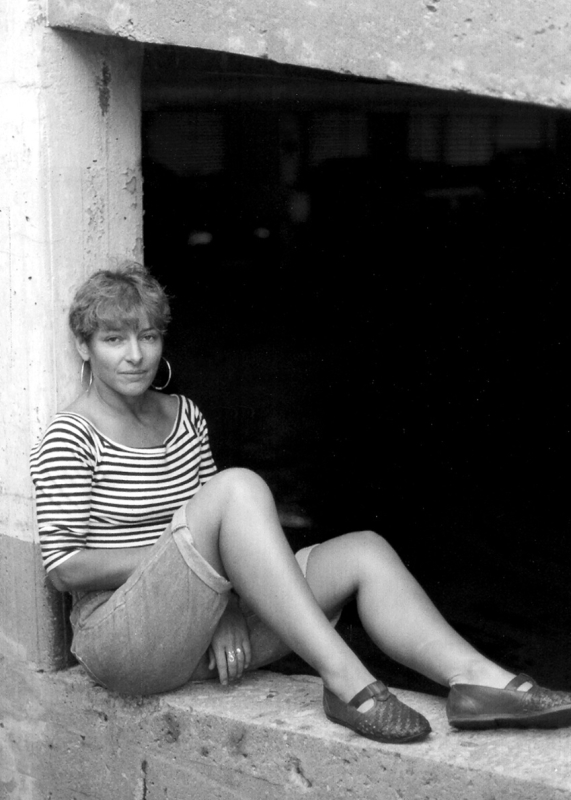
fig 10, Robert Barriault, fashion shoot in 60’s style, 1987
Become a Premium member now and check out the extended version of this essay in which the author closely examines how the erotic film classics Belle de Jour (1967) and Last Tango in Paris (1972) inspired his personal views and art.
Click HERE for the most arousing films of the Roman Porno genre
Let us know your thoughts about this publication in the comment bo below...!!