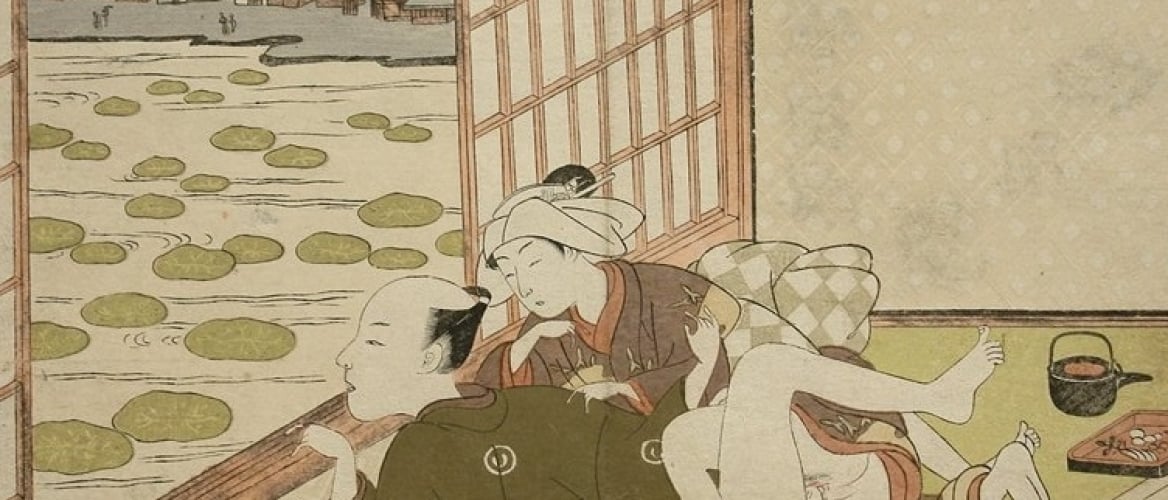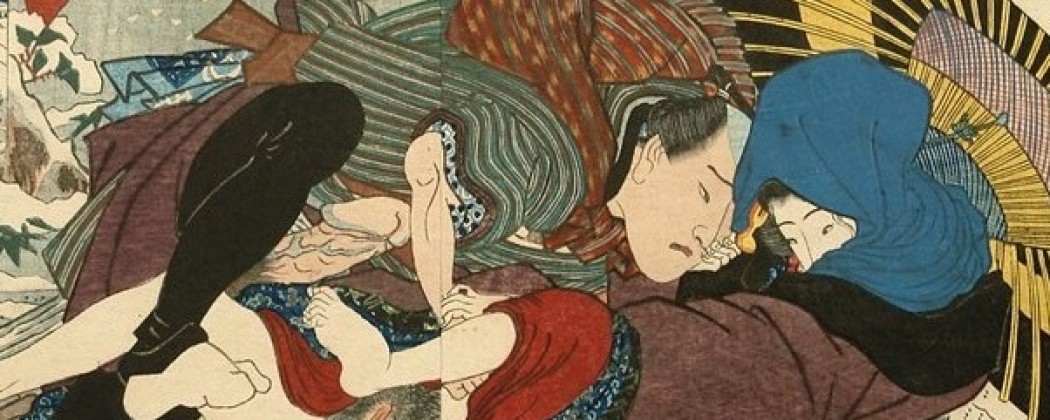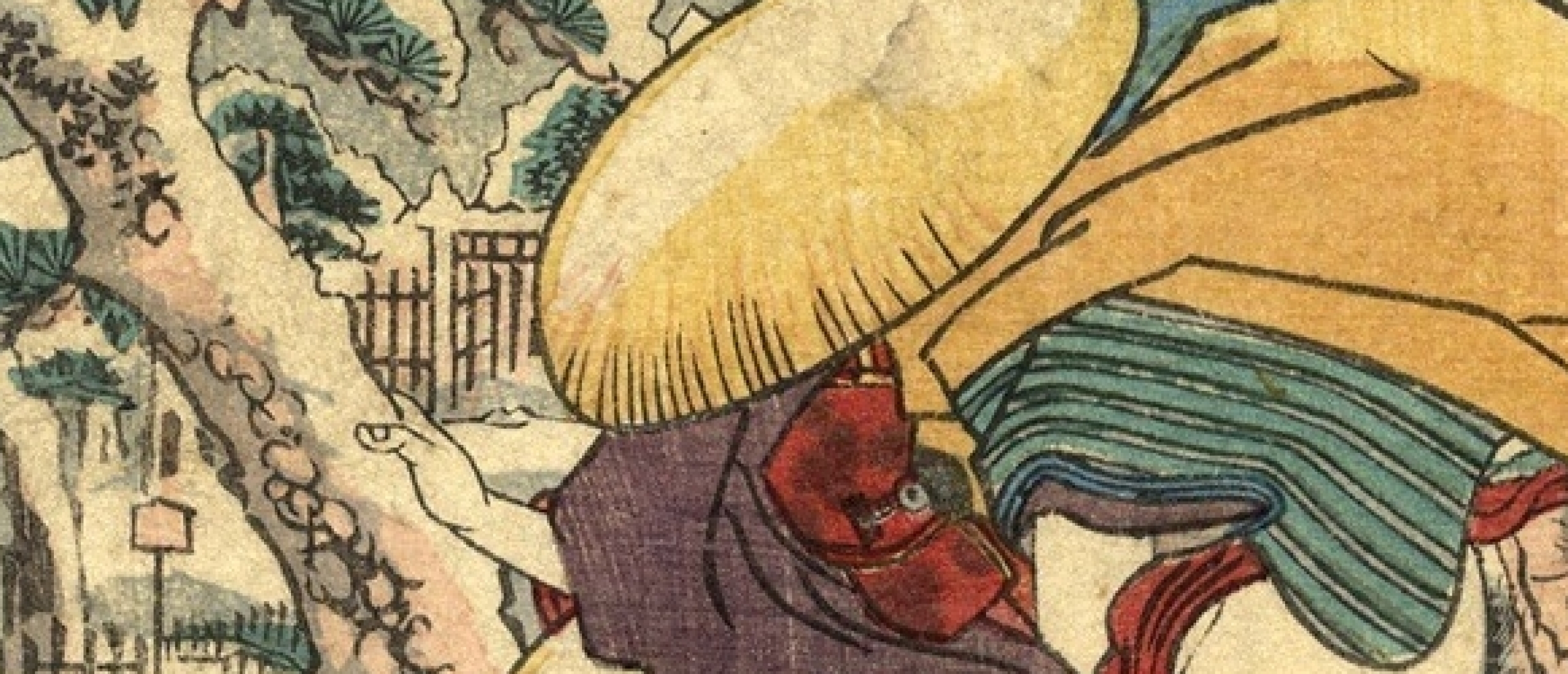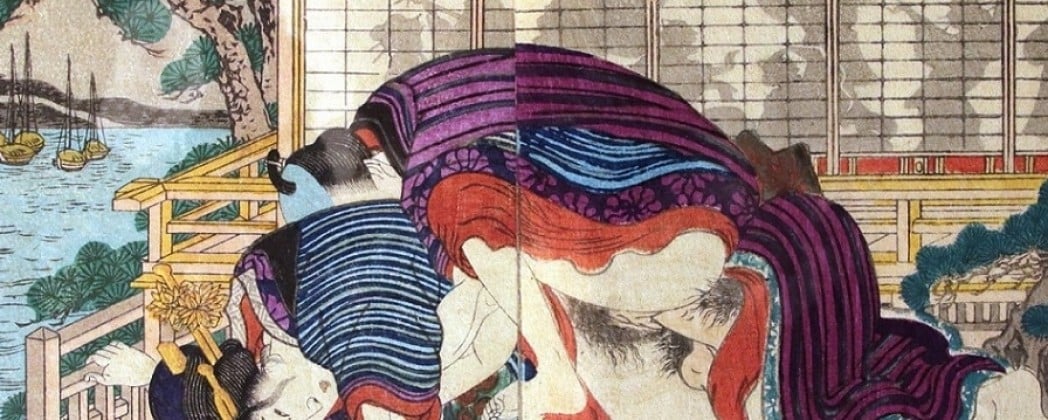

The ukiyo-e genius and color woodblock pioneer Suzuki Harunobu is known for his impeccable use of karazuri, or blind-printing. Blind-printing was a technique whereby a pattern was carved in the wood and then rubbed into the sheet of paper without applying colour pigments, creating a relief in the print. He also employed a special mulberry paper (hōshō), which with its high gloss, strength and softness lent lent itself to creating particular effects.
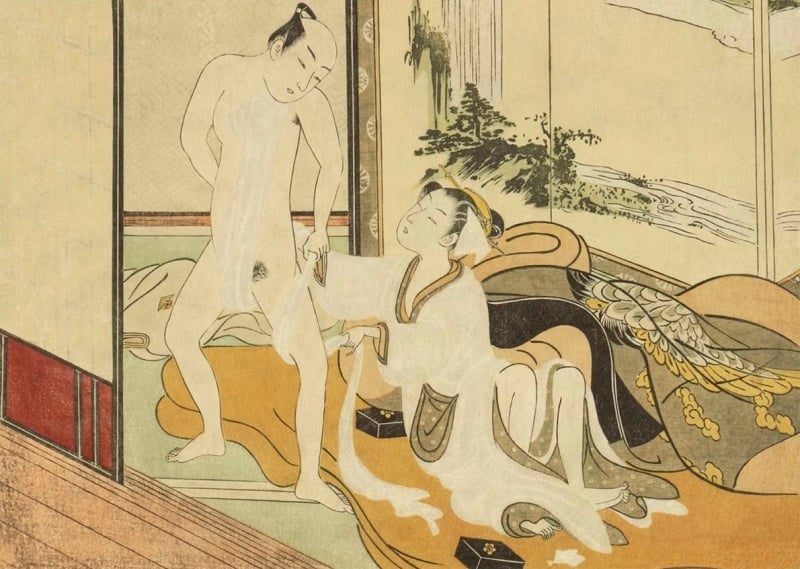
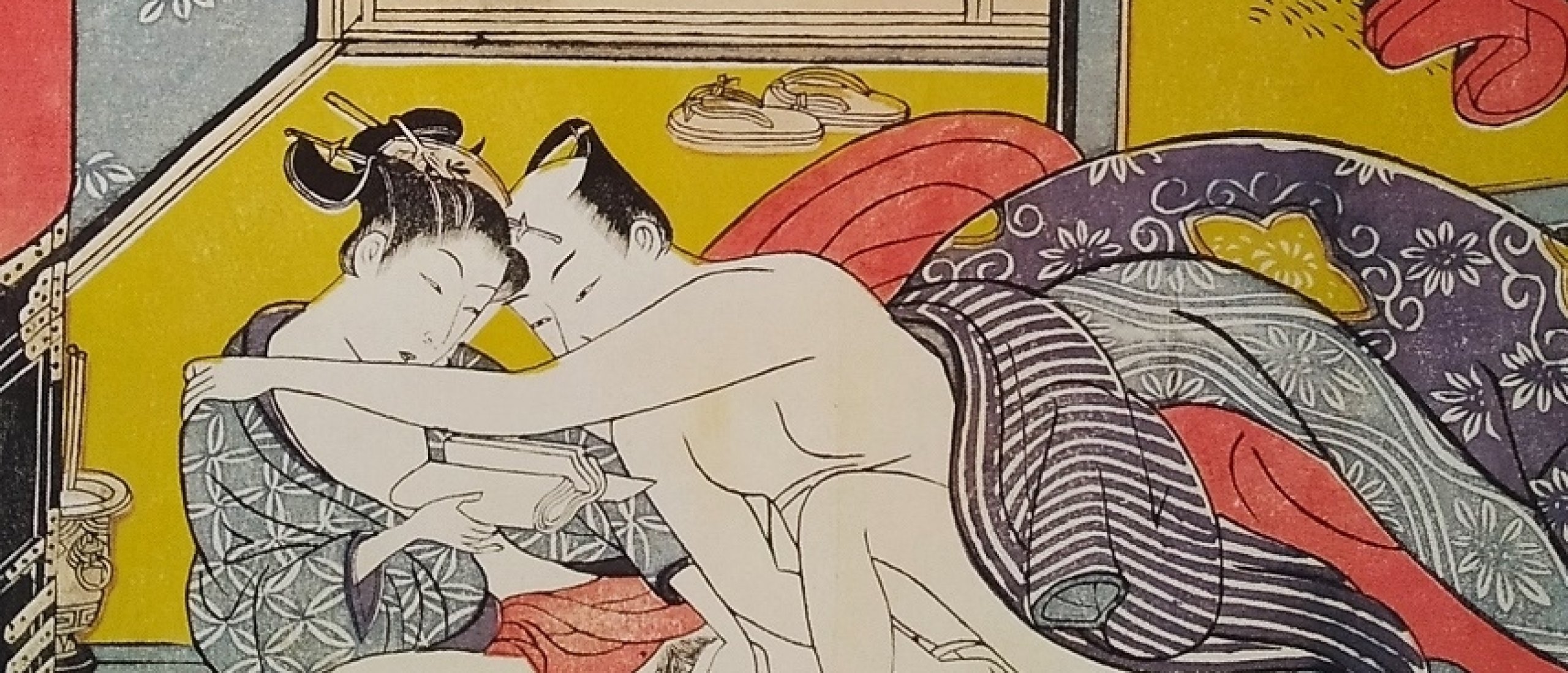
Fig.1 "Couple in a brothel ", 1760s from an untitled series by Suzuki Harunobu
Fundōshi
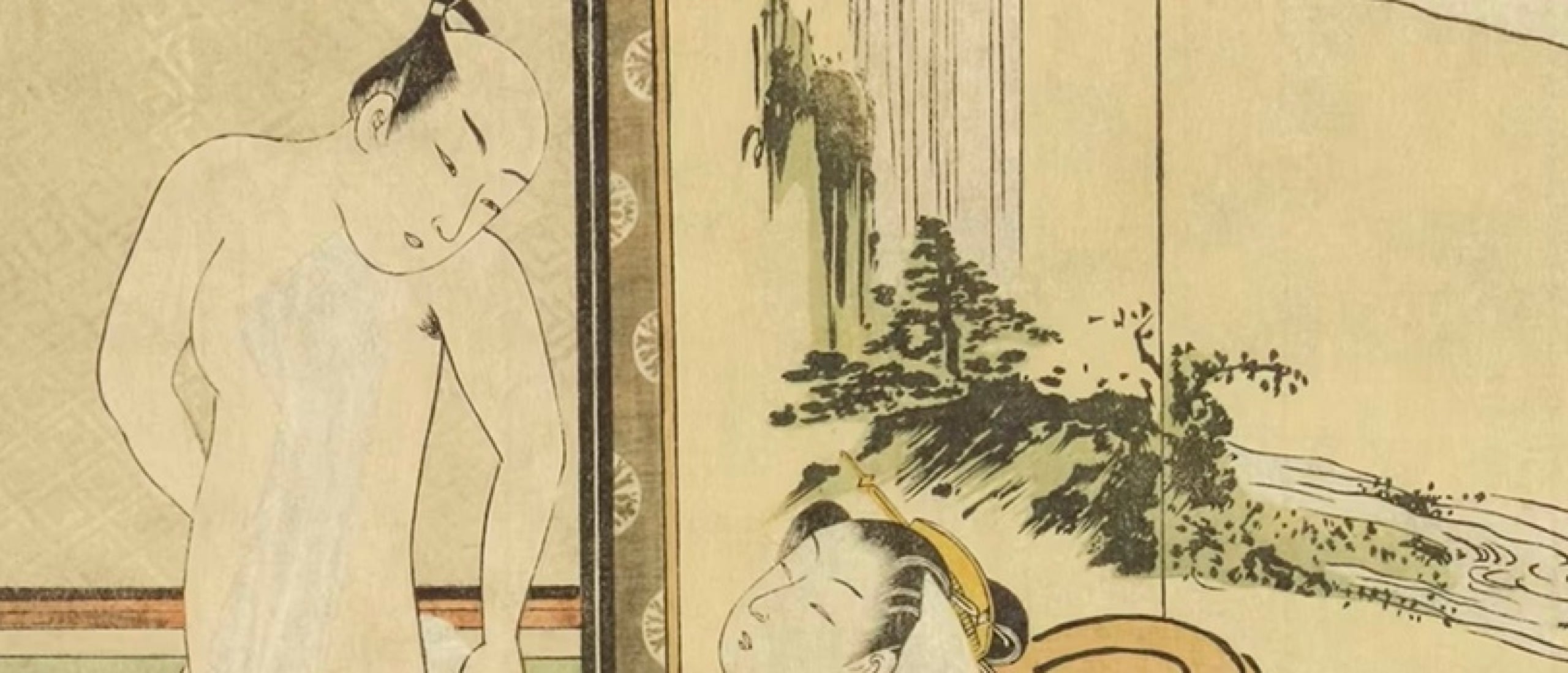
In this enticing design of a couple in a brothel, the karazuri technique was used to draw the folds of the girl's clothing and the band of white cloth that Japanese men used as underwear (fundōshi) with which the girl is trying to stop the man from leaving her.
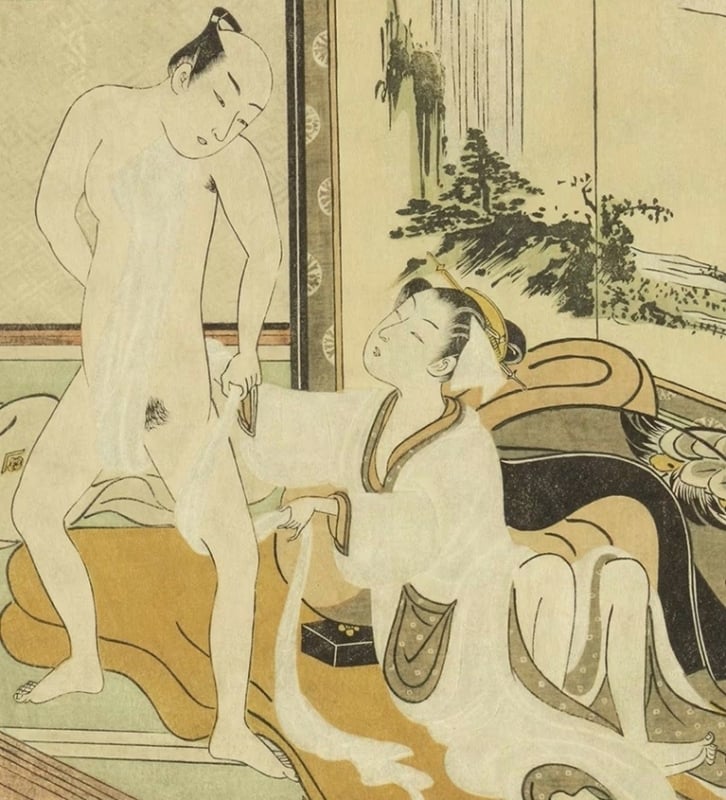
Fig.1a Detail
More Than 700 Designs
Harunobu produced in impressive amount of prints considering that he only worked for about six years in the nishiki-e medium. Continuing research gradually reveals exactly how many full-colour prints Harunobu produced. Harunobu expert David Waterhouse mentions more than 700 designs in Harunobu and his age (1964), and by 1980, several people speak of more than 900 or 1000 designs.
Become a Premium member now and check out 185+ articles on classical and modern shunga art not visible on the blog
Click HERE for Harunobu's two ardent intimacies near a stream
Sources: Klompmakers, Japanese Erotic Prints, 2001, p. 22, fig.
Calza, Poem of the Pillow and Other Stories, 2010