
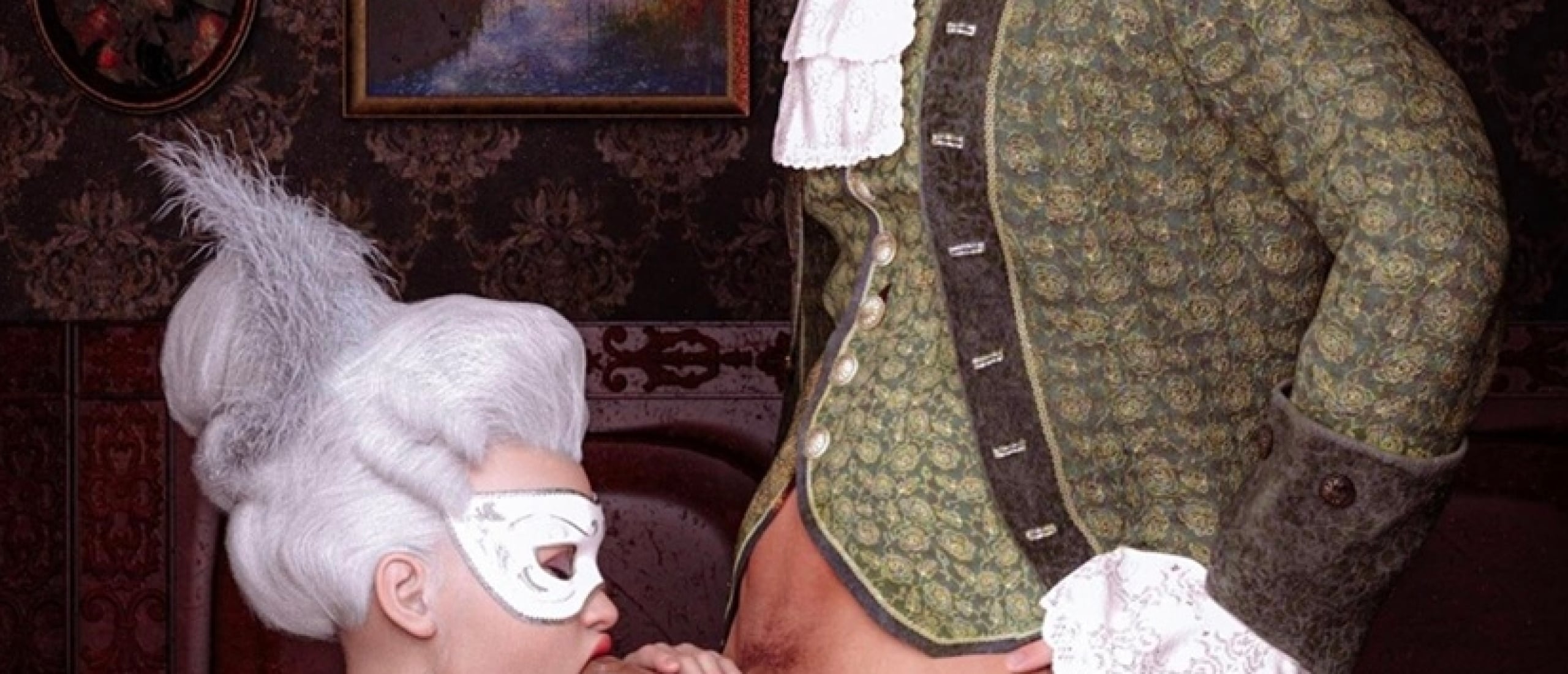

I’ve been thinking about masks, especially about the masks in our current erotic landscape, in our fashion, in our art, in our erotic photography. Not since Renaissance and Baroque Venice have masks been used so much in all our seduction rituals. When examined historically, the use of masks reveals itself has broad subject and some narrowing down is required. Masks have been as long as humans have been around. They were used by the Sumerians, the Egyptians, the Greeks, the Romans, and by tribes that lived far from western civilization; they have been used in rituals, in ceremonies, as well as in the play that accompanies our sex lives.
There is nothing more common in our evolution as conscious human beings, however, than the use of the mask. We also know that masks and disguises have been used for all kinds of nefarious purposes too, from battle armor to cult purposes like the hoods used of the KKK for instance. But for our purposes, let’s do a quick fly-over of how we have used masks more for pleasure and seduction, from the renaissance to the modern day. Let’s skip the fall of Rome and the so-called dark ages and start with the Italian renaissance where many of our seduction rituals have their origin.
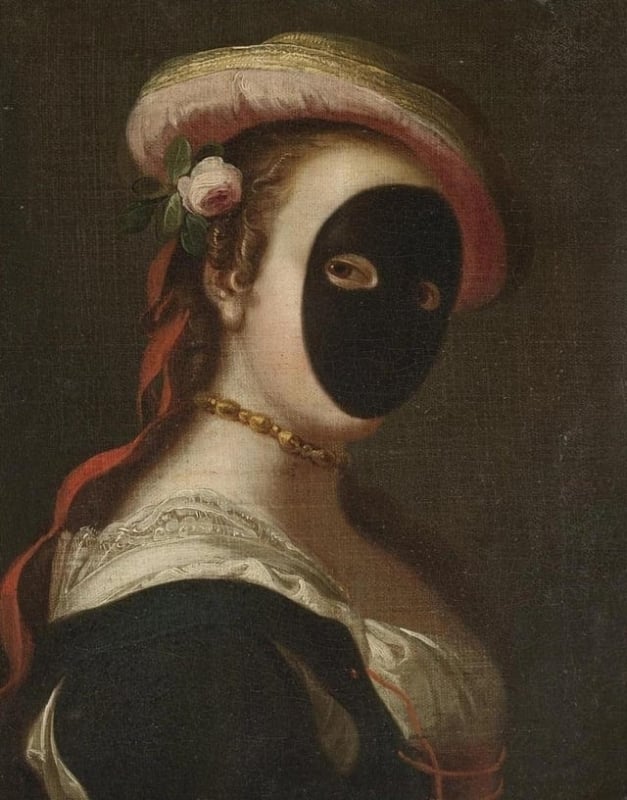
Fig 1. Masked Woman, Baroque Italy
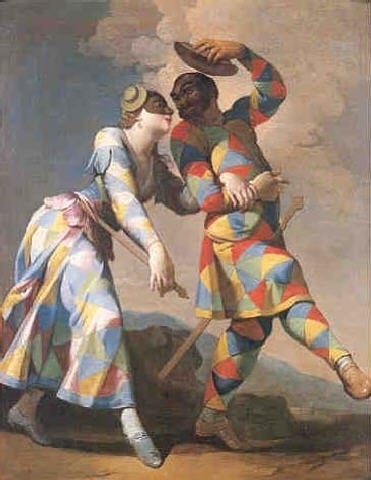
Fig 2. Domenico Ferretti, Arlequinno and Columbina
The Commedia dell'arte
Before it was used in social settings, the masks that we know from Venice were used principally in theatre. The Commedia dell'arte was an early form of professional outdoor theatre that was popular throughout Europe beginning in the 16th century in Italy and continued well into the 18th centuries. It was initially a form of Italian comedy but spread north by French writers like Corneille and Molière. In England in evolved into the eponymous Punch and Judy shows. It’s from the Commedia dell’arte that we get the masked characters that have populated theatre and art since the 16th century such the character Arlequinno now better known as Harlequin. Who can forget the contemporary iteration of Harlequin know as Harley Quinn? Other characters from the Commedia that gave shape to the masks we find in later Venice balls such as a greedy old man called Pantalone or the female figure Pulcinella.
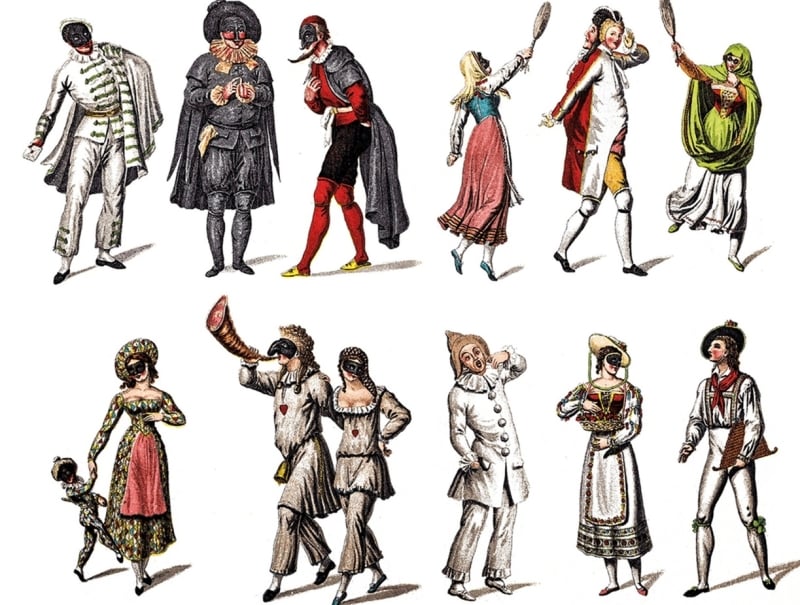
Fig 3. Commedia dell‘arte characters .
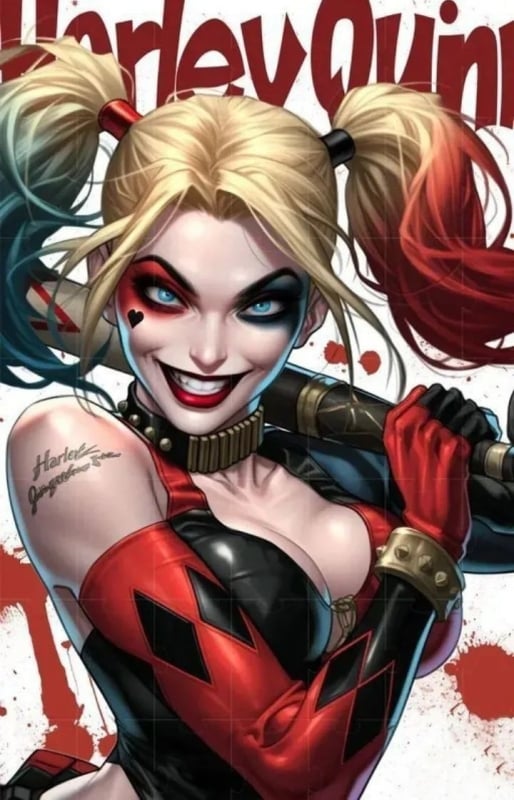
Fig 4. Harley Quinn
The Venice Carnivale
When it comes to the commedia and the Venice Carnival, It’s a bit of a chicken and the egg story when it comes to establishing which came first but both manifestations have clearly fed from each other.According to one story, the Carnival of Venice began after the military victory of the Venetian over a rival city state in the 12th century. In order to celebrate people started to dance and gather in St-Mark’s Square. The festival started in that period and became a regular event during the Italian Renaissance. As time went by the Baroque version of the Carnival created a prestigious image of Venice around the world. It was even more famous during the 18th century.
The Carnival also became known for its encouragement of licentiousness and pleasure, especially among the upper classes. So under the rule of Emperor Francis the second, the festival was outlawed entirely in 1797 and the use of masks became strictly forbidden. It reappeared gradually in the 19th century, but only for short periods, when it became an occasion for artistic creation. After a long absence, the Carnival returned in 1979. It’s been a reason to party on Shrove Tuesday ever since Masks were an important feature of the Venetian Carnival. Traditionally, people were allowed to wear them between the festival of Santo Stefano on December 26 and the end of the Carnival season at midnight on Shrove Tuesday which also marked the beginning of lent. As masks were also allowed from 5 October to Christmas. people could spend a large portion of the year in disguise. Mask makers enjoyed a special position in society, with their own laws and their own guild.
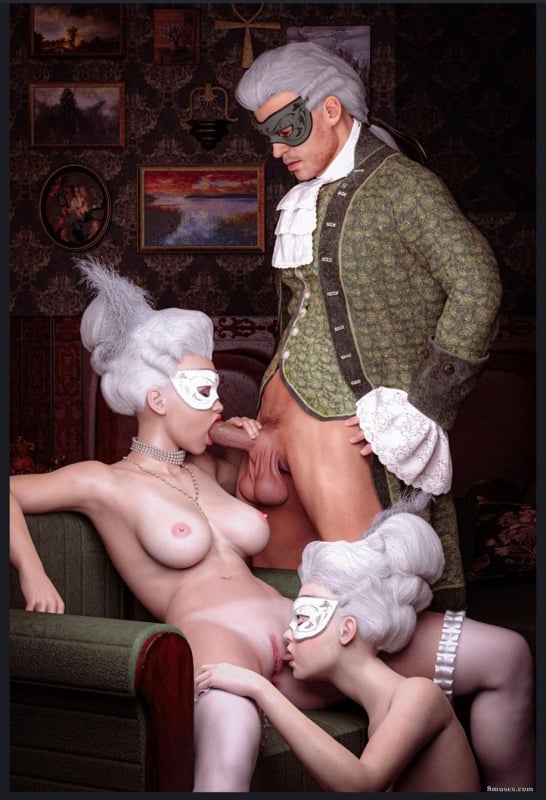
Fig 5. Scene from Venetian mask fantasy
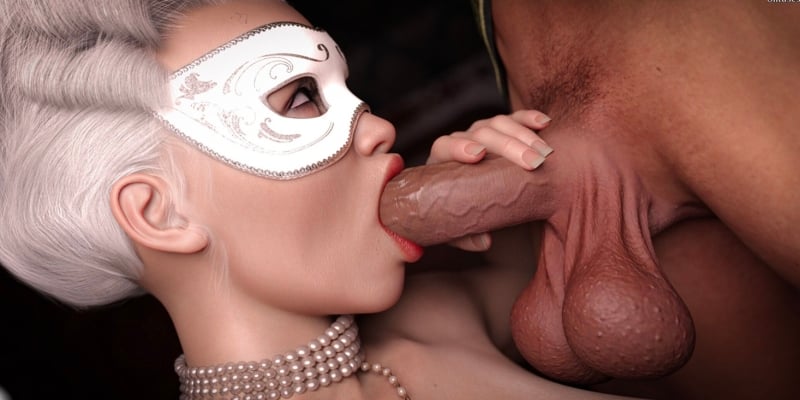
Fig 6. Scene from Venetian mask fantasy (detail)
Become a Premium member now and discover more about the intrigue and seduction of the Venice Carnival in art and literature, the use of erotic mask fantasies in 19th and 20th century art, kinky masks in contemporary art, many additional examples of "Masked" erotica, and MORE...!!
Click HERE for the erotic masquerades in the paintings of the enigmatic artist Andrea Alciato or here for the sadomasochism in 'Evening Hour' by the Dutch Surrealist Joop Moesman
Let us know your thoughts about this article in the comment box below...!!