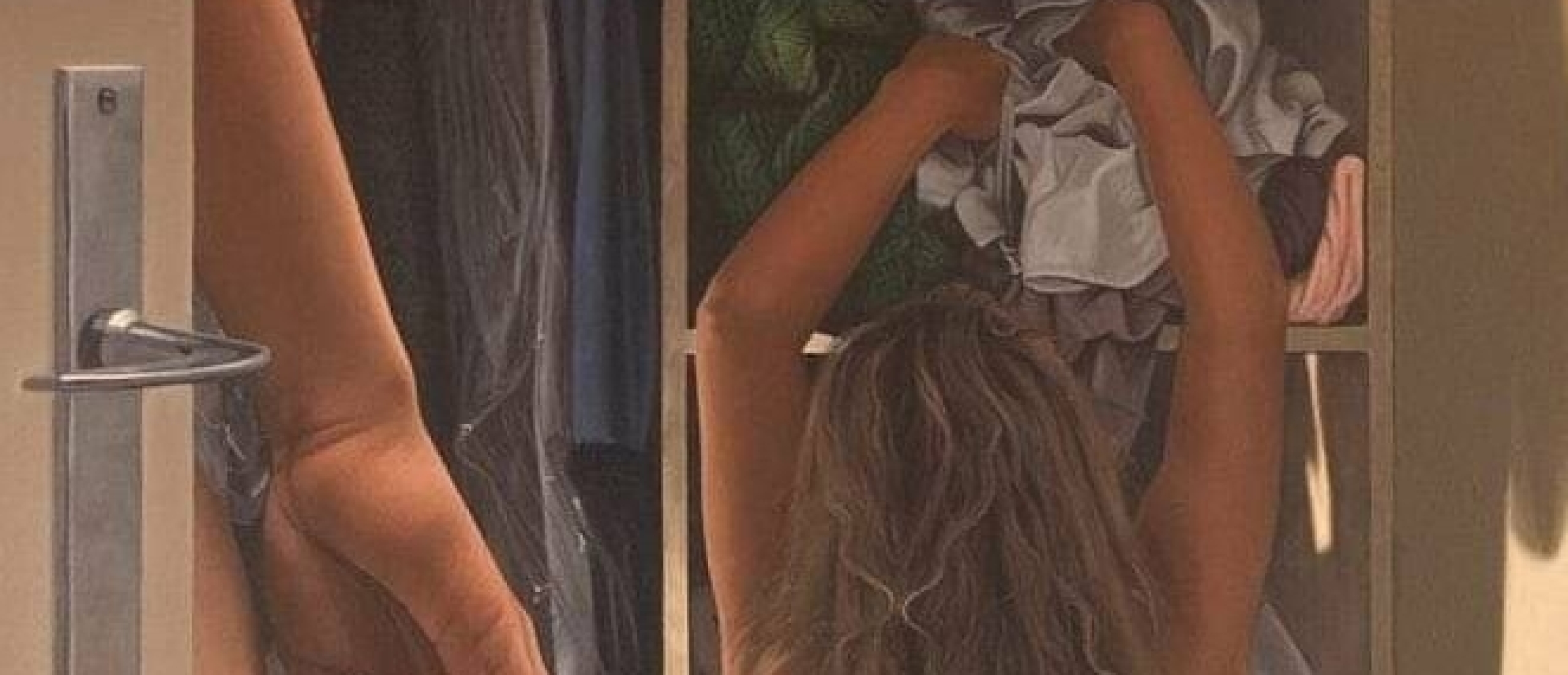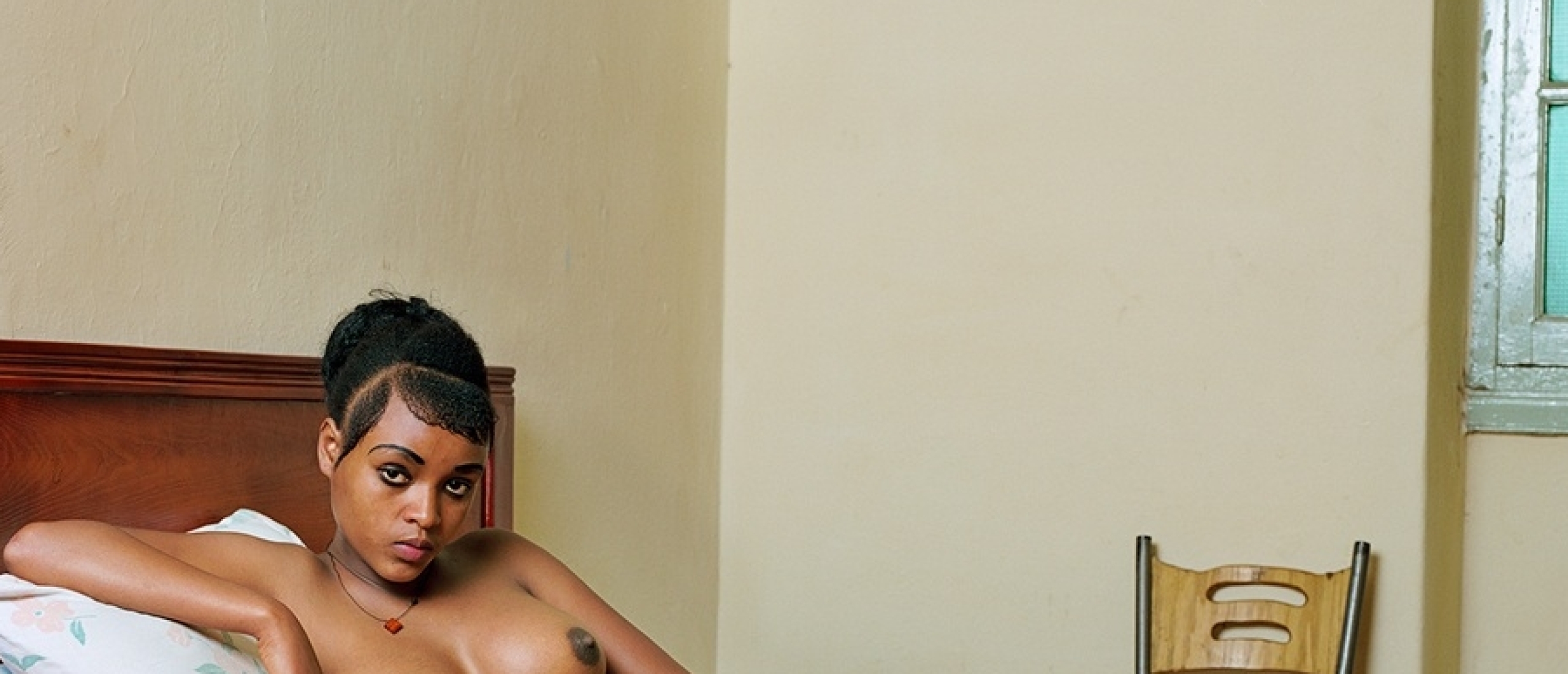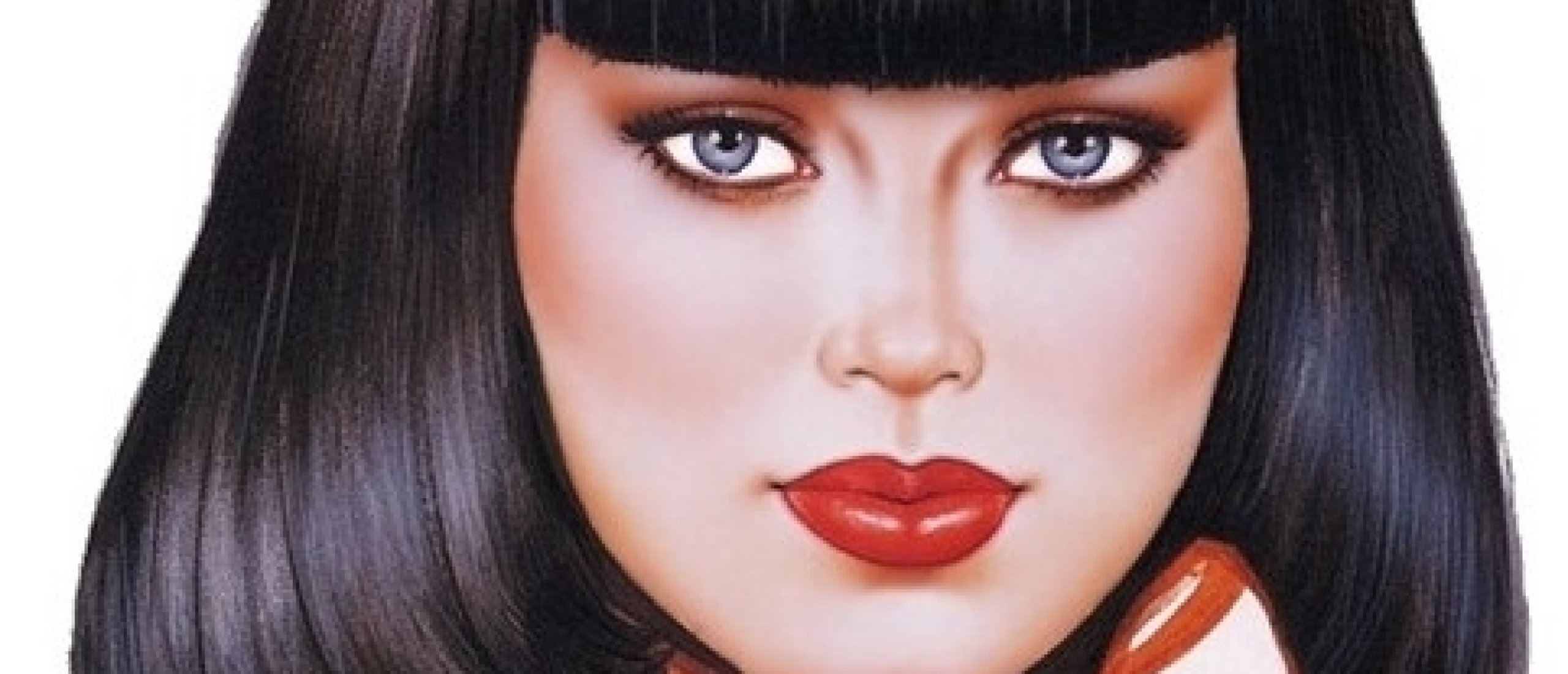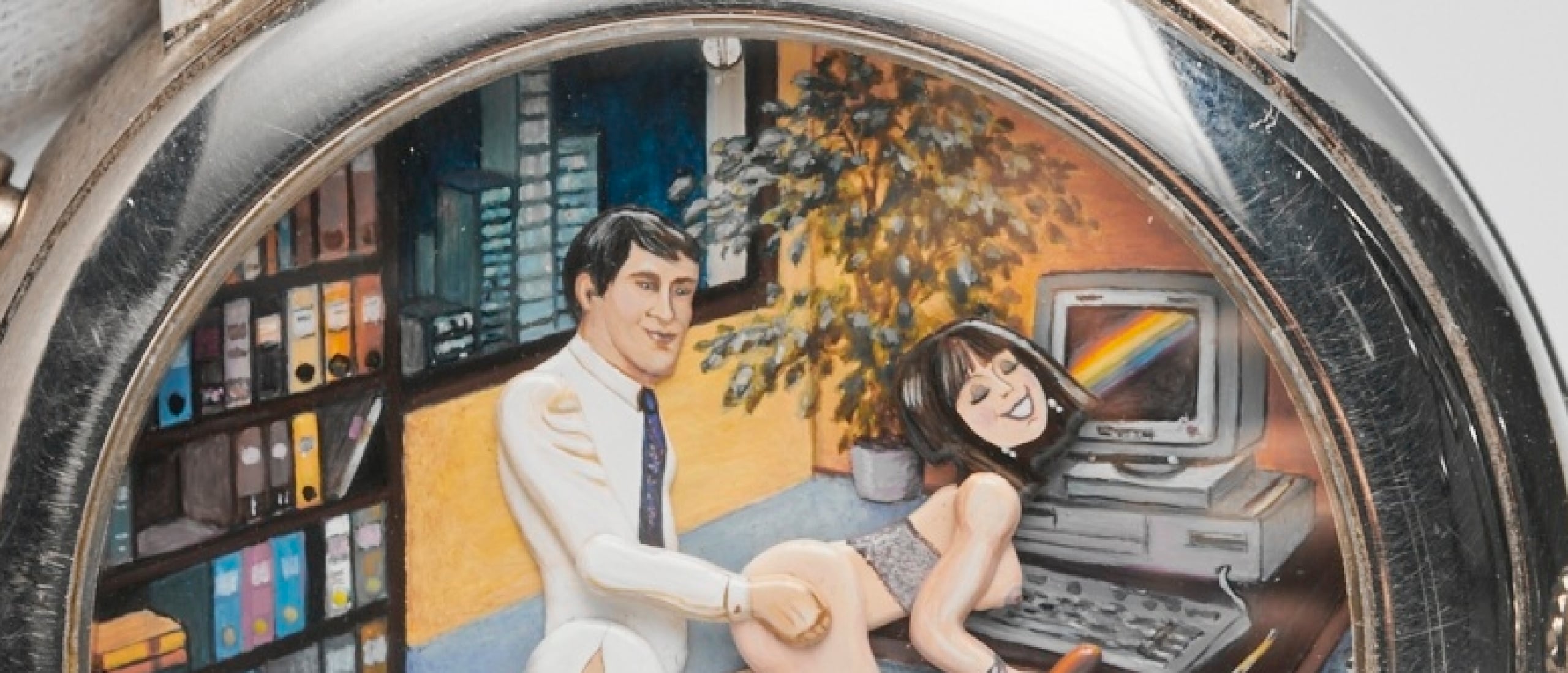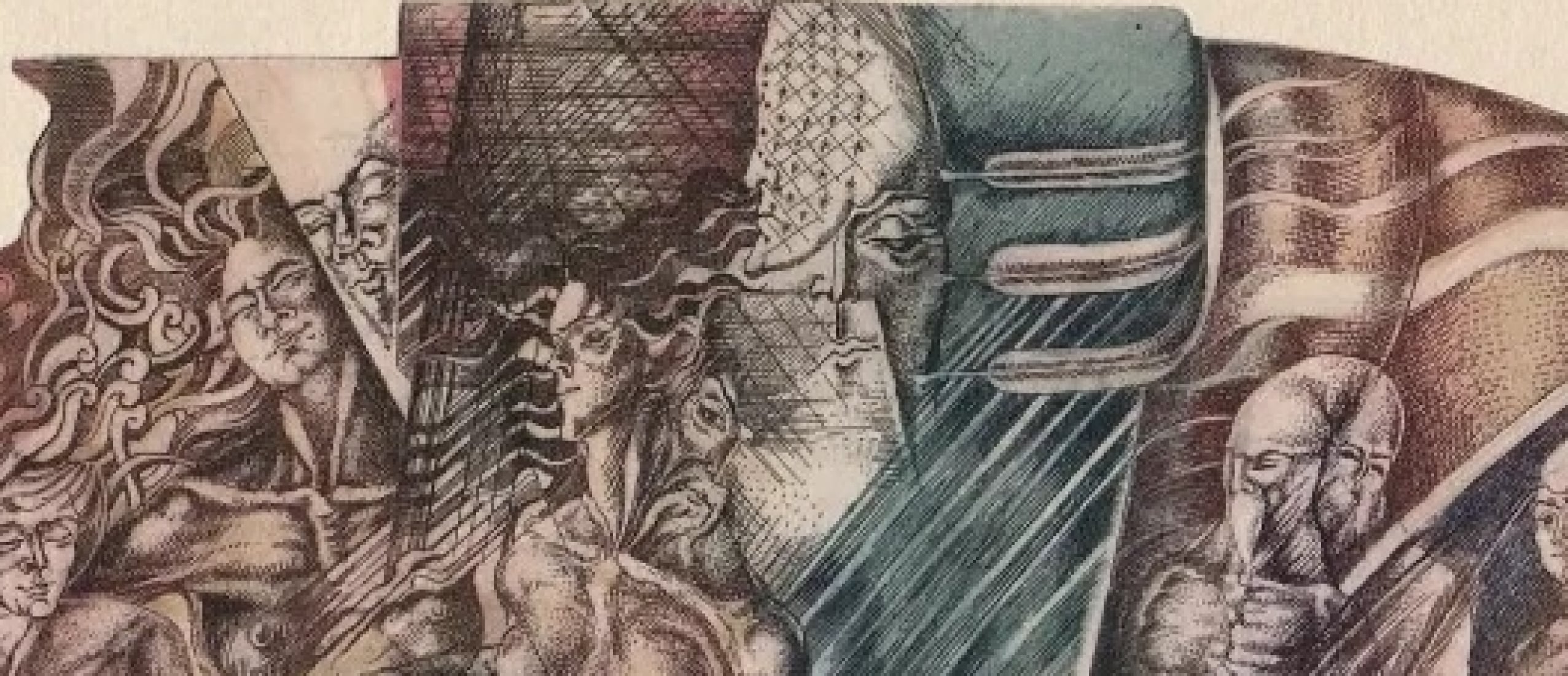
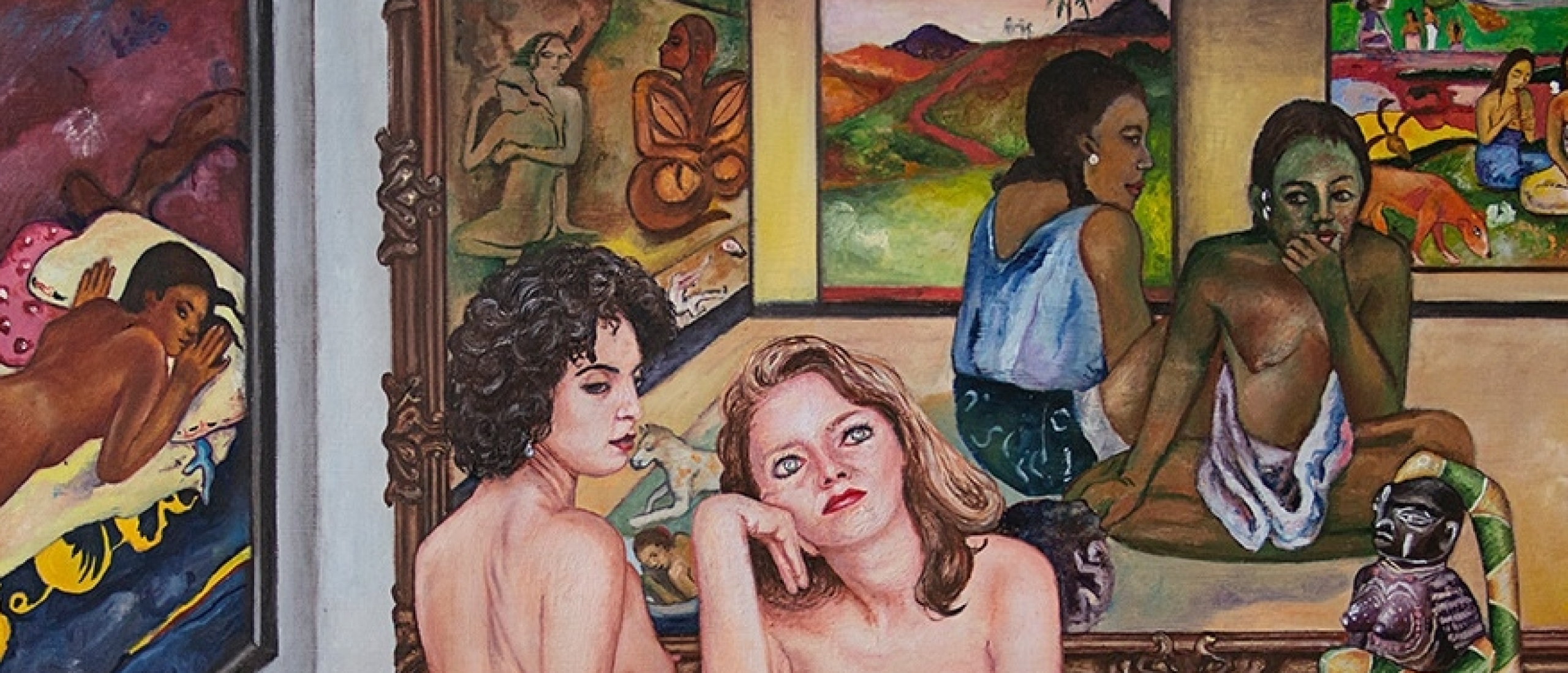

The work of the contemporary artist Nazanin Pouyandeh (born in Tehran in 1981 and based in Paris) defies an easy categorisation because it is a unique blend of realism and dreamlike surrealism with repeated motifs of the body, femininity, myth and desire. Pouyandeh is considered to be one of the most compelling voices in contemporary figurative painting. Although her motifs may seem scattered at the end of the day some key features of her work are liberation, resistance and the erotic as the complex. Visually, also, her paintings all have a distinct style that connects them all in a cohesive unit of erotic exploration.
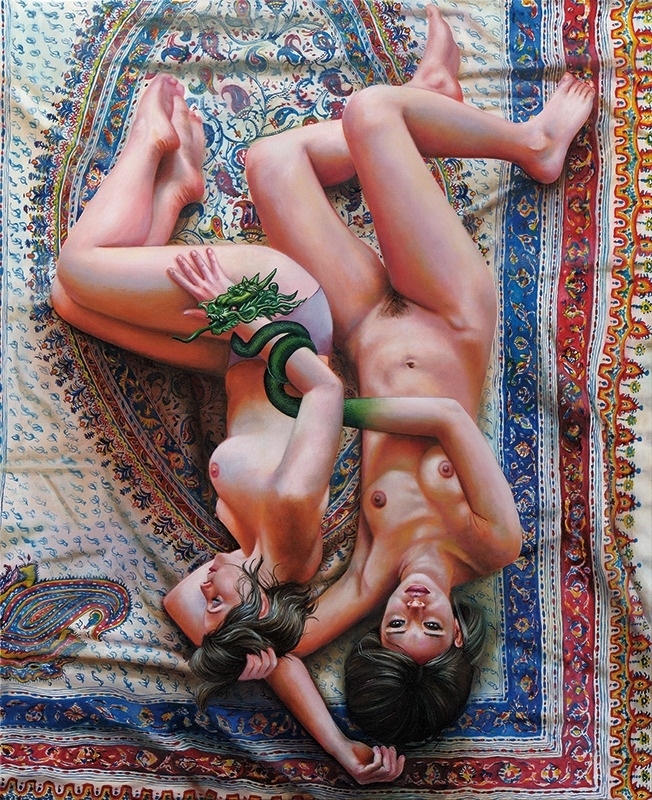
Fig.1 Nazanin Pouyandeh, La route de la soie, (The Silk Road), 2010
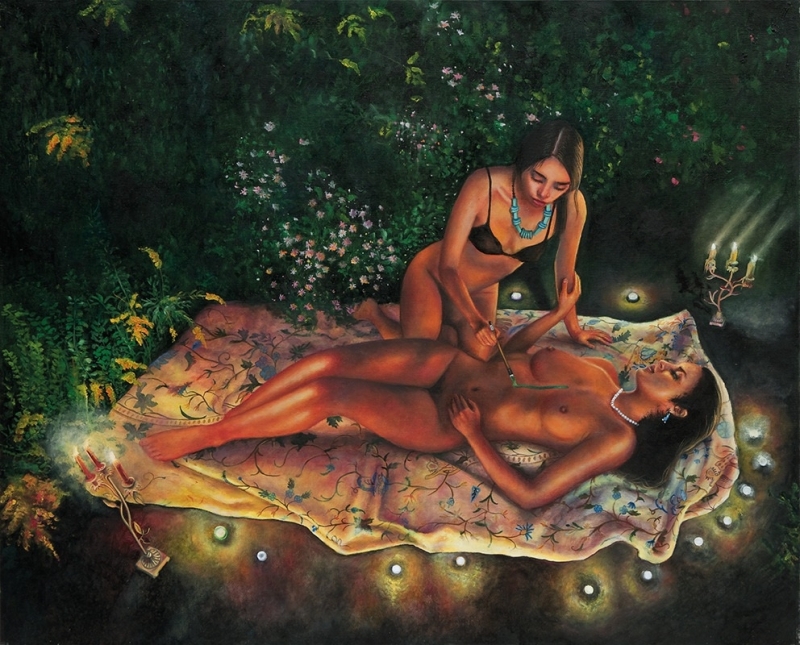
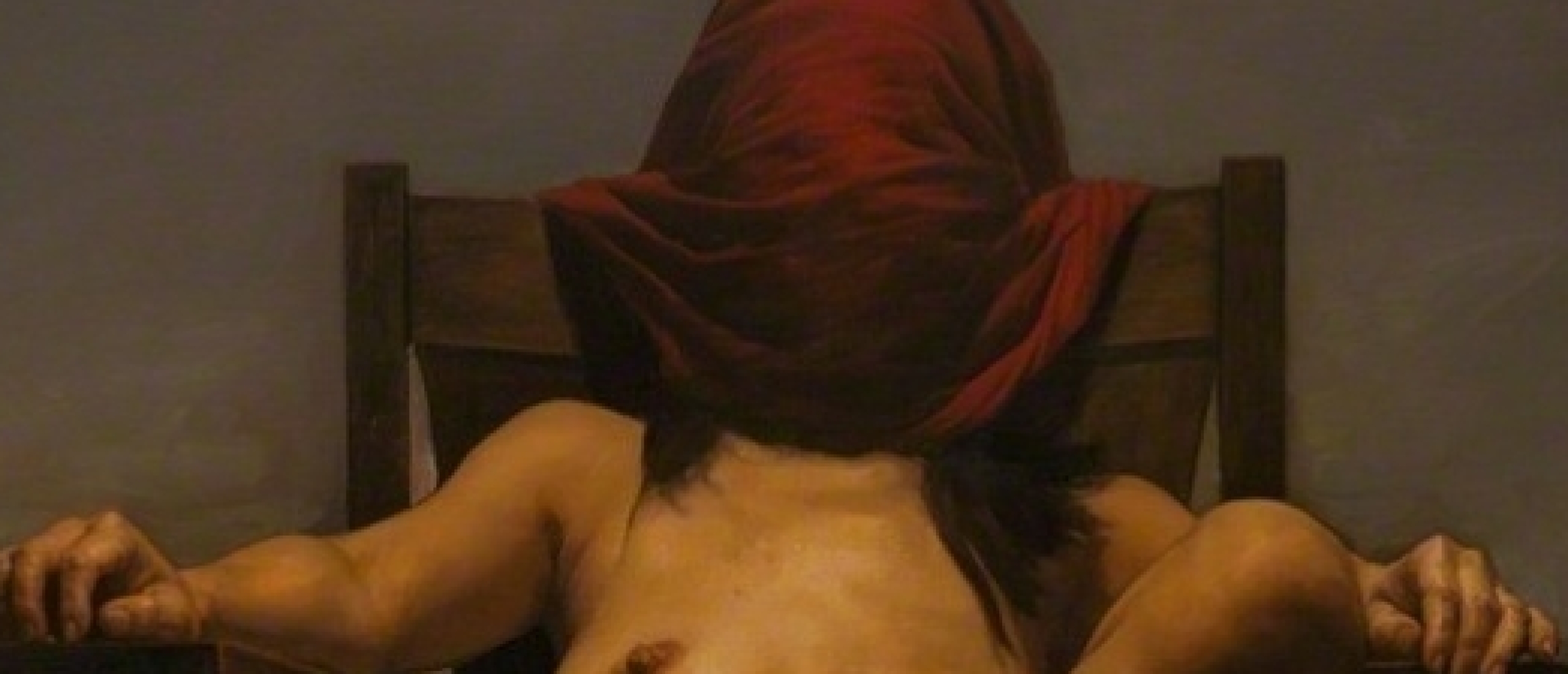
Fig.2 Nazanin Pouyandeh, Les duchesses de Bourgogne (Margaret of Burgundy), 2010
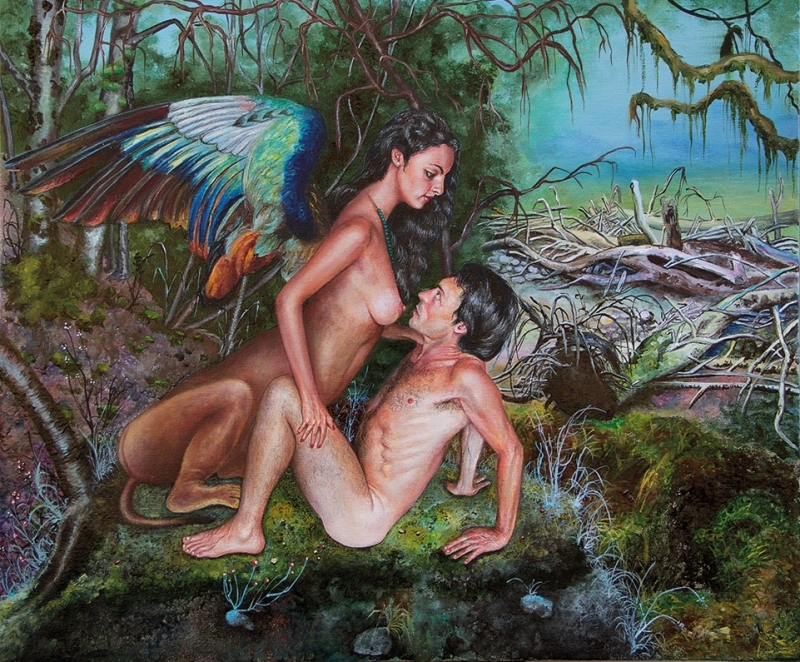
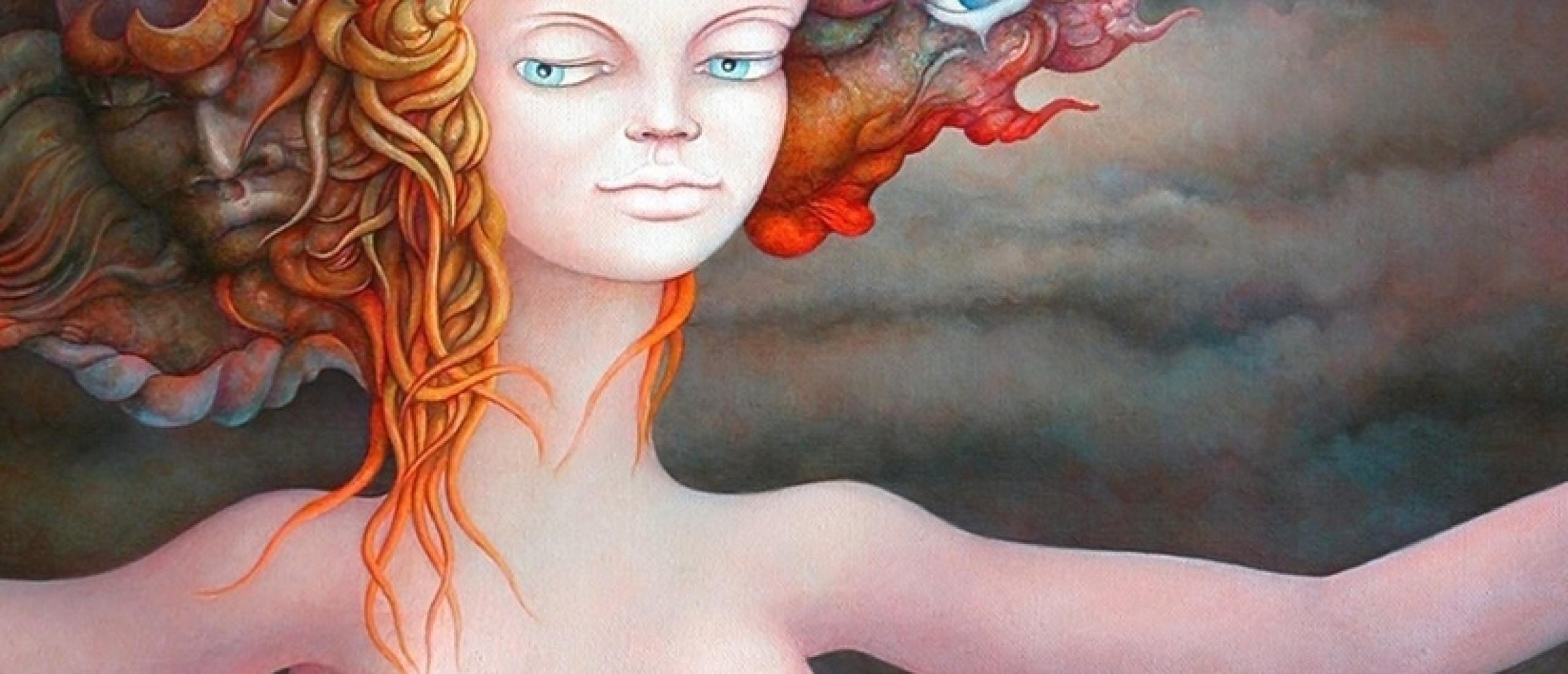
Fig.3 Nazanin Pouyandeh, Histoires naturelles III, 2013
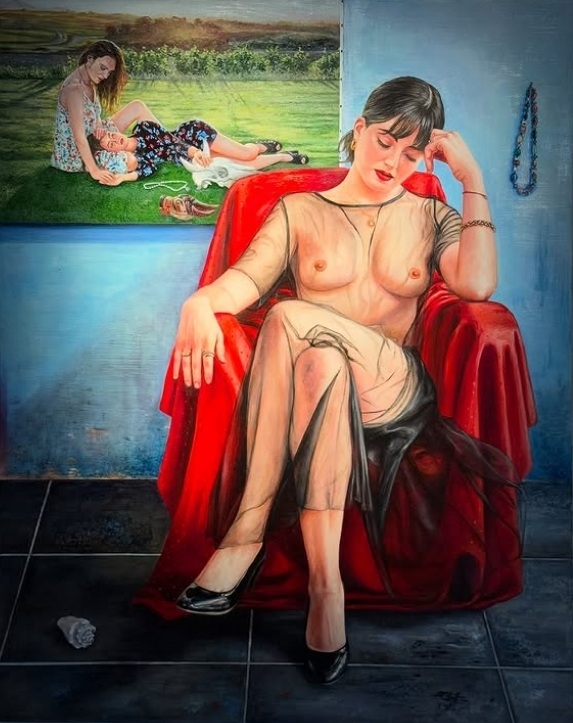
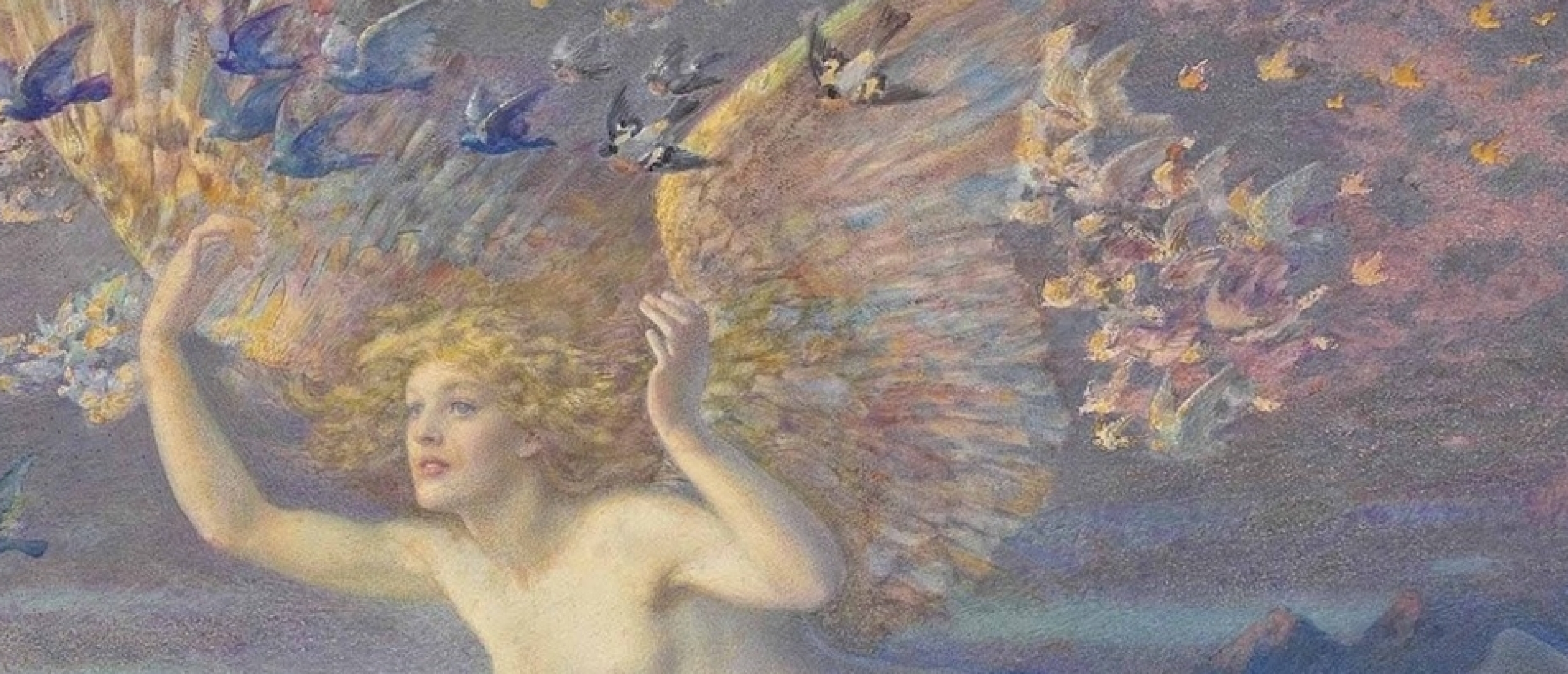
Fig.4 Nazanin Pouyandeh
Serpent Symbolism
Pouyandeh’s paintings all start with a normal motif, just naked bodies in an interior or in an outdoor setting, but then she carefully weaves something unusual into the composition thus turning it into a dreamlike scene which makes us intrigued and surprised both at the same time. In Fig.1., for example, the composition recalls the classical European paintings of Odalisques or reclining nude women, but instantly the normalcy of the scene is destabilised. The way the bodies of these two nude women are intertwined is neither fully tender nor fully sensual. The serpent, evoking Eden serpent symbolism, is wrapping itself between the figures acting almost as a mediator of desire rather than a simple symbol of temptation. While one woman is looking outward towards the viewer, the other woman has her eyes closed; she is turned inward, absorbed in her own thoughts, or sleeping. In a way the serpent becomes a visual hinge between intimacy and intrusion. The decorative textile background, reminiscent of Persian rugs, flattens the space and contrasts with the hyper-realistic style in which the female figures are painted. The tension between ornamental surface and physical realism heightens the sense that we’re looking at a staged psychological tableau rather than a naturalistic moment.
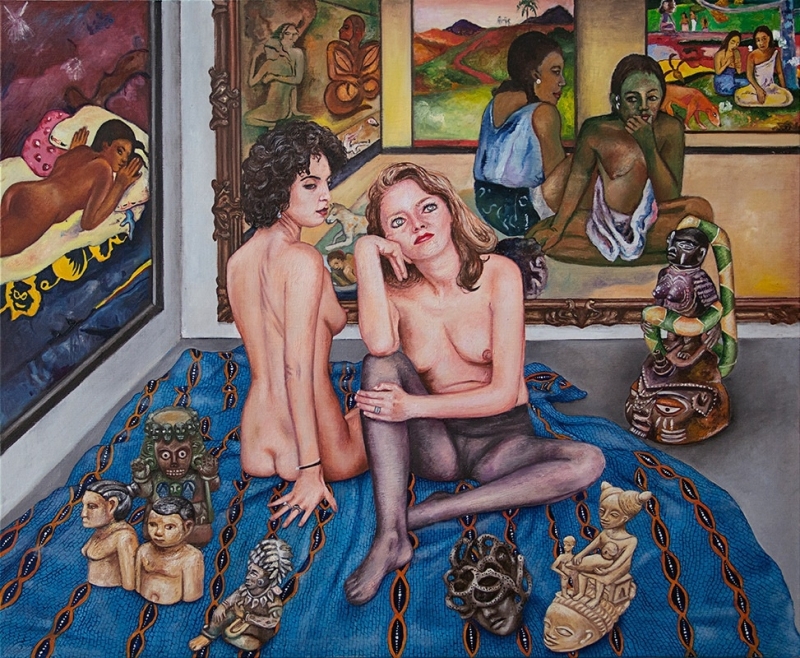
Fig.5 Nazanin Pouyandeh, Oviri, 2018
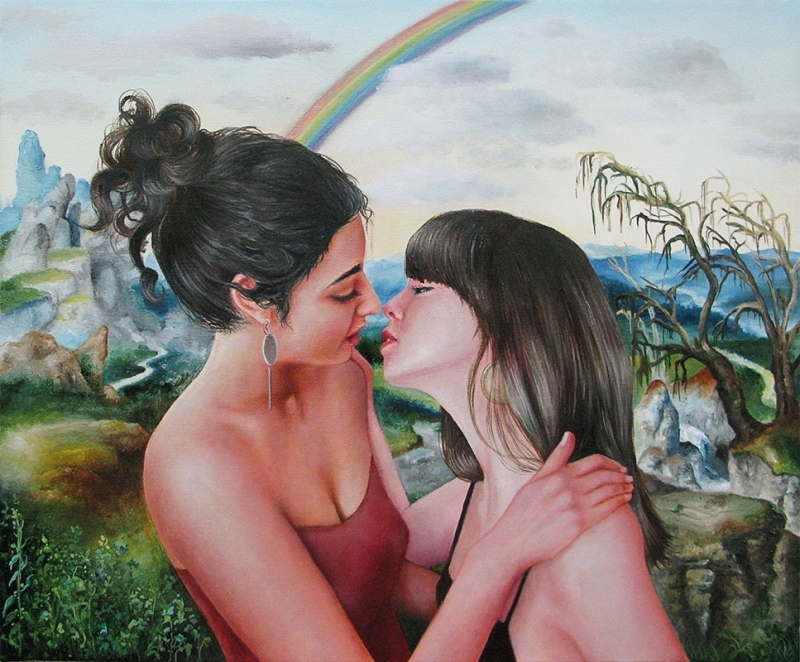
Fig.6 Nazanin Pouyandeh, The Rainbow, 2011
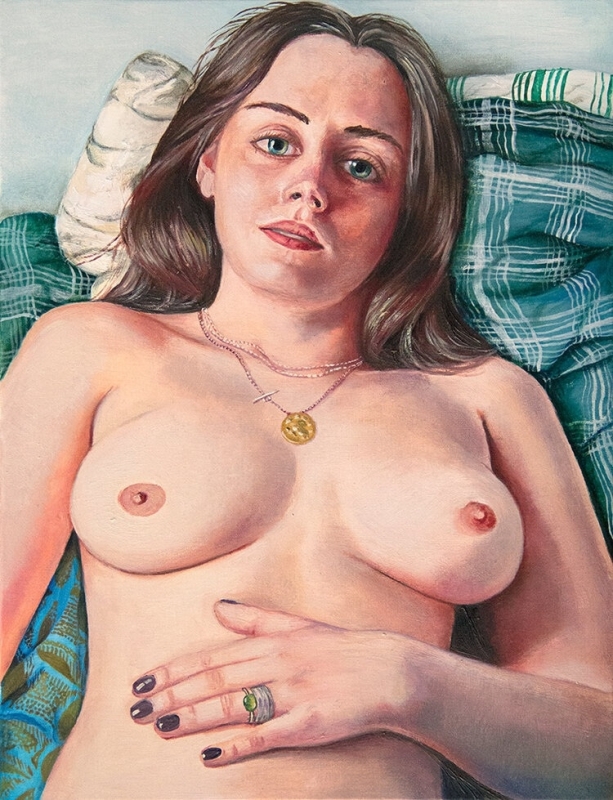
Fig.7 Nazanin Pouyandeh, untitled, 2019
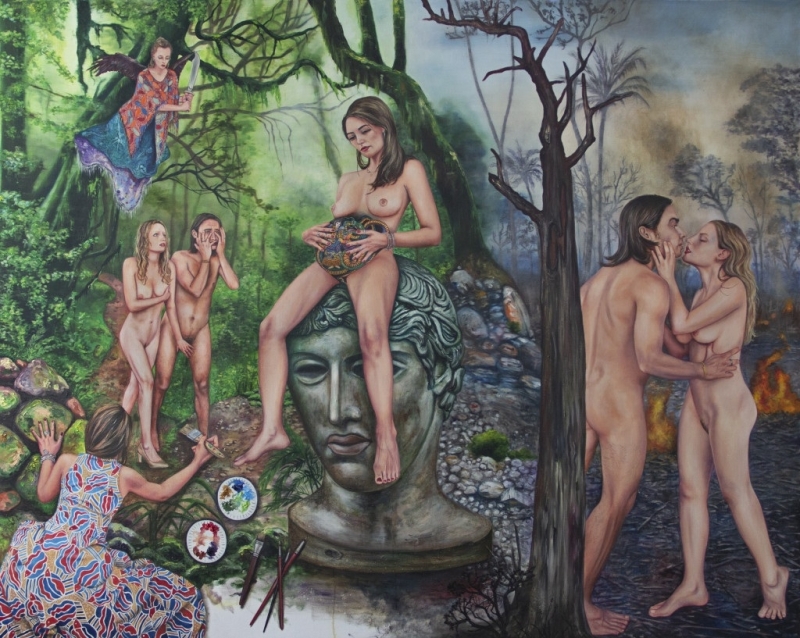
Fig.8 Nazanin Pouyandeh, J'ai été chassée du Paradis, 2019
Winged Female Figure
In Fig.3. the erotic scene takes place outdoors; from a polished, carefully arranged interior to a wild, mythic, almost primordial landscape. The winged female figure suggests a hybrid mythology; she is part harpy, part an enchantress, and in this way Pouyandeh is recalling the traditions from Greek mythology without interpreting it strictly in the academic sense. Here the mythology is a springboard for further personal explorations of the erotic and the strange. The dynamic here is about power; the winged female figures dominates both in terms of composition visually and physically in relation to the man who is seen as being grounded, looking upward and vulnerable. Their eye contact creates a charged vertical axis; desire is mixed with tensions, possible threats and the landscape echoes this sense of strangeness and uncertainty. When looking at Pouyandeh’s paintings we might think; what is going on here? And even if we cannot pinpoint it precisely, we can always feel that something is off, that something is ominous or simply unexplainable.
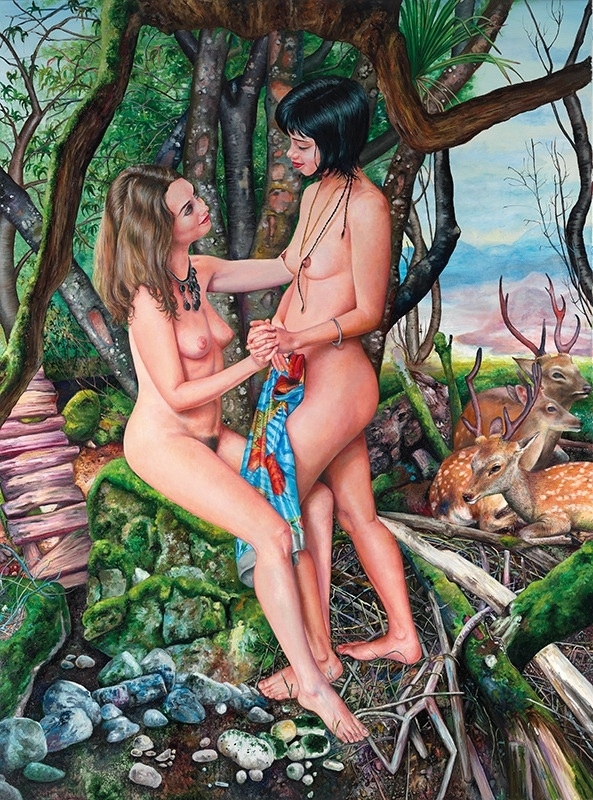
Fig.9 Nazanin Pouyandeh, Julie et Marion, 2013
In the extended Premium edition you can find an extensive review of Fig.2 (Margaret of Burgundy), more about the symbolic elements in Pouyandeh's work, an analysis of her erotic vocabulary and aesthetics, and MUCH more...!!
Nazanin Pouyandeh is active on Instagram
Click HERE for our interview with the dark surrealist Saturno Buttò
Let us know your thoughts about Nazanin Pouyandeh's art in the comment box below...!!