
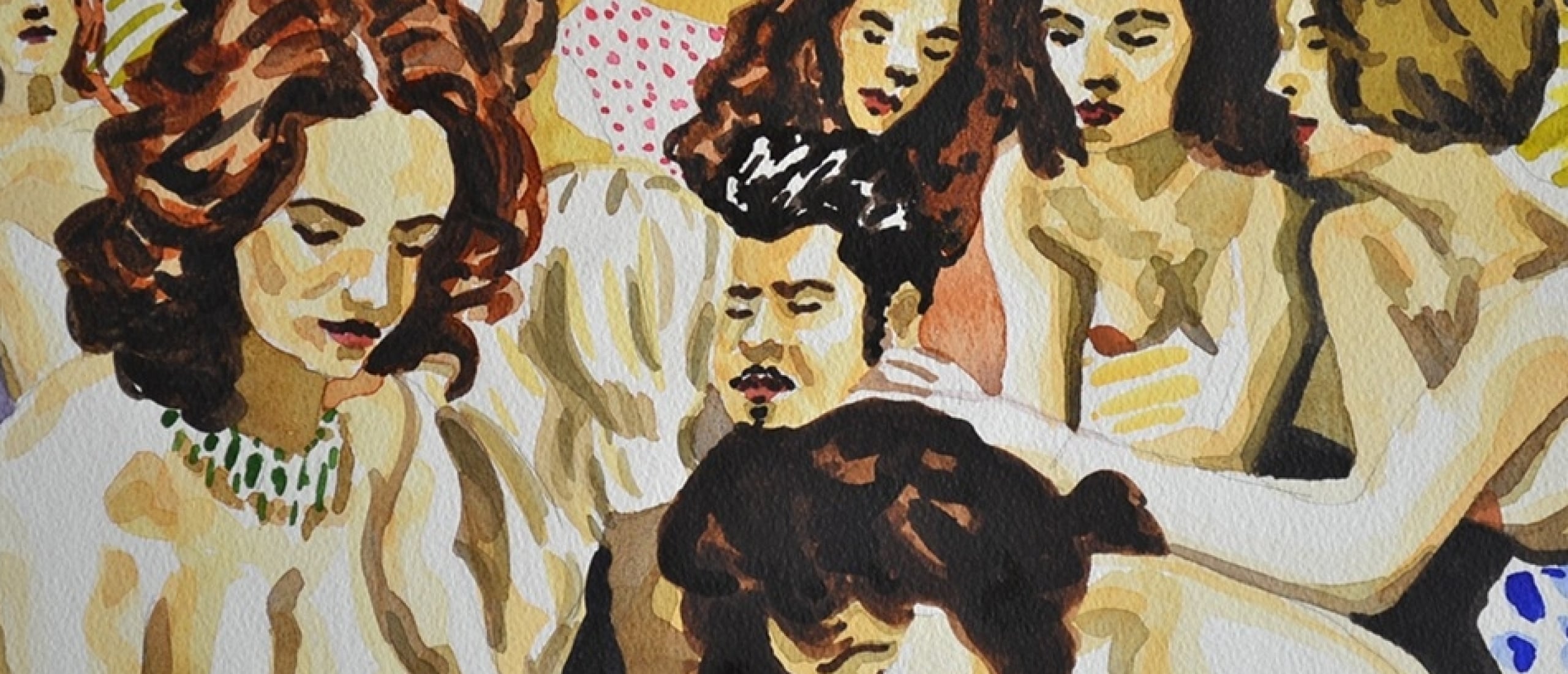

The paintings of David Murphy confront the viewer with a visual language that is at once unapologetically explicit and profoundly introspective. For Murphy, erotic imagery is not a stylistic choice nor a provocative gesture designed to scandalise, but the core through which he has sought to understand himself, desire, and the complex emotional terrain of embodiment. Across decades of practice, his work has remained committed to transforming the visual vocabulary of pornography into an arena of painterly exploration, psychological inquiry and expressive intensity.
This conversation reveals an artist whose trajectory cannot be separated from biography. Murphy speaks candidly about childhood isolation, artistic obsession, and the formative encounters that shaped his commitment to erotic subject matter. From early copies of art historical nudes to the revelatory discovery of artists such as Egon Schiele, his development reflects a persistent effort to reconcile technical mastery with emotional truth. Erotic painting, in this context, emerges not as spectacle but as a deeply personal methodology, one through which questions of shame, longing, fear, fascination, and identity are continually negotiated.
Throughout the interview, Murphy describes a practice characterised by cycles of creative paralysis and immersion, where periods of psychological turmoil often precede intense bursts of production. Colour, gesture, and composition become registers of mood and markers of lived experience, while series-based working methods allow recurring themes to unfold across variations of form and atmosphere. Equally striking is his ambivalent relationship with audiences and institutions, shaped by decades of rejection, misunderstanding, and marginalisation, yet counterbalanced by moments of recognition and dialogue.
What emerges is the portrait of an artist for whom erotic painting functions as both confrontation and refuge; a site where discomfort, vulnerability, and catharsis coexist. This interview offers rare insight into the motivations, struggles and convictions that continue to animate Murphy’s singular artistic world.
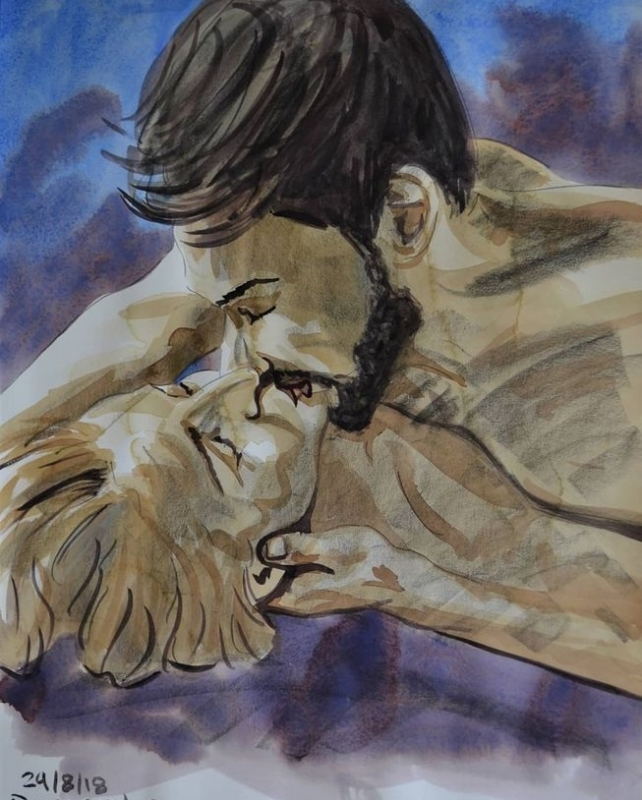
Fig.1 David Murphy, The Kiss, 2018, Watercolour and Conte Crayon on Arches 140lb Watercolour Paper
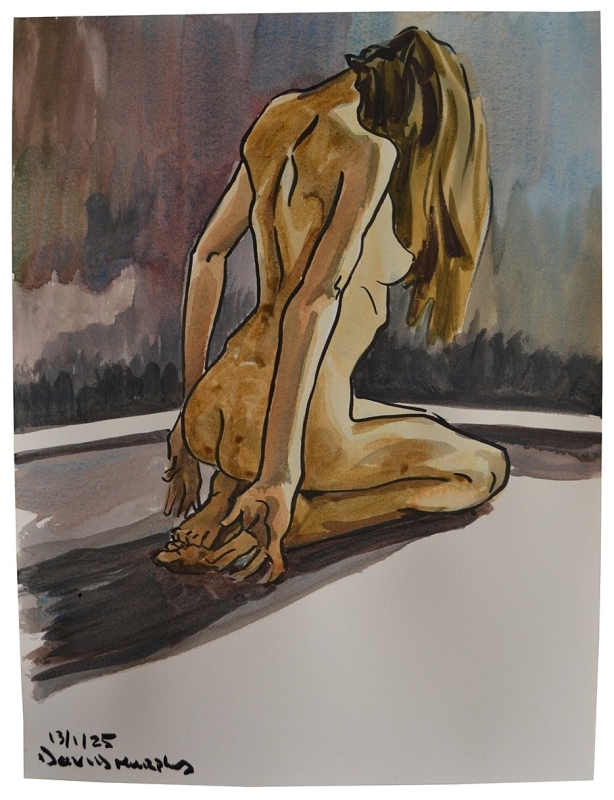
Fig.2 David Murphy, Kneeling Female Nude, 2025
When did erotic imagery first become central to your artistic practice rather than peripheral? Do you remember a specific moment or painting where you realised this was the direction you wanted to pursue?
I have drawn and painted for as long as I can remember. As a child I was physically and emotionally abused by my mother, and bullied in school, so I withdrew into myself, and I became obsessed with art. At age ten I decided I wanted to become a great artist. So, I would copy female nudes from practical books on art, and later art history books. For example, I would do copies of nudes by Pierre-Auguste Renoir and later Gustave Courbet. By fifteen I was often making female nudes but they were copies of paintings. I have always been obsessed with women, yet technically drawing or painting the female nude was so difficult for me at the start, because I lacked the skills, but I was determined to master it. However, I was drawing the female nude long before I had even seen a naked woman. I was chronically shy around real girls my age and I only lost my virginity to prostitutes in Amsterdam many years later in 1992 at the age of twenty-one. However, women were always the centre of my universe, so it seemed only natural to make them the centre of my art. As a teenager, I was always frustrated by the idealisation of the female nude in the limited art history I knew at the time. So, when I discovered Egon Schiele at the age of fifteen and a half it was a revelation. It was not only his physical and sexual truthfulness that impressed me, but also his incredible expressiveness, and his pathologization of desire. Influenced by Schiele, I also came to see my self-portraits as companion pieces to my porn paintings. As a teenager I also started collecting a lot of books on erotica, but I was disappointed by the poor technical standards, naivety, and kitsch quality of a lot of erotica. Pornography was banned in Ireland until 1996, and we had some of the most extreme censorship laws in the West. So, when I went to Las Vegas in 1989, I bought porn mags and shipped them home, and I became obsessed by what I saw. I decided that if I was to be honest about myself and my desires, I had to make porn central to my art, and to turn the base material of porn into artistic gold figuratively speaking. Yet, I was painting porn as a twenty-year-old virgin who had never even been kissed. I was also very ashamed of my use of porn, and I could not understand why it had such power over me. I thought that if I painted porn stars, I could learn to understand women and not fear them so much. Though I think it only made me even more terrified of women.
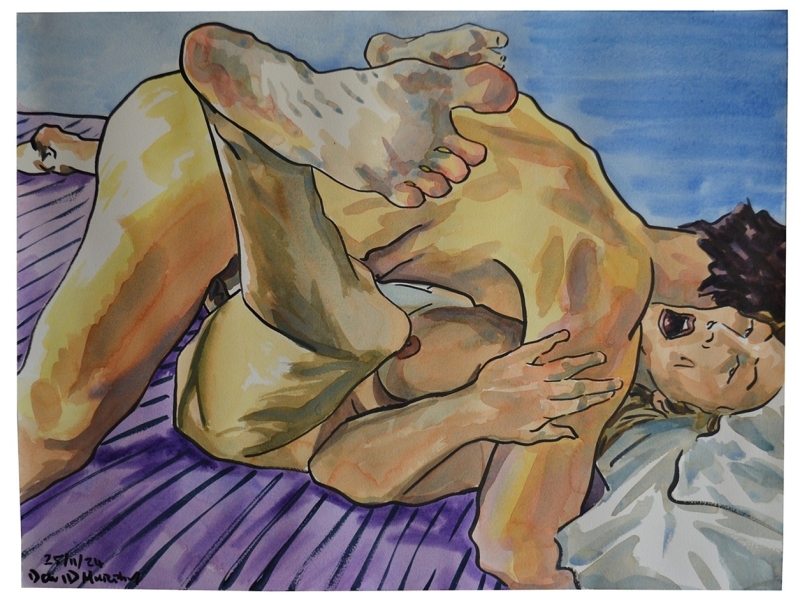
Fig.3 David Murphy, Ecstatic Lovers, 2024
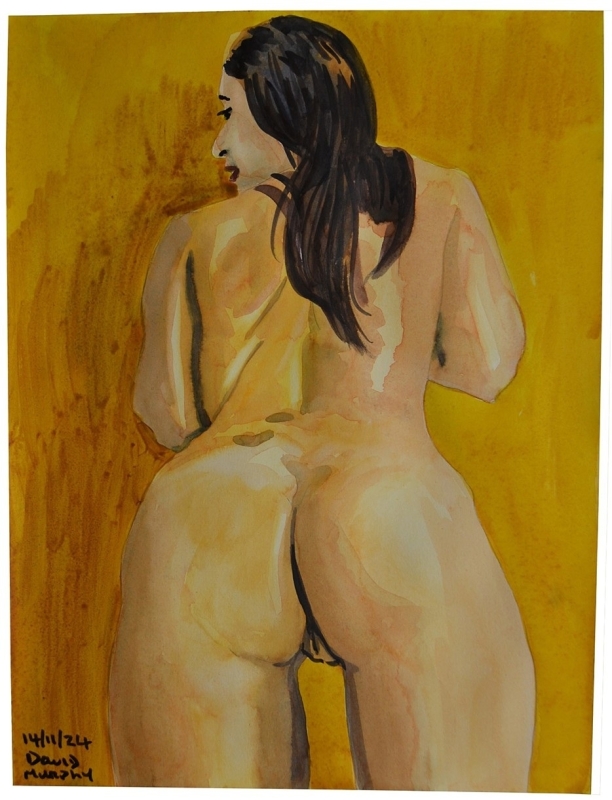
Fig.4 David Murphy, Woman Presenting Her Bottom, 2024
How does a painting typically begin for you; with a visual idea, an emotional state, a gesture, or something else?
Unfortunately, I suffer from artistic blocks a lot. I can go weeks or months unable to draw or paint. So, I build up source images from porn, webcams, and sex scenes in movies. Meanwhile I look at a lot of art to find inspiration. Often, I get obsessed by a particular colour combination in a painting by one of my heroes, and I try to find an image that would match that image. I also go through a lot of emotional turmoil, and I try to think of how I can resolve those feelings in a painting. So, its weeks or even months of despair. Finally, I commit to drawing or painting, and if things go well, I get totally lost in the painting process. If I am in good form, I work spontaneously and I do not think too much about what it means, but rather how it feels. In many ways, even my porn paintings are self-portraits. I tend to work in series and make up to twelve works in a single style. BTW I use the term porn instead of erotica because I think it is dishonest, especially since my work is so pornographic in comparison to most erotica.
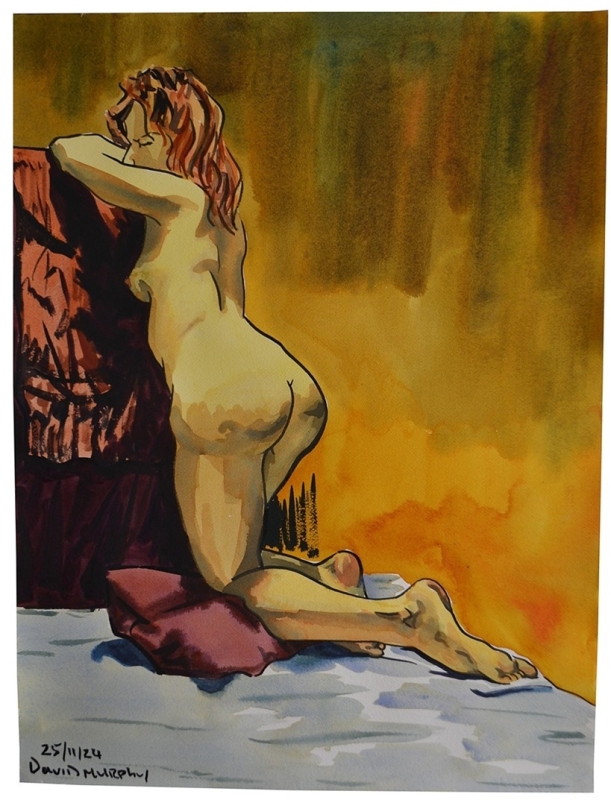
Fig.5 David Murphy, Resting Female Nude, 2024
What are your artistic influences or artists, contemporary or historical, that you look up to?
I have so many artistic heroes, and I am influenced by so many artists, but in terms of my erotic art I am most influenced Egon Schiele; Gustav Klimt’s late drawings; Félicien Rops, Henry Fuseli, August Rodin’s late drawings; Pablo Picasso in particular the work he made when he arrived in Paris in 1900, and the last work he made in his eighties; and so many more. But I am far less interested in Post-Modern or Contemporary artists because most of them just play pretentious intellectual games with imagery, and I do not find their work has much feeling or honesty.
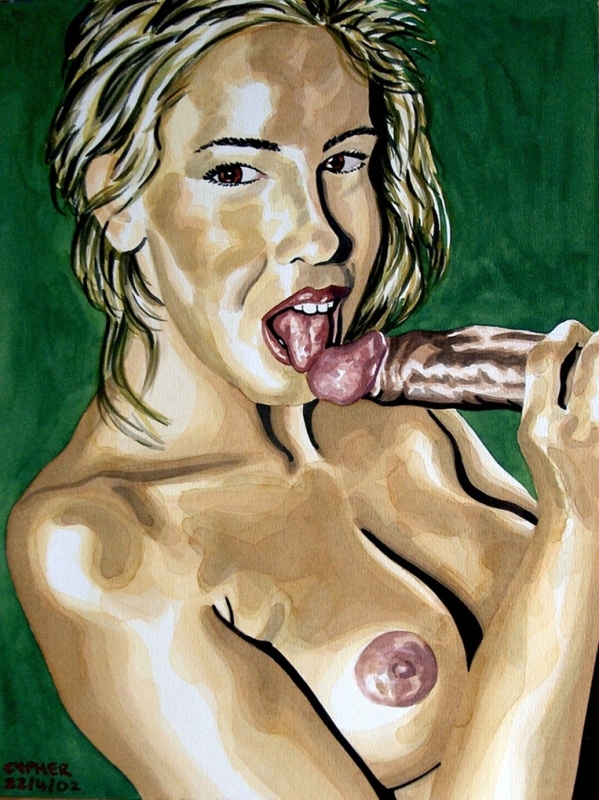
Fig.6 David Murphy, Blow Job, 2002
How do you balance recognisability of bodies with the desire to dissolve them into movement and sensation?
That is the hard part. I used to have a very linear painting style, and I have spent years trying to become painterly. So, even though I try to remain true to the overall drawing in a painting, I also want the paint to flow with a rhythm that emerges as I paint. I do not want to merely copy my source material; I want to heighten it in an expressive manner that comes to me in the painting process. As long as I anchor the painting to the fundamental drawing, I feel free to lose other details in the process of painting. But it does not always work, and that is the gamble I take.
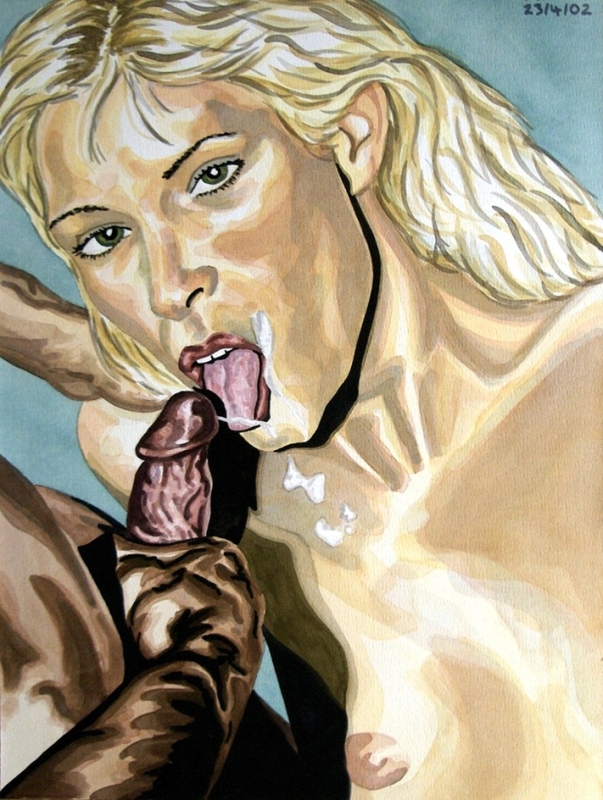
Fig.7 David Murphy, Cum Shot, 2002
Colour in your paintings often feels like temperature rather than surface. How do you approach palette when working with flesh?
I have tried a lot of different approaches, and it depends upon my mood. I can paint in a naturalistic academic manner if I want, and I sometimes I do it as practice. I have also tried a realist approach to painting nudes like Lucian Freud, because I adored the range of colours he could see in flesh. But I prefer to take an expressionist approach. One of my teachers commented that he could only teach me how to draw, and how to be more painterly, but colour was a very subjective matter. So, my colours come from how I am feeling at the time. If I look back on all the nudes, erotica, and porn I have painted it is like a record of my mental health, moods, and level of maturity.
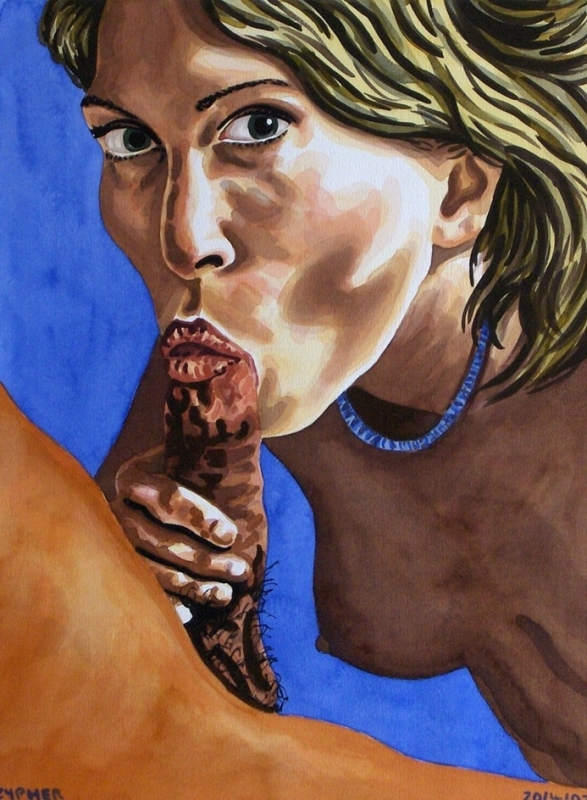
Fig.8 David Murphy, Orange and Blue Blow Job, 2002
Your monochromatic series create a different emotional register. What draws you to limiting colour in certain bodies of work? Do you associate particular colours with emotional or erotic states?
Yes, I do associate colours with different periods of my life. For example, from 1987-90 I went through a Black Period, and the darkness of my artworks at that time reflected my deep self-hatred, shame, misery, nihilism, and alienation. But an even longer period was my Purple Period from 2007-2018, and that reflected my grief at losing my mother, shame, self-loathing, misery and failure as an artist. I suffer from a borderline personality disorder due to childhood abuse, and it is often a living hell. My moods are constantly changing, and so is my sense of self. So, I think colour is very important to me as a marker of myself.
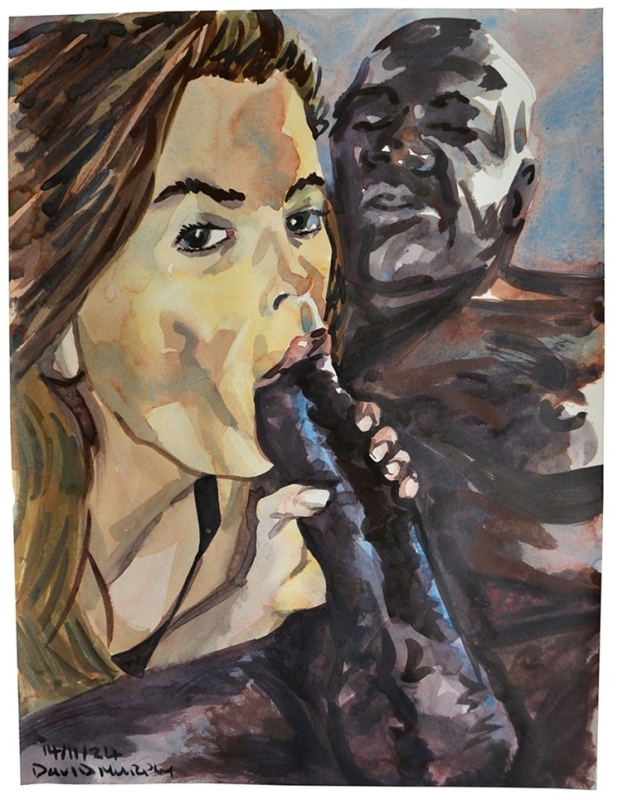
Fig.9 David Murphy, Interracial Blow Job, 2024
Your paintings can feel immersive and confrontational at the same time. What kind of viewer response interests you most?
To be honest, I try not to think about an audience. My art is almost solipsistic in its self-sufficiency. When I was young my mother was very threatened by my art because it allowed me to escape her domination, and my middleclass family thought I was totally deluded. So, I never showed them my art, and I continue to show very few people my art. The only people I am in dialogue with is dead artists. Moreover, when I have thought about other people’s responses I have had awful artist blocks. I have had all kinds of reactions to my art. Once when I applied to an art college in 1993, I was rejected, and they told my mother that my work was “the most violent and pornographic they had ever seen”. I have been rejected over 99 by arts bodies. At my exhibitions, many people have been shocked, run out of the gallery, or become angry and confrontational. But almost worse was those who thought I was some kind of alpha male stud – because they were shocked I was such a shy, self-loathing, passive, recluse. Meanwhile, the art reviews in the press demonised me. Only my friends and girlfriend knew how much my painting of porn was a vital form of therapy. Notably, when I had exhibitions, it was often women who were the most interested in my work beyond its mere shock value. And it was a woman who wrote the most telling essay on my art, and she said I “painted the erotics of agony”. And I have discovered that some of the very best writers on erotica and porn have been women.
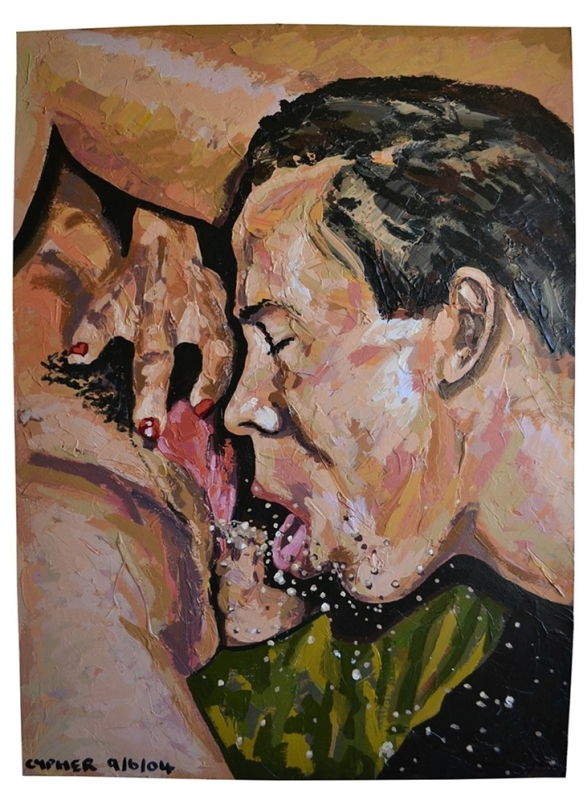
Fig.10 David Murphy, Submissive Male No. 2, 2004
Do you think discomfort can be a productive part of encountering erotic art?
I think if you experience discomfort when looking at an artwork, but you persist in looking at it, you can come to understand it, and maybe then, when you accept it, it can be like a revelation. Often the most original or honest art is the most discomforting at first. I could not even count the number of feelings that small book on Egon Schiele provoked in me in late 1985. It is often discomfort that drives me to make art and find a resolution. As I have said, I go through long artist blocks, and usually I reach a point where I cannot bare the mental pain any longer, and I am driven to make art. And afterwards, I feel I have achieved a form of catharsis, and I briefly do not hate myself. In fact, I feel great. Then I could spend weeks painting manically.
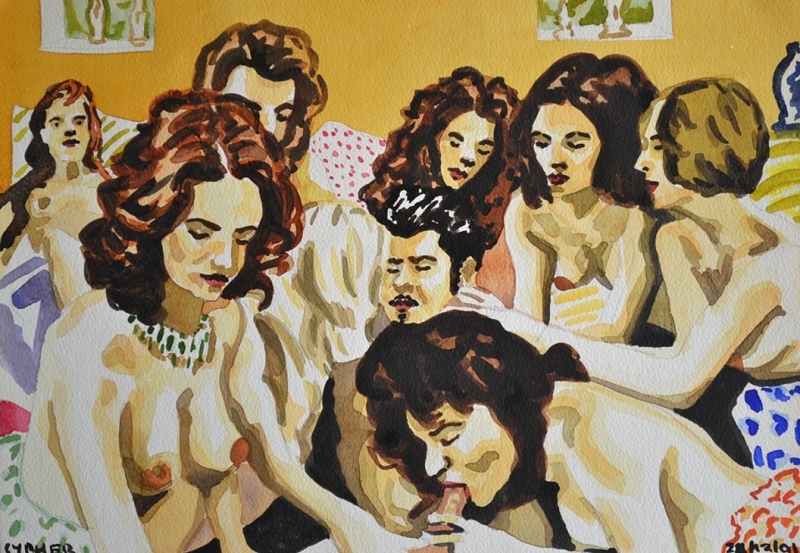
Fig.11 David Murphy, Self-Portrait As Sultan in Euroland, 2002
What has painting erotic subjects taught you about the body that observation alone could not?
One of the things I hate most of all is the “monkey see monkey do” theory. Art is all about contemplation, and making art is a form of meditation, it has nothing to do with action. I am essentially a voyeur, and I find pleasure in looking rather than acting. But looking and painting are as much about projection as seeing. We all like to see hot men and women in sex scenes, because part of us imagines we are them, looking beautiful, and acting with passion. Because of my borderline personality disorder, I often find that while I am painting, I feel like I have entered the painting, and I have become the painting.
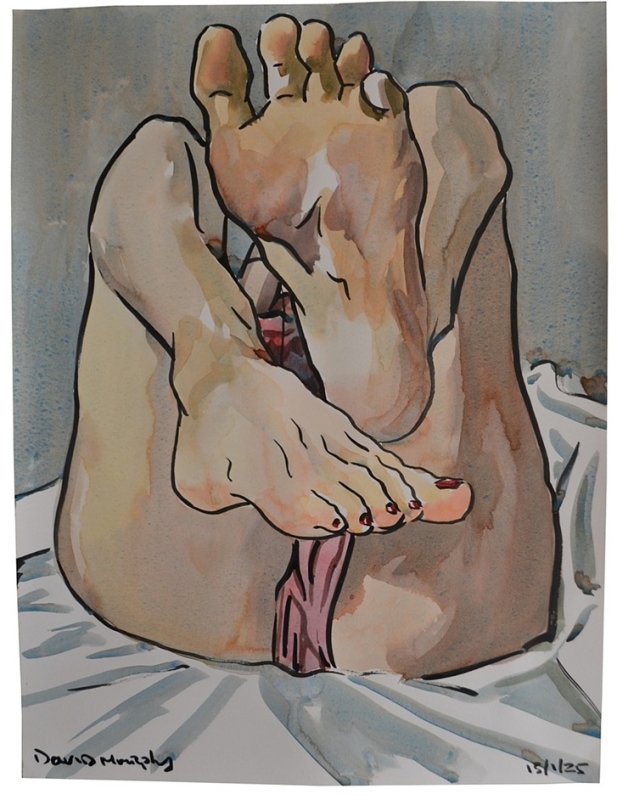
Fig.12 David Murphy, Female Feet, 2025
What continues to excite or surprise you about working within erotic painting?
The beauty of women is endlessly fascinating, but it also provokes in me many feelings from fear, anxiety, shame, lust, to love. So, I think I will continue to spend the rest of my life exploring the mysteries of womanhood.
If viewers could take one feeling away from your work, what would you hope it is?
I think my art has always been about ‘the erotics of agony’. As a child I was terrorised by my mother, in my early twenties I tried to kill myself nine times, and I have lived most of my life suffering from mental anguish, but my art has always given me hope to carry on, and it is the only thing I am proud of. I started off my artistic life very nihilistically, but I have survived so much, and they were never able to stop me painting.
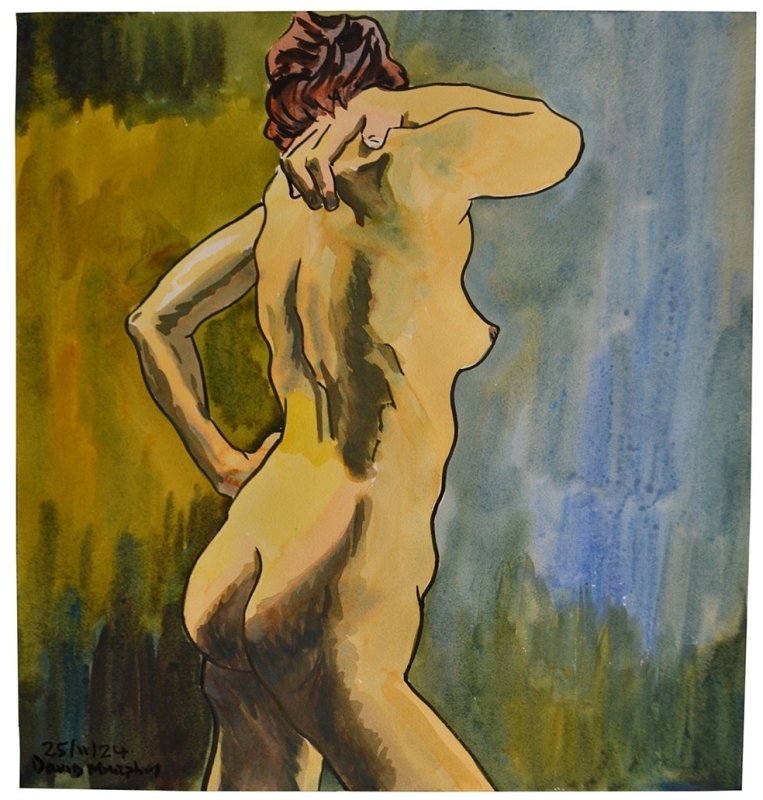
Fig.13 David Murphy, Back of Woman Stretching, 2024
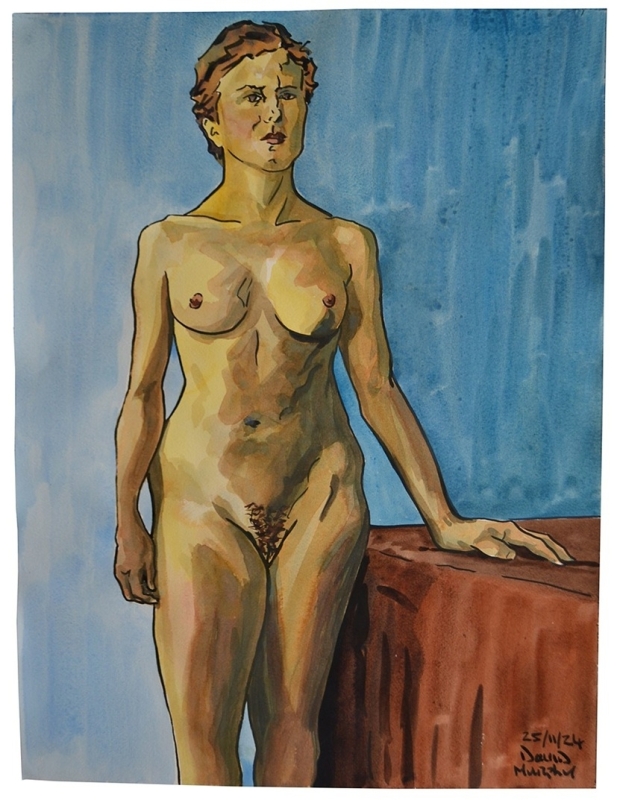
Fig.14 David Murphy, Standing Nude Woman, 2024
Become a Premium member now and check out the extended edition of the article including four additional questions, including answers to the following questions:
- How has audience reception shaped or challenged your practice over time?
- Has working with erotic imagery changed your understanding of intimacy or connection?
- Are there misconceptions about erotic artists that you find yourself wanting to challenge?
- Are there directions or themes you feel drawn toward but haven’t yet explored?
Click HERE for a conversation with Paul Laurenzi famous for his curvaceous temptresses
Let us know your thoughts about the interview in the comment box below...!!