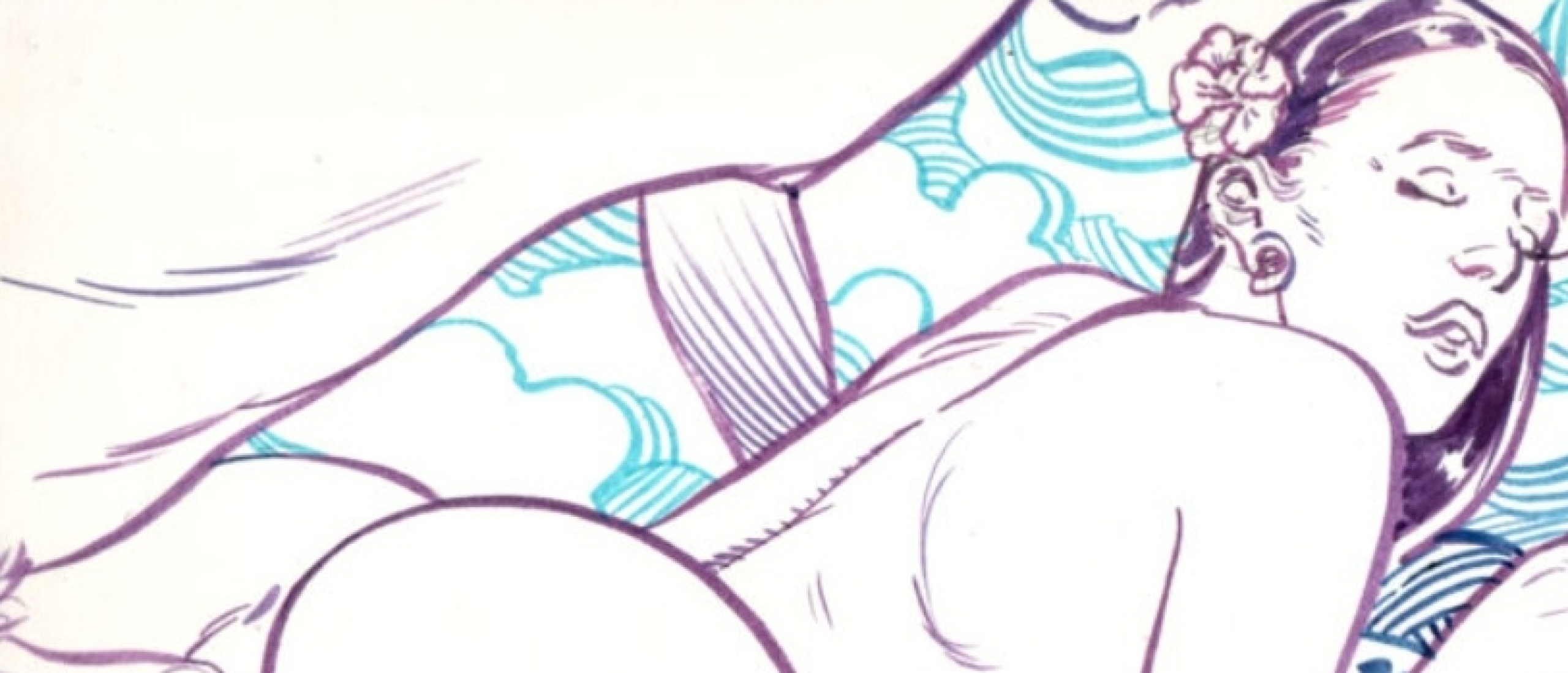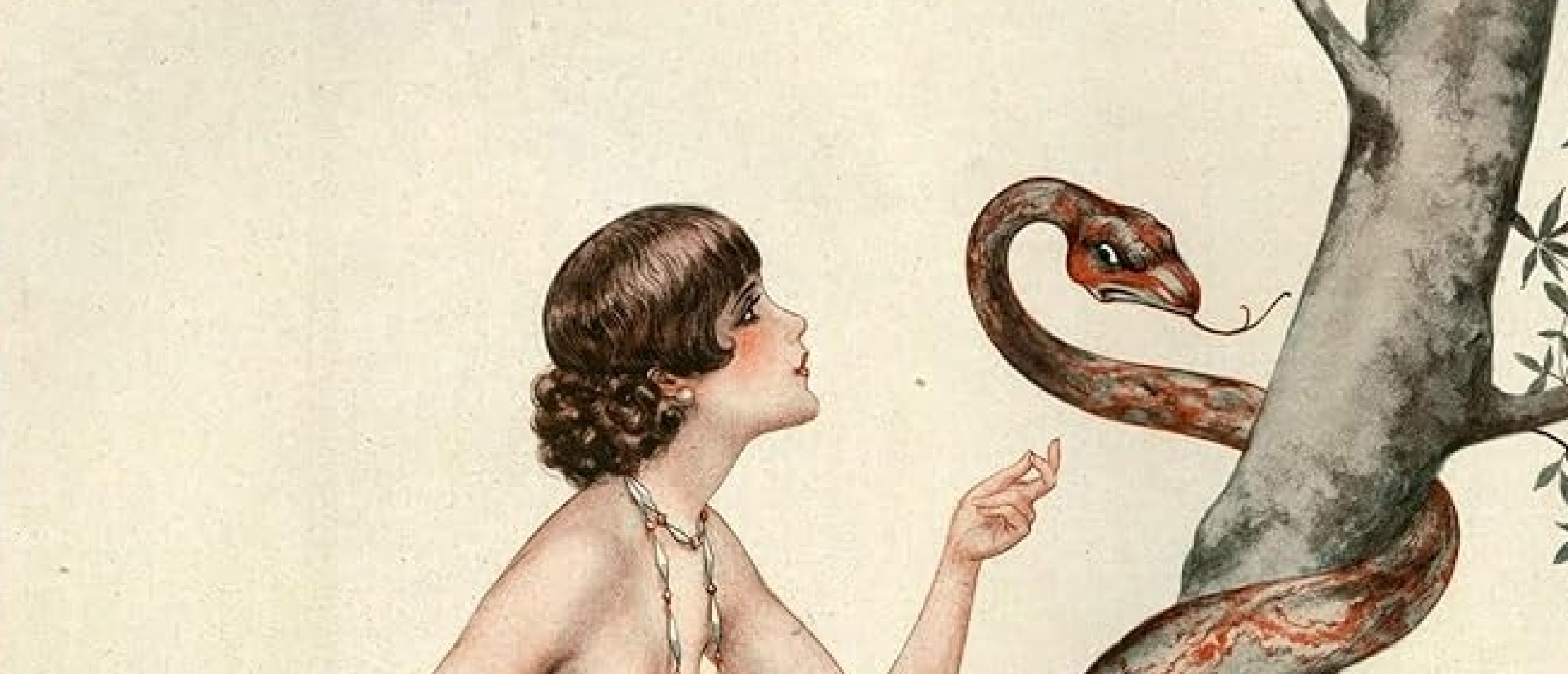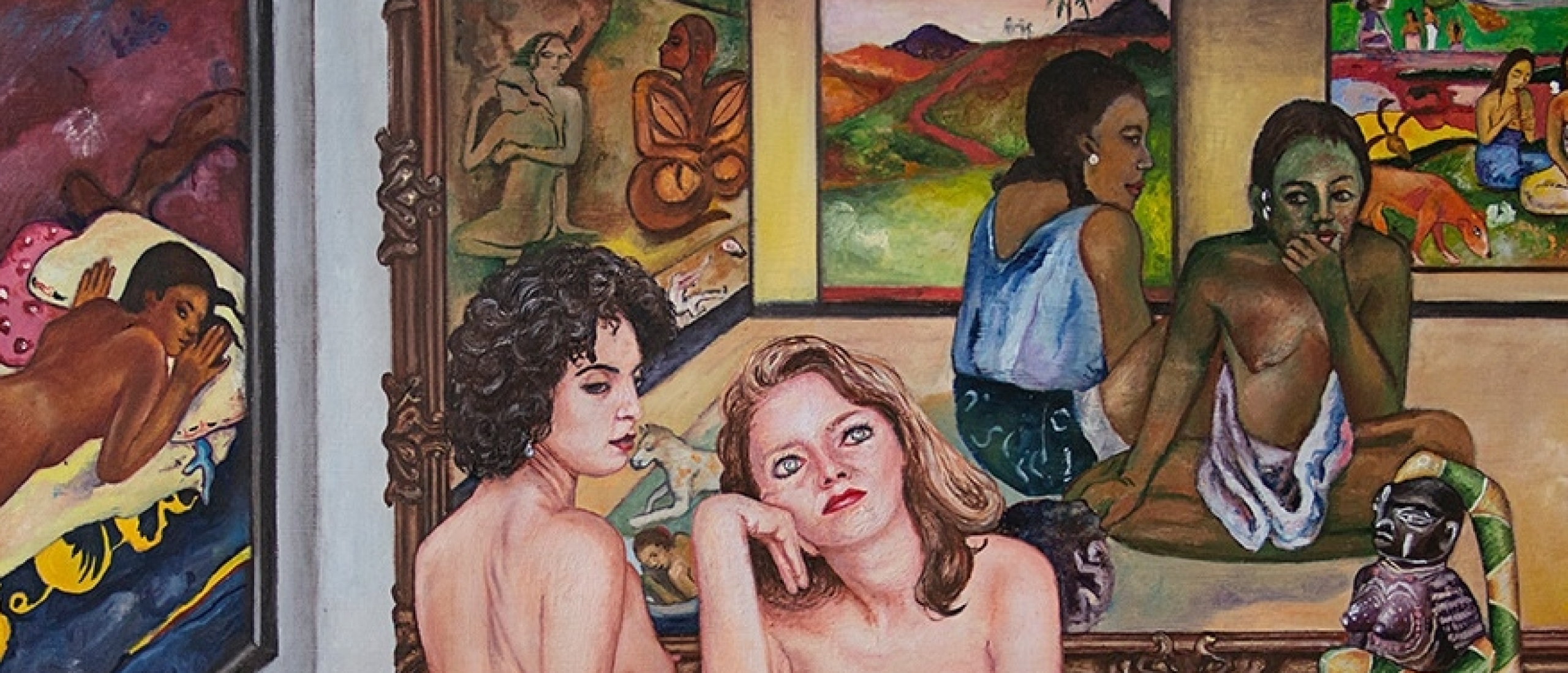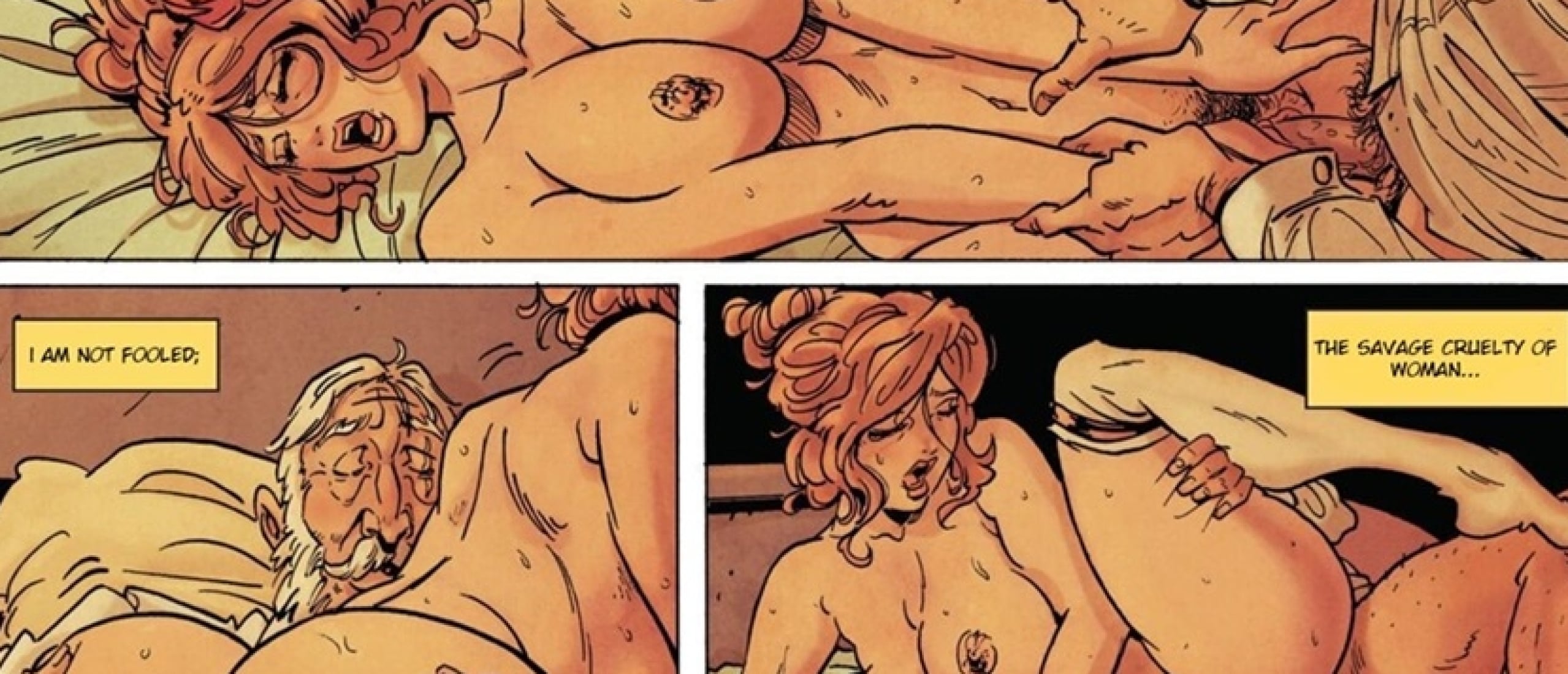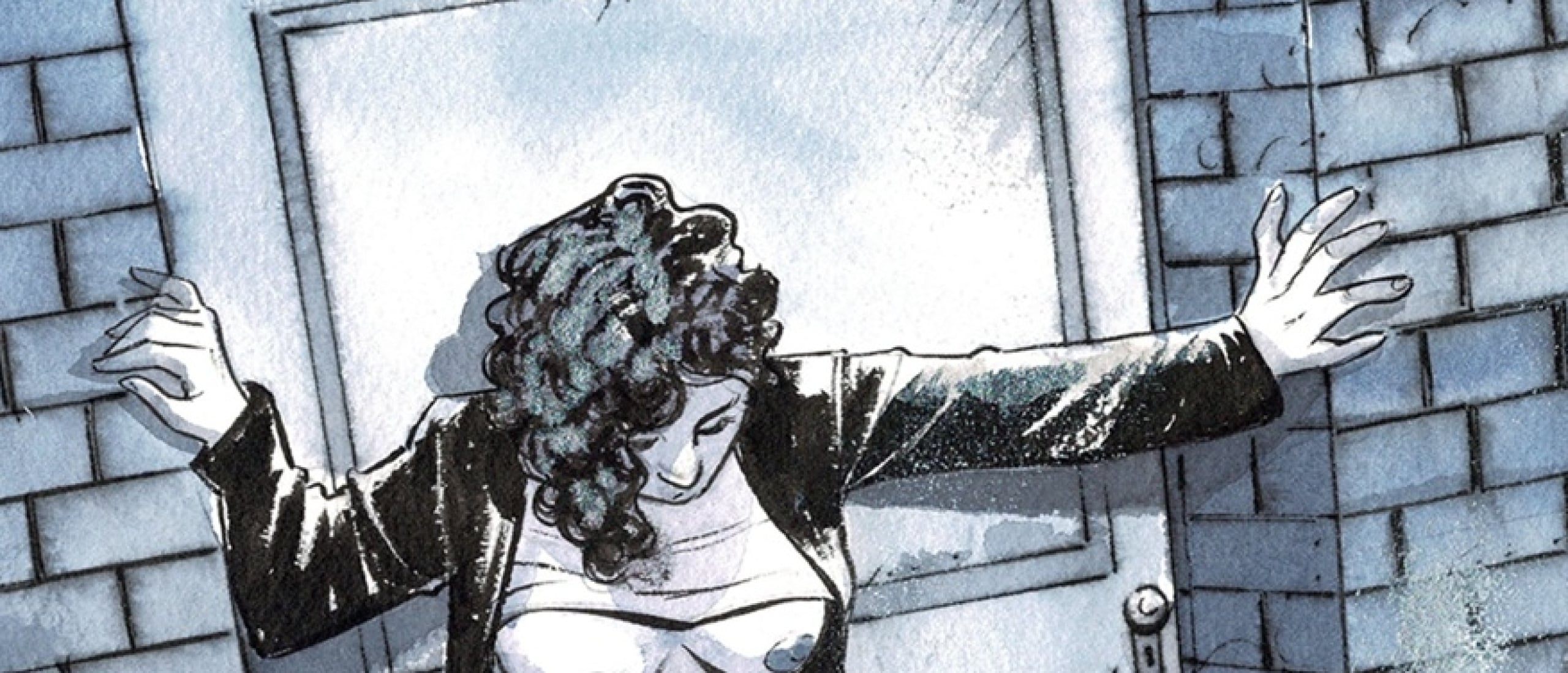
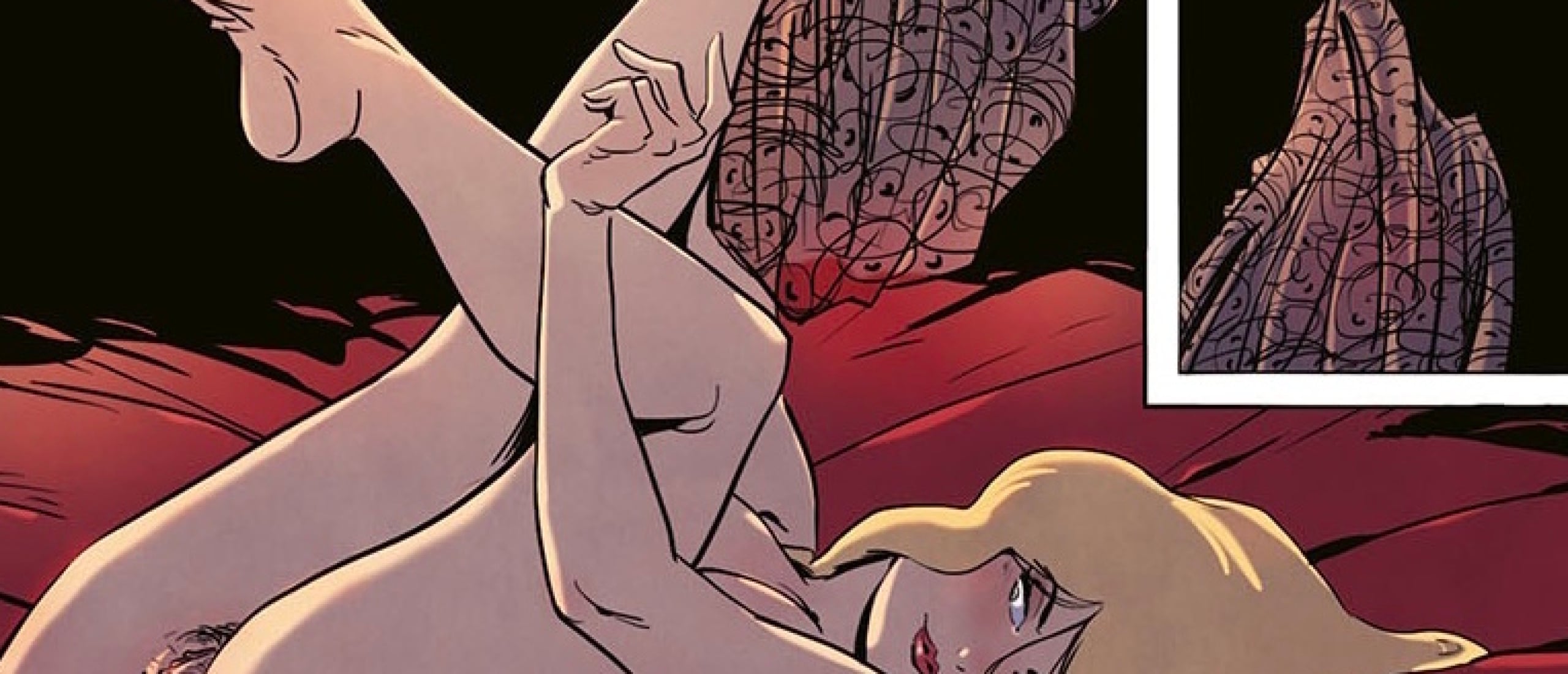

I first became interested in Gabriele Di Caro’s work through the way eroticism operates in his comics not as an interruption of narrative, but as one of its means of construction. Although his name has become closely associated with erotic comics, his trajectory is broader: painting, graphic design, satire, literary adaptation and historical narratives have all contributed to an approach in which drawing, color, composition and sequential storytelling remain inseparable. As Di Caro himself emphasizes in this interview, his primary interest is not erotic comics as an isolated genre, but comics themselves and their capacity to tell different kinds of stories.
Interest In Desire
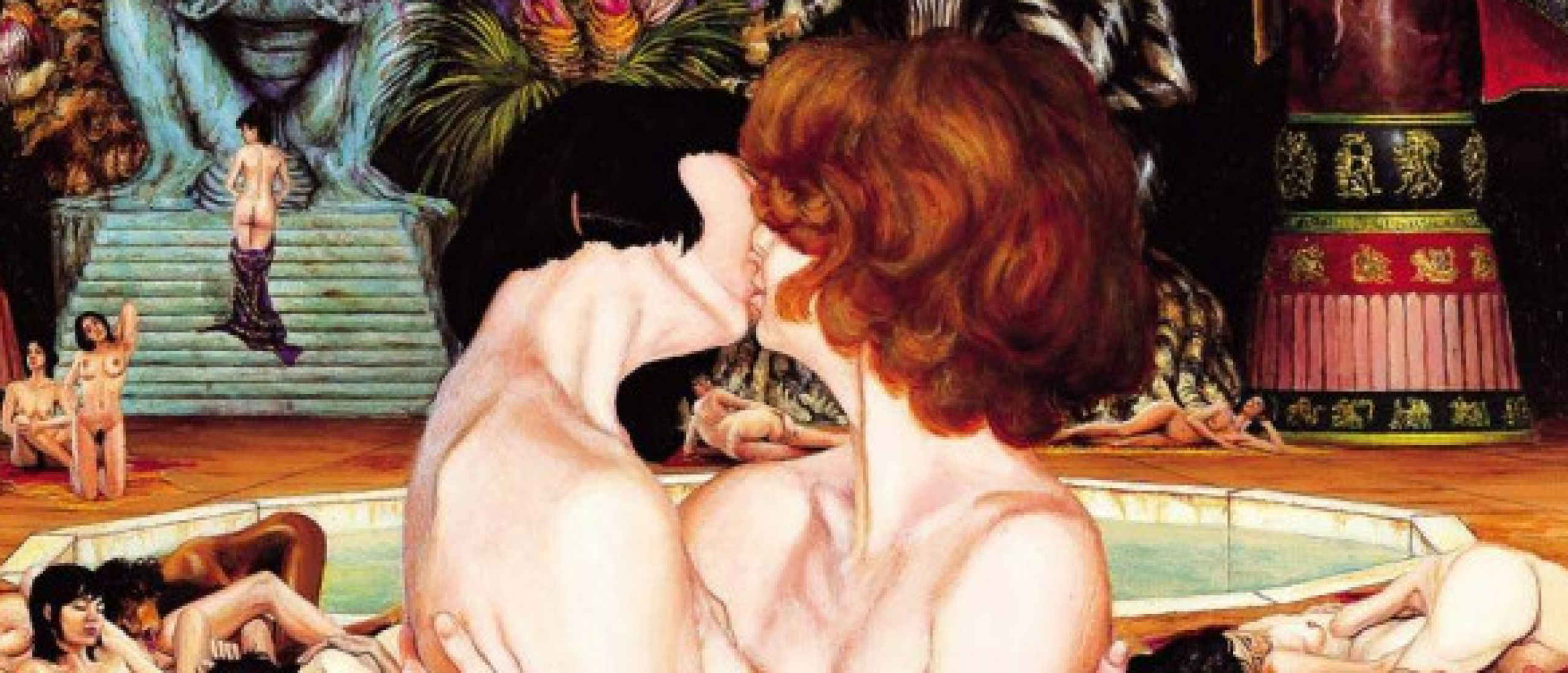
This becomes particularly evident when we consider the path from Sous le Paradis to Les Arcanes de la Maison Fleury and Le Fruit le plus doux. These works move through very different historical and visual settings, from stories inspired by François Truffaut’s The Man Who Loved Women, through the theatrical spaces and moral contradictions of Victorian London, to the imagery of postwar America in the 1950s. Yet they share an interest in desire as something inseparable from character, circumstance and social conventions. Di Caro does not begin with the sexual scene and then construct a narrative around it. As he explains here, plot comes first, followed by the characters; erotic encounters emerge from their personalities and from the situations in which they find themselves.
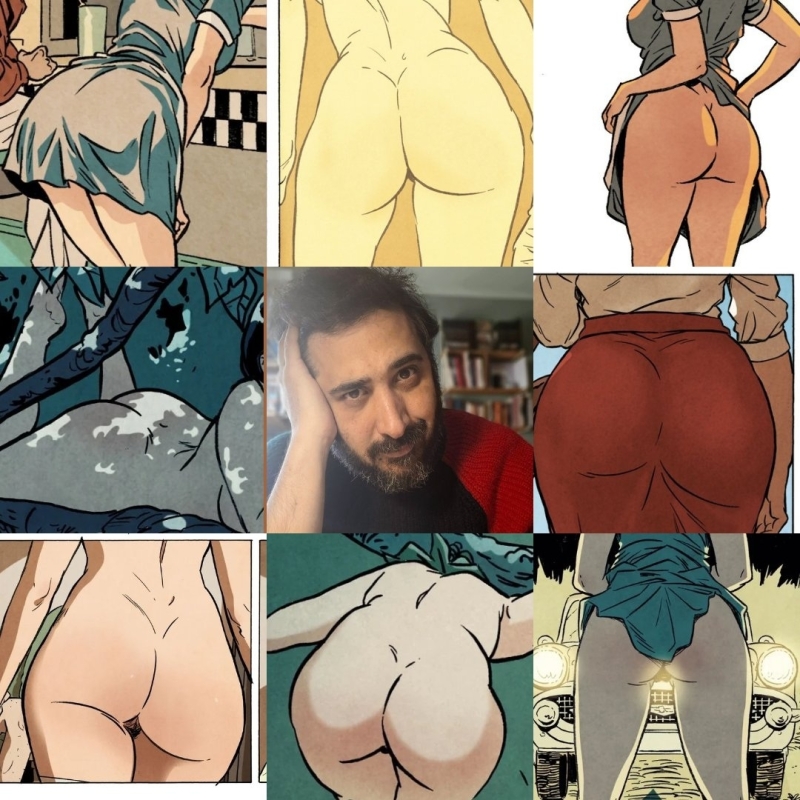
Fig.1 Gabriele Di Caro and "his buttocks"
Visual Structure
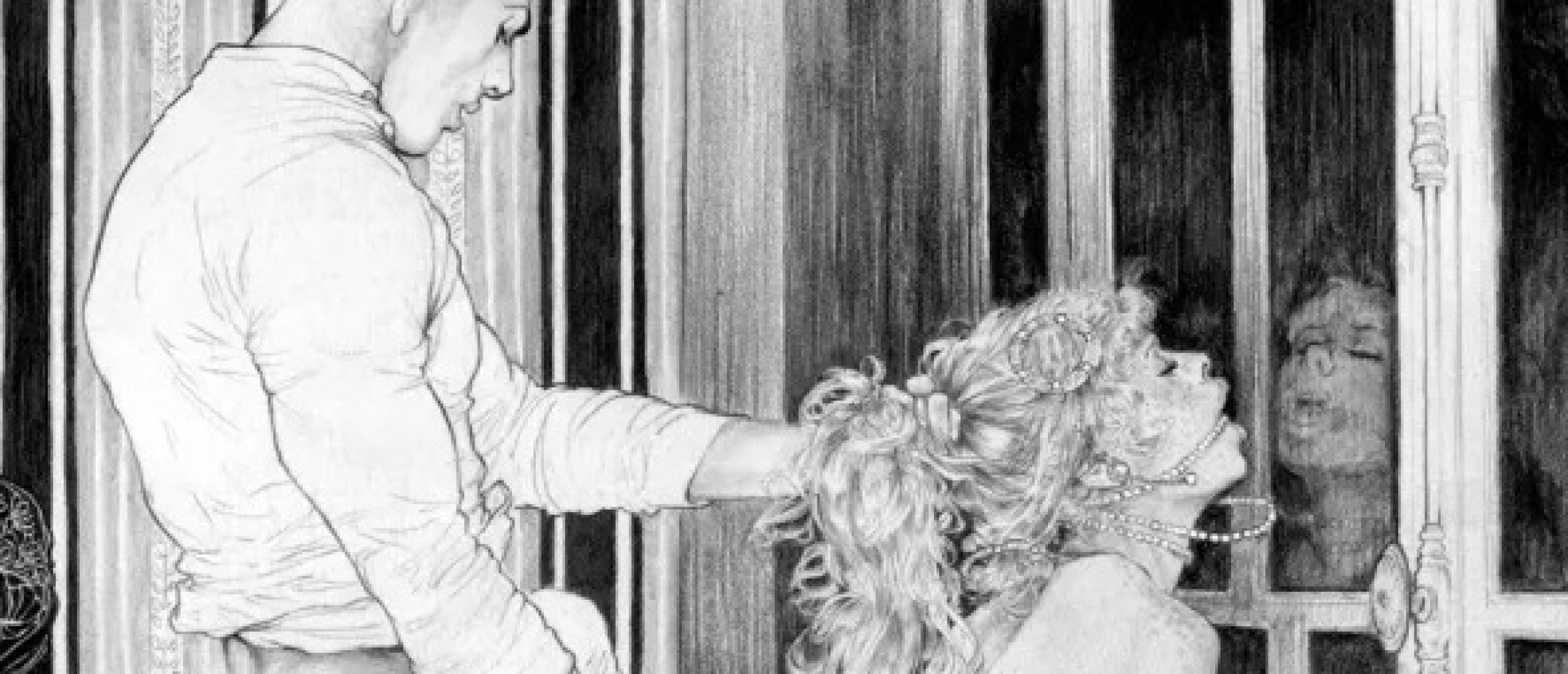
I was also interested in discussing with him how the representation of the body is shaped by the visual structure of comics. In Maison Fleury, doors, curtains, corridors and rooms continually regulate what the reader is allowed to see, placing us alternately in the position of voyeur, theatergoer, brothel client or witness. In his other works, color and lighting perform a comparable function, establishing different degrees of intimacy and affecting how bodies and sexual encounters are perceived. His background in painting becomes important here, particularly in his use of chiaroscuro (strong contrasts), composition and color to direct the reader’s gaze and emotional response.
Unexpectedly Erotic Moment
Our conversation therefore ranges from Di Caro’s artistic training and early work as a satirical cartoonist to questions of female representation, voyeurism, historical reconstruction, repression, violence, power and the relationship between comics and cinema. What emerges is an understanding of eroticism less as the simple exposure of the body than as something produced through narrative expectation, concealment, framing and the tension between what can and cannot be seen. As Di Caro suggests when discussing an unexpectedly erotic moment in Mission: Impossible – Fallout, eroticism can appear where we least expect it. The same principle runs throughout his comics: desire becomes most interesting when it participates in telling the story rather than replacing it.
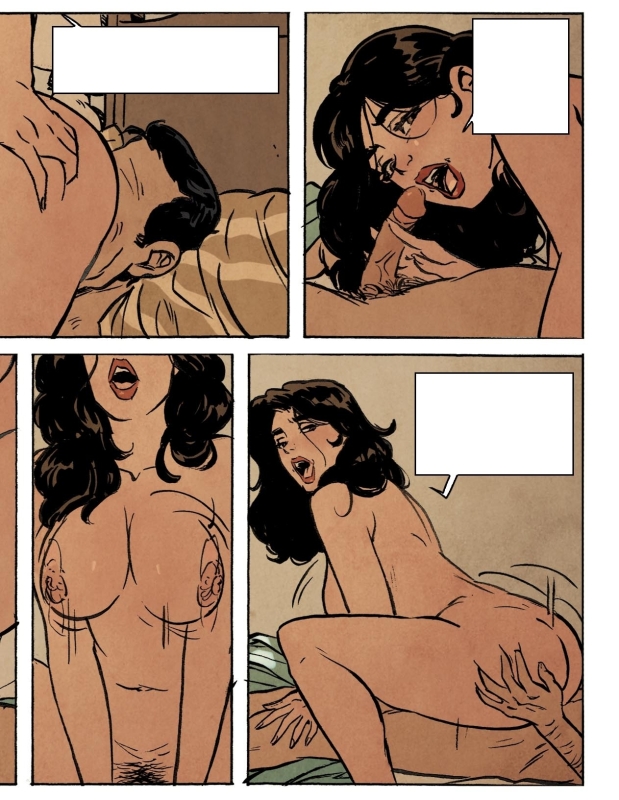
Fig.2 Pamela le matin from Le Fruit le plus doux 1 (The Sweetest Fruit), 2025
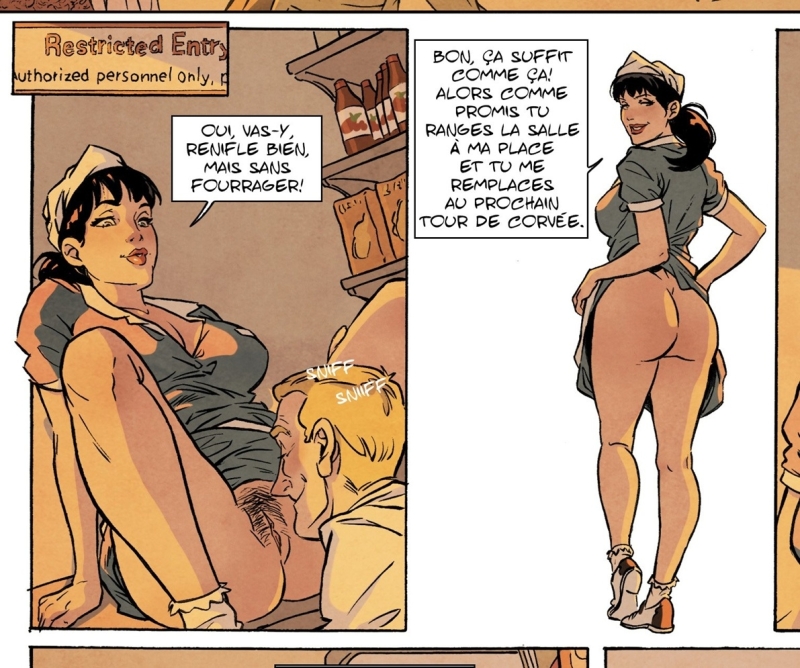
Fig.3 A steamy sequence from Le Fruit le plus doux 1 (The Sweetest Fruit), 2025
INTERVIEW WITH GABRIELE DI CARO
Your background combines painting, graphic design, and comics. How do these different experiences shape your creative process today, particularly your approach to the body, page composition, and color?
I believe that everything serves to enrich both the page as a whole and the individual panel.
Painting has helped me not only with the study of color, basic anatomy, and perspective, but also with composition, something I am currently revisiting through photography. At a certain point, these concepts become second nature, yet there is a risk of taking them for granted. Furthermore, since I am still in the early stages, I never settle for the first storyboard; that specific framing isn't necessarily the best one. Graphic design has greatly aided my efforts to ensure readability; everything must be clear and communicate directly to the reader.
It creates a perfect blend with painting, allowing you to tell a story within a single image. I pursued all these paths to apply what I have learned, and continue to learn, to the medium of comics, which offers the opportunity to tell a story not through just one image, but through a sequence of many. Moreover, the panels must be readable even without dialogue and possess good pacing—or rather, the right rhythm for each specific sequence.
Before turning to erotic comics, you worked with satire, literary adaptations, and historical narratives. What did these experiences teach you about storytelling, and what aspects of them have remained in works such as Sous le Paradis, Les Arcanes de la Maison Fleury, and Le Fruit le plus doux?
I think a preliminary note is in order: my name is associated with erotic comics, but my true passion is the comic book medium itself, a medium that gives me the chance to tell any story I have in mind. My artistic career began with a job as a satirical cartoonist for a local newspaper; at the time, I felt a need to express myself that way, and, being just starting out, it was the opportunity available to me. It taught me a great deal about conciseness and aiming for impact, as well as the importance of staying attuned to world events; you had to come up with an idea within the span of a single day. Adapting historical events or literary works is fascinating because you rework them using a different language, sometimes even fictionalizing elements to further engage the reader. You inevitably learn from the original author and try to pick up some of their storytelling techniques. All of this becomes part of my creative toolkit, and I would include films and TV series in that mix as well. Comics are like movies: there are frames featuring actors whom I not only direct but also draw, along with the set designs. At the same time, a comic is like a book that tells a story, complete with dialogue and captions.
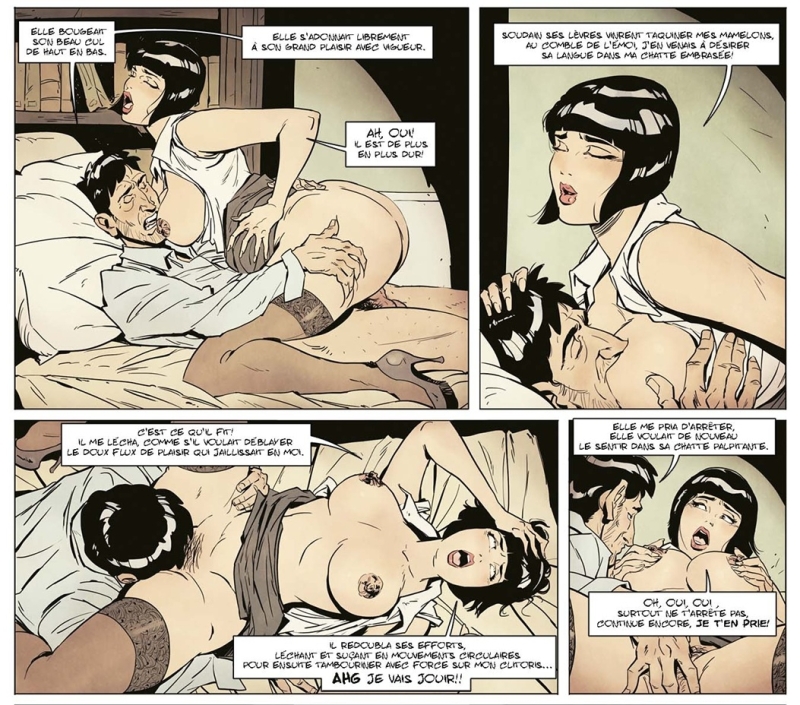
Fig.4 A detail from the short story "Devant le miroir (Before the Mirror)" from Sous le paradis, 2019
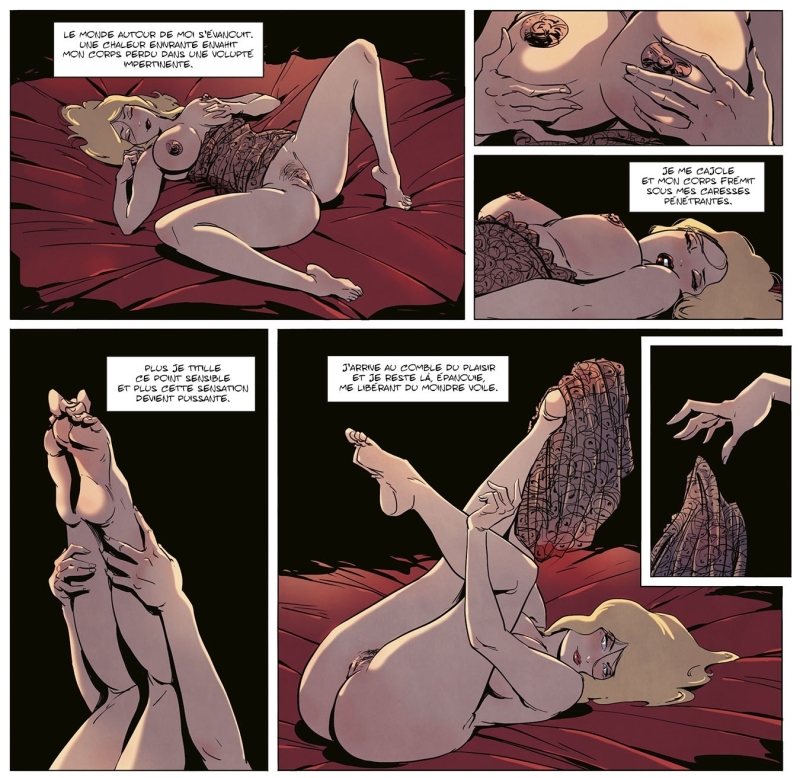
Fig.5 Details from the short story "De la coupe aux lèvres (From Cup to Lip)" from Sous le paradis, 2019
Sous le Paradis was conceived as a tribute to François Truffaut’s The Man Who Loved Women and consists of twelve stories in which desire and sexuality often lead to unexpected or sometimes bitter consequences. What interested you about Truffaut’s film, and how did you translate that cinematic reference into the language of comics?
What struck me about the film was the sincere, unvulgar portrayal of a man obsessed, albeit in a fragile way, with the world of women. I wanted to highlight the obsession rather than the obsessed man himself, maintaining an underlying sense of disillusionment and melancholy, accompanied by a cynical ending that sets it apart from the original work.
In your comics, sex scenes rarely seem to interrupt the narrative. On the contrary, they often reveal something about a character or change the direction of the story. When you write an erotic work, what usually comes first: the sexual situation, the characters, or the plot?
First of all, thank you for this particular question. For me, the plot is the most important element; I develop the characters next, and only then do I write the erotic scenes, which are solely and exclusively a consequence of the characters' personalities and the circumstances in which they find themselves. Jenkins and Madame Fleury are different from one another, and they behave very differently compared to someone like Pearl or even Pamela (Le fruit le plus doux); consequently, their erotic scenes play out in distinct ways. There is an increasingly common mistake of staging what might appeal to the reader, or, worse, what appeals to the author themselves—thereby losing sight of the character's personality and arc.
Women are central to Sous le Paradis and continue to play a major role in your later works. How do you approach the creation of female characters within a genre that has historically been shaped by the male gaze upon the female body?
Without any grand pretensions. I simply try to create characters and observe how they handle situations, situations that, more often than not, differ from those a man might face. Yet, I also try not to overreach; it will always be my vision, or rather, the vision of the female character as seen through the lens of that specific story. I simply aim to tell stories in the best way possible, striving above all to convey their complexity and, more clearly, their strength in certain situations. Perhaps only a few have managed to delve so deeply into that universe; in my opinion, Almodóvar is one of the few who has succeeded.
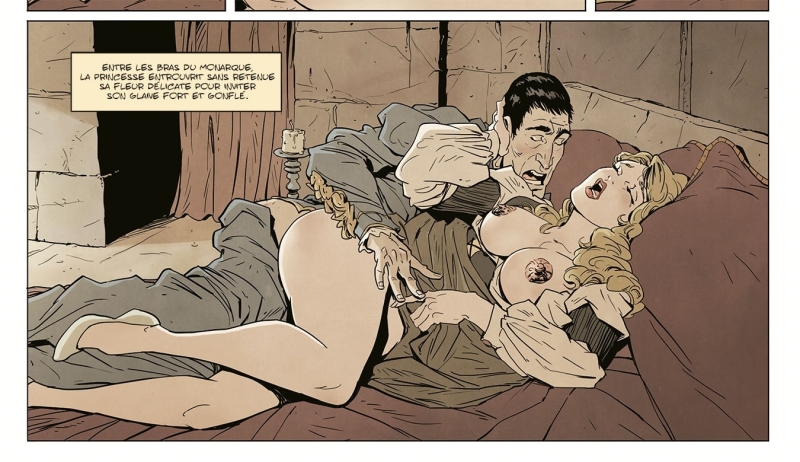
Fig.6 Panel from the short story "Un baiser jamais donné (A Kiss Never Given)" from the comic Sous le Paradis, 2019
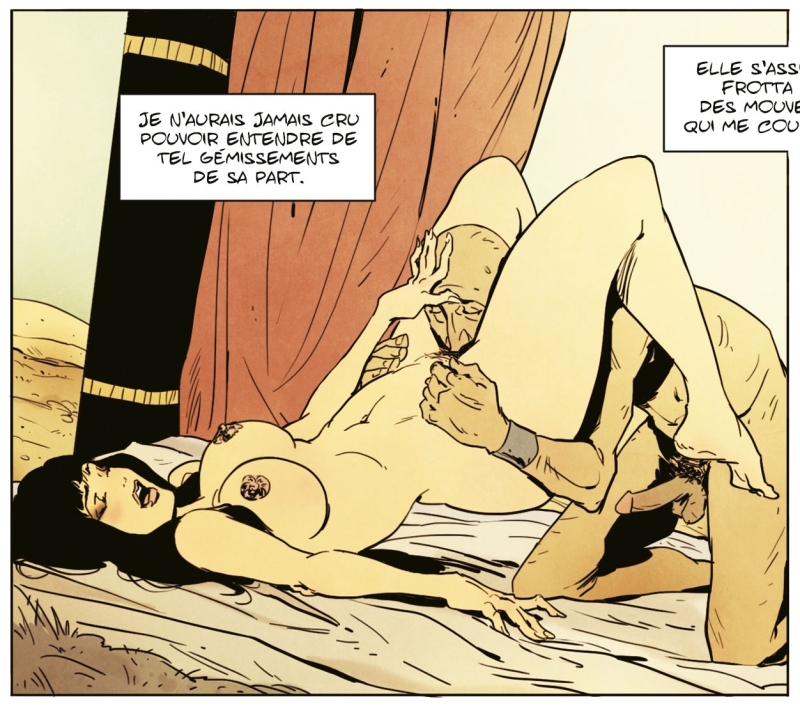
Fig.7 "Bon appétit". Panel from the short story "Corps et âme (Body and Soul)" from the comic Sous le Paradis, 2019
In Les Arcanes de la Maison Fleury, prostitution, criminal investigation, theater, and eroticism come together in late nineteenth-century London. What led you to choose this historical period, particularly a society marked by the contrast between public morality and respectability on the one hand, and sexual practices kept within the private sphere on the other?
To be honest, setting aside the historical period, which has always fascinated me. I chose the late 19th century precisely for the reasons you listed; it served to highlight the contrast and ensure that the characters' journeys and desires wouldn't come easily. It all started with a question: patriarchy versus matriarchy, where should this battle play out? Secondly, where do crime and magic converge? That’s how I settled on the Victorian era. I had initially considered the 17th century, but I needed a setting that was even more theatrical and offered specific dynamics for the investigations. As you can see, there were several factors involved.
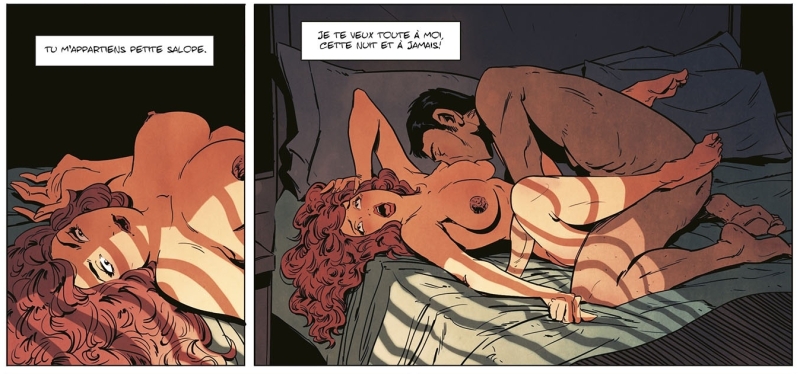
Fig.8 Panels from "Sous le paradis", 2019
In Maison Fleury, there is a recurring relationship between eroticism and staging: curtains, doors, rooms, corridors, and the panels themselves determine what can and cannot be seen. To what extent do you think of the reader as a voyeur when constructing an erotic page?
With this question, you’ve expanded on my previous answer. I needed that setting to turn the reader into a voyeur, a brothel client, a theatergoer, or one of the onlookers gathered around a discovered corpse. I always try to place the reader in the position of an observer, or, though more rarely, in the character's shoes.
Over the course of the three volumes of Maison Fleury, issues initially connected with desire and private secrets gradually come to involve money, hierarchy, violence, social conflict, and politics. Do you see eroticism as a way of revealing power relations that might remain less visible in other kinds of narratives?
I believe the erotic genre lends itself well as a vehicle for telling these kinds of stories, though it isn’t the only one, as fantasy and science fiction work just as well. With erotica, however, you can add that sense of primal instinct, making everything even more impactful, and sometimes even more readable.
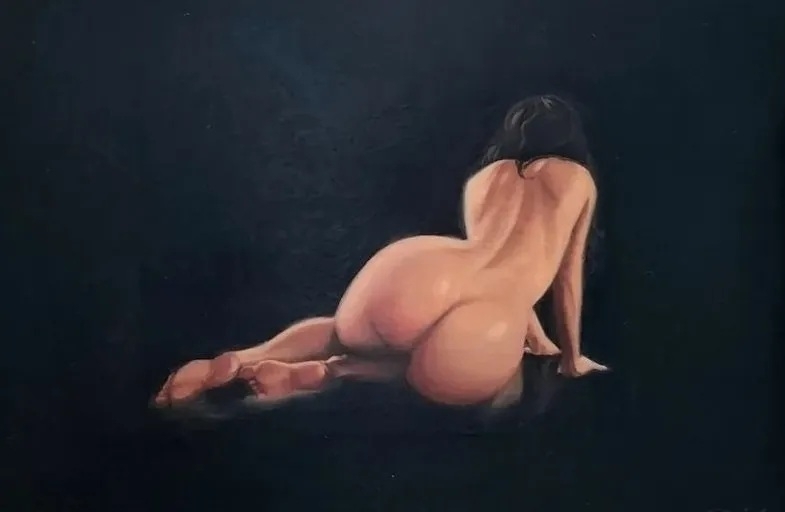
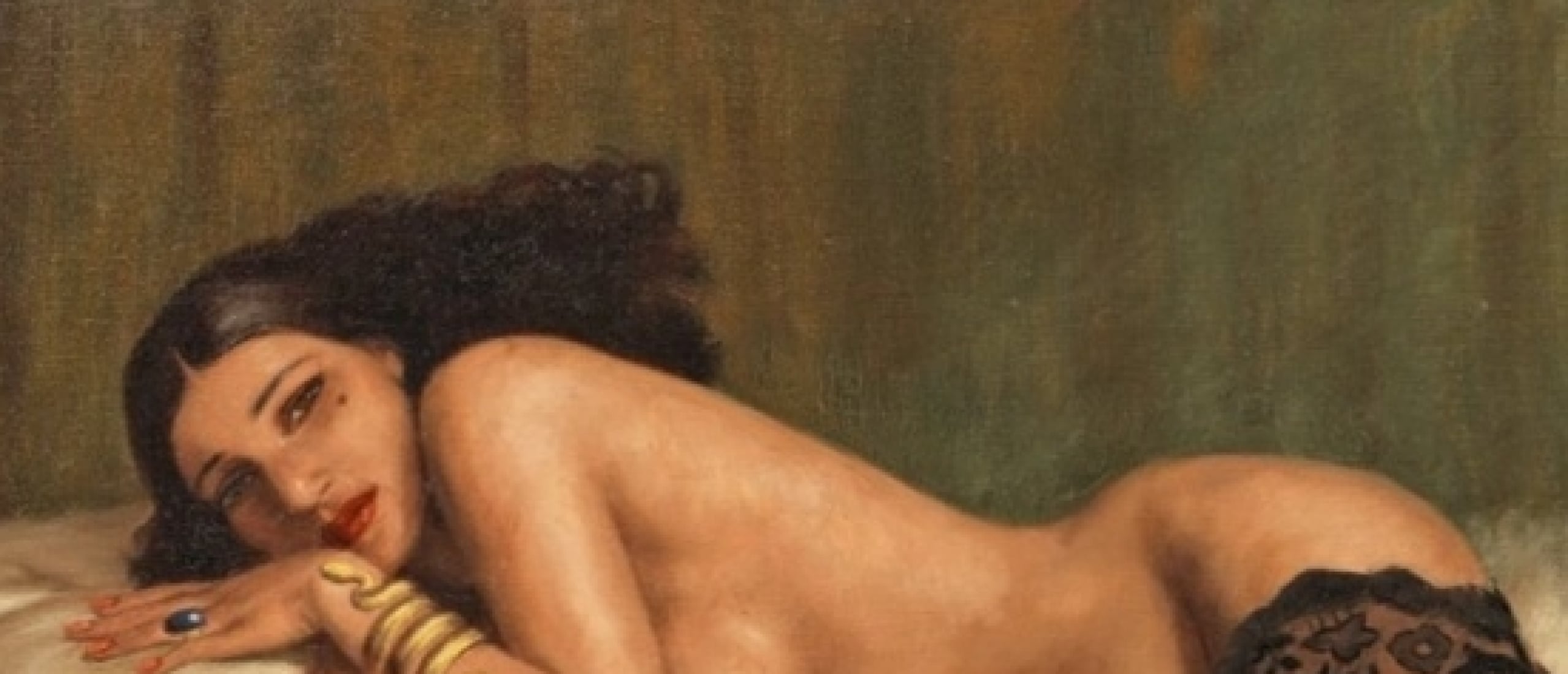
Fig.9 Painting of nude seen from the back
Become a Premium member now and check out the extended version of the interview including four BONUS questions and many more of his erotic works.
Gabriele Di Caro is active on Instagram
Click HERE for the author's earlier article about the eroticism in Di Caro's comic art
Image sources: x.com/ bluesky.com
Let us know your thoughts about the interview and/or Di Caro's comic art in the comment box below...!!