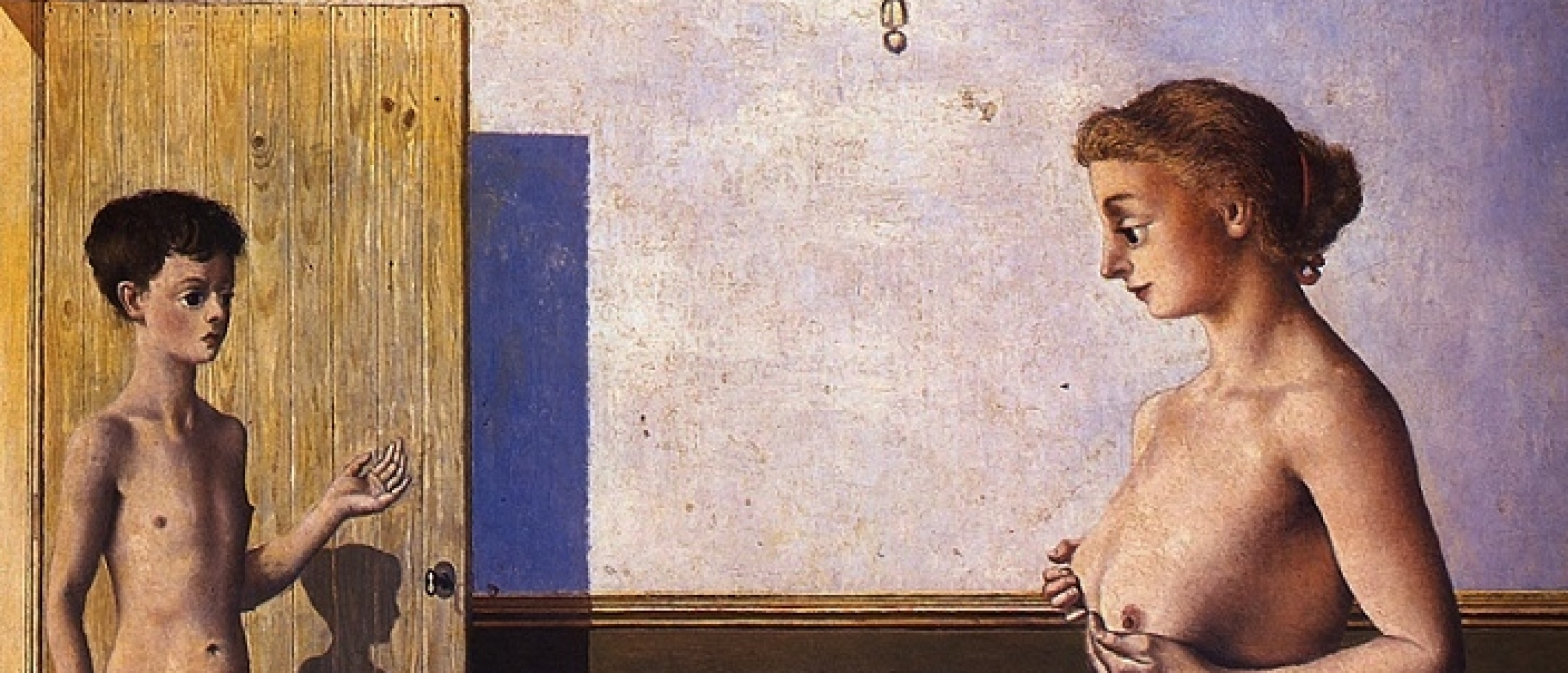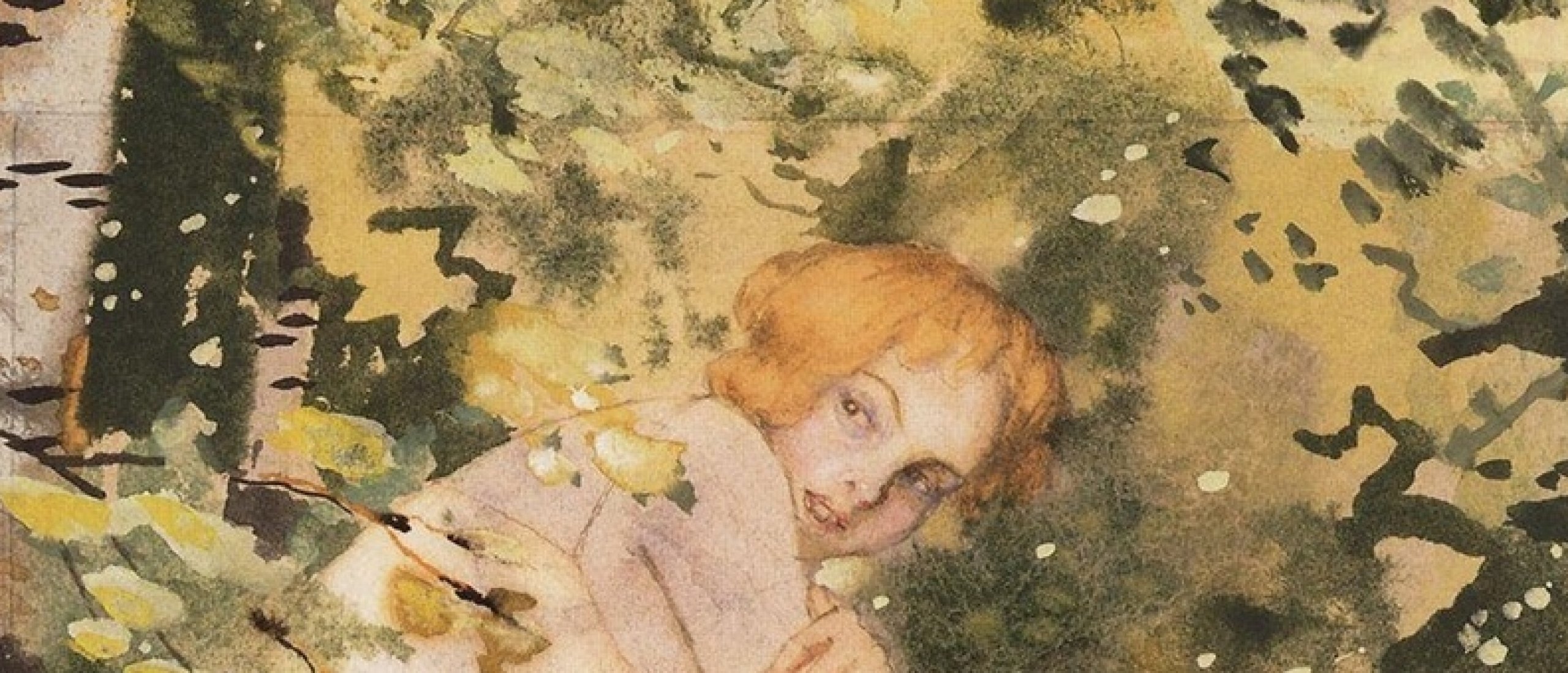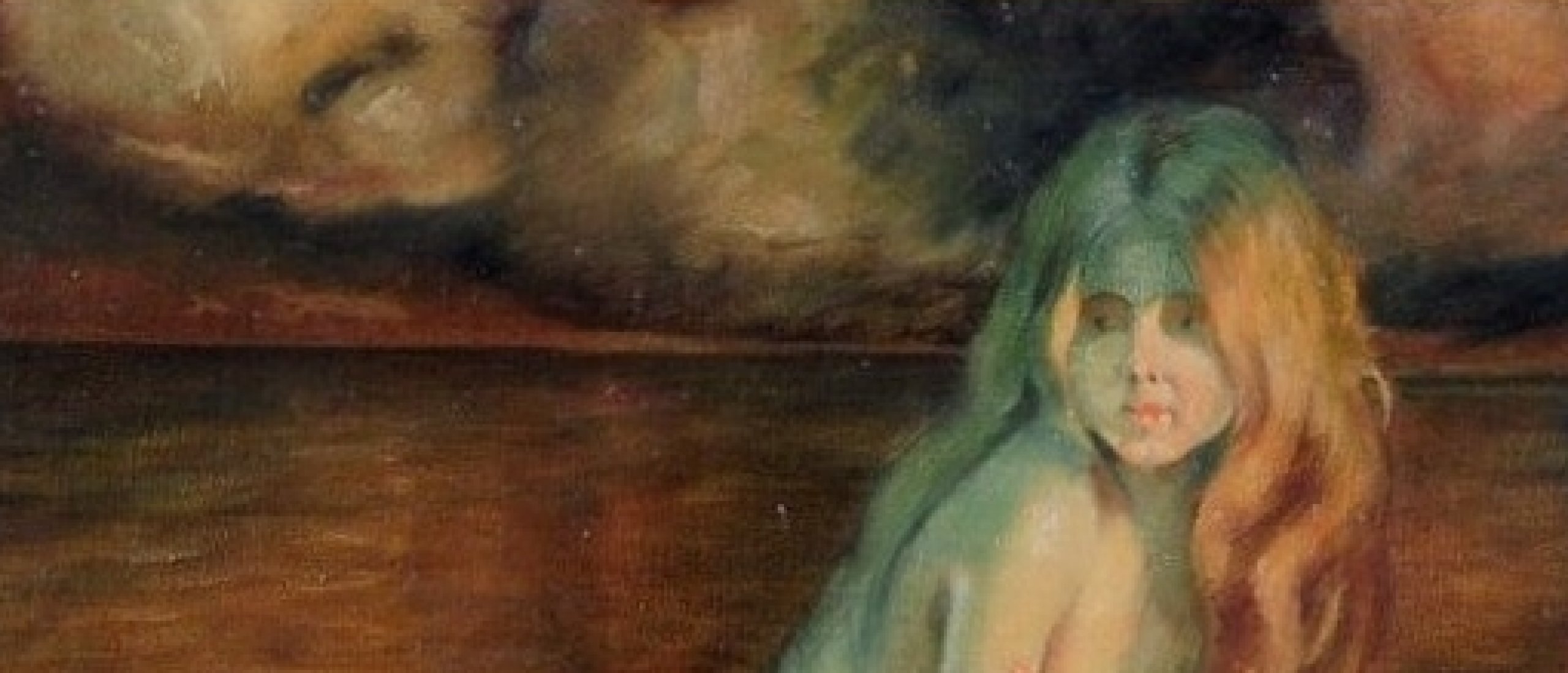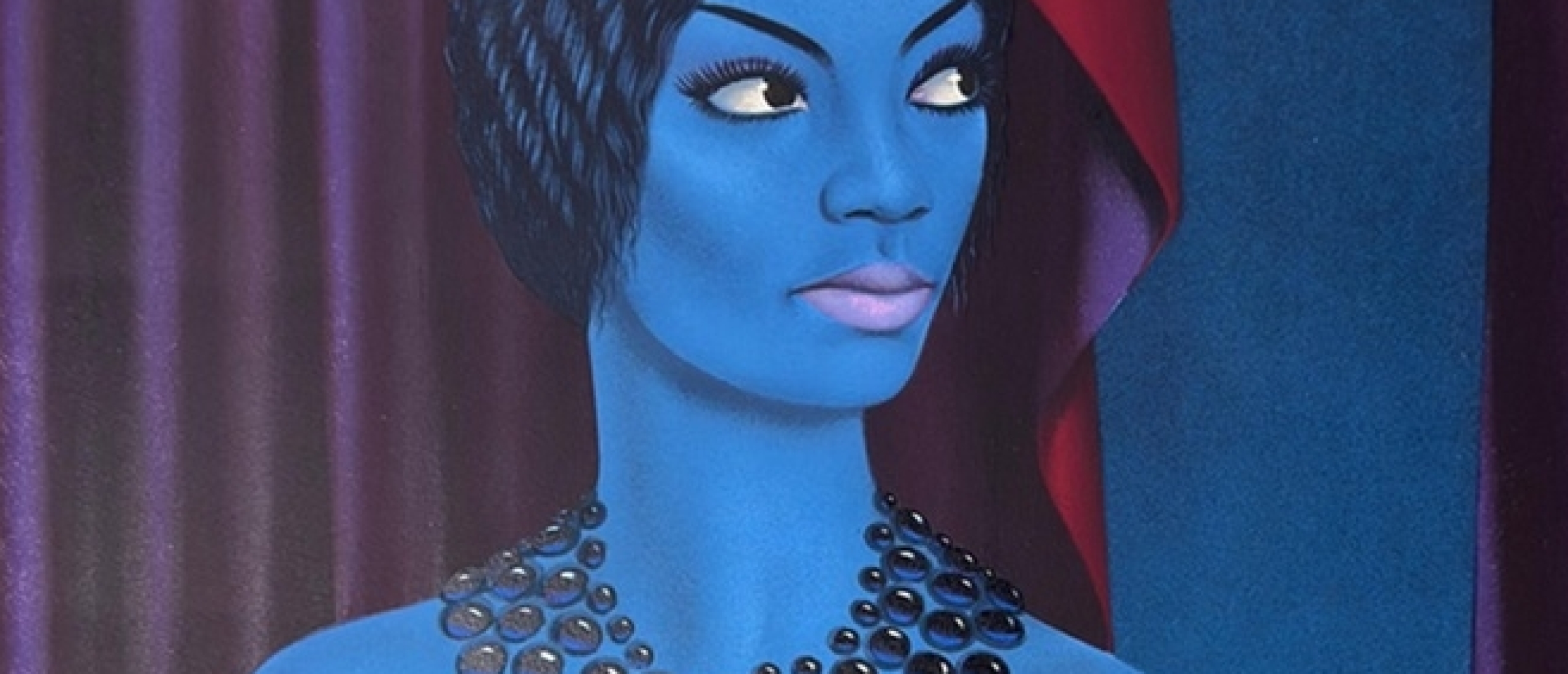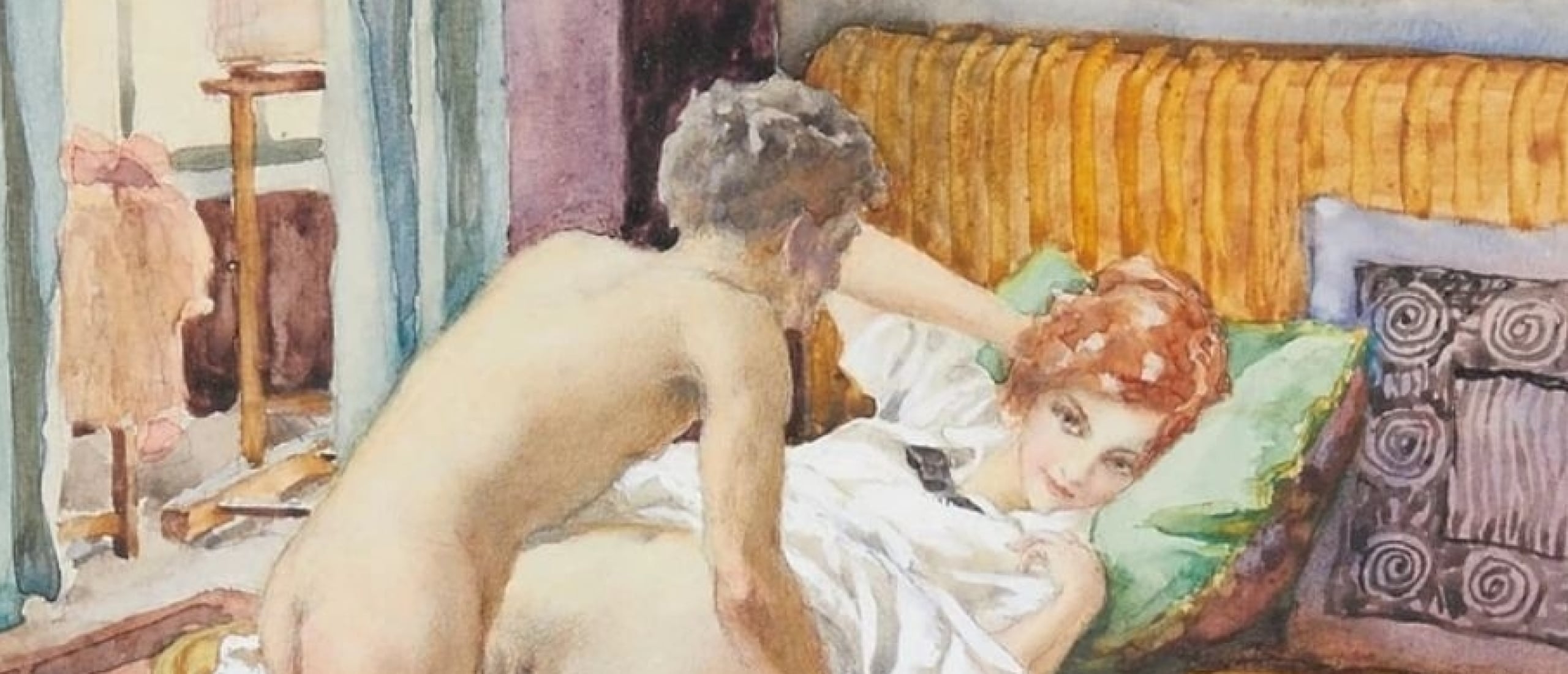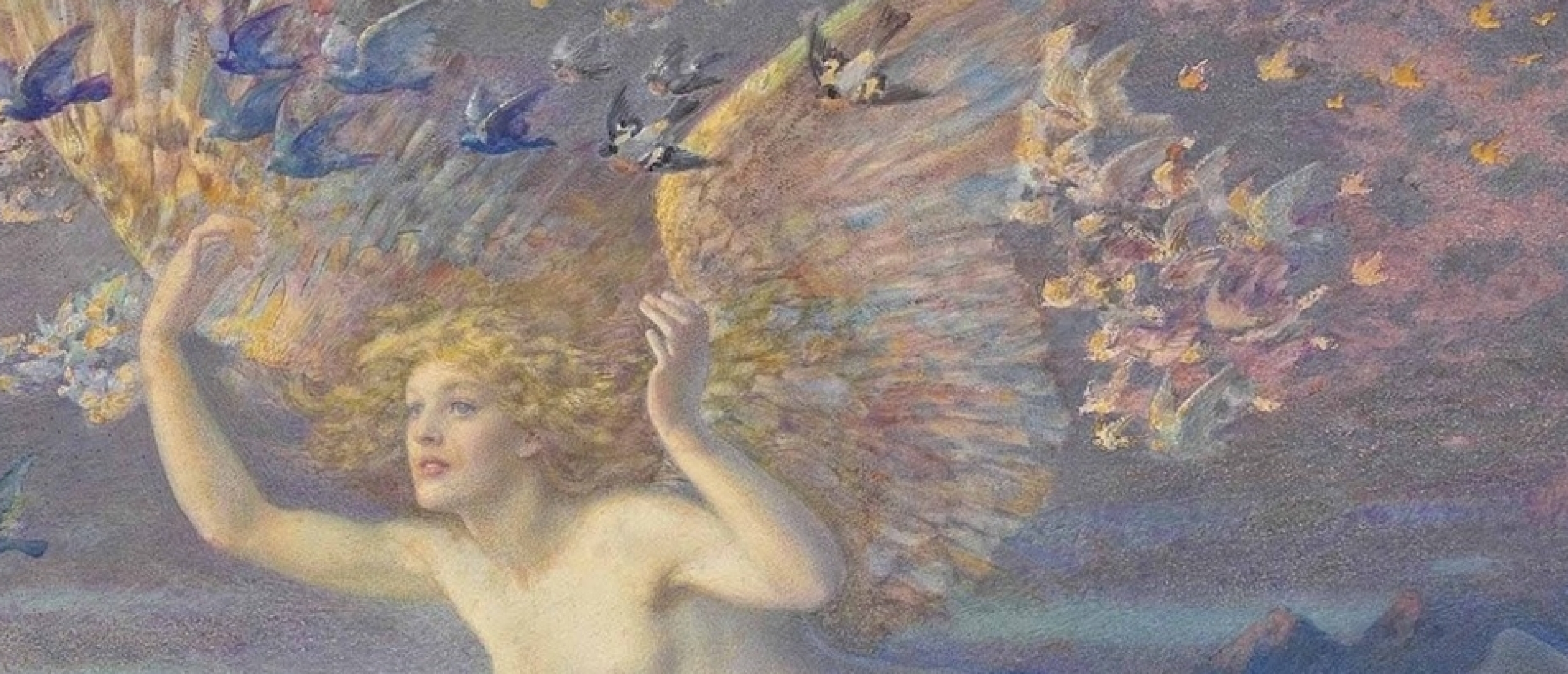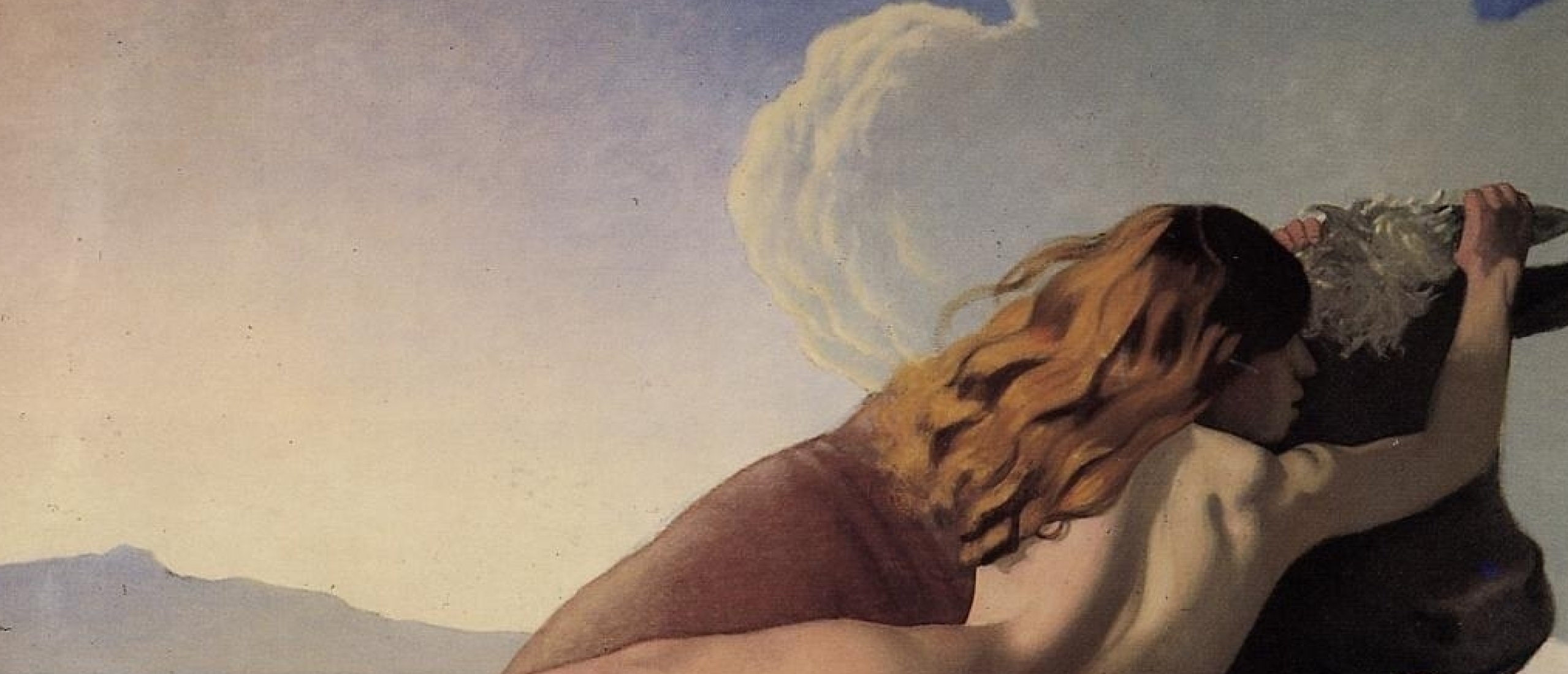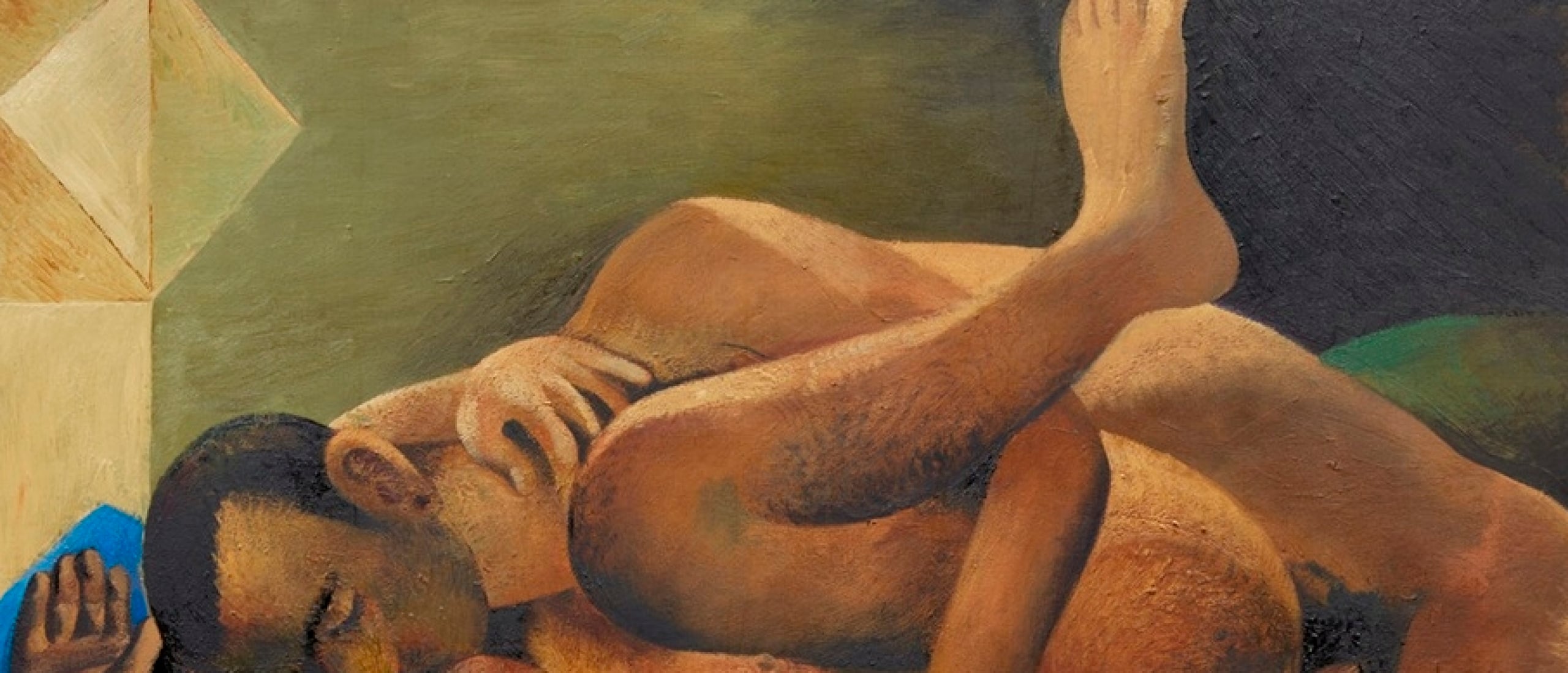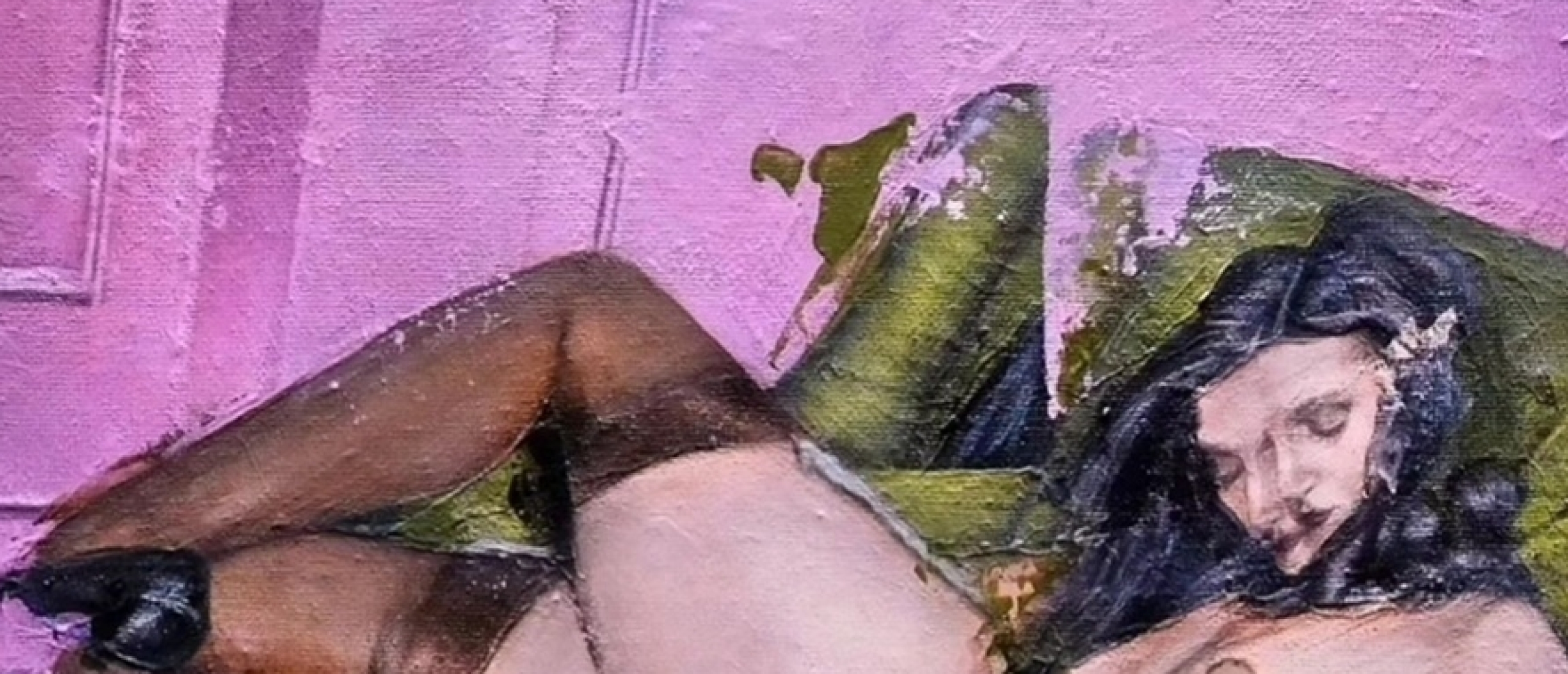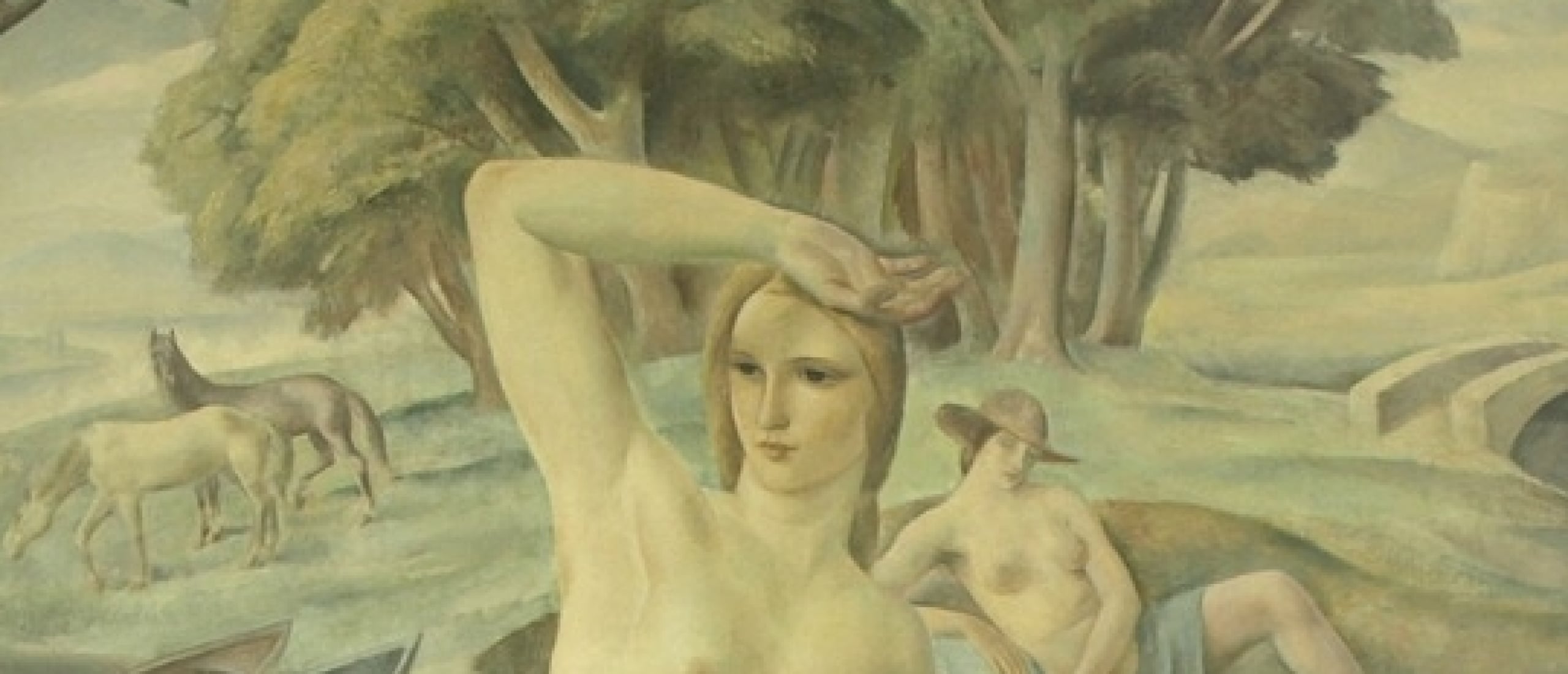
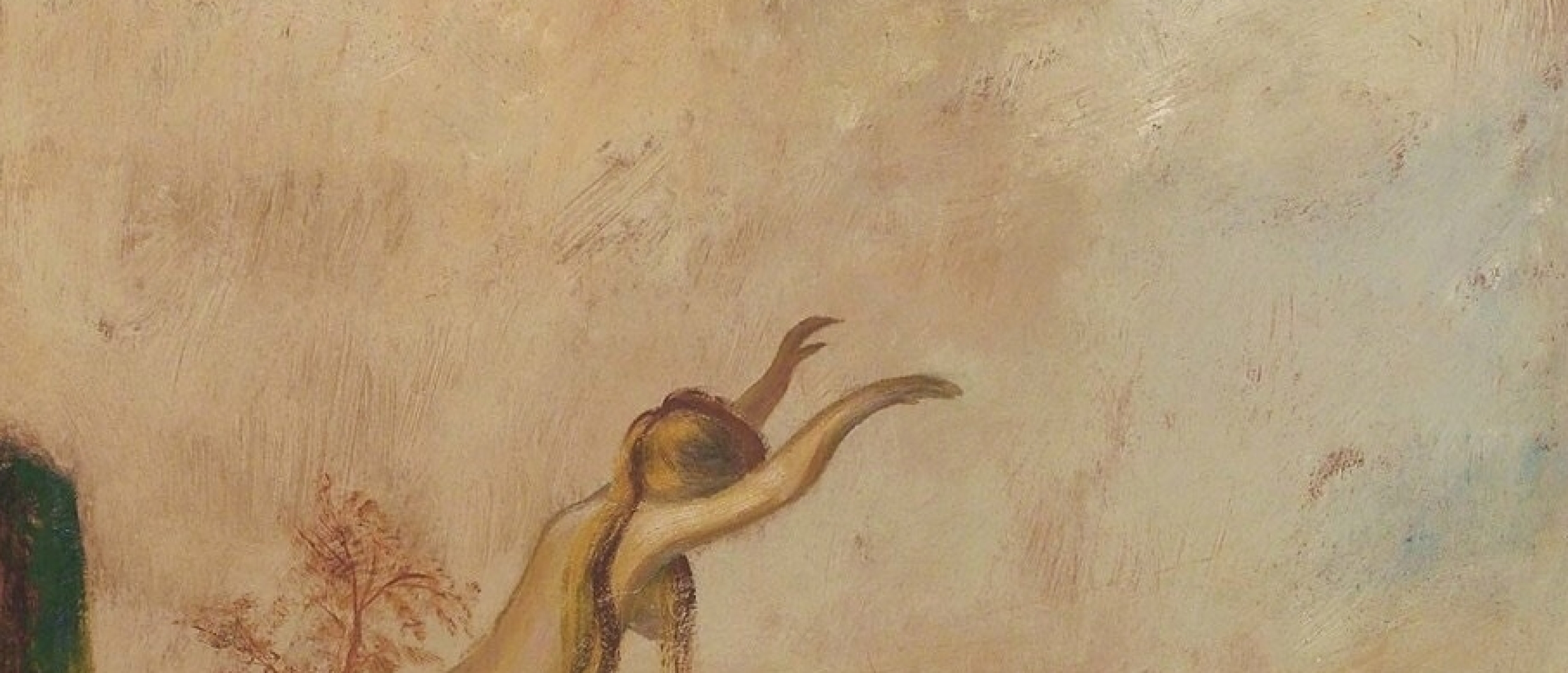

The American painter of landscapes and nudes Louis Eilshemius (1864-1941) is a fascinating subject because his erotic paintings sit somewhere between dream, fantasy, landscape, naïve art and psychological projection. It would be unfair and incorrect to simply label Eilshemius’ paintings as ‘erotic nudes’ because there is so much more to them and it would instead be better to look at how he turned the landscape itself into an erotic space. Eilshemius was born in a well-off family in New Jersey and he received a respectable artistic education through studying at the Art Students League in New York and later also at the Académie Julian in Paris where he encountered the nudes of William-Adolphe Bouguereau as well as other French artist such as Corot whose influence can be felt deeply in Eilshemius’ dreamy and verdant landscapes. While Corot painted his figures clothes in flimsy attire, Eilshemius removes the clothing all together and lets the female figure be as free as the nature around her. Still, the conventional artistic training gave a painter who was all but conventional.
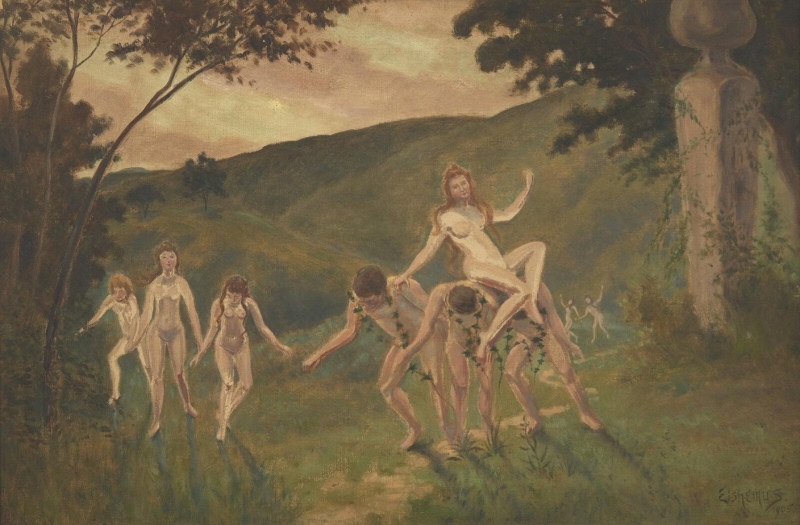
Fig.1 Louis Michel Eilshemius, Figures Dancing in the Glen, 1905
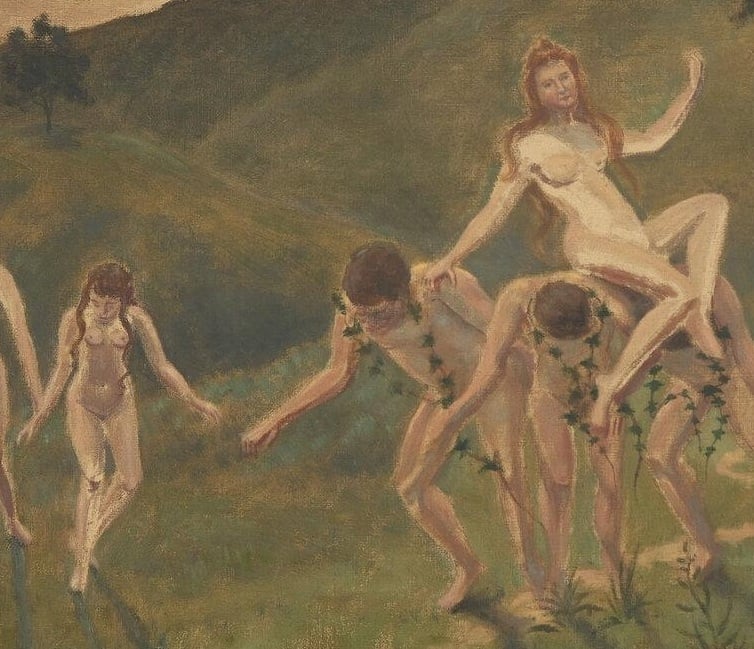
Fig.1a
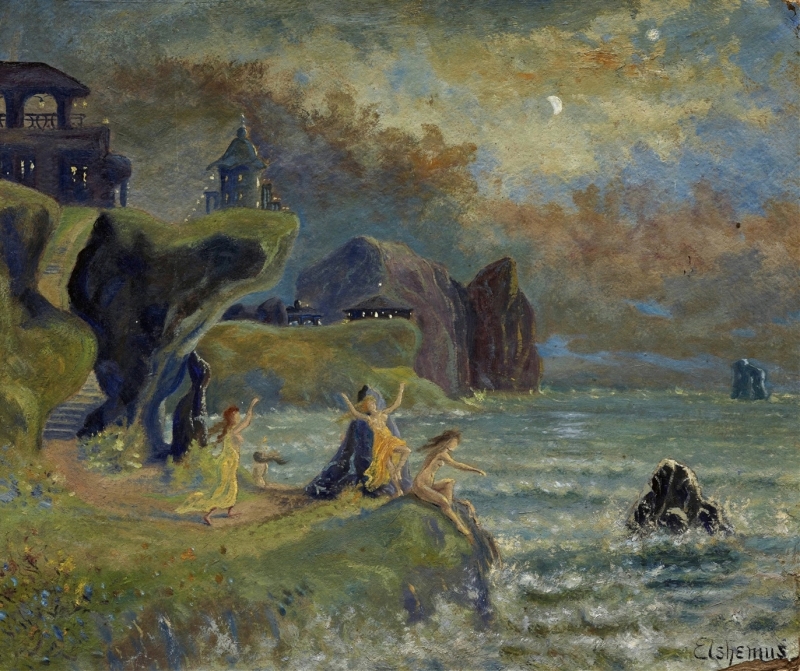
Fig.2 Louis Michel Eilshemius, Sirens of The Sea, 1908
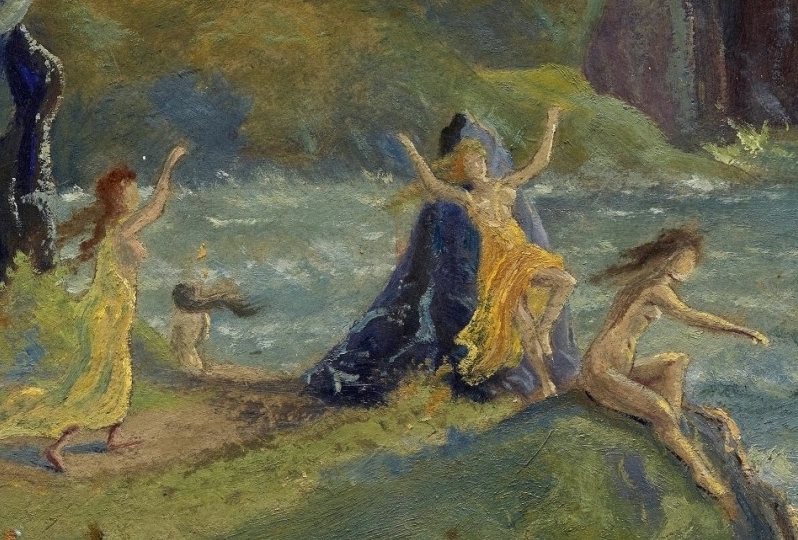
Fig..2a
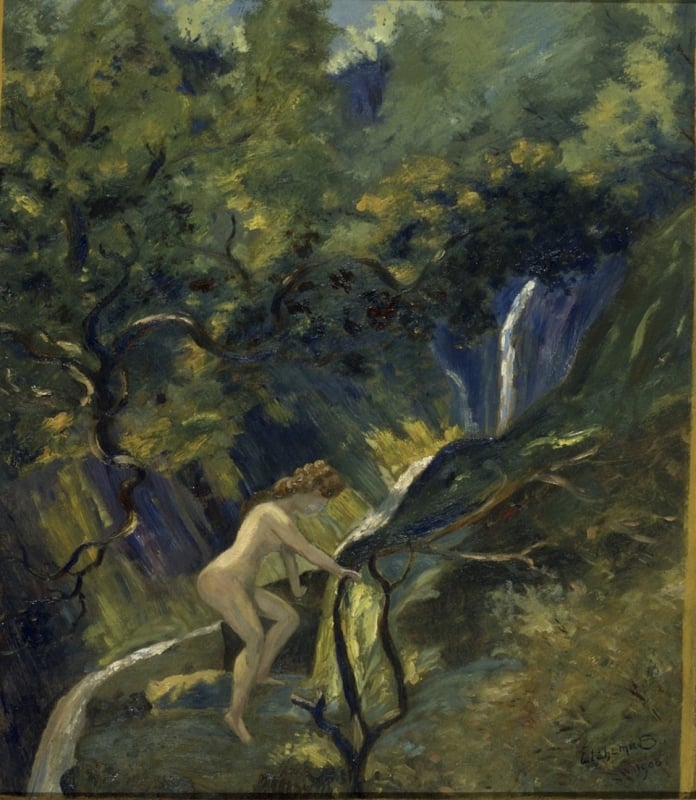
Fig.3 Louis Michel Eilshemius
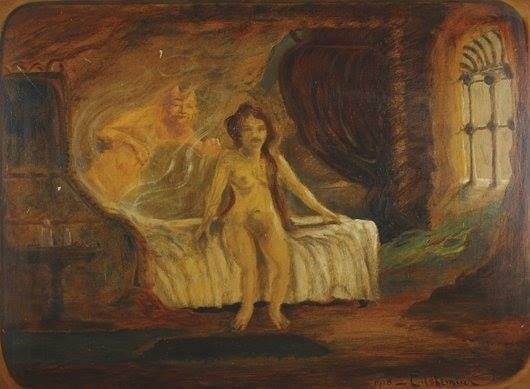
Fig.4 Louis Eilshemius, Dreaming of Temptation, 1918
Polished Perfection
Eilshemius’ paintings gradually became more personal and more fantastical. Around the year 1910 the nude female figure became the central motif of his imaginative worlds. At the same time his technique became increasingly unconventional; he gave up the polished perfection of the academic art and rejected the modernist interpretations of sexuality and instead created a personal mythology in which the naked body is a part of nature itself. Instead of canvas he would often use other surfaces as well, such as cardboard or even the cigar-box wood. Over the years the female figures become more simplified, vaguer but also more blending with nature, disappearing, dissolving in it.
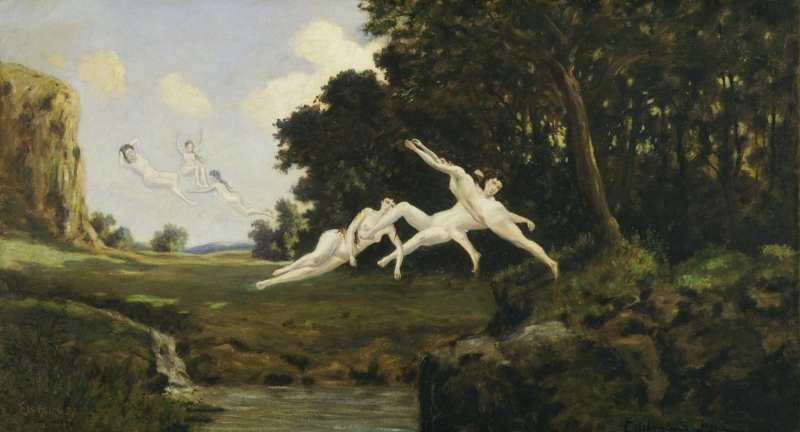
Fig.5 Louis Eilshemius, Afternoon Wind, 1899
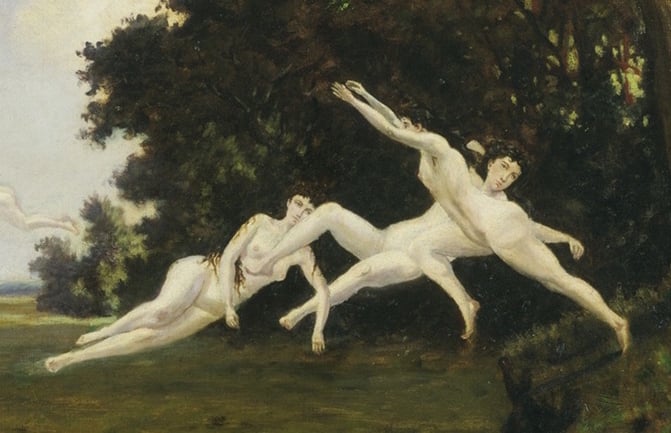
Fig.5a
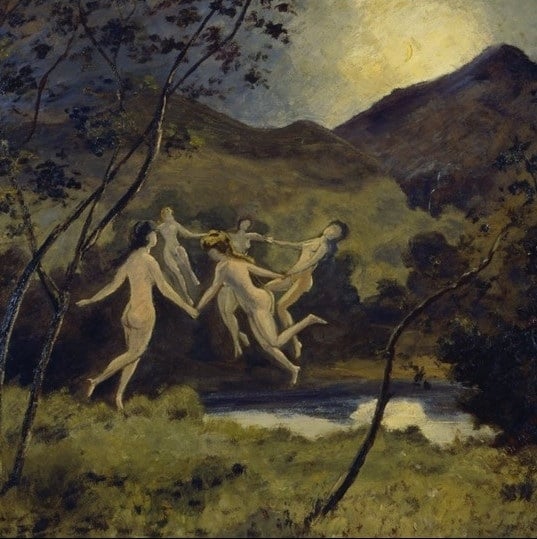
Fig.6 Louis Michel Eilshemius, The Dream, 1908
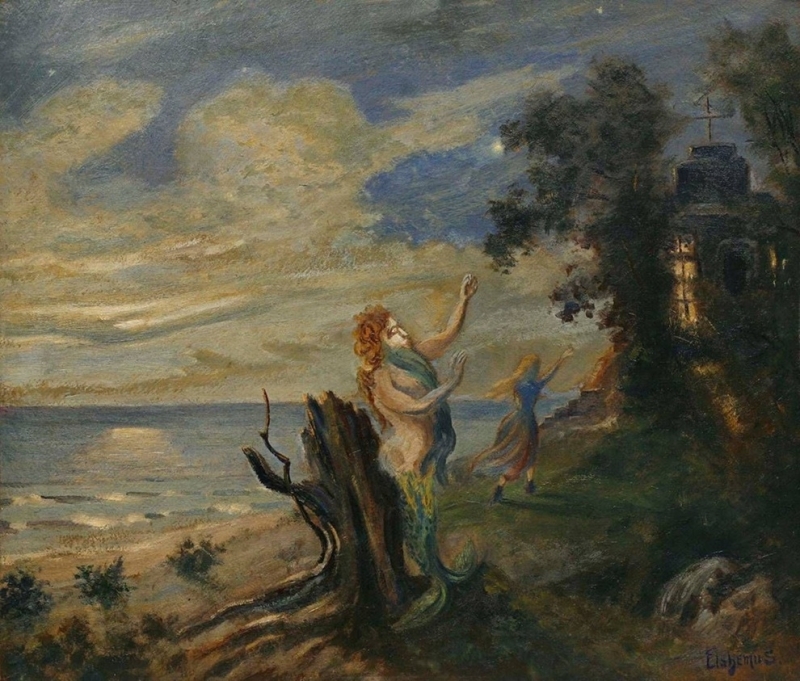
Fig.7 Louis Michel Eilshemius, ‘Untitled (Figures in a Moonlit Landscape)’, oil on board, ca. 1905-9.
Wonderfully Strange
The peculiar mix of sensuality and innocence is what makes Eilshemius’ erotic art so difficult to place. Without a doubt, there is something wonderfully strange about the women who inhabit the landscapes of Louis Eilshemius. They appear among trees, waterfalls, moonlit forests and distant hills, sometimes alone, sometimes in groups, sometimes floating as though gravity itself has ceased to matter. Their bodies are voluptuous and unmistakably sensual, yet there is something almost innocent about their expressions. They smile. They dance. They wander through impossible landscapes as though they have emerged not from the world of flesh and desire, but from a dream.
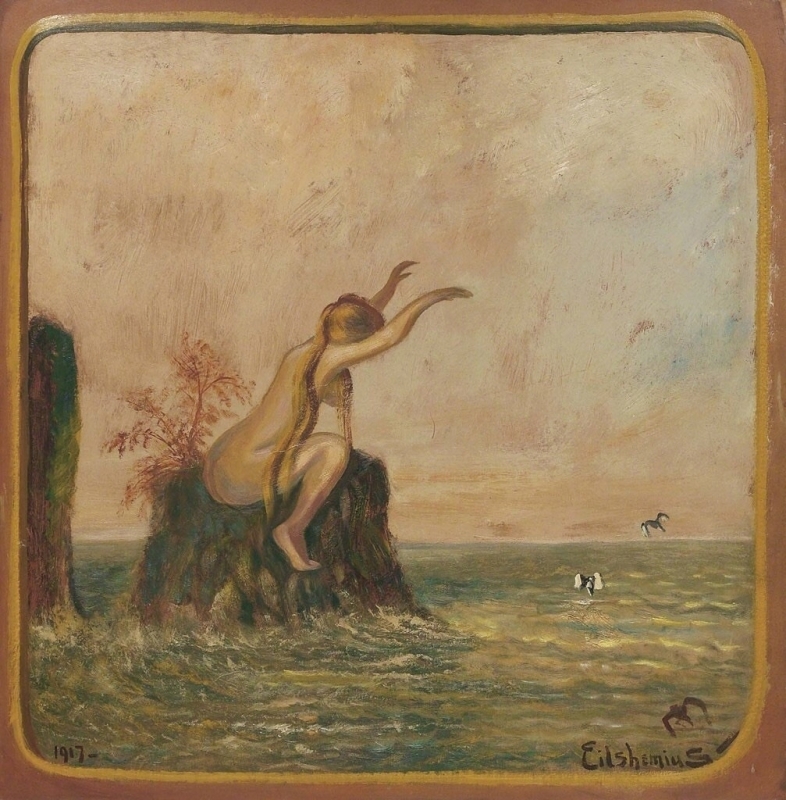
Fig.8 Louis Michel Eilshemius, Untitled (Love Bather), 1917.
Continue reading in Premium and check out the extended version of the article including more about Eilshemius's awkwardness, his 'use' of nymphs, the particular choice of titles in his work, the peculiar aesthetic path he chose, and MUCH more...!!
Click HERE for the playful eroticism of nymphs in European art and gopis in Indian miniature art
Let us know your thoughts about Eilshemius' paintings in the comment box below...!!