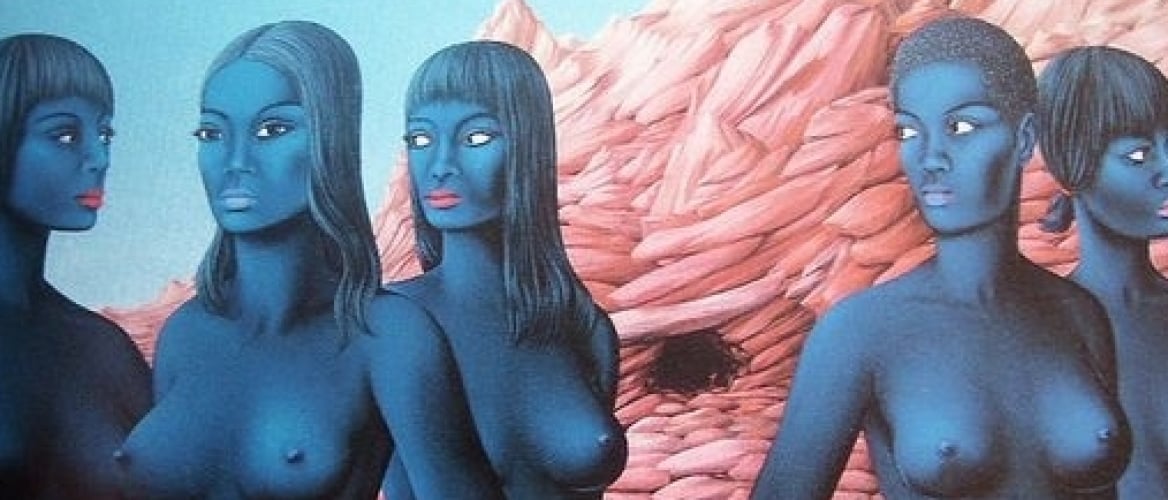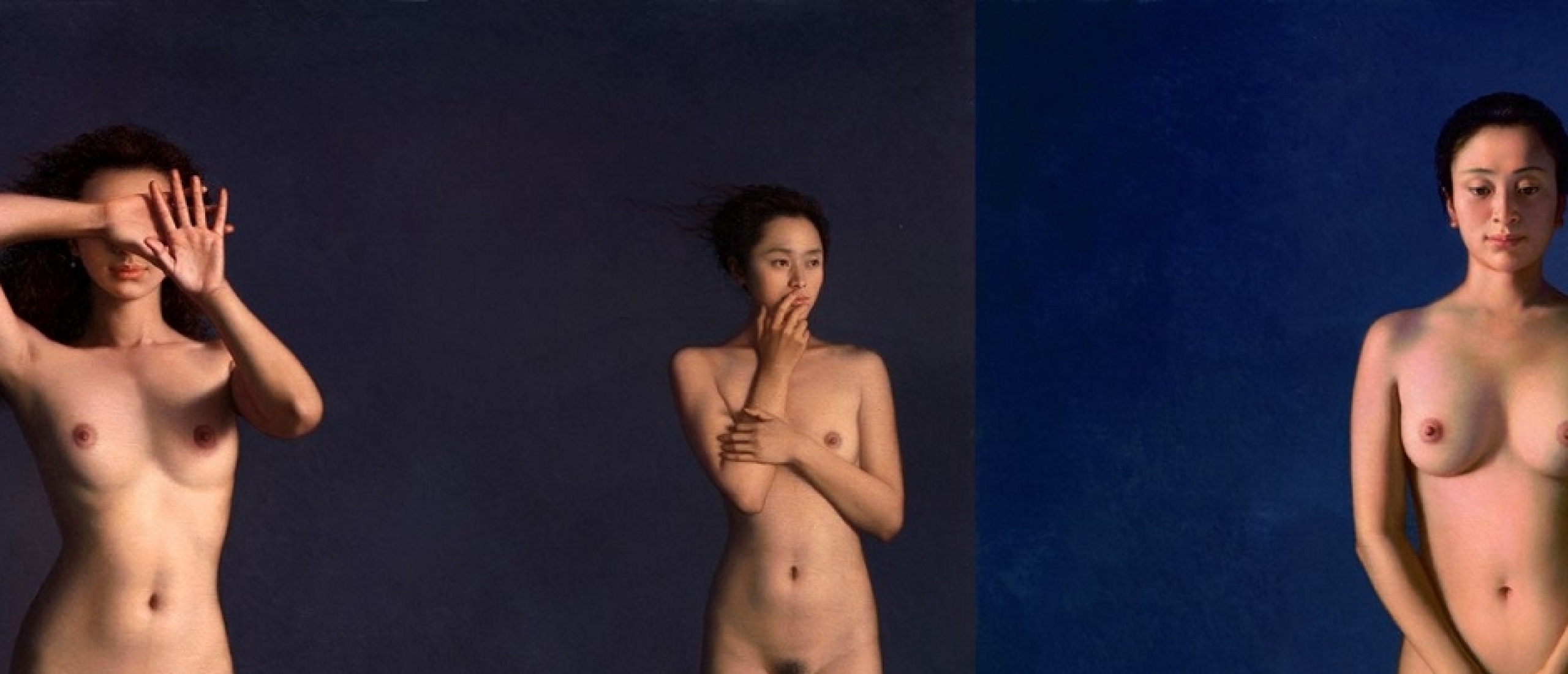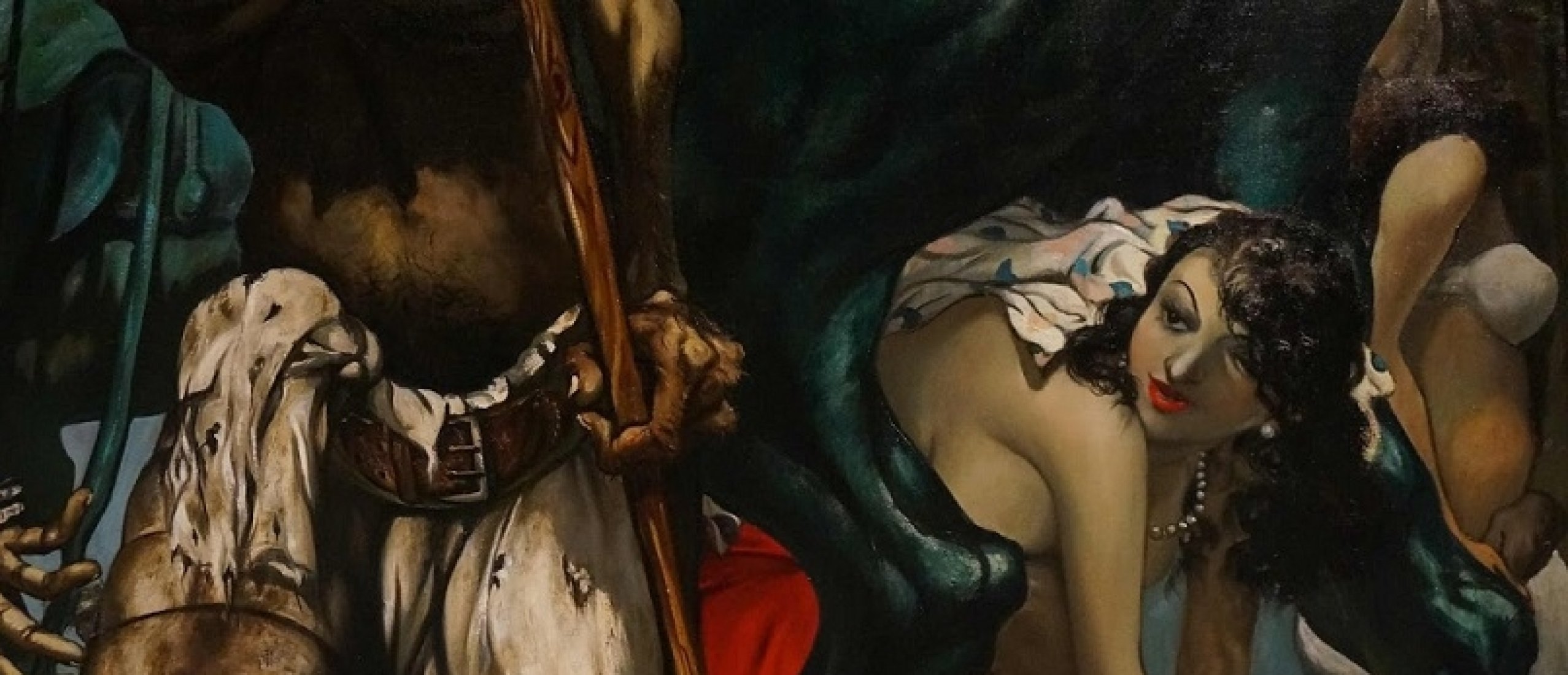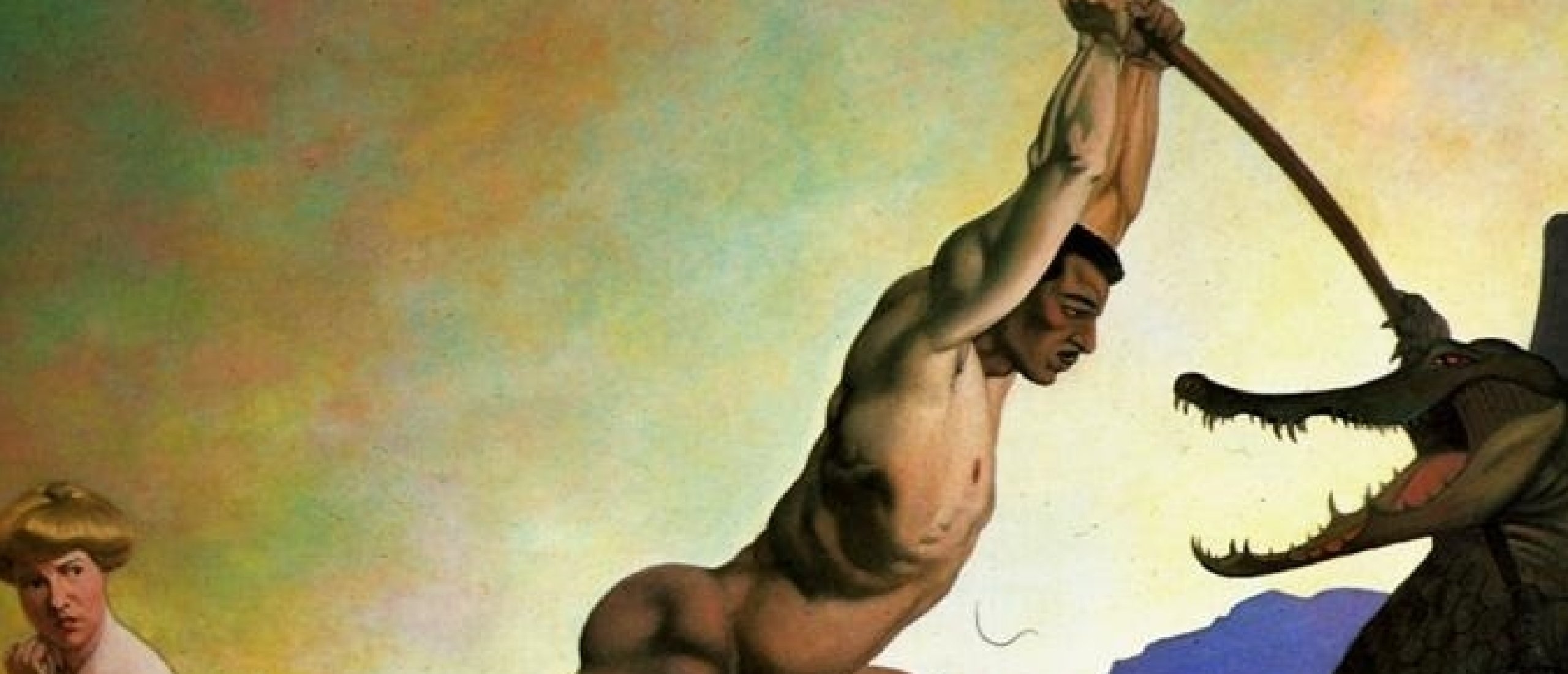
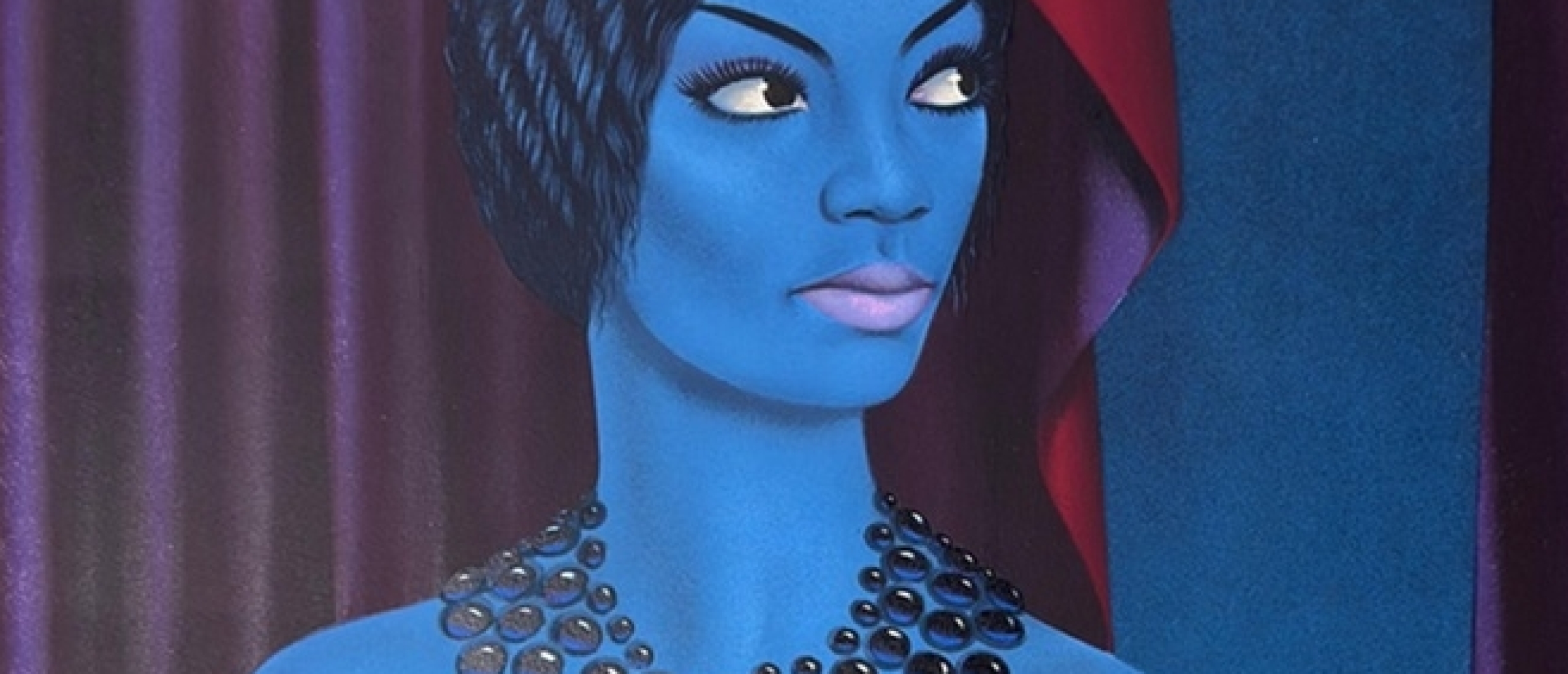

Félix Labisse (1905-1982) occupies a peculiar niche within the twentieth century art. Officially he is a Surrealist painter, but there is latent Symbolism in his paintings as well, especially the ones from his ‘Blue Women’ series. Unmistakably his art is the part of that dreamy European lineage where eroticism, fantasy, and unease converge. His nudes are central to his artistic vision. In his paintings nude women serve less as studies of flesh and more as phantasmal apparitions; women as muses, witches, sirens and archetypes, mostly femme fatales such as Judith and Lucretia which we see in Fig.1. an Fig.2. Something that instantly strikes us while gazing at Labisse’s nudes is their duality. These women are simultaneously alluring and alien, seductive and strange. In so many examples these women are painted with a blue skin tone, the cold blue that instantly speaks of mysteries and dreams. Unlike the warm-blooded sensuality of Renoir or Modigliani, Labisse’s figures seem to belong to some dream-world where desire is tinged with danger and very few are brave enough to enter. The erotic element here is not simply physical, but also metaphysical, inviting the viewer into a labyrinth of myth and nightmare. Their eyes wide open and their lips pressed together, these nudes also seem eerily quiet, mute, which makes them all the more frightening and alluring.
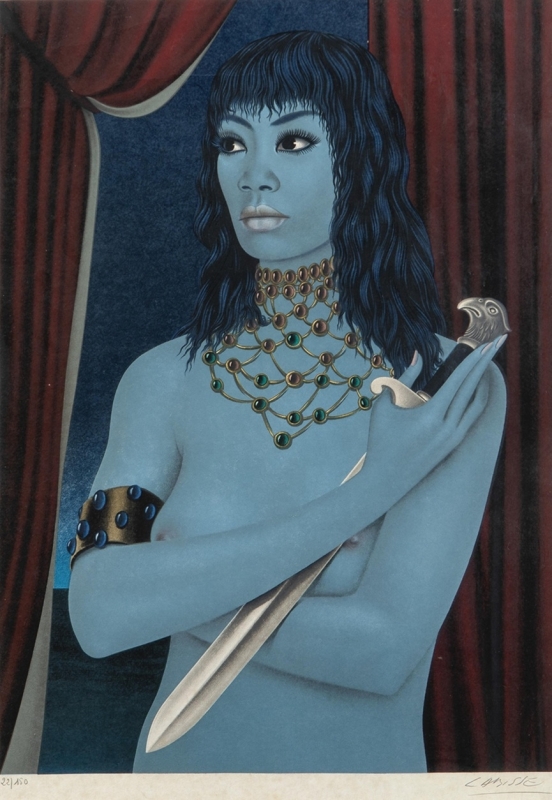
Fig.1 Felix Labisse, Judith, circa 1960
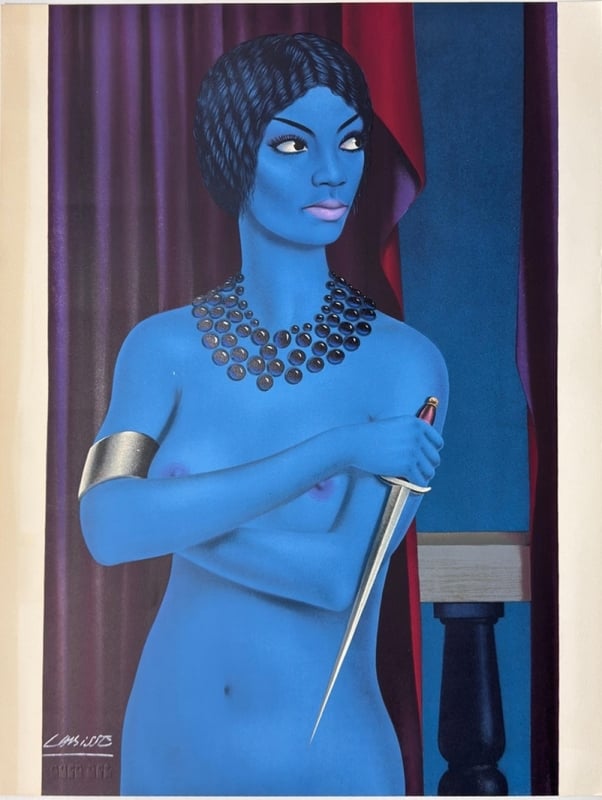
Fig.2 Felix Labisse, Lucretia, circa 1960
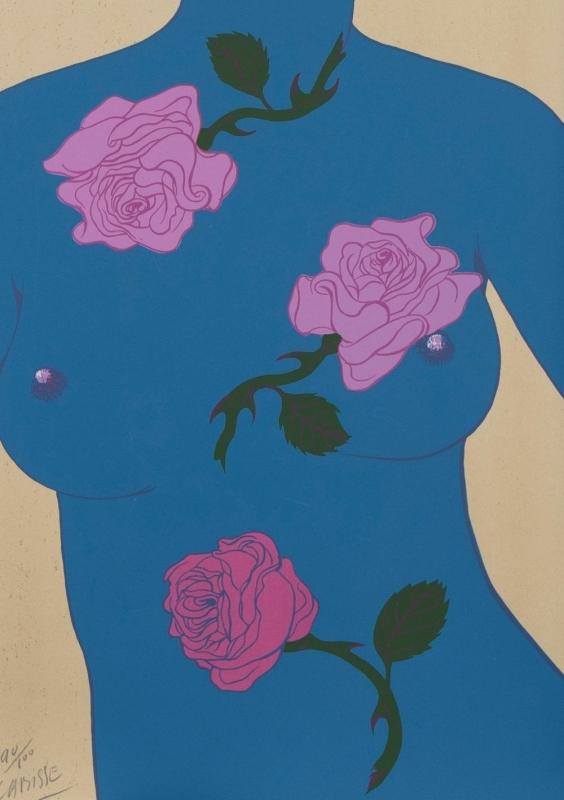
Fig.3 Felix Labisse, Afternoon Songs, Fleur du Mal, Colour lithograph, 1975
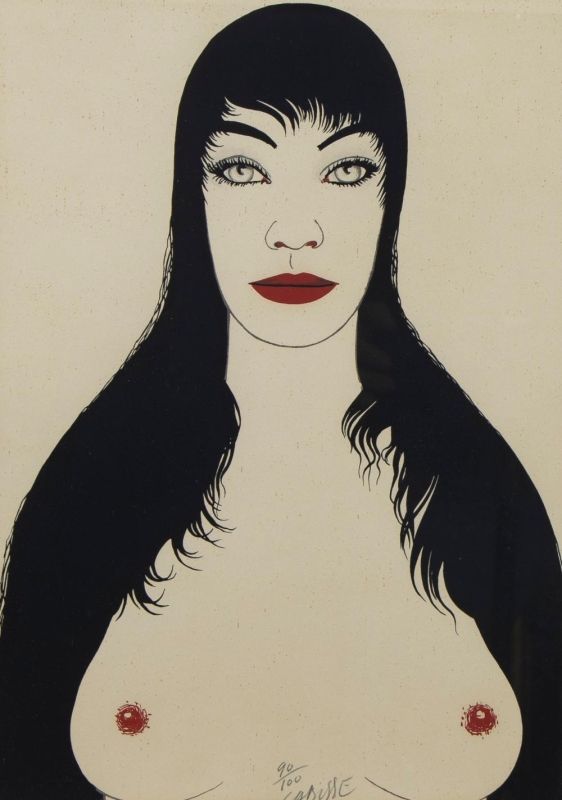
Fig.4 Felix Labisse, Afternoon Songs, Fleur du Mal, Colour lithograph, 1975
Seeds of Transgression
Labisse’s decorative sensibilities connect him back to Symbolism and even to Art Nouveau. The arabesques of hair, the jewel-like tones, the theatrical staging of his figures recall the works of Moreau, Gustav Klimt and Vittorio Zecchin. Labisse’s women are often seen wearing heavy, elaborate jewellery, as seen in Fig.6. and Fig.8. for example. Not just necklaces but body jewellery as well. But while Klimt wraps his figures in a golden ecstasy, Labisse unclothes them against theatrical voids, giving them a sculptural solitude. His women are isolated presences, idols of desire yet also enigmas. One might say his nudes evoke the uncanny aspect of eroticism that Georges Bataille described, in the sense that desire is never innocent; it carries within it the seeds of transgression, even of terror. Labisse captures this tension; his women are not passive muses but active enigmas, withholding as much as they offer. Their eyes, often almond-shaped and elongated, gaze back with a cool self-possession, as if they know more than the viewer, as if the viewer has already been ensnared in their spell.
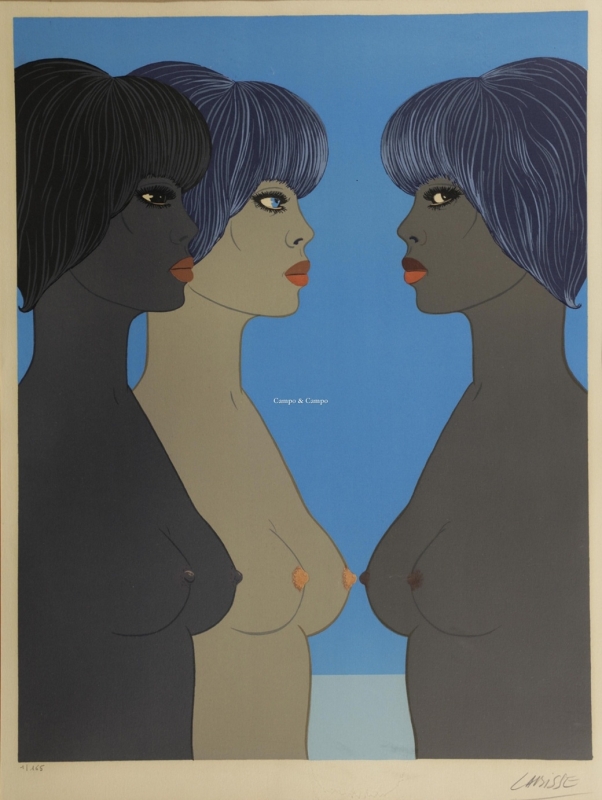
Fig.5 Felix Labisse, Three Nude Women, Colour lithograph, n.d.
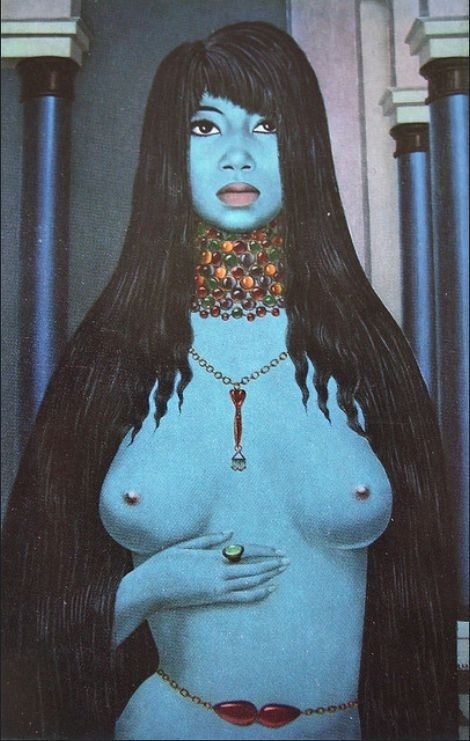
Fig.6 Felix Labisse, La vanossa concubine du pap, 1969
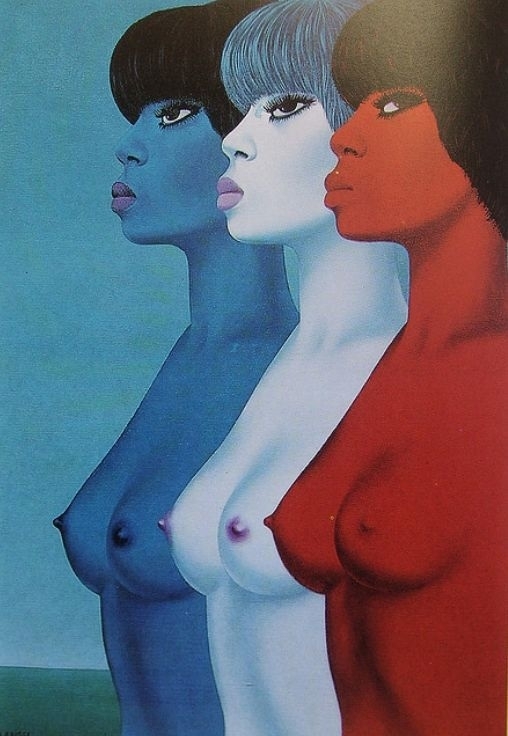
Fig.7 Felix Labisse, Le 14 juillet a pointe-a-pitrem, 1968
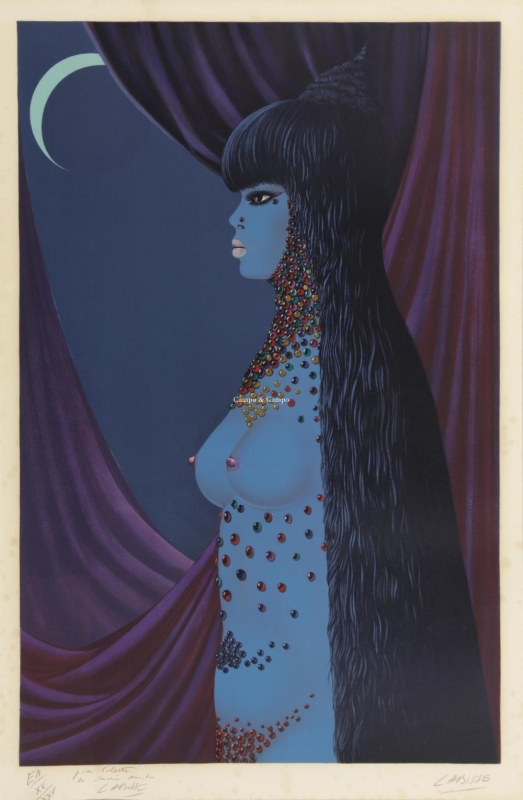
Fig.8 Felix Labisse, The overwhelm of the pearls, Colour lithograph, n.d.
Warm Carnality
Among Labisse’s most striking inventions are his blue women, the series which he started in 1960, nudes painted in spectral, cold shades of cobalt, turquoise, or midnight blue. In art history, blue has carried many paradoxical meanings: the divine meaning such as the Virgin Mary’s mantle, the infinity of the sea and the sky, but it may also be seen as the colour of melancholy and grief. In Labisse’s hands, blue turns the human body into something both earthly and unearthly, both desired and unreachable. The blue women resist warm carnality. They are not bodies of blood and heat but apparitions, closer to lunar goddesses or dream figures than to flesh-and-blood lovers or vixens. Blue also connotes distance and infinity, and in Labisse’s erotic vocabulary, this transforms the nude into a horizon of longing. These women are not available presences but eternally mysterious just like the sea, and they draw you toward them but never fully let you arrive.
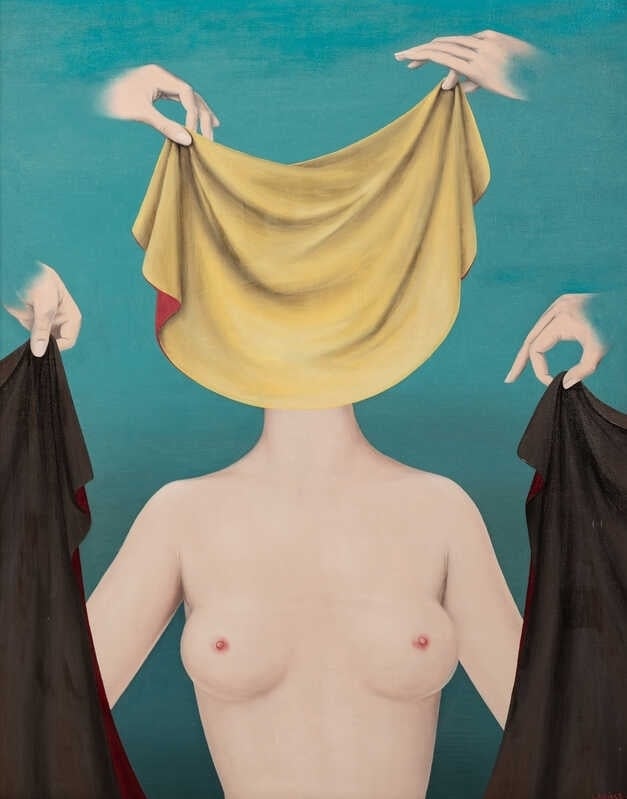
Fig.9 Félix Labisse, L'Apprenti Sorcier, 1962
Become a Premium member now and check out the extended edition of the article!
Click HERE for an earlier article about Félix Labisse
Let us know your thoughts about Labisse's art in the comment box below...!!