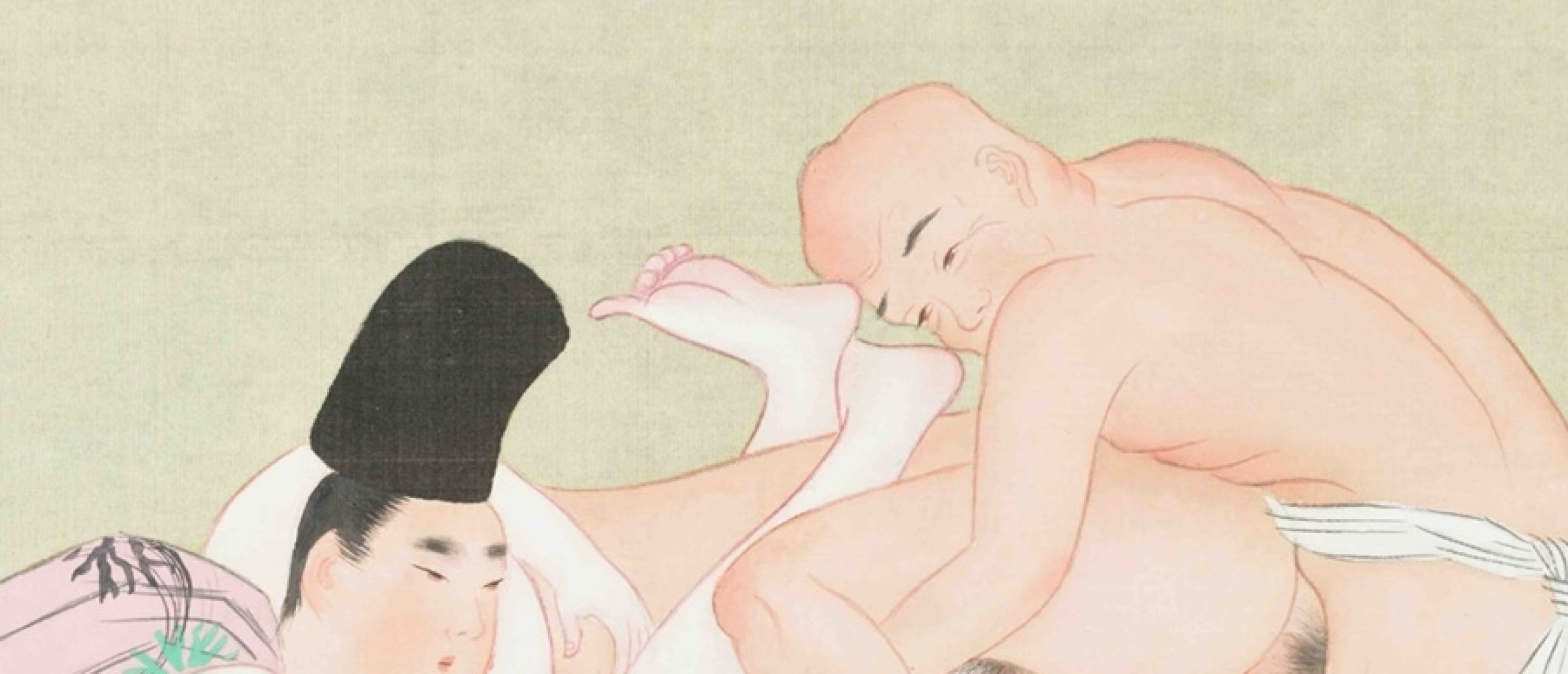
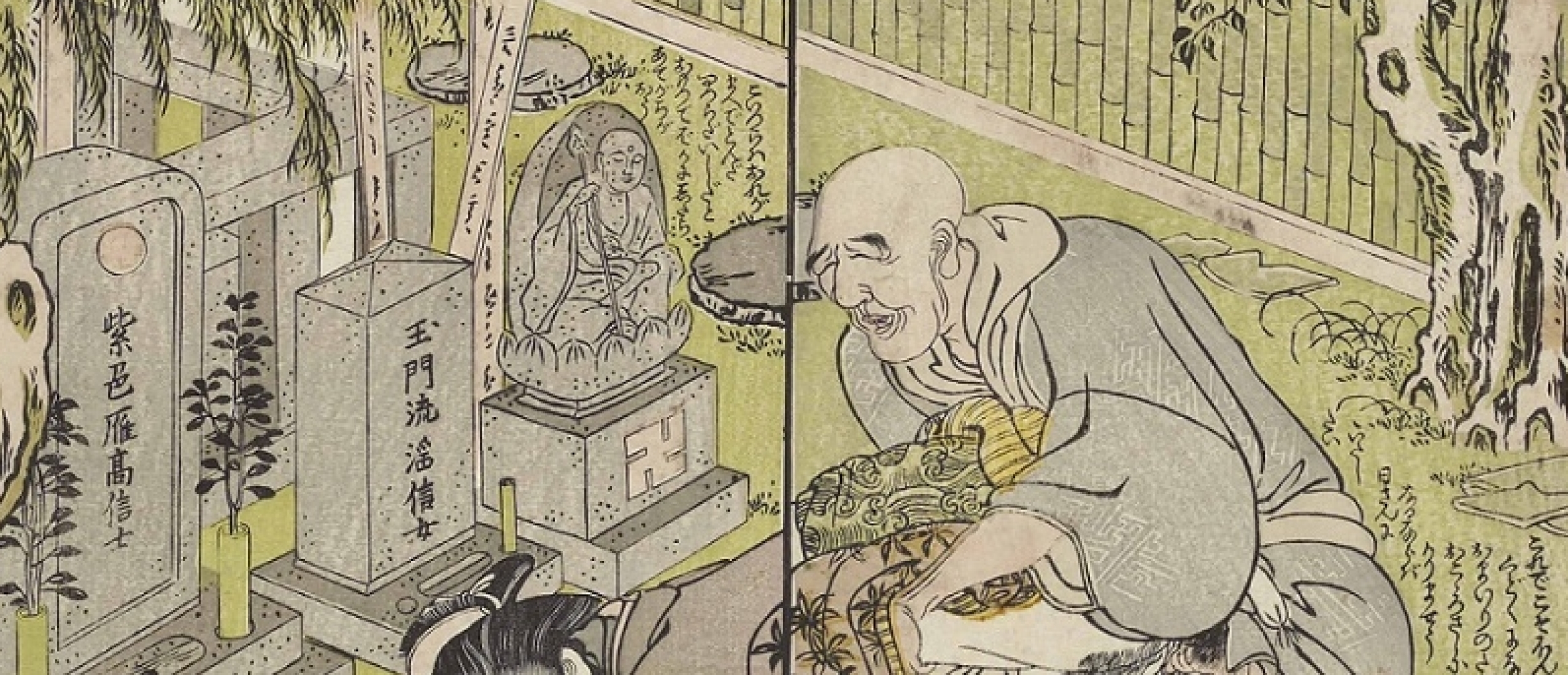

In the two rare designs below, a dominant role is reserved for the statue of Jizo. These statues were made in the image of Jizo Bosatsu, a guardian deity of children and travelers.
Protection and Longevity
They're also known as the 'earth bearer', so jizo statues are mainly made out of stone, which is said to have a spiritual power for protection and longevity that predates Buddhist beliefs. They can be found in many places, for example, at Buddhist temples, graveyards, and on the side of the road.
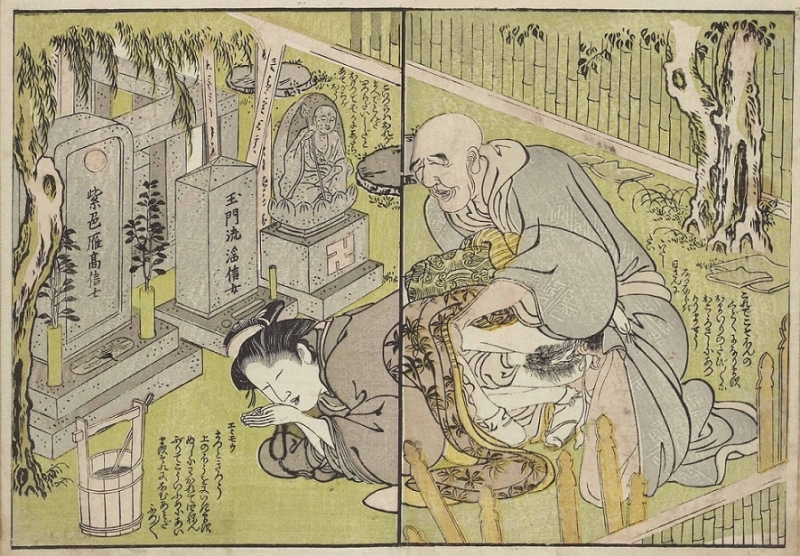
Fig.1.
Relatively Unknown
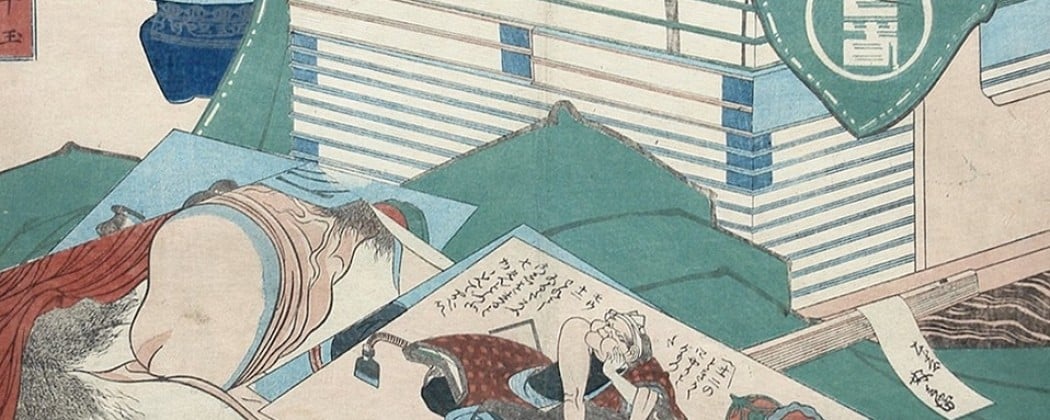
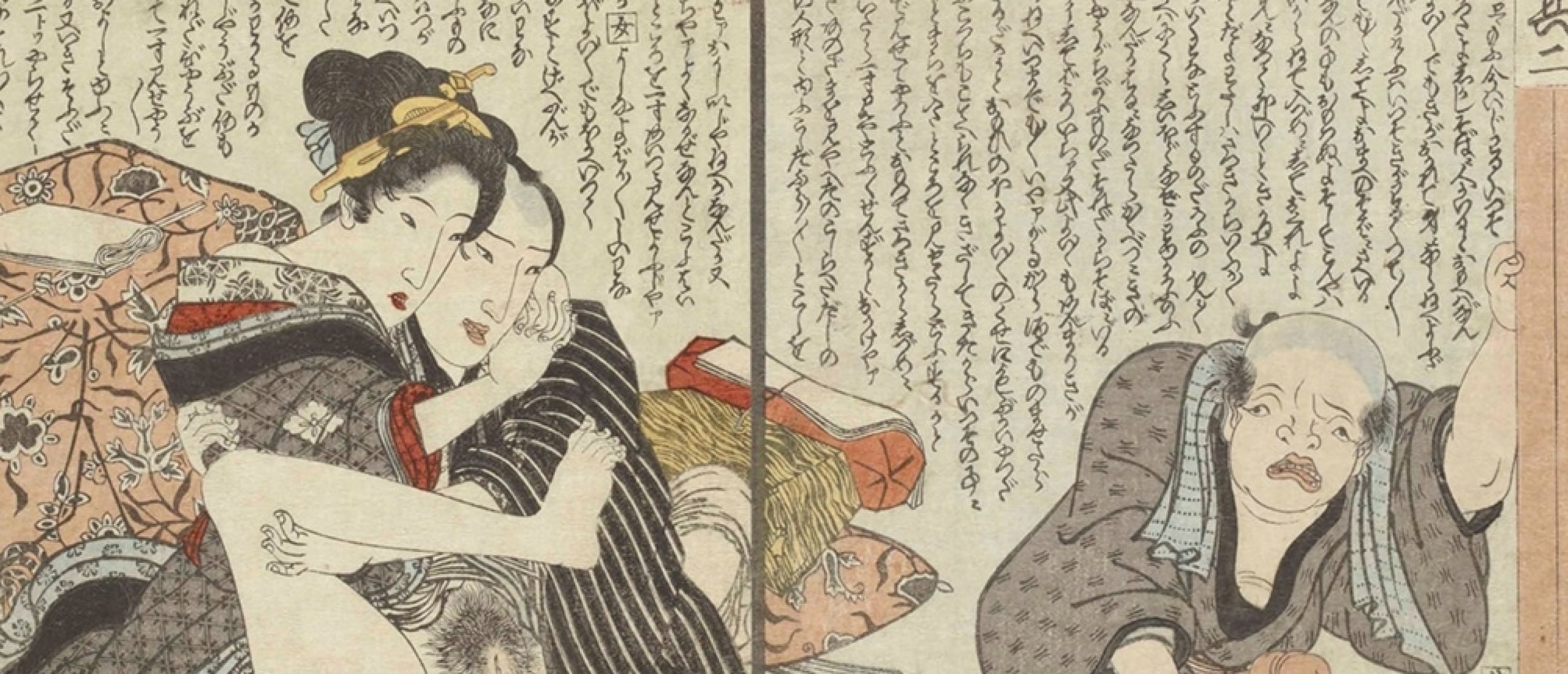
While cleaning her dead husband's grave, a widow is penetrated from behind by an old monk (Fig.1). This double-page illustration comes from a book entitled (loosely transl) 'View on Encounters of Men and Women' (c.1780s) and was designed by the relatively unknown artist Katsukawa Shundo (act.1780-1792).
Earliest Pupils
Very little is known about Shundo. It is thought that he was one of the earliest pupils of Katsukawa Shunsho (1726-1793), though it is possible that he may have been Shunsho’s peer under the tutelage of Miyagawa Shunsui.(act. 1744–64).
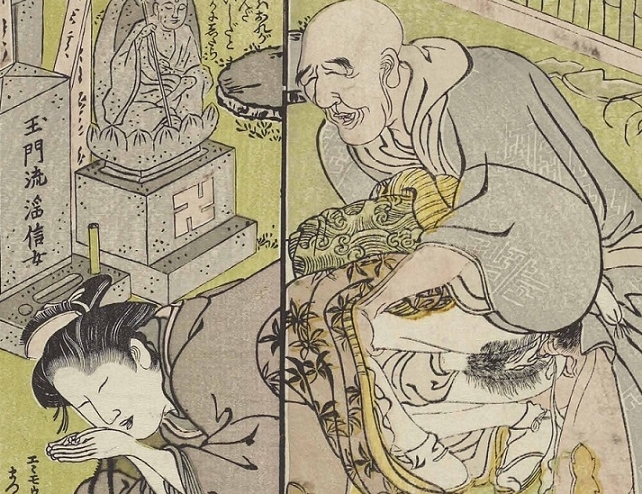
Fig.1a.
The dialogue reads:
Monk: “This will be a true meritorious deed.
Widow: "Yes, please poke the top more tightly. It's been four years since my husband died."
Statue of Jizo (in the back): "These guys do crazy things in front of me."
Look closely at Jizo's crotch (Fig.1a)...
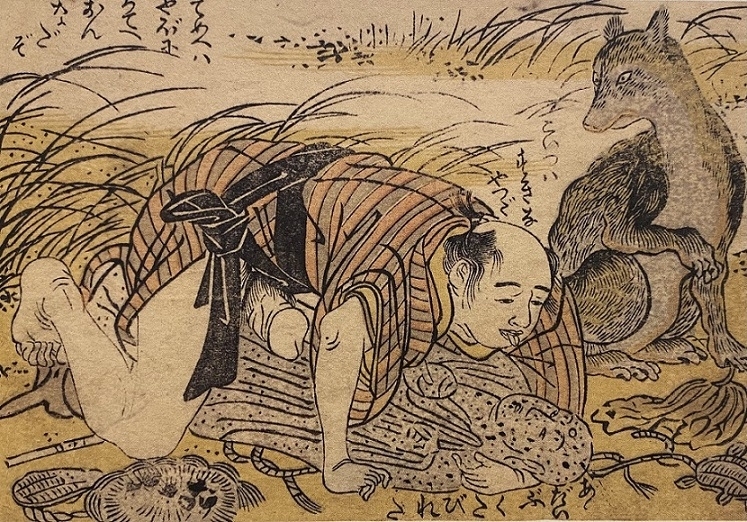
Fig.2.
Fox
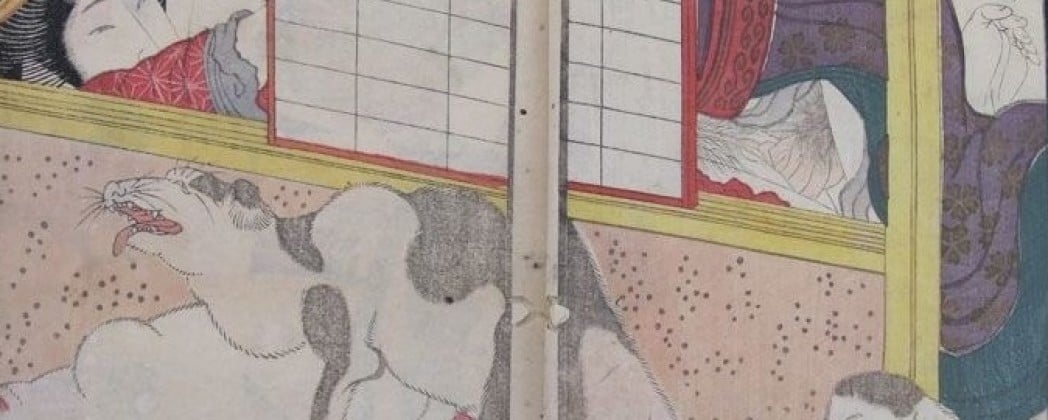
In this second smaller koban-sized design a traveler is making love to the Buddhist statue of Jizo, while being observed by a fox. It was produced c.1818-30 and produced by an unknown Kamigata artist.
Text and dialogue read:
Don't rub your maro (penis) on Jizo
Man: "This is a difficult onago (also meaning woman) for me."
Fox: "This man is a lover."
Jizo: "I'm tired ..."
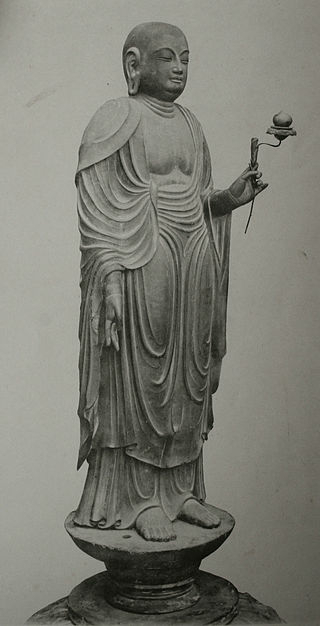
Fig.3. Statue of Jizo in Japan (Wikipedia.org)
Click HERE for an article featuring a contemporary statue based on Keisai Eisen's extraordinary "Harbor" scene by Joscha Bender
Source: Tuyashun (Twitter). wikipedia.org
Do you like these kind of examinations about topics treated within shunga?