
NEW BODILY POSSIBILITIES
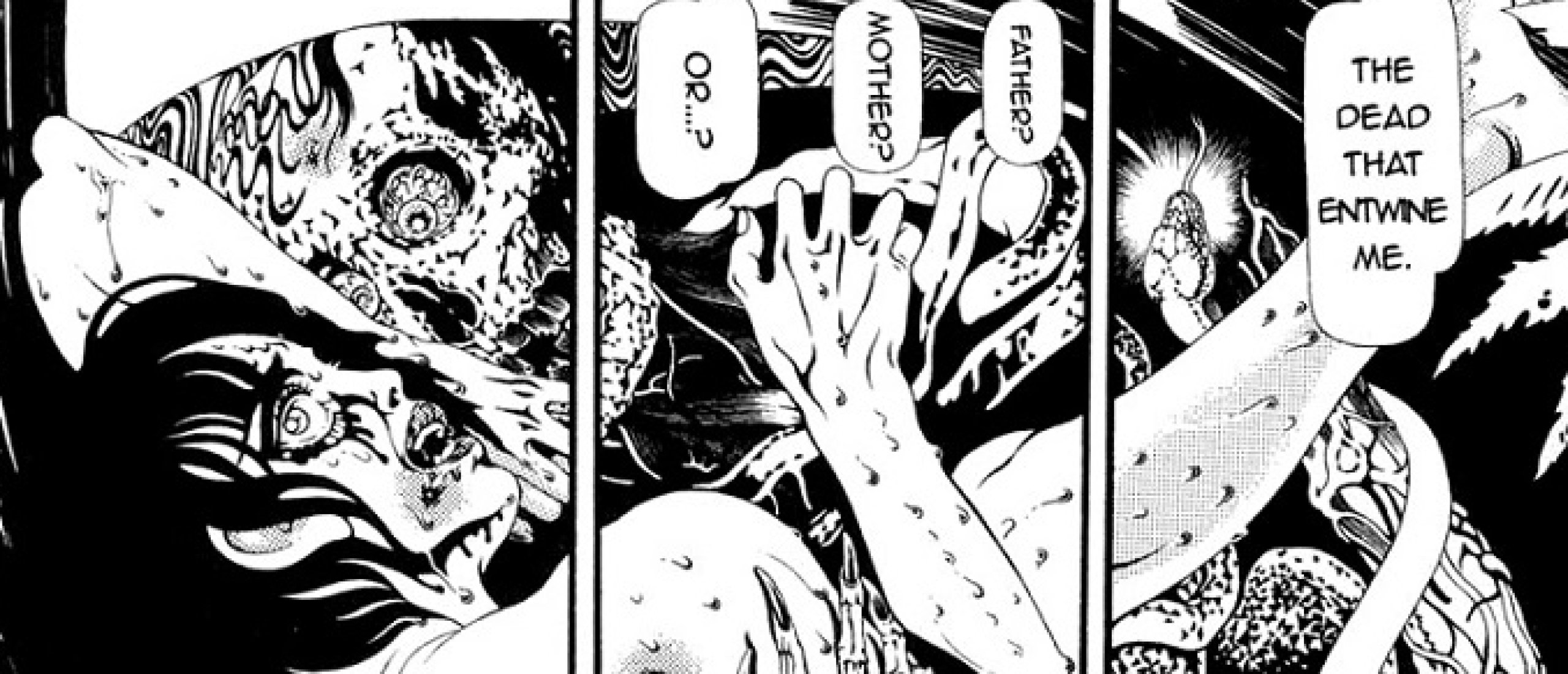
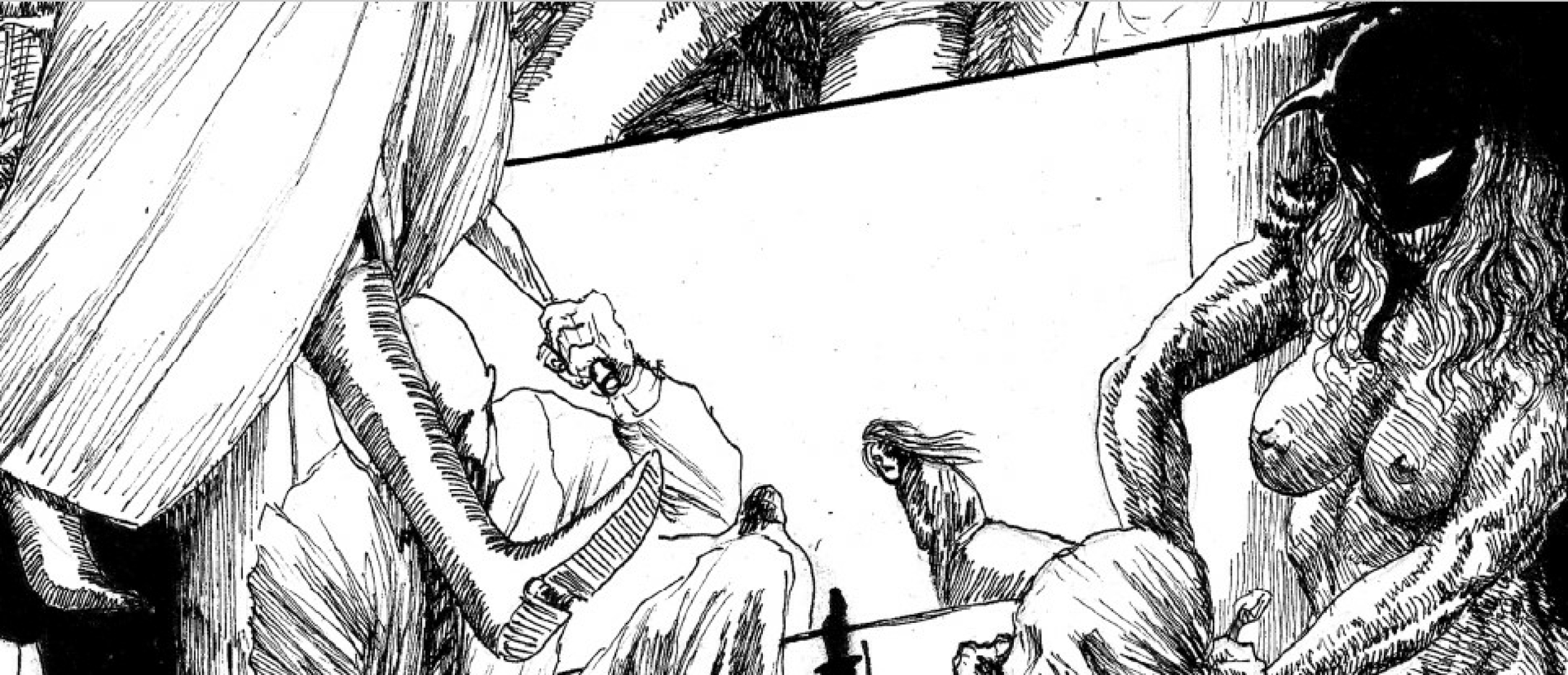
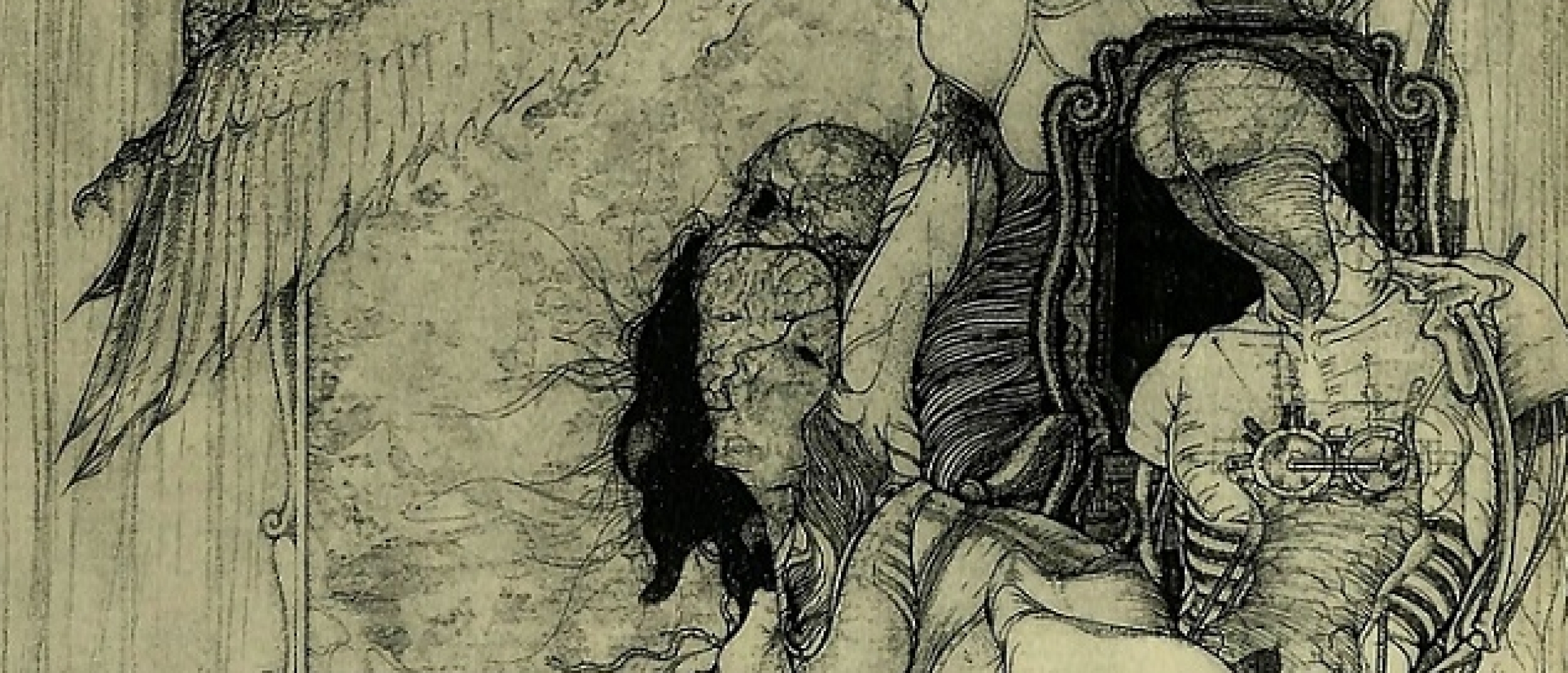
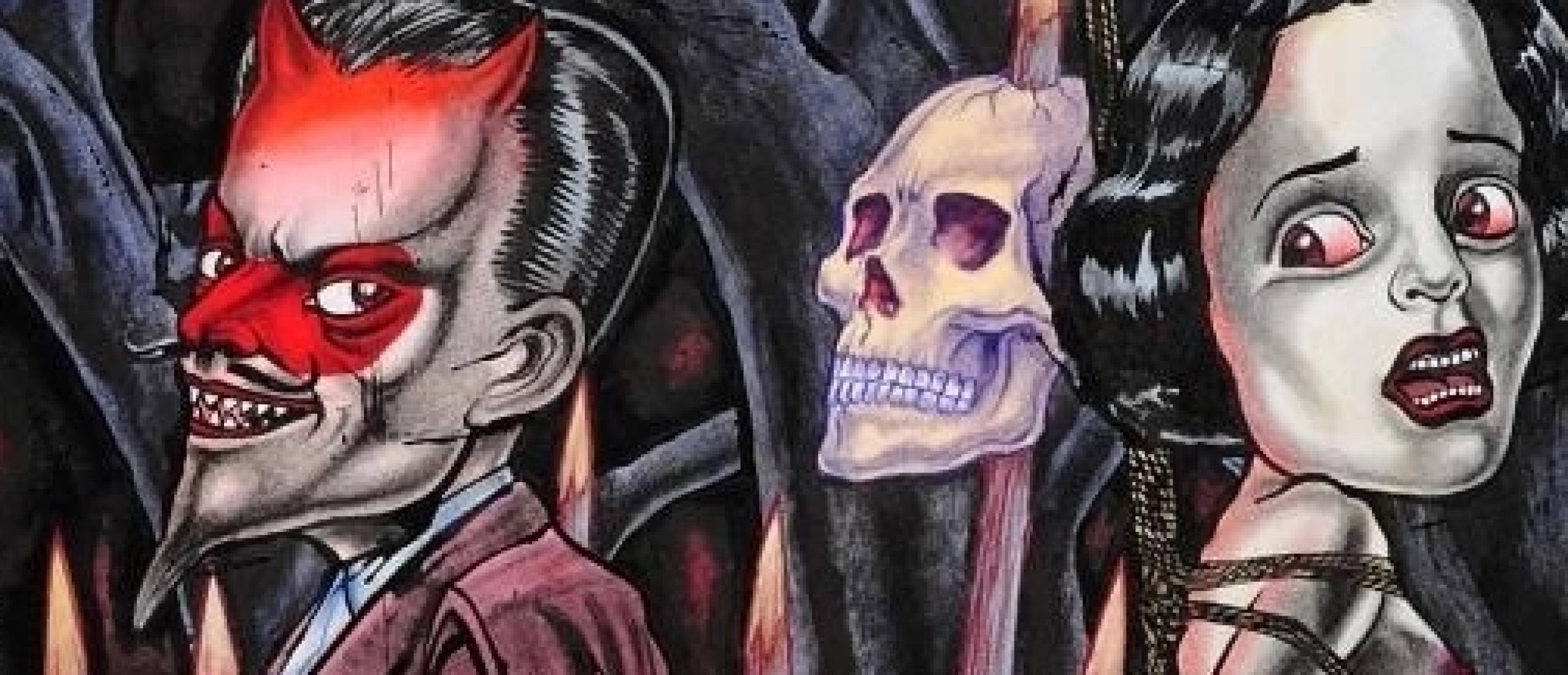
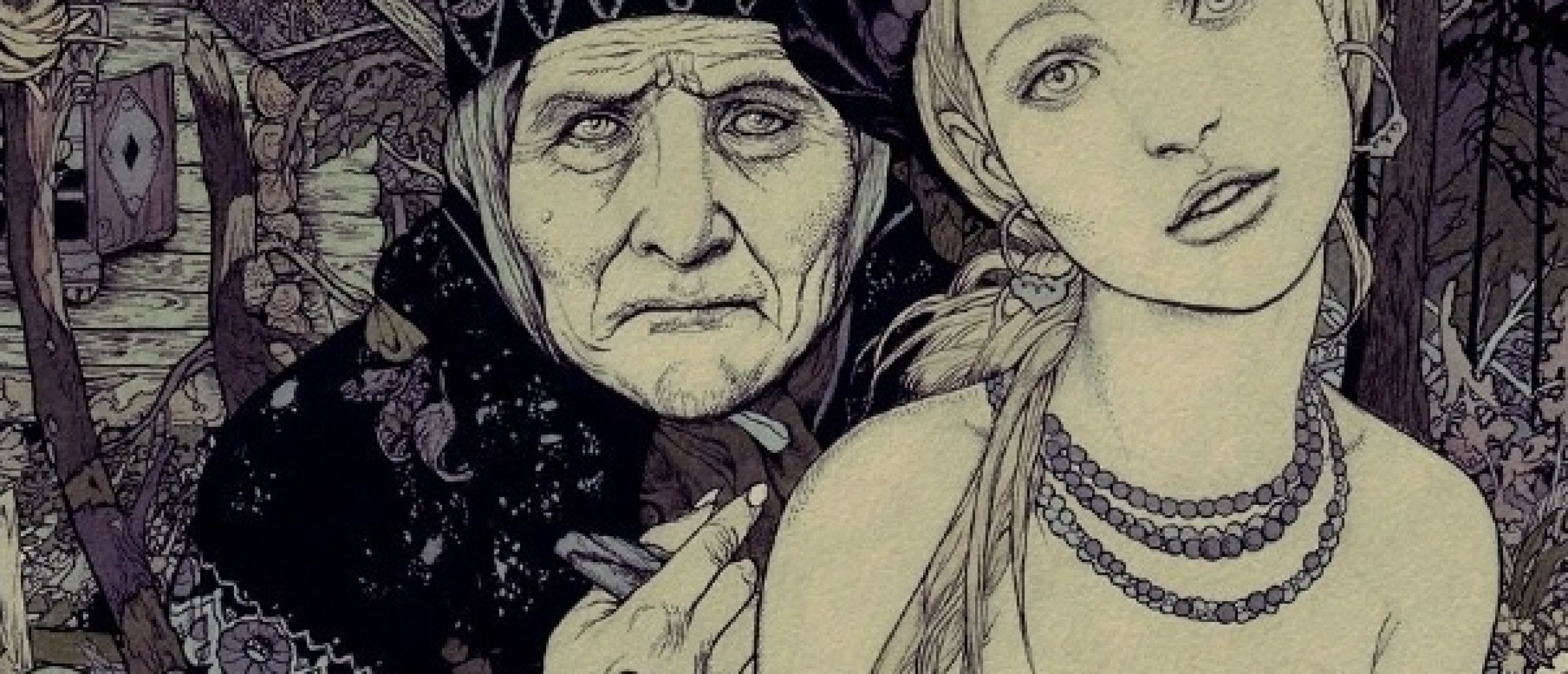
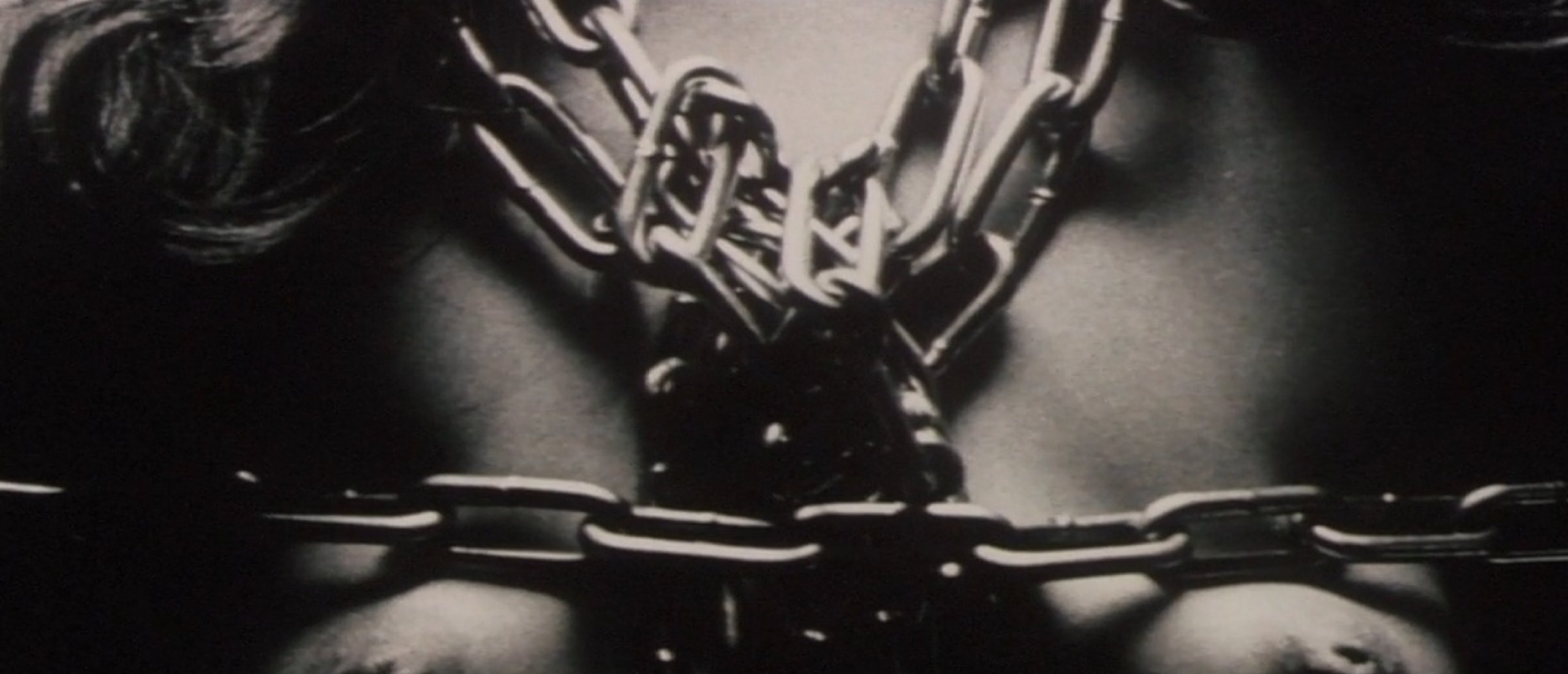
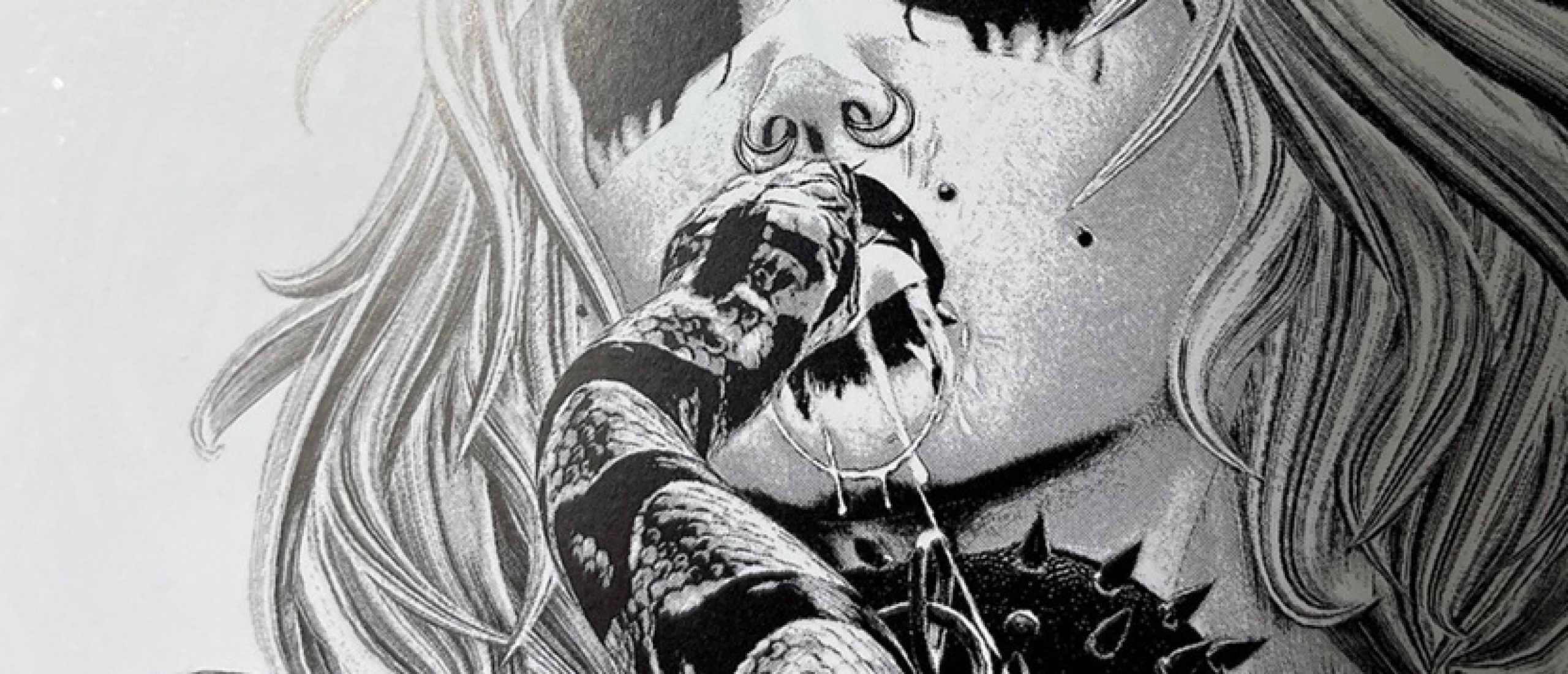
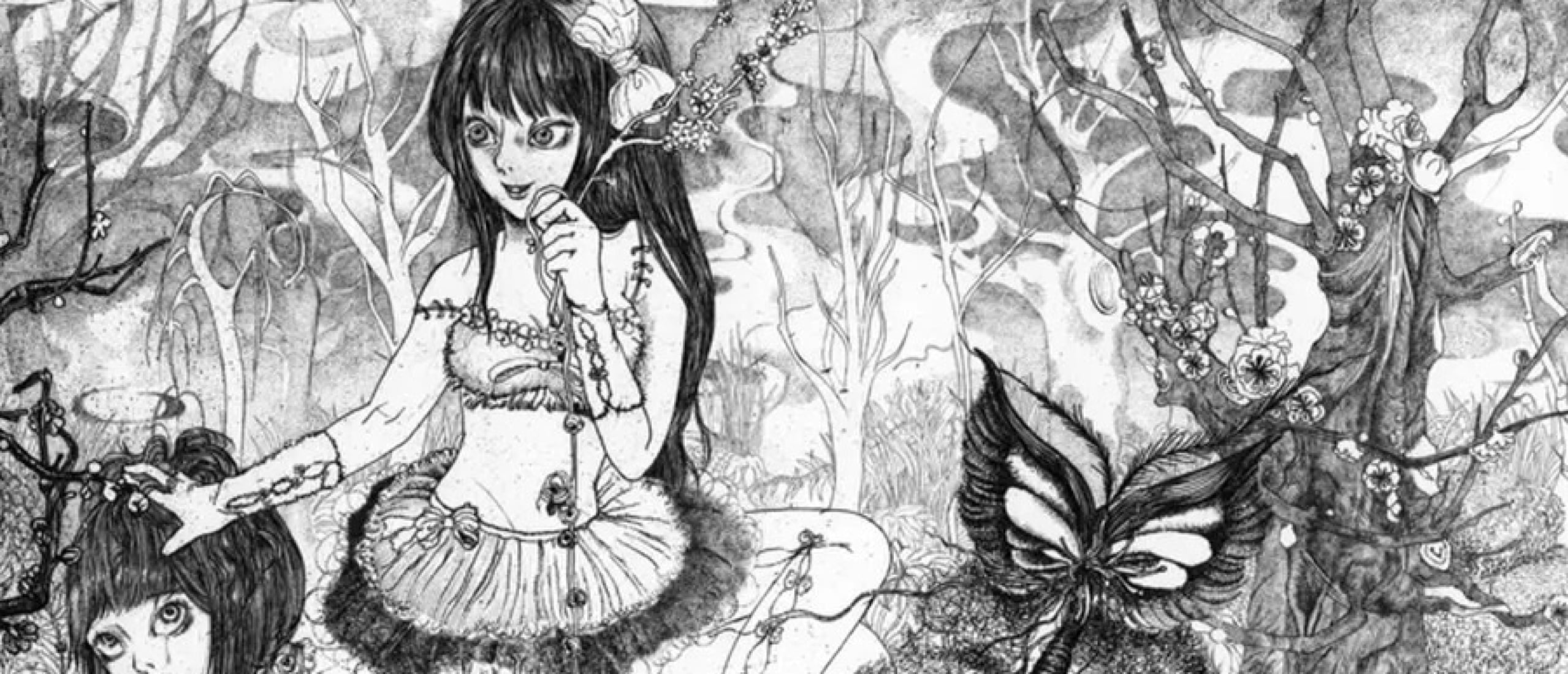
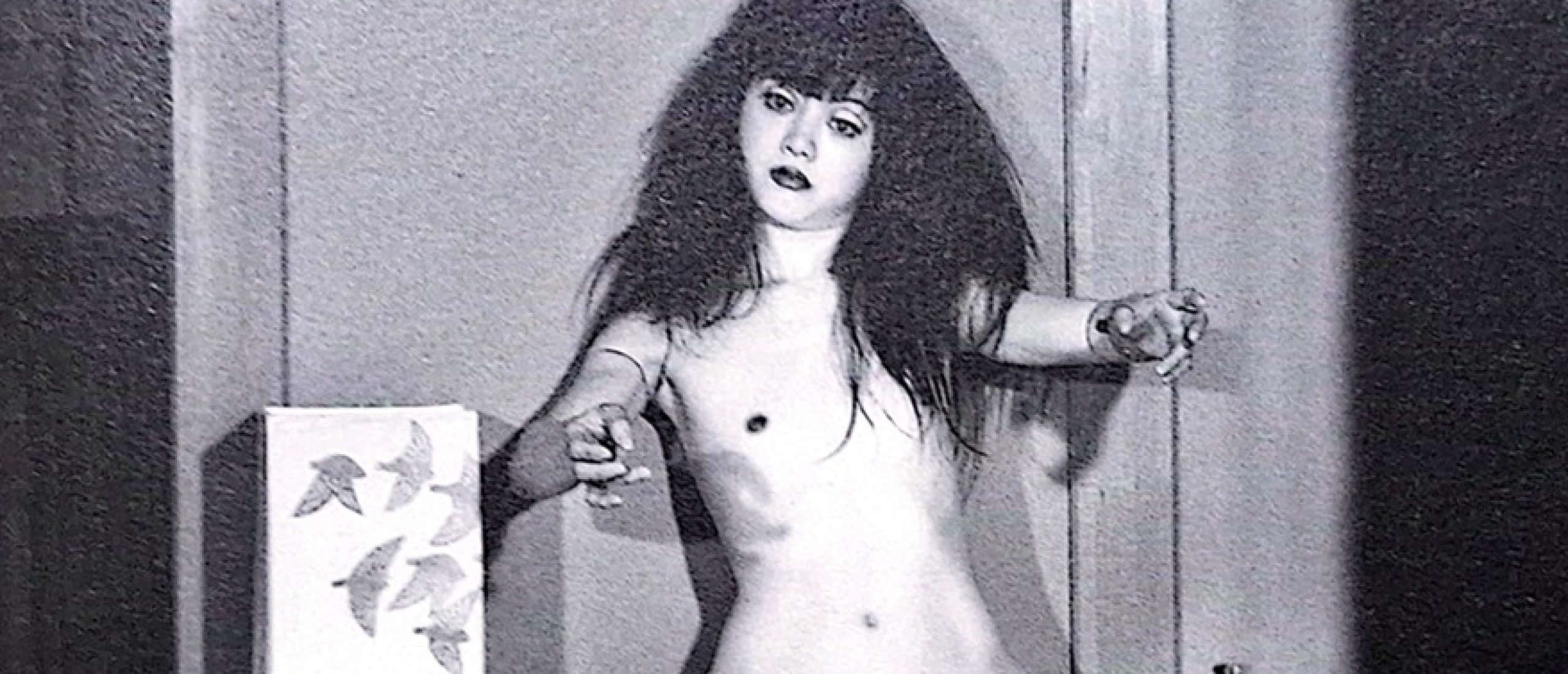
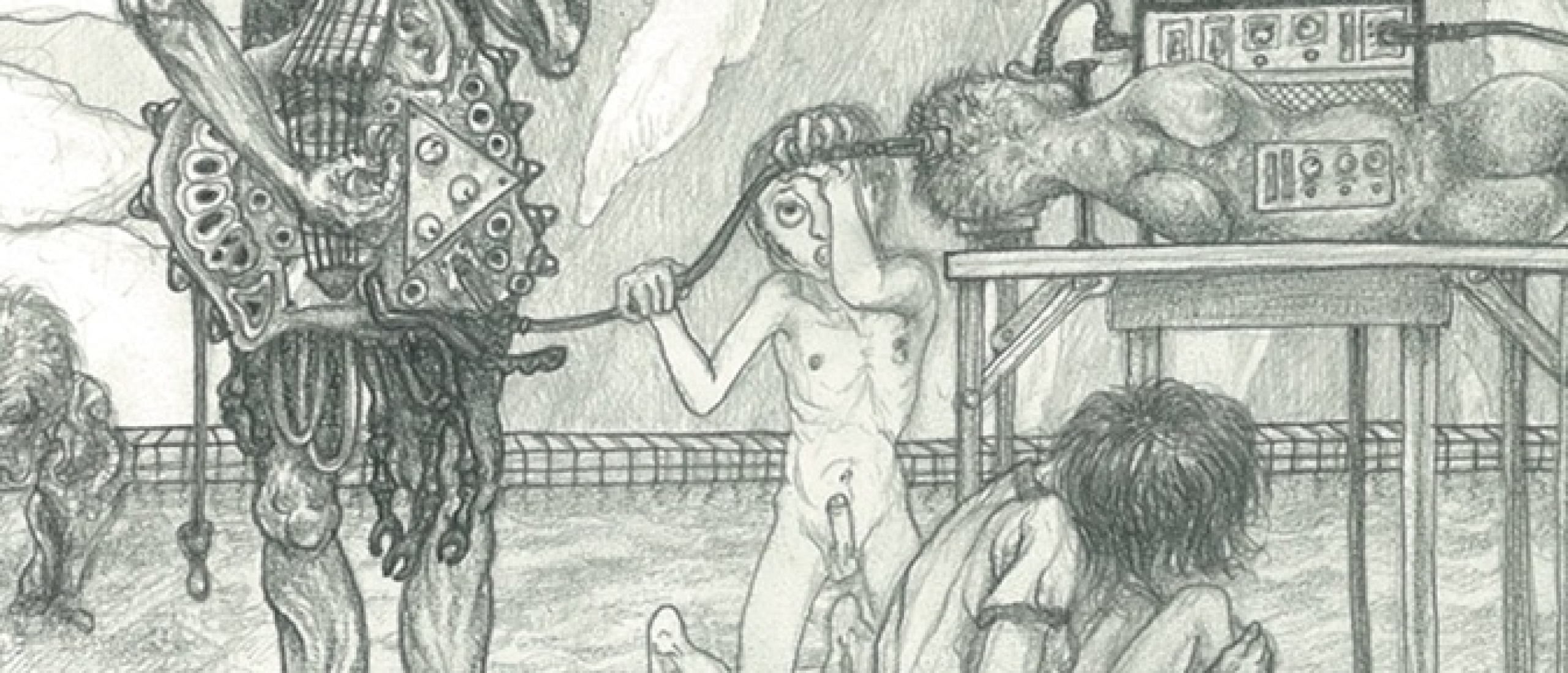
When I came across the visual production of Wataru Kasahara, I was impressed by the way the artist builds a true catalog of anatomical transgressions. His figures seem to exist in a permanent state of metamorphosis, in which the boundaries between interior and exterior, human and non-human, organic and imaginary become unstable. In his works, anatomy ceases to be understood as a fixed and functional structure to become a field of experimentation. Limbs multiply, organs appear in unexpected places, and bodies are subjected to continuous processes of fusion, fragmentation, and recomposition. The result is not just the negation of the conventional human form, but the creation of new bodily possibilities that challenge categories established by science and by artistic representation itself, as the artist himself comments on his Instagram channel:
"First of all, it is necessary to establish a premise: I produce works in the dimension of the flesh. Through concrete and immediate gestures, I investigate the impurity of the flesh, pull tendons and nerves, penetrate the interior of the viscera, and dive into excrement to try to connect myself to the manifestations of the universe — deities, buddhas, demons, and magnetic fields, that is, supernatural phenomena endowed with their own force. Part of these productions perhaps cannot even be called a “work of art” in aesthetic terms. However, they constitute, for me, the real. To make fantasy and reality collide in the dimension of the flesh and to make a work emerge as a scar of this shock — something similar to a sacred stigma — is the first task to which I dedicate myself." (Wataru Kasahara on Instagram)
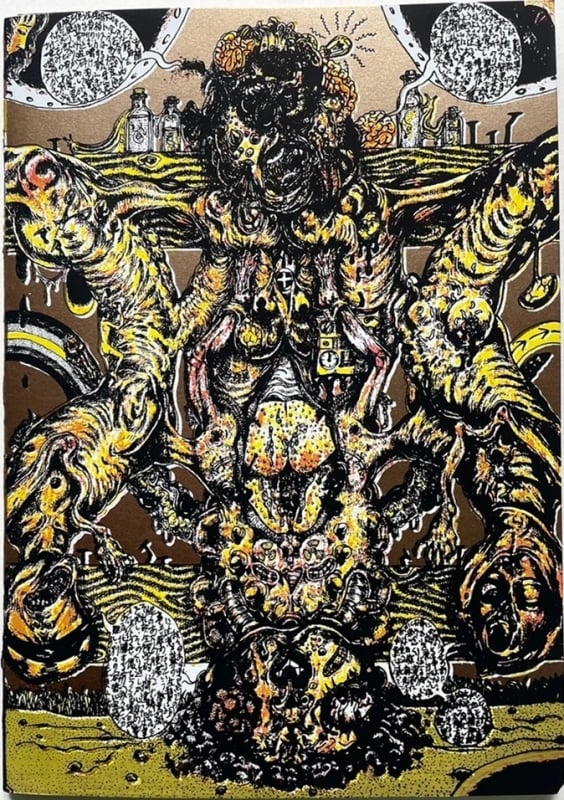
Fig.1
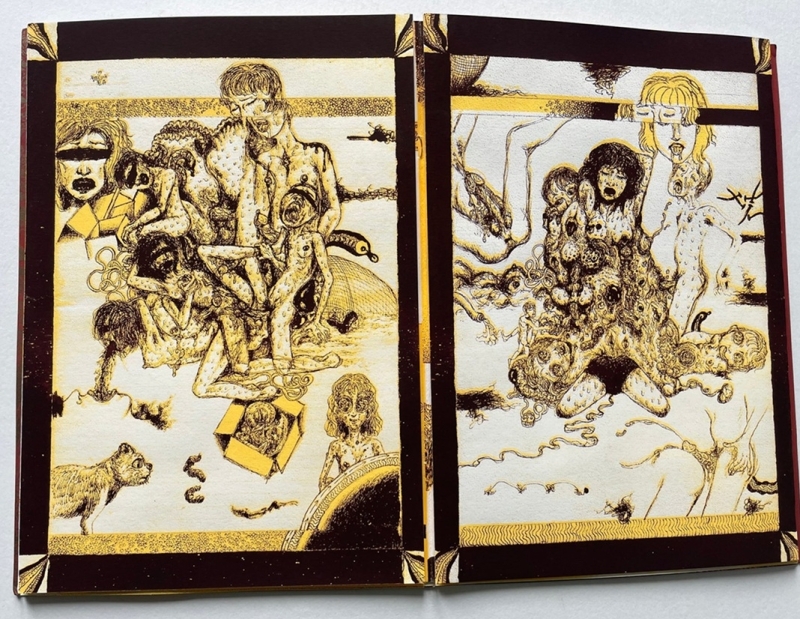
Fig.2
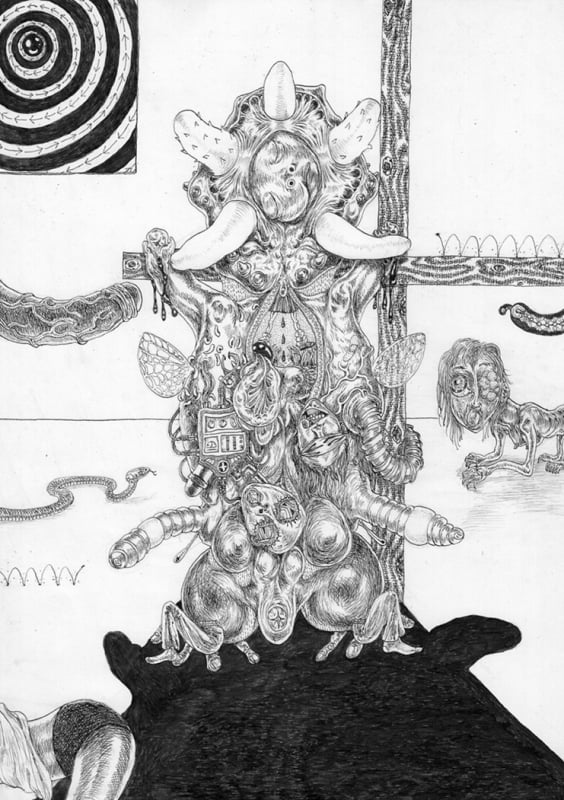
Fig.3
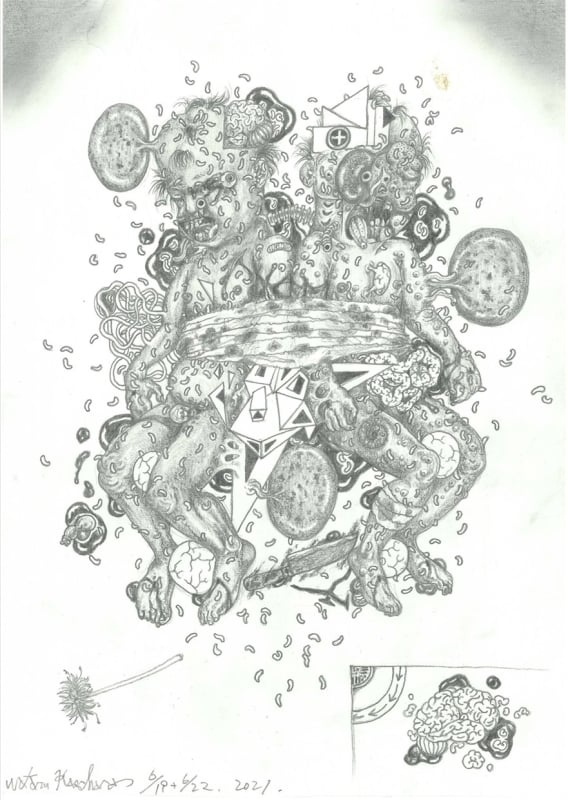
Fig.4
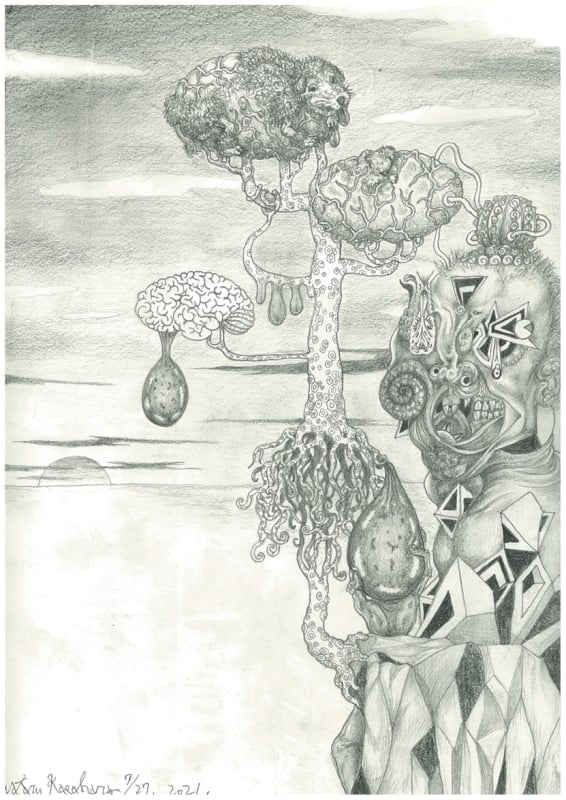
Fig.5
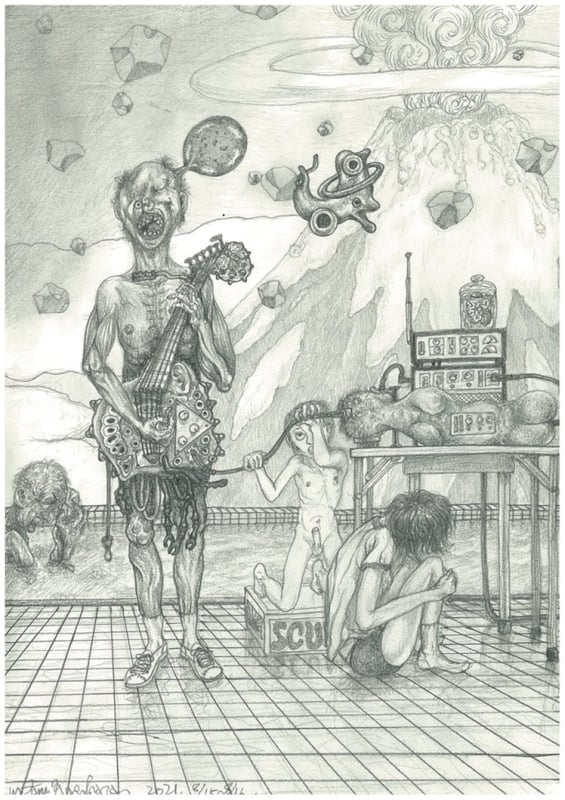
Fig.6
THE BODY AS THE SKIN OF THE UNIVERSE
Wataru Kasahara’s trajectory is marked by the convergence of extreme biographical experiences, artistic investigation, and philosophical reflection. Born in 1968 in Saitama Prefecture, Japan, the artist describes his childhood as a period of physical frailty coupled with an intense fascination for the processes of organic decomposition. From an early age, he observed animal carcasses, maggots, and biological transformations while simultaneously developing an interest in the sounds of nature and industrial machinery. During adolescence, he became immersed in Surrealism, the Vienna School of Fantastic Realism, Viennese Actionism, and the work of Francis Bacon, influences that were further enriched by his interest in psychology, philosophy, meditation, and psychoactive experimentation. It was during this period that themes that would remain central to his oeuvre, sexuality, bodily deformation, madness, and the tension between pleasure and suffering, began to emerge.
Throughout his life, Kasahara expanded his practice to encompass painting, performance, and experimental music, developing a poetics grounded in the collision between fantasy and material reality. His work is informed by the idea that all living beings function as the “tactile organs of the universe” or as its “skin,” a hypothesis formulated in his youth that later became one of the conceptual foundations of his artistic production. His works are constructed through processes of transformation, deterioration, and physical intervention, in which violence, chance, and degradation become integral components of the image itself. After gaining international recognition through the French publishing house Le Dernier Cri and through publications associated with the European underground scene, Kasahara established a body of work dedicated to themes of scatology, eroticism, decay, renewal, and corporeality, bringing together influences that range from Francis Bacon and Otto Muehl to Shigeru Mizuki.
In 2014, Wataru Kasahara published through the publisher United Dead Artists the book Haritsuke, whose premise is based on a series of surgical experiments on creatures with genetic disorders resulting from a hypothetical crossbreeding between aliens and humans. In the following year, the artist released through the same publisher Psychic Mucus, composed of scenes of debauchery between degenerate monsters and humans, set in a nightmare scenario with bloody corpses, exposed organs, feces, secretions, and cabalistic signs.
Different from commercial publications, these artbooks use the physical medium to confer an aura of permanence to illustrations that deal with the ephemeral and the abject. In Psychic Mucus, the use of absolute black and white, without intermediate gray tones other than those obtained by hatching, creates a contrast that highlights the complexity of the forms. This technical rigor is a constant in the artist's career, from the first fanzines to contemporary luxury editions.
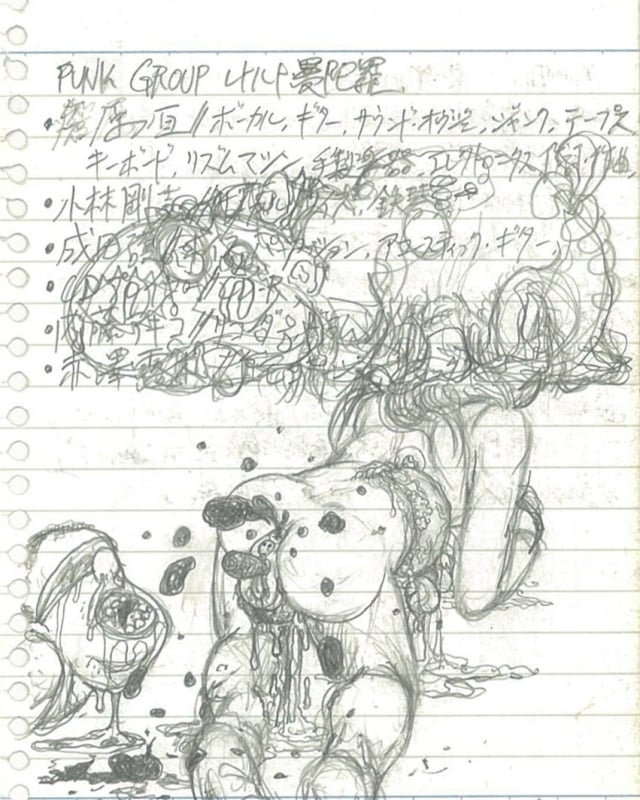
Fig.7
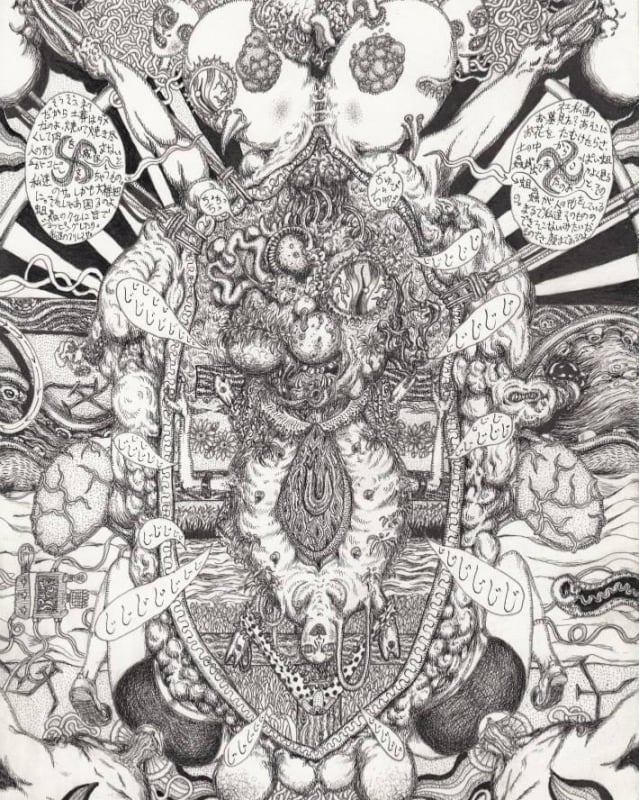
Fig.8
Become a Premium member now and learn more about the cosmology of "haritsuke" and visual martyrdom in , the visual style and the ero-guro tradition, anatomical deconstruction, the absence of text and the universality of the image, the underground art market and the fetish of the object, the function of the grotesque in kasahara's production, and MUCH more...
Wataru Kasahara is active on Instagram
Click HERE for the drawing, eroticism, and the body in transformation as depicted by Perdita Lujuria
Let us know your thoughts about Wataru Kasahara's ero guro illustrations in the comment box below...!!