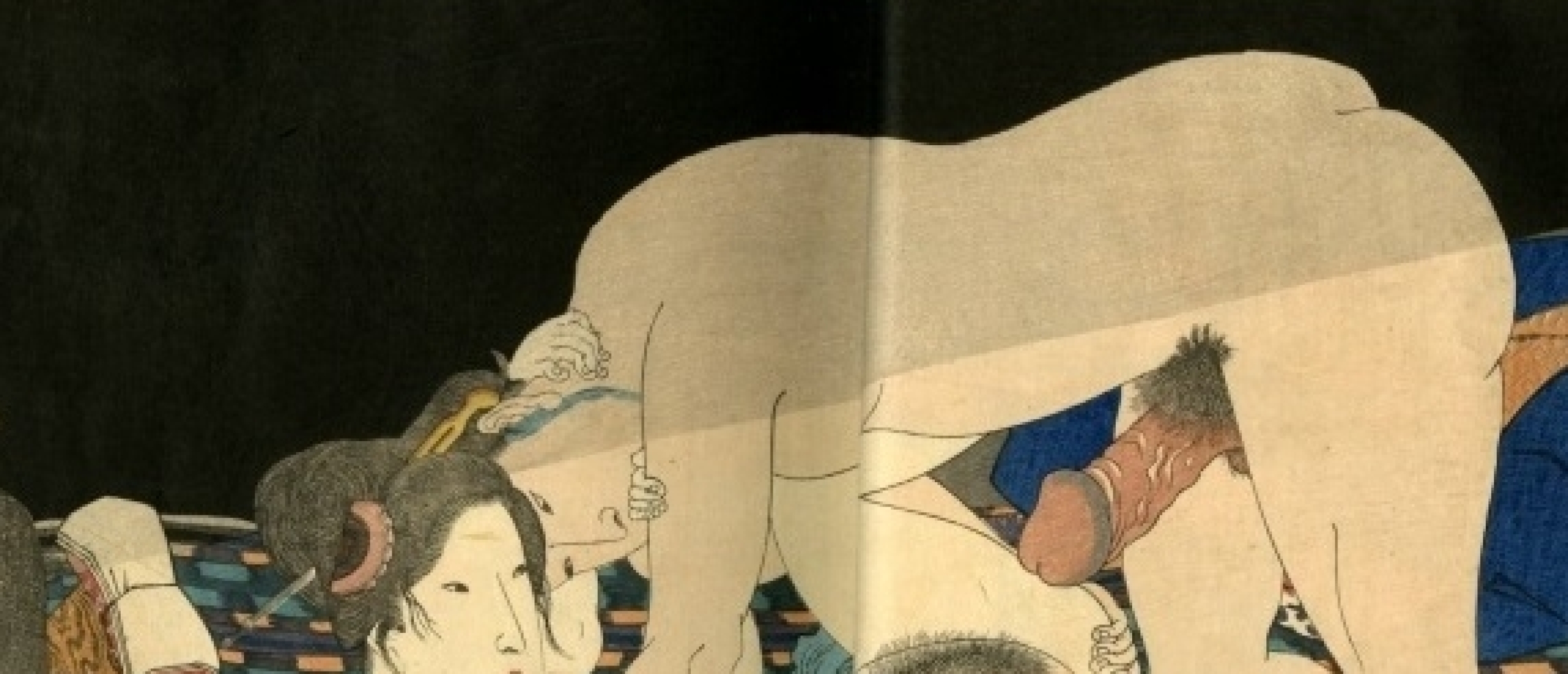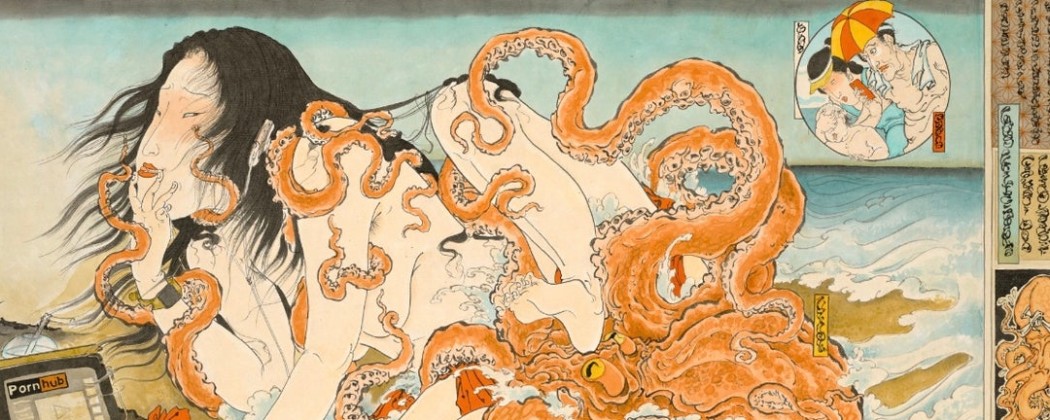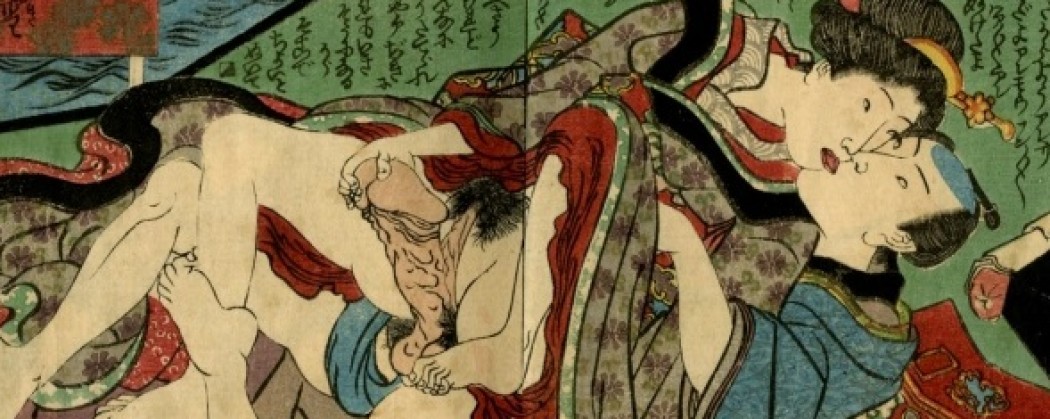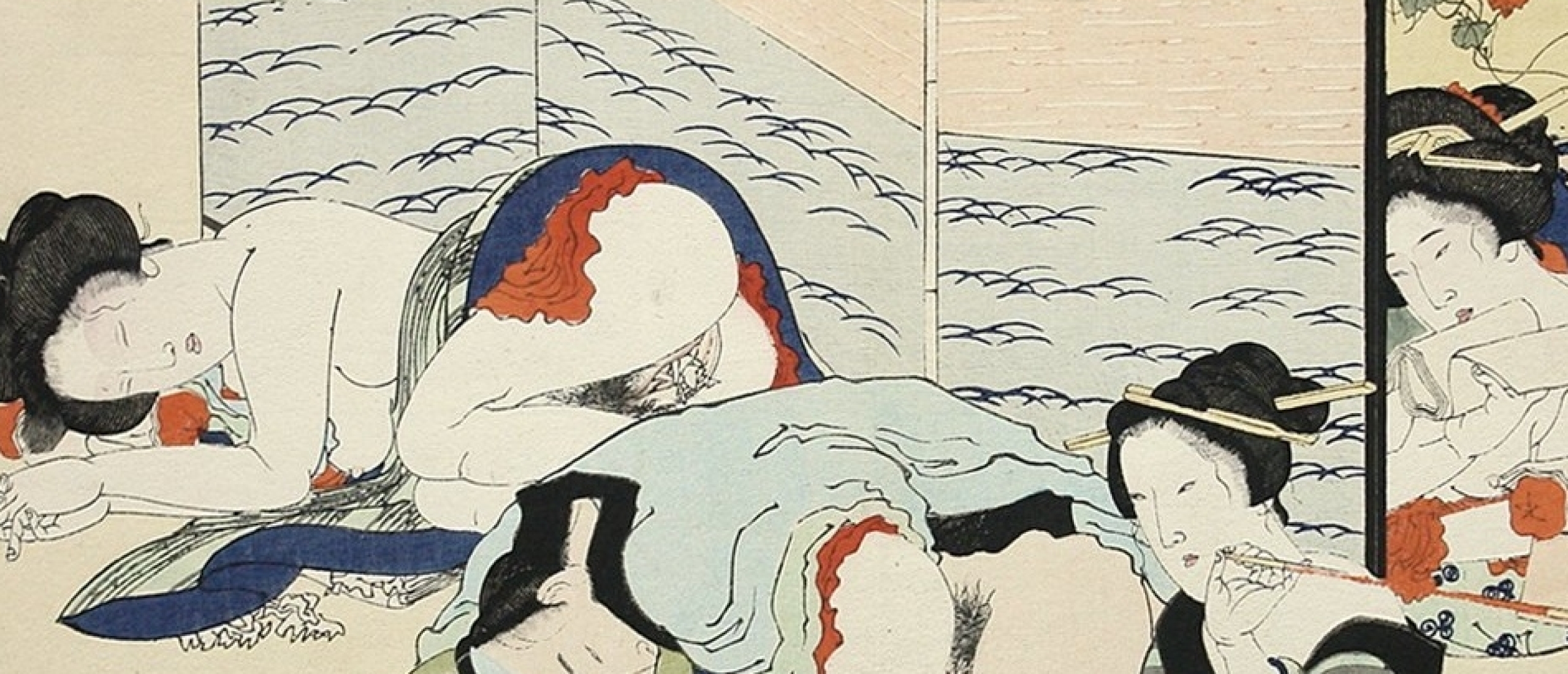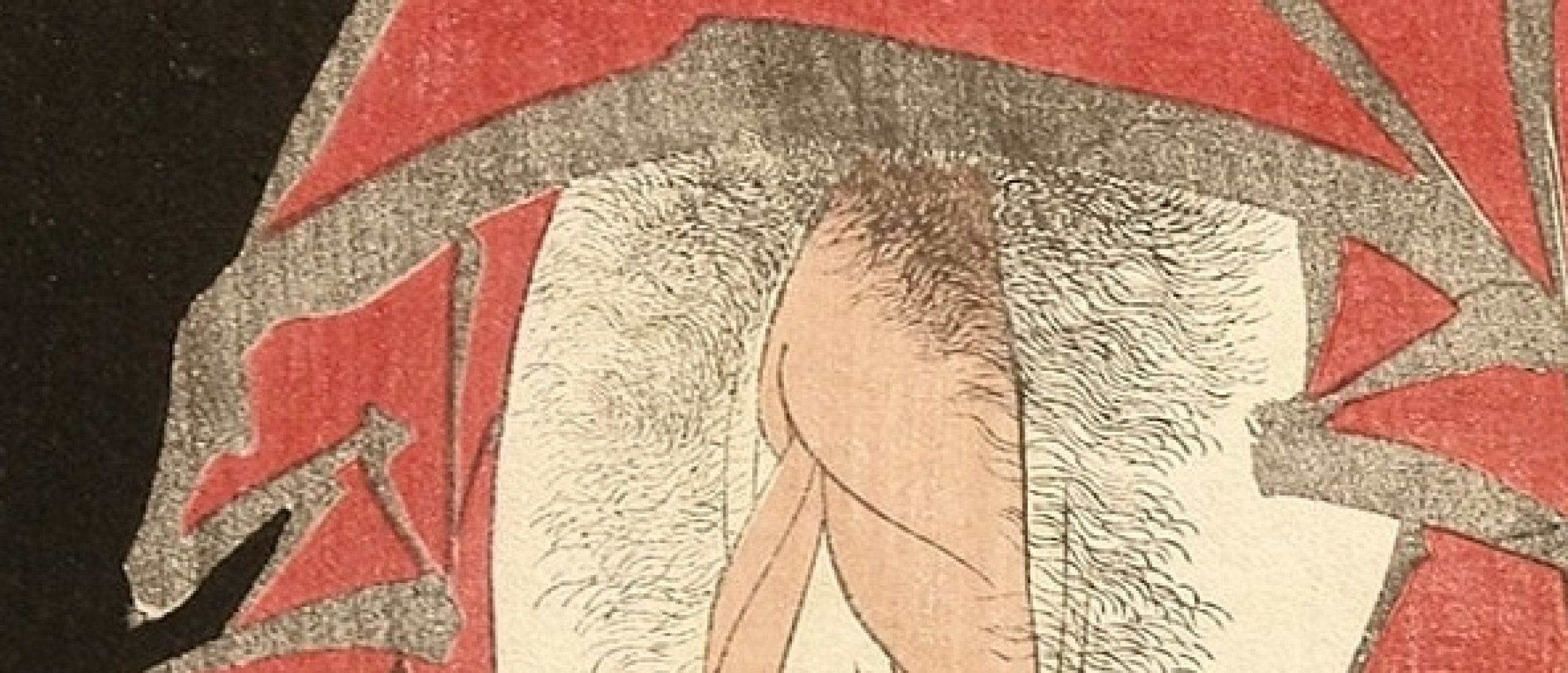
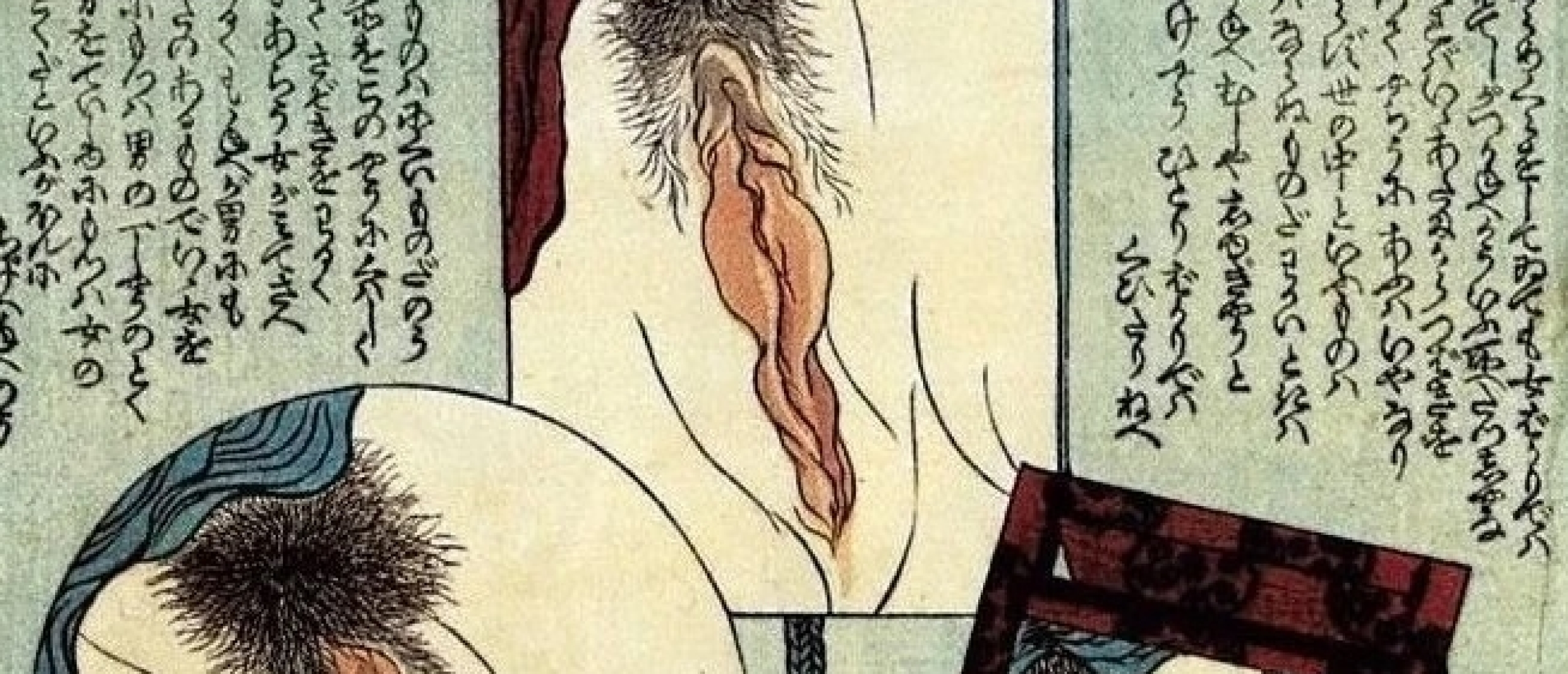

The mirror is a beloved motif in shunga. Artists did not let the fact that Japanese mirrors were made of metal and reflected clearly only up to a distance of around 40 cm (16" in) restrict their imaginations when it came to using them to heighten eroticism.
Direct Gaze
Mirrors can provide another vantage point for observing couples and their intimate organs. Sometimes the sexual act was hidden from the direct gaze of the viewer but was visible by its reflection in a mirror. On other occasions the lovers' backs are presented to us and their faces can only be seen in the mirror.
Performing Cunnilingus
There are also depictions of young girls learning about their bodies using a mirror to watch a man performing cunnilingus. In some prints, the mirror reveals the woman's face but not the man's - it has been said that this was so a male viewer could imagine himself in the picture, but since most shunga show the man's face this seems doubtful.
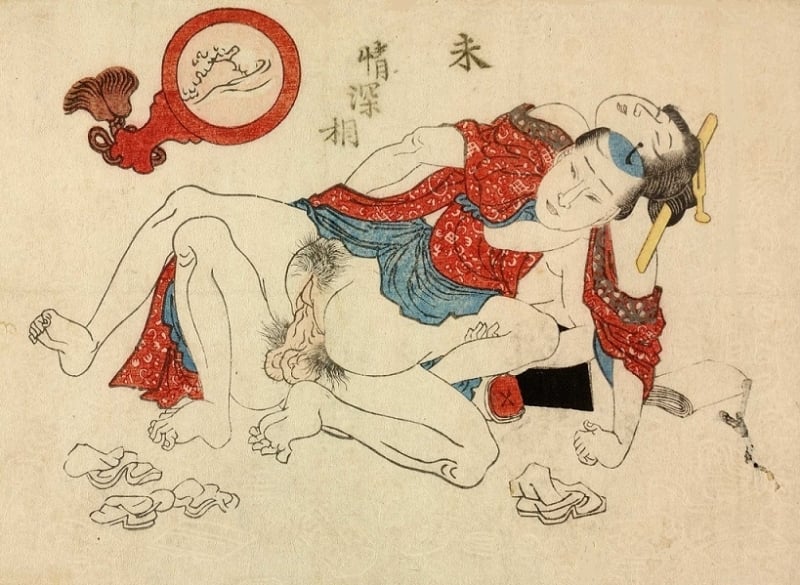
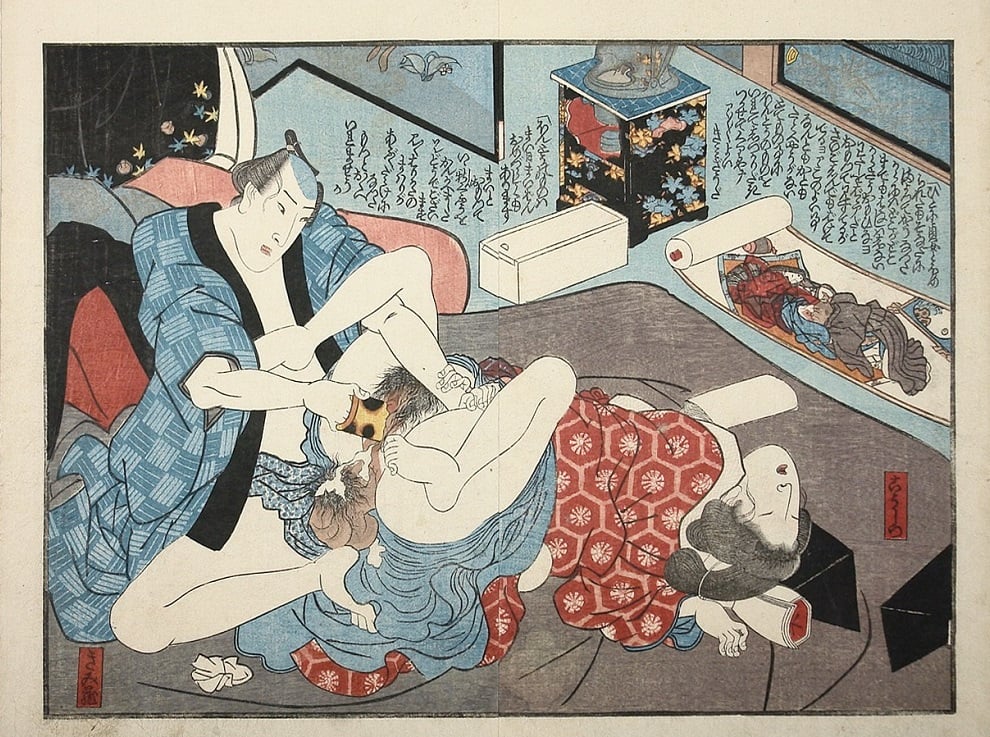
Fig.1. 'Passionate intimate couple surrounded by paper tissues. The insert is a mirror depicting the insides of the vagina.' (c.1830) by a member of the Utagawa school
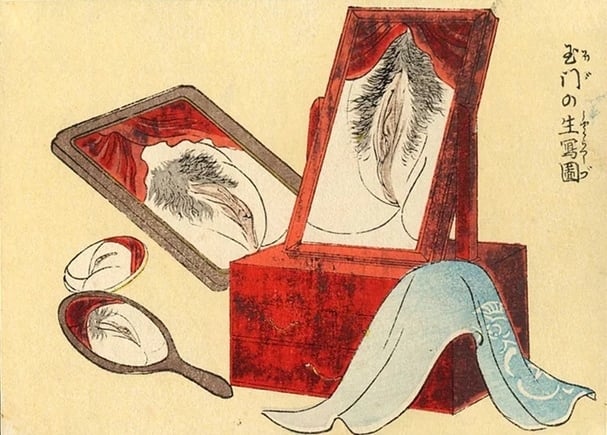
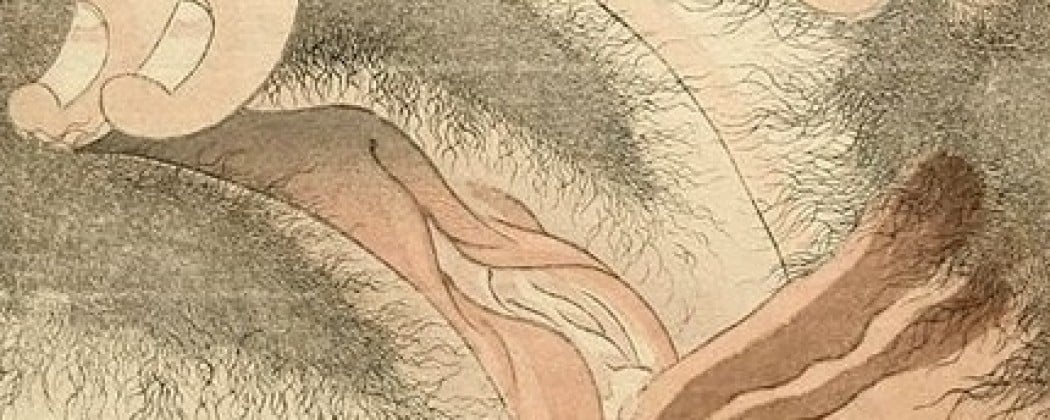
Fig.2. Meiji shunga design depicting 'Various vagina close-ups in mirror.' (c.1907) by an anonymous Meiji artist.
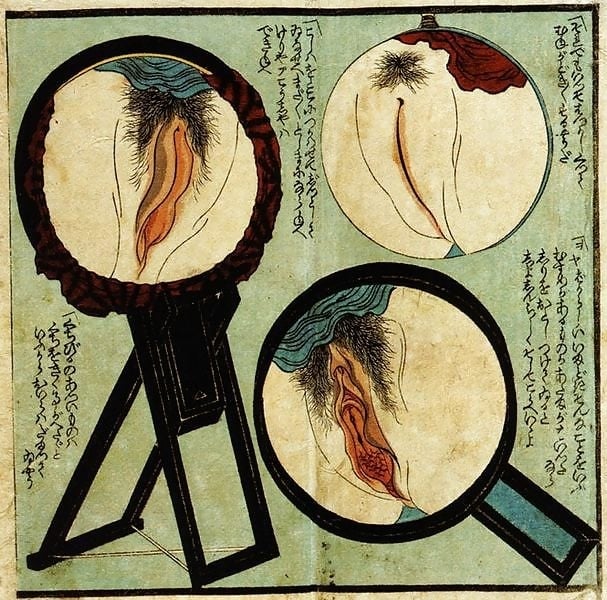
Fig.3.
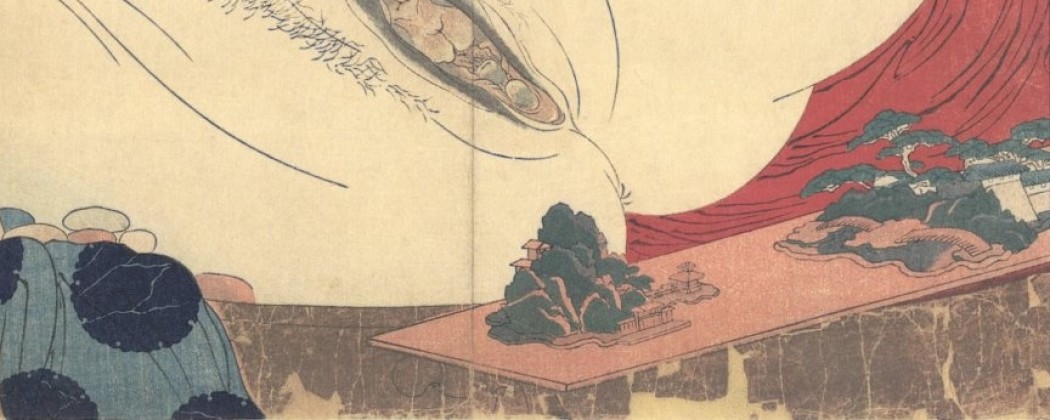
Six Vulvas
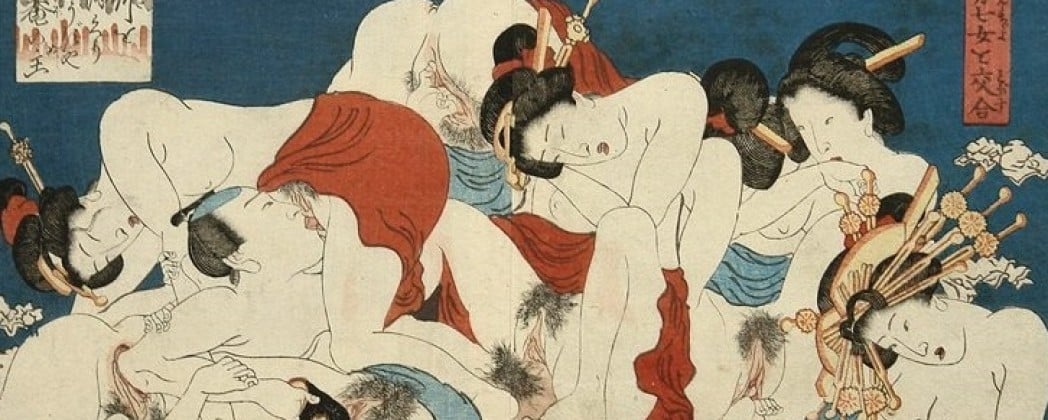
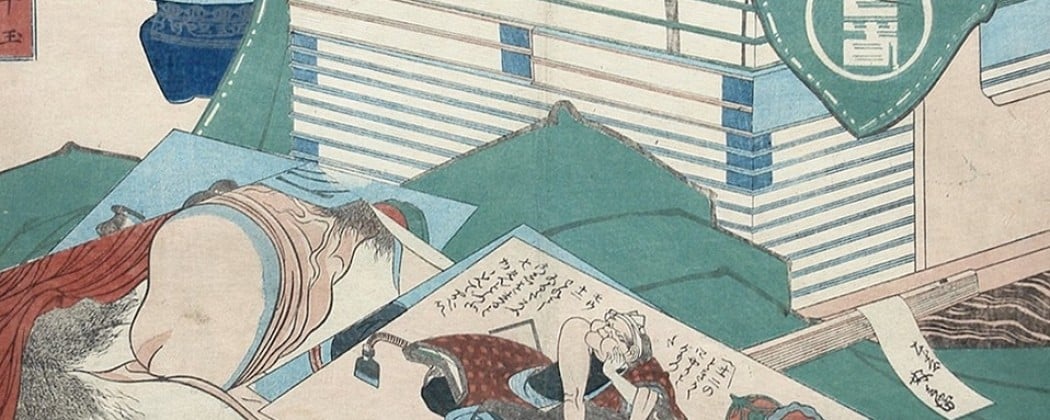
Two opening plates from an untitled album of eight prints by Utagawa Kuniyoshi (1797-1861). The designs depict six different types of mirrors, imaging six different types of vulvas. These are followed by six various sex scenes, and vulvas are visible in all but one. The last plate (not included here) is signed 'Hodoyoshi', one of Kunyioshi's known aliases.
Clockwise
1st image (Fig.3): Seen from the upper right and running in a clockwise fashion are a hanging mirror and standing mirror.
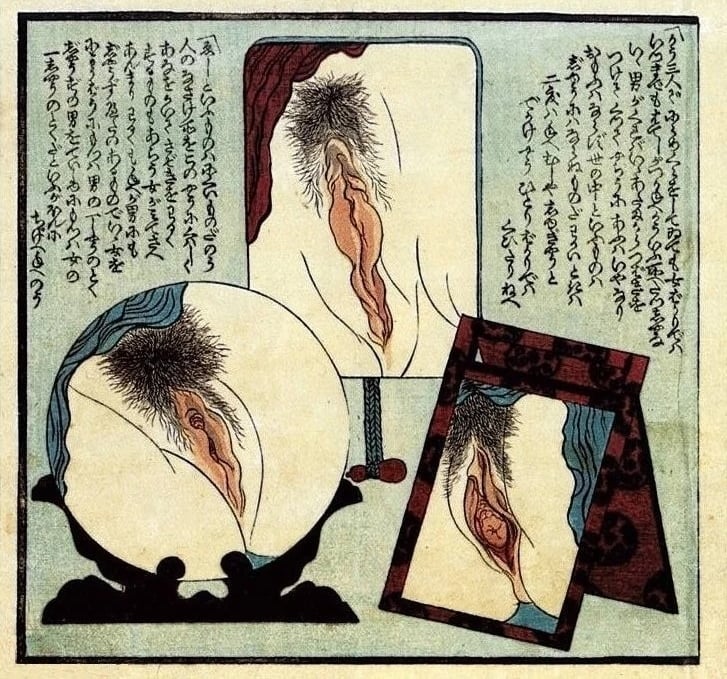
Fig.4.
Chinese-style Stand
2nd image (Fig.4): Seen from the upper right and running in a clockwise fashion are rectangular hanging mirror with a small gourd on a string, a standing table mirror and a round mirror in a wooden Chinese-style stand.
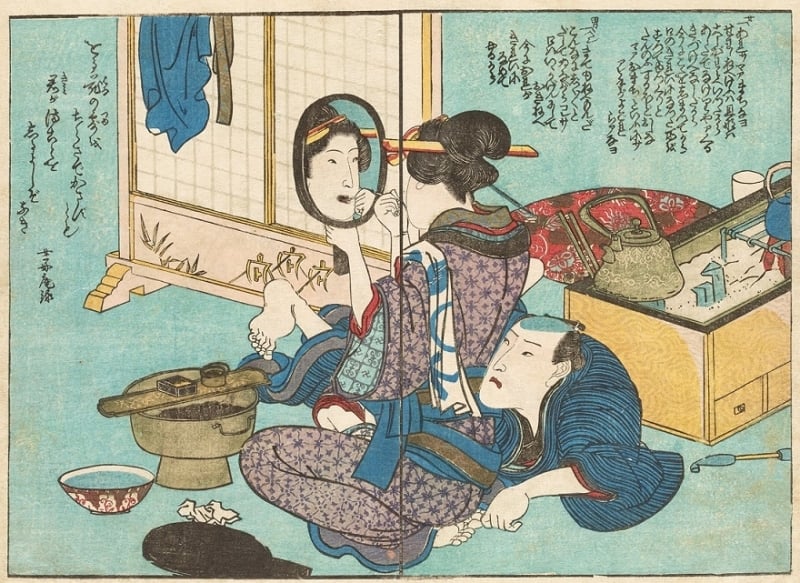
Fig.5.
Ohaguro
In this book illustration (Fig.5) from Kuniyoshi's shunga book 'Hanayuki Ikichi ' we see a woman blackening her teeth (ohaguro) in conversation with her secret lover.
Kanemizu
The fashion at the time was for women to have white painted faces, and blackened teeth were thought to compliment this look well. The process of dyeing is made possible with a mixture known in Japan as kanemizu. Kanemizu consists of iron filings, vinegar, tea, and rice wine. This potent mix created a blackening effect on the teeth.
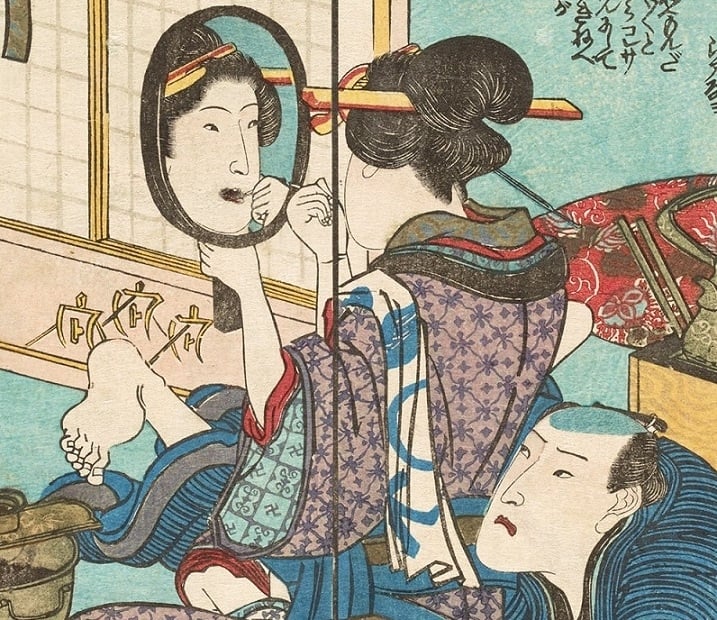
Fig.5a.
Awful Smell
However, although it was very effective as a dye, historical reports suggest that it smelled awful. What’s more, it only lasted a few days and did not stain teeth permanently, so people had to devote much time to the process.
In Premium you can find over 130+ shunga stories not visible here.
Click HERE for numerous striking close-up intercourse designs as portrayed in shunga art....!!
Sources:
'Japanese Erotic Fantasies: Sexual Imagery of the Edo Period' by C. Uhlenbeck a.o.
'Japanese Erotic Art: The Hidden World of Shunga' by Shagan Ofer
jpninfo.com
Do you like these kind of examinations about topics treated within shunga?