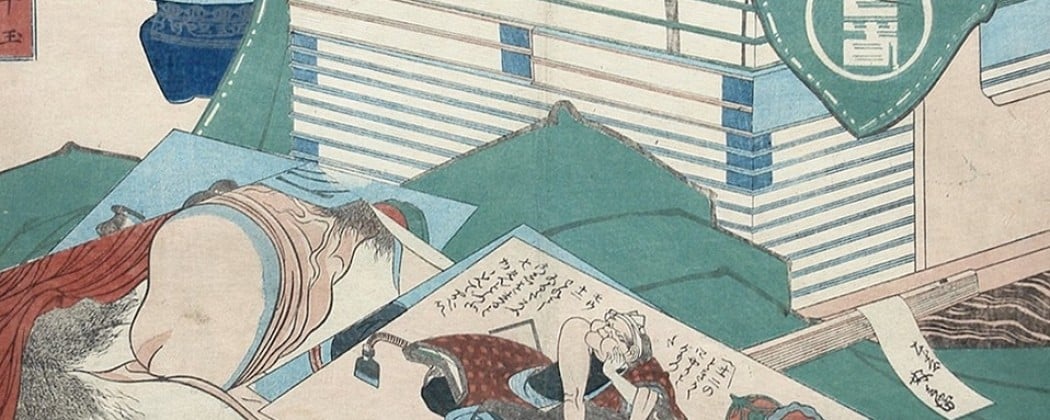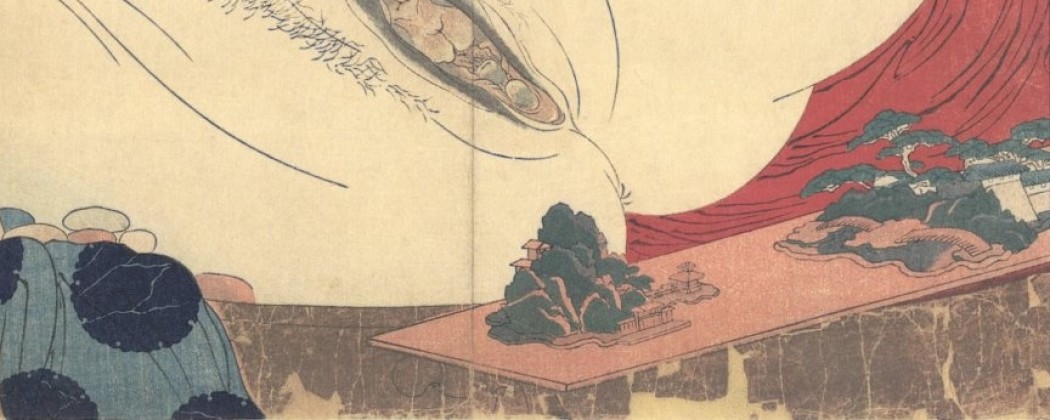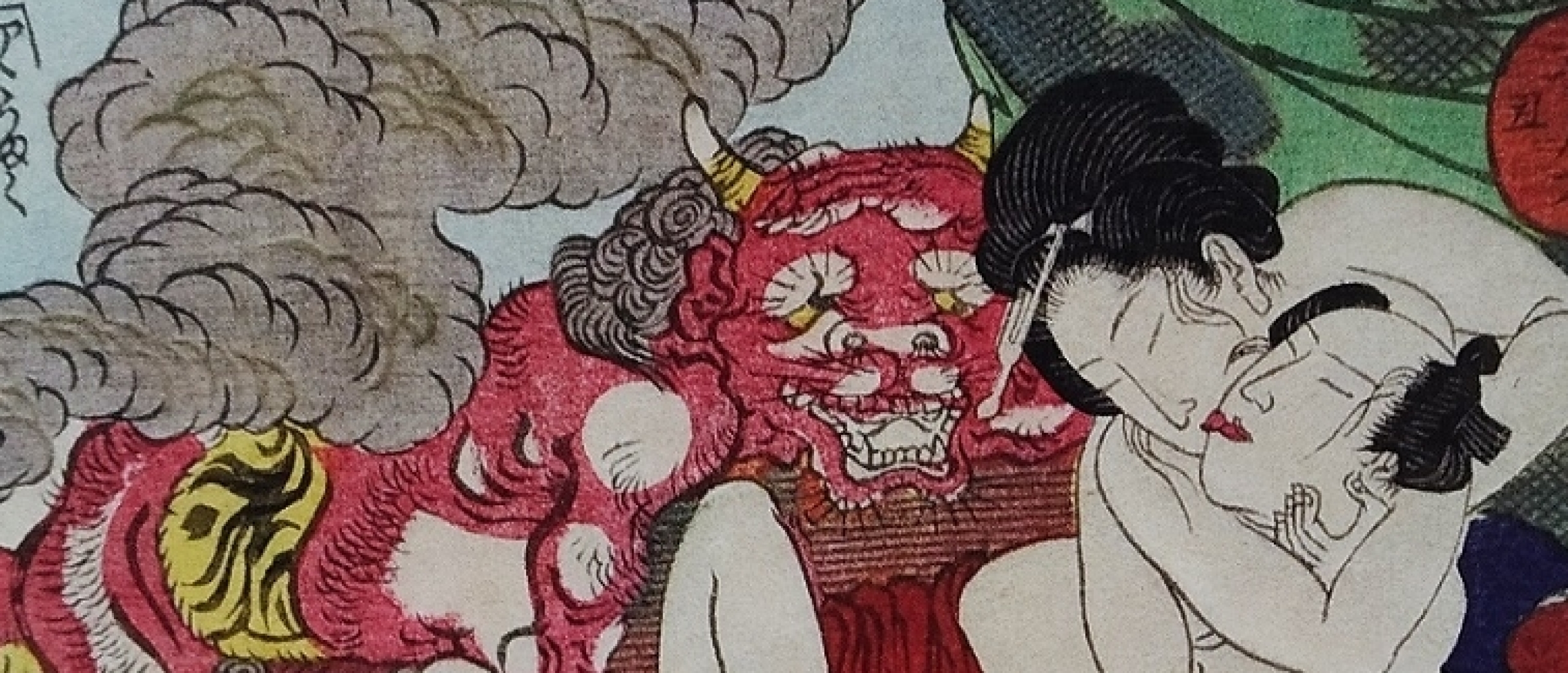
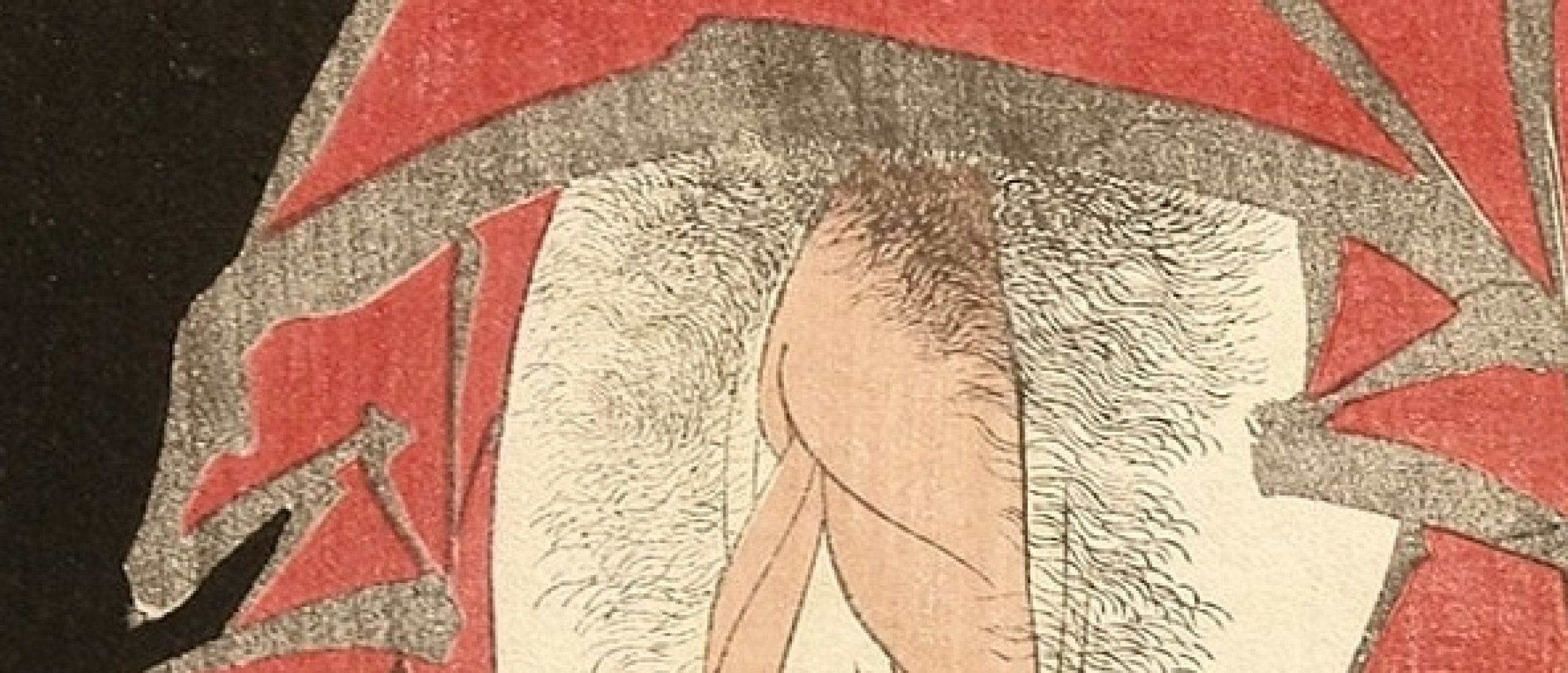

Peeking out from the red Buddhist robe known as Daruma katsugi is a monstrous vagina (Fig.1). This is a parody of a parody. Daruma (Bodhidharma) is the monk who brought Zen Buddhism from India to China. He was traditionally depicted in bust portraits meditating, but in parody versions called Onna Daruma (Female Daruma) he was replaced by a courtesan in a red robe. This led to the type of depiction seen here where the courtesan is replaced by a vagina.
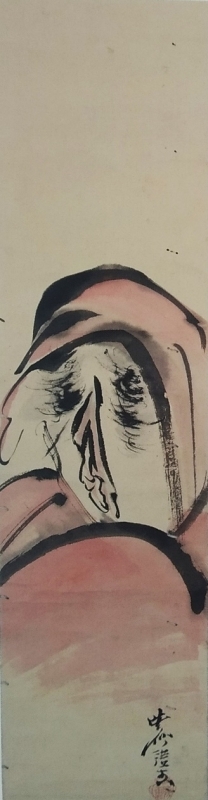
Fig.1. Hanging scroll "Daruma Vagina "(1871-1889) (71.9 x 18.9 cm) by Kawanabe Kyosai. Signed: Kyosai kinga. Seal: Kyosai.
Grueling Duty
The idea behind Onna Daruma is that a courtesan's grueling duty lasts for ten years, while Daruma sat for "only" nine years in meditation to reach enlightenment. Thus, a courtesan's enlightenment should surpass that of Daruma's. It is said that Hanabusa Itcho heard this story and painted the first Onna Daruma picture (Kyusensha manpitsu, 1858, preface). Further investigation is needed to determine whether Itcho was actually the first to paint the subject.
Kunisada
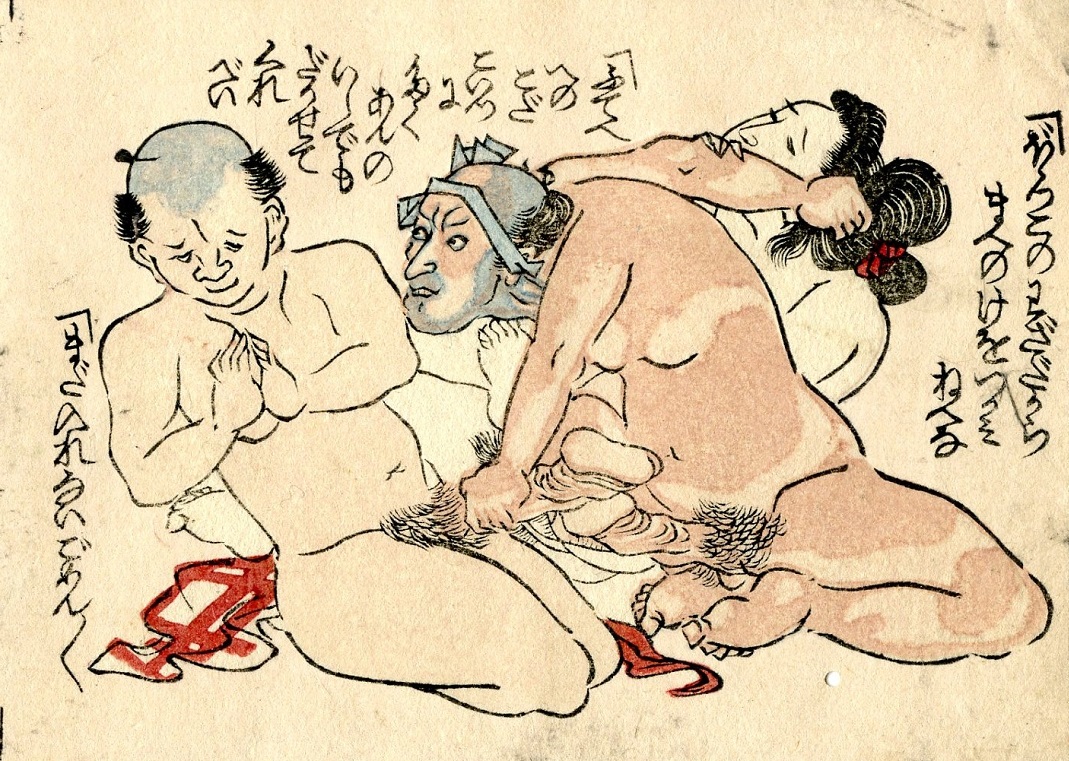
Other artists who painted it include Gion Nankai, Miyagawa Issho, Kitagawa Utamaro, Utagawa Toyokuni I and Kyosai (Kawanabe Kyosai Memorial Museum). An illustration of "Daruma Vagina" occurs in the shunpon Hyakki yagyō (1825 - Fig.2) by Utagawa Kunisada.
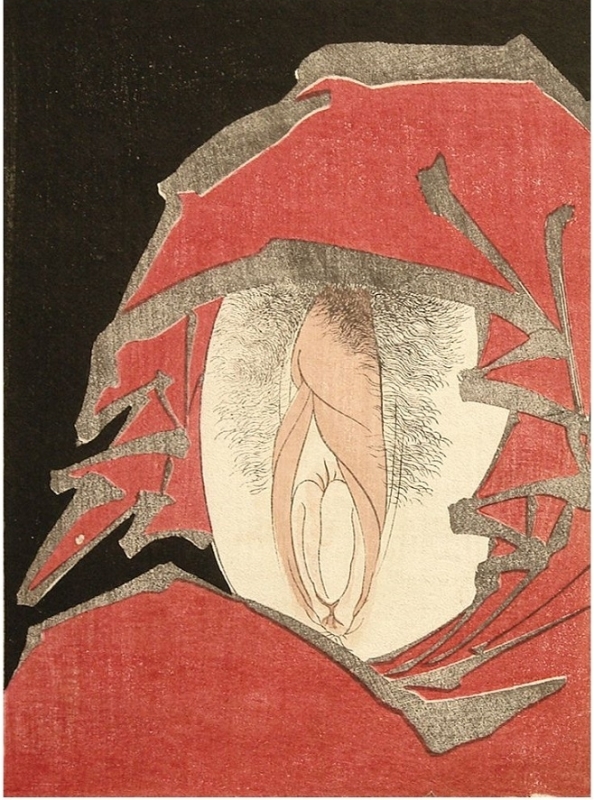
Fig.2. Daruma Vagina (1825) from the series The Night Parade of One Hundred Demons (Hyakki yagyō) by Utagawa Kunisada (Source: Akantiek.nl)
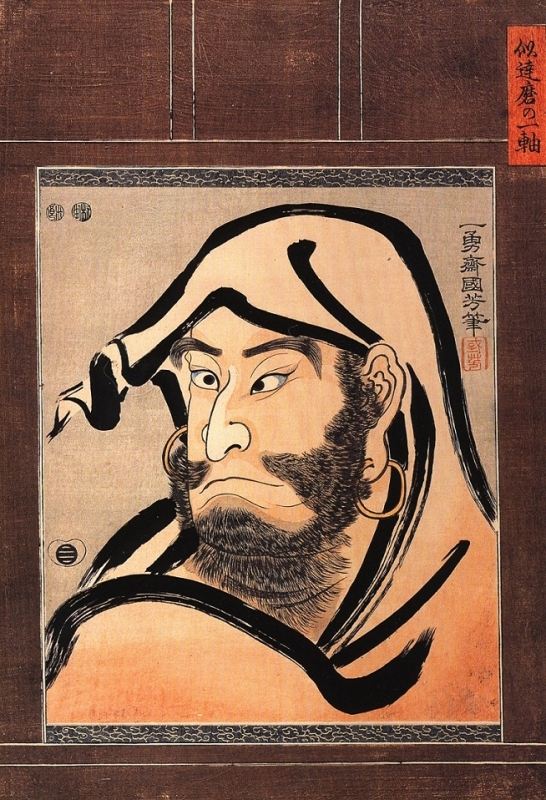
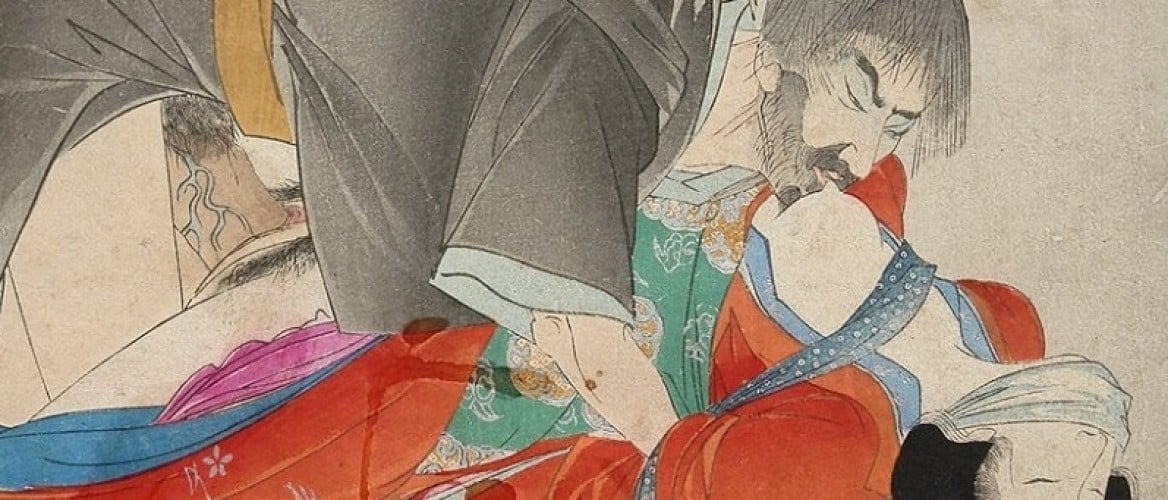
Fig.3. Hanging scroll woodblock print (oban tate-e) Portrait of Daruma - Actor Nakamura Utaemon IV as Daruma (Ni Daruma no ichijiku) (c.1848, 8th Month) by Utagawa Kuniyoshi
Iconic Image
This print by Utagawa Kuniyoshi (1797-1861) is a portrait of the actor Nakamura Utaemon IV (1798-1852) in the role of Daruma in the kabuki play Takagi Oriemon budojitsuroku which was staged in the eighth month of 1848. While the composition appears to portray the iconic image of Daruma (the founder of Zen Buddhism) in a format mimicking hanging scroll mountings, it is really a clever way to produce an actor okubi-e which were restricted by the Tenpo reforms. Another impression is housed in the collection of the Museum of Fine Arts, Boston.
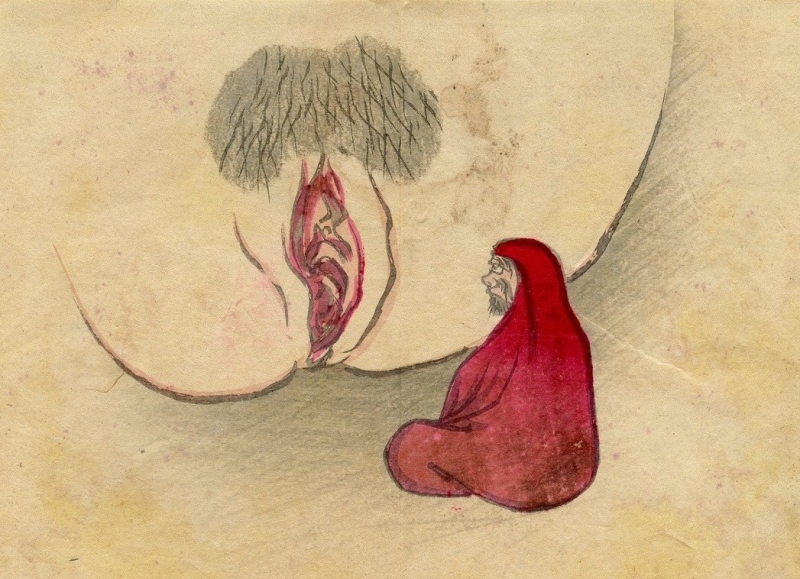
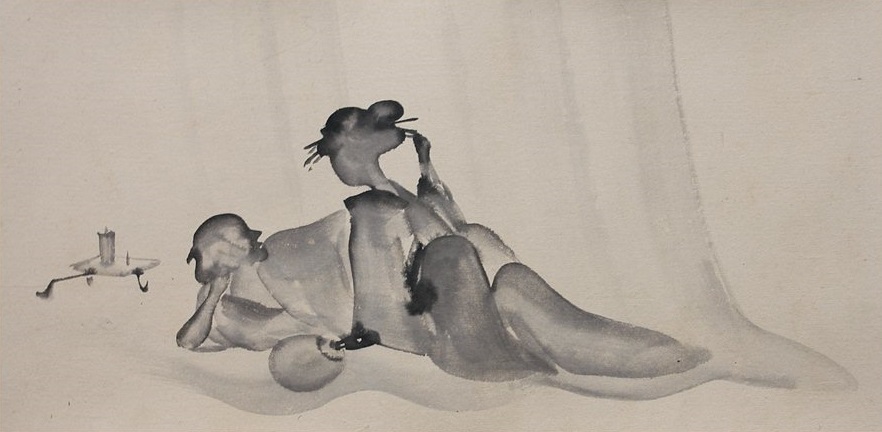
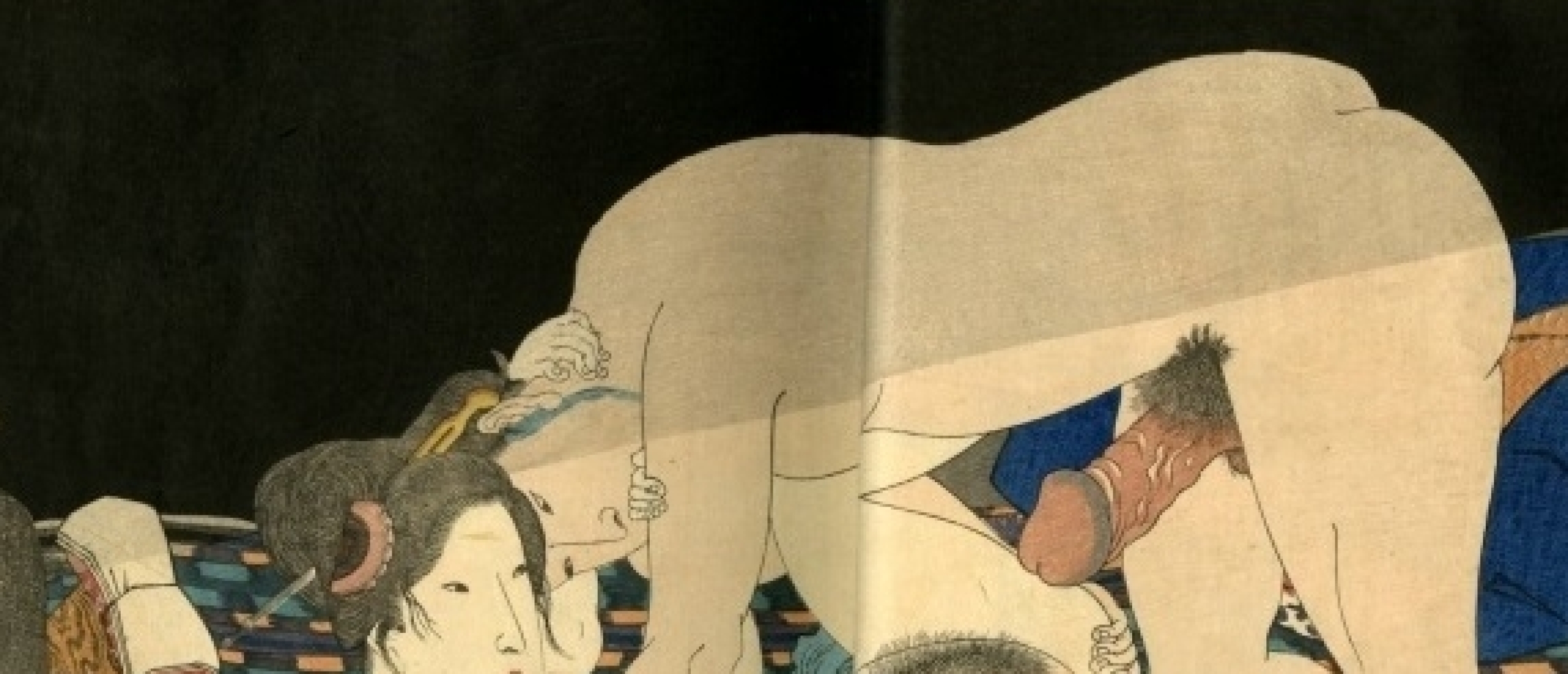
Fig.4. ‘Daruma meditating at the genital entrance‘ (c.1870) in the Kyosai style
Become a Premium member now and check out 130+ post on shunga art not visible here!
Click HERE for the fascination for the feared Raijin of Kyosai and Hokusai
Sources: 'Sex and Laughter with Kyosai: Shunga From the Israel Goldman Collection' by Ishigami Aki and Sadamura Koto, commons.wikimedia.org, Heroes & Ghosts: Japanese Prints by Kuniyoshi 1797-1861, by Robert Schaap